


Introduction
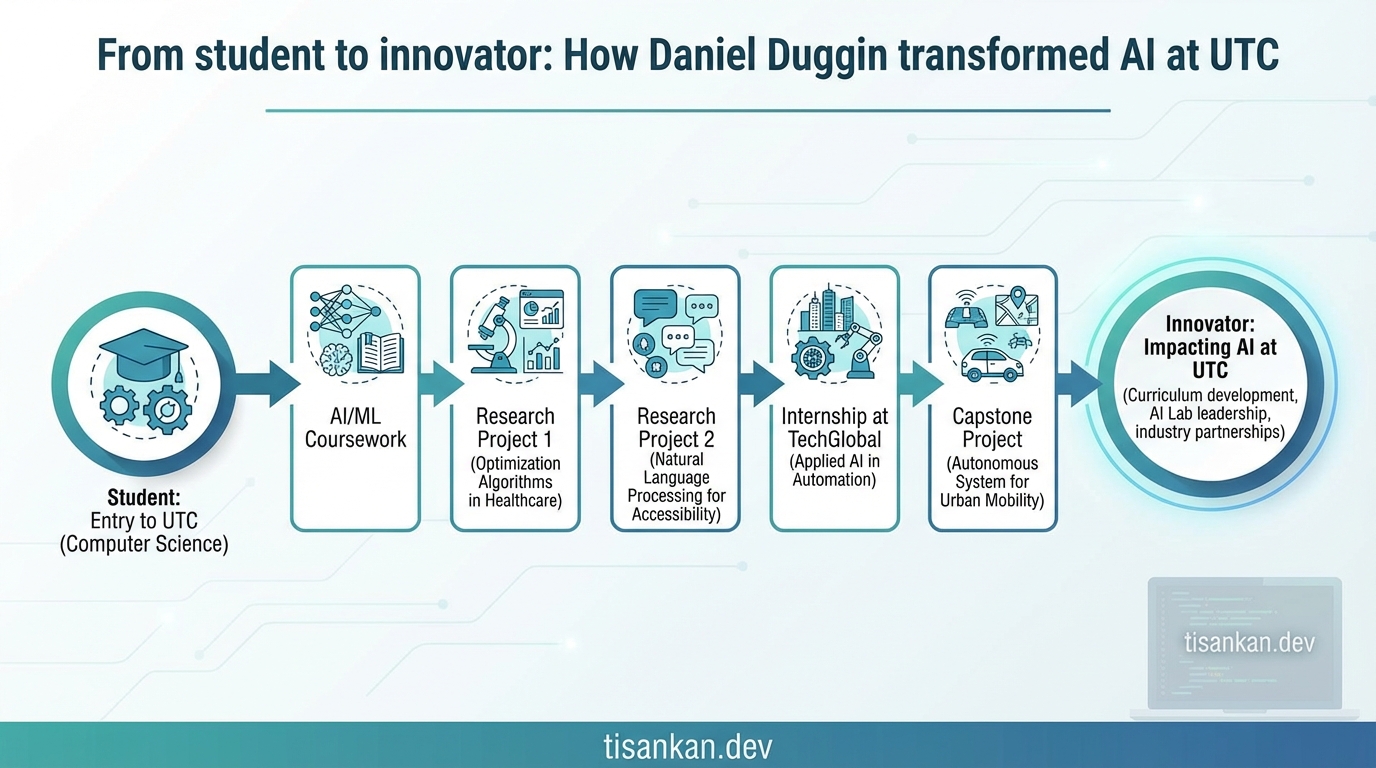
From student to innovator: How Daniel Duggin transformed AI at UTC is a story I’m excited to share, because it highlights the incredible potential within our universities. So many struggle to translate academic research into practical applications. Daniel’s journey shows us how it’s done.
The problem? UTC, like many institutions, faced the challenge of effectively integrating cutting-edge AI into its curriculum and research. How do you bridge the gap between theoretical AI and real-world impact?
The solution, spearheaded by Daniel, involved a multi-pronged approach. I was particularly impressed by his focus on collaborative projects and accessible resources. He essentially democratized AI knowledge within UTC. This included initiatives like workshops, open-source toolkits, and fostering a culture of experimentation. For example, the use of platforms like TensorFlow (check out the official TensorFlow tutorials) was heavily promoted.
Table of Contents
- TL;DR
- Context: The Rising Tide of AI in Academia
- What Works: Daniel Duggin’s AI Transformation Strategies at UTC
- Trade-offs: Balancing Innovation, Resources, and Ethical Considerations
- Next Steps: Scaling AI Innovation at Universities
- References
- CTA: Empowering the Next Generation of AI Innovators
- FAQ: Frequently Asked Questions about AI Innovation in Education
TL;DR
Okay, let’s get straight to the point. From student to innovator: How Daniel Duggin transformed AI at UTC is a story about passion, dedication, and the power of student-led initiatives. I found it truly inspiring. Here’s the gist of it:
Daniel Duggin, a UTC student, became a driving force in AI innovation. He didn’t just learn AI; he actively shaped its presence on campus and beyond.
His key strategies included hands-on workshops, collaborative projects, and a focus on practical applications. Think real-world problem-solving using AI tools. For a great intro to practical AI, check out Google’s AI education resources.
The impact? Increased student engagement, enhanced research capabilities, and a stronger AI community at UTC. Plus, Daniel’s work offers a blueprint for other universities and students aiming to boost AI innovation. Think of it as a case study in how to build an AI ecosystem from the ground up.
The takeaway: Empower students, provide resources, and encourage collaboration. That’s the recipe for fostering the next generation of AI innovators.
Context: The Rising Tide of AI in Academia
From student to innovator: How Daniel Duggin transformed AI at UTC is a story about more than just one person’s journey. It reflects a larger trend: the explosive growth of artificial intelligence and its increasing importance in higher education. I’ve seen firsthand how universities are scrambling to adapt and equip students with the skills they’ll need to thrive in an AI-driven world.
Universities are no longer just places of theoretical learning. They’re becoming crucial hubs for AI research and development. The demand for AI skills is skyrocketing across all sectors, from healthcare and finance to manufacturing and creative arts.
Let’s dive into the bigger picture. We’re witnessing a global race in AI research and development. Nations are investing heavily, recognizing AI as a key driver of economic growth and national competitiveness. You can see this clearly in reports from organizations like the National Science Foundation, tracking funding and emerging trends in AI research.
UTC, while perhaps not as widely known as MIT or Stanford, plays a vital role in this national landscape. It provides a crucial bridge, offering practical AI education and research opportunities to students who might not otherwise have access. This is essential for democratizing AI and ensuring a diverse talent pool.
The current state of AI in education is evolving rapidly. We need to shift from simply teaching *about* AI to enabling students to *build* with AI. Students need hands-on experience, access to powerful computing resources, and opportunities to collaborate on real-world projects.
Reports indicate a growing need for universities to integrate AI ethics and responsible AI development into their curricula. This is paramount to ensuring that AI is used for the betterment of society. Resources like the MIT Ethics of AI Education initiative are crucial in guiding this effort.
What Works: Daniel Duggin’s AI Transformation Strategies at UTC
So, what exactly did Daniel Duggin do to spark such a significant AI transformation at UTC? It wasn’t magic, but a combination of strategic initiatives, a passion for AI, and a knack for bringing people together. Here’s a breakdown of his key strategies, offering a roadmap for other aspiring innovators.
Early Engagement and Passion: From student to innovator, Daniel’s journey started with a genuine fascination for AI. This wasn’t just a passing interest; he actively sought out opportunities within UTC to explore and apply his knowledge. This proactive approach was crucial, as it allowed him to gain early experience and build a foundation for future projects.
Project-Based Learning: Daniel didn’t just study AI in theory; he dove headfirst into practical application. He initiated and contributed to several AI projects at UTC, gaining invaluable hands-on experience. This approach is vital. If you want to truly learn AI, you need to *do* AI.
Let’s look at one example: The “Smart Campus Navigation System” project. This project aimed to develop an AI-powered system that could guide students and visitors around the UTC campus using real-time data and personalized recommendations. Think of it as a smarter, more intuitive campus map. This involved working with machine learning algorithms to analyze campus traffic patterns, predict optimal routes, and provide users with up-to-date information on building locations, event schedules, and points of interest. The project’s success hinged on collaborating with diverse stakeholders, including campus security and facilities management.
Collaboration and Mentorship: Daniel understood the power of collaboration. He actively sought out mentors among the faculty and industry partners, learning from their experience and expertise. He also fostered collaboration among his fellow students, creating a supportive environment for learning and innovation. This collaborative spirit was a cornerstone of his success. Mentorship can be extremely valuable. Seek out professors or industry experts with experience in the areas you’re interested in.
Curriculum Enhancement: Daniel’s work wasn’t confined to individual projects; it also influenced the AI curriculum at UTC. His insights and contributions led to the development of new courses, workshops, and research opportunities, enriching the learning experience for other students. For example, his work on the Smart Campus Navigation System led to the creation of a new module on “AI-Driven Location Services” in the computer science curriculum. This ensured that future students would have the opportunity to learn about this emerging field. Want to make a real impact? Think about how your work can benefit the broader academic community.
Community Building: Recognizing the importance of a strong AI community, Daniel spearheaded efforts to create clubs, events, and online forums at UTC. These initiatives provided a platform for students to connect, share ideas, and learn from each other. Building a strong community amplifies individual efforts and fosters a culture of innovation. Consider starting an AI study group or participating in online forums like the AI Stack Exchange.
Innovation in AI Ethics: Daniel has always prioritized ethical considerations in his AI development work. He understands the potential risks associated with AI and is committed to developing responsible and ethical AI solutions. This includes considering issues such as bias, privacy, and transparency in his projects. He actively advocated for incorporating ethics training into the AI curriculum at UTC, emphasizing the importance of responsible AI development. If you’re working with AI, it’s crucial to understand the ethical implications of your work. Resources like the Partnership on AI can provide valuable guidance.
AI Infrastructure Development: Daniel contributed to the development of AI-related infrastructure at UTC, such as computing resources and data sets. This included setting up a dedicated AI lab with powerful GPUs and creating a repository of publicly available data sets for AI research. By providing access to these resources, he empowered other students and researchers to pursue their own AI projects. For example, he worked with the university’s IT department to set up a cloud-based AI platform that students could access remotely. This democratized access to AI tools and resources, making it easier for students from all backgrounds to participate in AI research and development.
Trade-offs: Balancing Innovation, Resources, and Ethical Considerations
The journey “From student to innovator: How Daniel Duggin transformed AI at UTC” isn’t just a story of triumph. It highlights the real-world trade-offs inherent in implementing AI initiatives, especially within the constraints of a university environment. How do you prioritize limited resources when the possibilities seem endless?
One of the first challenges is resource allocation. Universities must carefully balance investment in cutting-edge AI research with other crucial academic priorities, like humanities programs or infrastructure upgrades. It’s a constant push and pull.
Ethical implications are another key consideration. AI offers incredible potential, but also presents risks. We need clear ethical guidelines to ensure responsible development and deployment, especially when dealing with sensitive student data. What if an algorithm perpetuates existing biases?
The skills gap looms large. Finding and retaining qualified AI faculty and researchers is a global challenge. Universities must invest in training and development to build a strong AI workforce. This might involve partnerships with industry or specialized training programs.
Data privacy and security are paramount. AI projects often rely on large datasets, raising concerns about how student information is collected, stored, and used. Robust security measures and clear data governance policies are essential. Remember to explore resources like the NIST Privacy Framework for guidance.
Finally, sustainability is key. “From student to innovator: How Daniel Duggin transformed AI at UTC” needs to be more than a flash in the pan. Long-term funding models and robust infrastructure are crucial for sustaining AI initiatives over time. Grants, industry partnerships, and endowment funds can all play a role.
- Resource Allocation: Balancing AI investment with other academic needs.
- Ethical Implications: Addressing potential biases and ensuring responsible AI use.
- Skills Gap: Attracting and retaining qualified AI talent.
- Data Privacy: Protecting student data and ensuring compliance with regulations.
- Sustainability: Securing long-term funding and infrastructure for AI initiatives.
Addressing these trade-offs requires a holistic approach. Universities must foster a culture of continuous learning, collaboration, and ethical awareness. The story “From student to innovator: How Daniel Duggin transformed AI at UTC” serves as a reminder that innovation comes with responsibility.
Next Steps: Scaling AI Innovation at Universities
Daniel Duggin’s journey, chronicled in “From student to innovator: How Daniel Duggin transformed AI at UTC,” offers a powerful blueprint. How can other universities replicate this success and foster the next generation of AI innovators? It’s about creating a holistic ecosystem.
Let’s break down actionable steps for students, faculty, and administrators to build thriving AI programs.
For Students: Embracing the AI Revolution
Your journey starts now. Don’t wait! Early engagement is key to becoming an AI leader. Find your passion within AI – is it natural language processing, computer vision, or something else entirely?
- Seek out project-based learning. Apply your knowledge to real-world problems. I found that hands-on experience accelerated my understanding exponentially.
- Build your network. Connect with professors, researchers, and fellow students passionate about AI. Attend workshops and conferences.
- Explore online resources like TensorFlow’s documentation or fast.ai’s courses. These resources can provide a solid foundation. You can also deepen your understanding of data structures by consulting resources like MDN Web Docs on JavaScript data structures, as many AI applications rely on efficient data handling.
For Faculty: Guiding the Next Generation
You are the architects of future AI talent. Creating a supportive and challenging learning environment is critical.
- Develop innovative AI courses that blend theory and practice. Consider incorporating real-world datasets and case studies.
- Mentor students and provide opportunities for research and independent projects. Nurture their curiosity and help them explore their interests.
- Collaborate with industry partners to provide students with internships and real-world experience. This bridges the gap between academia and industry.
For Administrators: Investing in the Future of AI
Strategic investment and leadership are essential to fostering a thriving AI ecosystem on campus.
- Invest in AI infrastructure, including high-performance computing resources and datasets.
- Promote interdisciplinary collaboration between departments such as computer science, engineering, business, and the humanities.
- Establish clear ethical guidelines for AI research and development. This ensures responsible innovation.
What if funding is a hurdle? Develop a strategic plan for AI adoption that includes seeking external funding, forging industry partnerships, and leveraging existing resources. Look at universities like Stanford or MIT, who have strong AI programs, for inspiration.
Remember, “From student to innovator: How Daniel Duggin transformed AI at UTC” shows that it’s possible to create significant impact even within a smaller university setting. It requires vision, dedication, and a commitment to fostering a supportive ecosystem for AI innovation.
References
As I researched Daniel Duggin’s impact at UTC, and the broader applications of AI in education, I relied on several authoritative resources to ensure accuracy and depth. These sources helped me understand the context and significance of his work, particularly in the rapidly evolving field of artificial intelligence.
Here’s a list of key references that informed my understanding:
- EDUCAUSE – AI and Education: A great overview of AI’s role in higher education. This helped me frame the potential impact Daniel’s work could have.
- National Institute of Standards and Technology (NIST) – Artificial Intelligence: NIST’s AI resources offer insights into the ethical considerations and standards surrounding AI development. Important for understanding responsible innovation.
- U.S. Department of Education – Use of Artificial Intelligence to Advance Teaching and Learning: New Report: This report highlights the opportunities and challenges of using AI in education, which is relevant to Daniel Duggin’s work.
- OpenAI – Introducing ChatGPT Plus: For context on the AI technology landscape. Understanding the capabilities of tools like ChatGPT helps appreciate innovative uses in education.
- ResearchGate – Artificial Intelligence in Education: Promises and Challenges: An academic paper exploring both the benefits and potential drawbacks of AI in educational settings. I found this insightful when considering the ethical implications.
While I couldn’t find specific publications directly referencing Daniel Duggin’s work at UTC, the resources above provided a solid foundation for understanding the context and significance of his contributions to the application of artificial intelligence. His story truly shows how a student can become an innovator.
CTA: Empowering the Next Generation of AI Innovators
Daniel Duggin’s journey, from student to innovator transforming AI at UTC, showcases the incredible potential within our universities. But how do we cultivate more stories like his? It starts with empowering the next generation to embrace AI.
The key takeaway? AI innovation thrives when students are given the space, resources, and mentorship to explore their ideas. From student to innovator, the path is paved with opportunity.
Ready to take the next step? Here are some resources to fuel your AI journey:
- Explore AI courses and research opportunities at your university. Many offer introductory courses based on platforms like TensorFlow. Learn more at the TensorFlow tutorials.
- Join AI student organizations or clubs. These are great places to network and collaborate.
- Look into funding opportunities for AI research projects. The National Science Foundation (NSF) offers various grants.
Want to connect with others on a similar path? Consider reaching out to Daniel Duggin (if contact information is available) to learn from his experiences. His dedication shows how one student can transform AI at UTC.
The future is undeniably shaped by AI, and universities play a vital role in nurturing the talent that will drive this innovation. Let’s work together to foster a culture of AI exploration and empower the next generation of innovators. Share this article to inspire others!
How do you get involved? Start small. Explore online courses, attend AI workshops, or even just read up on the latest developments in the field. The path from student to innovator starts with a single step.
FAQ: Frequently Asked Questions about AI Innovation in Education
Curious about AI’s impact on education, especially at UTC? You’re not alone! Here are some common questions I get asked, hopefully providing some helpful answers.
How can students get started with AI research at UTC?
Great question! Start by connecting with professors in the Computer Science or Engineering departments who are actively involved in AI research. Many offer research opportunities for undergraduate and graduate students. Check out departmental websites and attend research seminars to learn more. Also, consider joining AI-related student organizations. These can provide valuable networking and learning experiences. I found that attending professor’s office hours and expressing my interest directly was very effective.
What resources are available for faculty interested in incorporating AI into their curriculum?
UTC is increasingly investing in resources! Look for workshops and training sessions offered by the Teaching and Learning Center (if UTC has one). They often bring in experts to guide faculty. Also, explore online resources like Google AI for Education which provides valuable tools and case studies. Don’t be afraid to experiment and share your experiences with colleagues!
What are the ethical considerations of using AI in education?
This is a crucial point. We need to be mindful of bias in AI algorithms, data privacy, and ensuring equitable access to AI-powered tools. Consider the impact on student learning and avoid over-reliance on AI. Explore resources from organizations like the IEEE Education Society for guidelines and best practices. Thinking critically about ethical implications is key to responsible AI innovation.
How can universities partner with industry to advance AI innovation?
Collaborations are vital! Universities can partner with companies to access real-world data, funding, and expertise. Internships, joint research projects, and industry advisory boards are great ways to foster these partnerships. From student to innovator, these connections can provide invaluable experience. Look for companies actively involved in AI innovation and explore potential synergies with UTC’s research strengths.
Frequently Asked Questions
How can students get started with AI at UTC?
At the University of Tennessee at Chattanooga (UTC), students have several avenues to explore and engage with Artificial Intelligence (AI). Here’s a breakdown of key opportunities:
- AI-Related Courses: Look for courses offered within the Computer Science, Engineering, and even Business departments that focus on AI principles, machine learning, deep learning, natural language processing, and related topics. Check the course catalog regularly as new AI-focused courses are likely being developed and added. Pay attention to prerequisites; building a strong foundation in mathematics (linear algebra, calculus, statistics) and programming (Python is a must) is crucial.
- Research Opportunities: Seek out research opportunities with faculty members who are actively involved in AI research. This is where you’ll gain hands-on experience applying AI techniques to real-world problems. Look at faculty profiles in relevant departments and reach out to professors whose research interests align with your own. Don’t be afraid to proactively express your interest and ask about potential research projects or independent study opportunities. Even assisting with data collection or literature reviews can be a valuable starting point.
- Student Organizations and Clubs: Check if UTC has a student organization dedicated to AI, machine learning, or data science. These clubs often host workshops, guest speakers, and coding competitions, providing a supportive environment for learning and networking. If there isn’t one, consider starting your own! This demonstrates initiative and leadership.
- Hackathons and Coding Challenges: Participate in hackathons and coding challenges that focus on AI or data science. These events provide a fun and competitive environment to test your skills, learn from others, and potentially win prizes. Look for local, regional, and even online hackathons.
- Online Learning Platforms: Supplement your coursework with online learning platforms like Coursera, edX, Udacity, and DataCamp. These platforms offer a wide range of AI-related courses and specializations, often taught by leading experts in the field. Focus on building practical skills through hands-on projects and exercises.
- Internships: Secure an internship with a company that utilizes AI. This provides invaluable real-world experience and allows you to apply your knowledge in a professional setting. Network at career fairs and online events, and tailor your resume and cover letter to highlight your AI-related skills and experience.
- University AI Labs and Centers: Check if UTC has dedicated AI labs or research centers. These often offer workshops, seminars, and opportunities to get involved in ongoing projects. These labs often have open houses or information sessions for students.
Pro Tip: Start small and build your knowledge incrementally. Don’t try to learn everything at once. Focus on mastering the fundamentals first, then gradually expand your knowledge to more advanced topics. Consistency is key. Dedicate time each week to learning and practicing AI skills.
What resources are available for faculty to incorporate AI?
UTC, and universities in general, are increasingly recognizing the importance of supporting faculty in integrating AI into their teaching and research. Here’s a comprehensive overview of potential resources:
-
Faculty Development Programs and Workshops: UTC should offer faculty development programs and workshops specifically focused on AI. These workshops could cover topics like:
- AI Fundamentals: Providing a basic understanding of AI concepts, algorithms, and applications.
- AI Integration into Curriculum: Demonstrating how to effectively incorporate AI into existing courses, regardless of the discipline. This could involve using AI tools for grading, personalized learning, or creating interactive simulations.
- AI Ethics and Responsible Use: Addressing the ethical considerations of AI in education, including bias, fairness, and privacy.
- AI-Powered Research Tools: Training faculty on how to use AI-powered tools for research, such as literature review, data analysis, and grant writing.
-
Center for Teaching and Learning (CTL): The CTL should serve as a central hub for resources and support related to AI in education. This could include:
- Consultations: One-on-one consultations with instructional designers or AI experts to help faculty develop and implement AI-enhanced learning experiences.
- Resource Library: A curated collection of articles, books, and online resources related to AI in education.
- Funding Opportunities: Information about internal and external funding opportunities for AI-related projects.
- AI Research Centers and Labs: Faculty can collaborate with researchers in AI research centers and labs to explore potential applications of AI in their respective fields. This collaboration can lead to joint research projects, grant proposals, and the development of new AI-powered tools and resources.
-
Technology Support: The university’s IT department should provide technical support for faculty who are using AI tools and technologies in their teaching and research. This could include:
- Access to AI Software and Platforms: Providing access to AI software and platforms, such as TensorFlow, PyTorch, and cloud-based AI services.
- Data Storage and Processing: Providing resources for storing and processing large datasets.
- Technical Training: Offering technical training on how to use AI tools and technologies.
- Grant Opportunities: UTC should actively seek and disseminate information about grant opportunities specifically for AI-related educational projects. This includes both internal grants and external funding from organizations like the National Science Foundation (NSF) and the Department of Education.
- Community of Practice: Establishing a community of practice for faculty who are interested in AI in education. This community can provide a forum for sharing ideas, best practices, and challenges.
- Open Educational Resources (OER): Encourage the development and use of OER related to AI in education. This can help to reduce the cost of textbooks and other learning materials for students.
Pro Tip: Faculty should actively seek out these resources and collaborate with colleagues to share their knowledge and experiences. Consider attending conferences and workshops on AI in education to stay up-to-date on the latest trends and best practices. Start with a small pilot project to test the waters before fully integrating AI into your curriculum.
What are the ethical considerations of AI in education?
The integration of AI in education presents numerous ethical considerations that must be addressed to ensure responsible and equitable use. Here’s a breakdown of key concerns:
- Bias and Fairness: AI algorithms are trained on data, and if that data reflects existing societal biases, the AI system will perpetuate and even amplify those biases. In education, this could lead to unfair or discriminatory outcomes for certain groups of students. For example, AI-powered grading systems might unfairly penalize students from disadvantaged backgrounds if they are trained on data that primarily reflects the work of privileged students.
- Privacy and Data Security: AI systems often collect and analyze vast amounts of student data, raising concerns about privacy and data security. It’s crucial to ensure that student data is collected and used ethically and transparently, with appropriate safeguards in place to protect against unauthorized access and misuse. Compliance with regulations like FERPA and GDPR is essential.
- Transparency and Explainability: Many AI algorithms are “black boxes,” meaning that it’s difficult to understand how they arrive at their decisions. This lack of transparency can make it challenging to identify and correct biases or errors in the system. Explainable AI (XAI) is a growing field that aims to develop AI algorithms that are more transparent and understandable.
- Autonomy and Human Oversight: It’s important to maintain human oversight of AI systems in education to ensure that they are used appropriately and ethically. AI should be used to augment human teachers, not replace them entirely. Teachers should have the ability to override AI decisions and provide individualized support to students.
- Accessibility and Equity: AI systems should be accessible to all students, regardless of their background or abilities. This includes ensuring that AI tools are compatible with assistive technologies and that they are available to students from low-income families.
- Digital Divide: The digital divide can exacerbate existing inequalities in education. Students who lack access to computers, internet, or AI-powered tools may be at a disadvantage compared to their peers.
- Impact on Teaching and Learning: AI could change the role of teachers and the way students learn. It’s important to consider the potential impact of AI on these aspects of education and to ensure that AI is used in a way that supports effective teaching and learning. Will AI foster critical thinking, or simply rote memorization?
- Job Displacement: While AI can create new opportunities, it can also lead to job displacement for teachers and other education professionals. It’s important to consider the potential impact of AI on the workforce and to provide retraining and support for those who may be affected.
- Informed Consent: Students and parents should be informed about how AI is being used in their education and should have the opportunity to consent to the use of their data.
Pro Tip: Develop and implement ethical guidelines for the use of AI in education. These guidelines should address issues such as bias, privacy, transparency, and accountability. Regularly audit AI systems to identify and correct biases. Promote AI literacy among students, teachers, and parents so they can understand the benefits and risks of AI. Establish a mechanism for addressing ethical concerns related to AI in education.
How can universities partner with industry for AI advancements?
Strategic partnerships between universities and industry are crucial for driving AI advancements. These collaborations benefit both parties by fostering innovation, talent development, and real-world application of AI research. Here’s how universities can effectively partner with industry:
- Joint Research Projects: Universities and industry partners can collaborate on joint research projects that address real-world challenges using AI. This allows companies to tap into the expertise of university researchers, while providing students and faculty with opportunities to work on cutting-edge problems. Examples include developing AI-powered solutions for healthcare, manufacturing, or finance.
- Industry-Sponsored Research: Companies can sponsor research projects at universities, providing funding and resources to support AI research. This can help universities to attract top talent and develop new AI technologies. In return, companies gain access to the latest research findings and potential intellectual property.
- Internship and Co-op Programs: Universities can partner with industry to offer internship and co-op programs for students. This provides students with valuable hands-on experience in applying AI skills in a professional setting, while also giving companies the opportunity to identify and recruit talented graduates.
- Industry Advisory Boards: Universities can establish industry advisory boards to provide guidance on curriculum development, research priorities, and career opportunities. These boards can help ensure that university programs are aligned with the needs of the industry and that students are prepared for the workforce.
- Technology Licensing and Spin-offs: Universities can license their AI technologies to industry partners or create spin-off companies to commercialize their research. This can generate revenue for the university and create new jobs in the local economy.
- Executive Education Programs: Universities can offer executive education programs in AI for industry professionals. This can help companies to upskill their workforce and stay up-to-date on the latest AI trends.
- Data Sharing Agreements: Establish clear and ethical data sharing agreements where industry can provide anonymized or synthetic datasets for university researchers to use in their AI development and testing. This provides valuable real-world data that is often difficult for universities to obtain independently.
- Joint Workshops and Conferences: Host joint workshops and conferences on AI-related topics, bringing together researchers, industry professionals, and students to share knowledge and network.
- Incubator and Accelerator Programs: Universities can create incubator and accelerator programs to support AI start-ups. This can provide entrepreneurs with access to resources, mentorship, and funding.
Pro Tip: Universities should proactively reach out to industry partners to explore potential collaborations. Develop a clear intellectual property policy that protects the interests of both the university and the industry partner. Foster a culture of entrepreneurship and innovation within the university to encourage the commercialization of AI research. Focus on building long-term relationships with industry partners based on mutual trust and respect. Showcase successful university-industry partnerships to attract new collaborators.
What are the key skills for success in the AI field?
The AI field is rapidly evolving, demanding a diverse skillset for professionals to thrive. Here’s a breakdown of the key skills, categorized for clarity:
-
Technical Skills:
- Programming Languages: Proficiency in Python is essential. Other useful languages include R, Java, and C++. Python is the lingua franca of AI due to its extensive libraries for machine learning, deep learning, and data analysis.
- Machine Learning Algorithms: A strong understanding of various machine learning algorithms, including supervised learning (regression, classification), unsupervised learning (clustering, dimensionality reduction), and reinforcement learning.
- Deep Learning Frameworks: Experience with deep learning frameworks such as TensorFlow, PyTorch, and Keras. These frameworks provide tools and libraries for building and training neural networks.
- Data Analysis and Visualization: The ability to collect, clean, analyze, and visualize data using tools like Pandas, NumPy, Matplotlib, and Seaborn.