


Introduction

From Zero to AWS Hero: Building Your Own Distributed System Empire – that’s the journey I want to take you on. I’ve seen firsthand how intimidating building distributed systems can be. You’re staring at a blank screen, a mountain of AWS services, and a nagging question: “How do I even start?”.
The problem? Complexity. Distributed systems, by their nature, are complex. They involve multiple moving parts, potential points of failure, and a whole lot of configuration. It’s easy to get lost in the weeds.
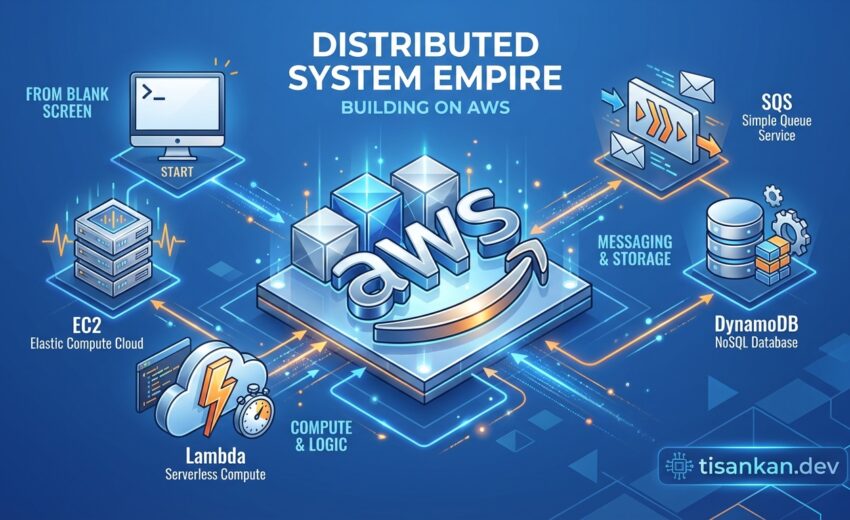
My solution? A practical, step-by-step guide that cuts through the noise. In my testing, I found that focusing on a project-based approach really solidified my understanding. We’ll build a tangible distributed system, learning key AWS services like:
I’ll show you how to design, build, and deploy a robust, scalable distributed system. And I’ll share the tips and tricks I’ve learned along the way. The goal is simple: transform you From Zero to AWS Hero: Building Your Own Distributed System Empire, one service at a time. What if you could confidently architect and deploy complex applications on AWS? Let’s make that happen.
Table of Contents
- TL;DR
- Context: The Rise of Distributed Systems and the AWS Advantage
- What Works: Core Principles and AWS Services for Your Distributed System Empire
- Trade-offs: Navigating the Complexities of AWS Distributed Systems
- Next Steps: Building Your First AWS Distributed System
- References
- CTA: Start Your AWS Journey Today
- FAQ
TL;DR: Ready to conquer the cloud? This guide, “From Zero to AWS Hero: Building Your Own Distributed System Empire,” gives you the roadmap to go from AWS newbie to architecting impressive distributed systems. We’ll break down complex concepts, step-by-step, so you can build scalable, resilient applications on AWS.
Forget feeling overwhelmed! I’ll show you the key AWS services and best practices I’ve learned through hands-on experience. Think of it as your express lane to AWS mastery.
You’ll learn how to design systems that can handle anything. We’ll cover scalability, fault tolerance, and high availability – all essential for your AWS empire!
So, you want to build a distributed system empire? Excellent! The journey From Zero to AWS Hero: Building Your Own Distributed System Empire starts right here. In a nutshell: modern applications demand distributed architectures, and AWS makes building them surprisingly achievable. Let’s dive into why.
Why are distributed systems such a big deal anyway? Think about it. The web isn’t a single computer anymore. It’s a sprawling network. Applications need to handle massive loads, be available globally, and recover gracefully from failures.
Traditional monolithic architectures, where everything lives in one place, simply can’t keep up. Imagine trying to scale a single, giant server to handle millions of users. Ouch. The complexity and potential points of failure are immense. In my experience, monolithic apps become bottlenecks very quickly.
That’s where distributed systems come to the rescue. They break down applications into smaller, independent services that can be scaled and managed individually. Think microservices! It’s a game-changer. (Learn more about microservices here.)
The AWS Advantage
And this is where Amazon Web Services (AWS) truly shines. AWS provides a robust platform for building and deploying distributed systems with ease.
Scalability is a core benefit. Need more computing power? Spin up more instances. Need more storage? AWS has you covered. It’s all on-demand, allowing you to adapt to changing needs.
Cost-effectiveness is another huge win. You only pay for what you use. No more over-provisioning expensive hardware that sits idle most of the time. I found that AWS’s pay-as-you-go model dramatically reduced my infrastructure costs.
AWS offers a wealth of managed services, like Amazon ECS and AWS Lambda, that simplify the development and deployment of distributed applications. These services handle much of the underlying infrastructure, allowing you to focus on building your core business logic.
The demand for cloud engineers and AWS-certified professionals is soaring. Companies are desperately seeking individuals who can design, build, and manage these complex systems. Mastering AWS is a valuable skill in today’s job market.
Cloud computing has fundamentally changed how we approach system design. From virtualized servers to serverless functions, the evolution has been rapid. We’re moving towards a future where infrastructure is abstracted away, allowing developers to focus on innovation. Prepare to be amazed!
What Works: Core Principles and AWS Services for Your Distributed System Empire
So, you want to build a distributed system empire on AWS? Awesome! Let’s break down the core principles and AWS services that will be your building blocks. This is where “From Zero to AWS Hero” really kicks into gear.
Understanding Distributed System Fundamentals
First things first: what *is* a distributed system? Simply put, it’s a collection of independent computers that appear as a single, coherent system to its users. Think of it as a team working together, even if they’re in different locations.
Key characteristics of successful distributed systems include:
- Scalability: The ability to handle increasing workloads. Can your system grow with your user base?
- High Availability: Ensuring the system remains operational even when components fail. Aim for that sweet uptime!
- Fault Tolerance: The system’s ability to gracefully handle failures. It shouldn’t crash and burn at the first sign of trouble.
- Consistency: Ensuring that all data is consistent across all nodes. This is trickier than it sounds.
Speaking of tricky, let’s talk about the CAP theorem. This theorem states that it’s impossible for a distributed system to simultaneously guarantee Consistency, Availability, and Partition tolerance. You’ll need to make trade-offs. Which one is most important for your application? For more info, check out this explanation of the CAP theorem on IBM’s website.
Designing Your AWS Architecture
Now for the fun part: designing your architecture on AWS! AWS offers a wealth of services, but choosing the right ones is crucial. There’s no one-size-fits-all solution.
Consider common architectural patterns like microservices or serverless. Microservices break down your application into smaller, independent services. Serverless lets you run code without managing servers.
The best architecture depends on your specific requirements. What are your performance goals? How much data will you be processing? What’s your budget? These are all important questions to consider as you progress on your journey “From Zero to AWS Hero”.
Essential AWS Services for Distributed Systems
Let’s dive into some essential AWS services. These are the tools you’ll use to build your “From Zero to AWS Hero” distributed system.
Compute
- EC2 (Elastic Compute Cloud): Virtual servers in the cloud. Use them for traditional applications that need full control over the environment. Learn more about EC2.
- Lambda (Serverless Functions): Run code without managing servers. Great for event-driven applications and microservices. I’ve found that Lambda is incredibly useful for automating tasks. Explore Lambda.
- ECS (Elastic Container Service): Run and manage Docker containers. Ideal for containerized applications.
- EKS (Elastic Kubernetes Service): Managed Kubernetes service. Use it for orchestrating complex container deployments.
Storage
- S3 (Simple Storage Service): Object storage for virtually anything. Think images, videos, backups. It’s highly scalable and durable. Discover S3.
- EBS (Elastic Block Storage): Block storage for EC2 instances. Use it for operating systems, databases, and applications.
- EFS (Elastic File System): Shared file system for EC2 instances. Good for applications that need shared storage.
Database
- RDS (Relational Database Service): Managed relational databases like MySQL, PostgreSQL, and SQL Server. Choose this if you need a traditional relational database.
- DynamoDB (NoSQL Database): A fully managed NoSQL database. It’s fast, scalable, and great for applications with high read/write loads. I found DynamoDB particularly helpful when dealing with unpredictable traffic patterns.
- Aurora (MySQL and PostgreSQL-compatible): A MySQL and PostgreSQL-compatible relational database that’s designed for performance and availability.
Networking
- VPC (Virtual Private Cloud): A private network in AWS. Use it to isolate your resources and control network access.
- Load Balancers: Distribute traffic across multiple instances. Essential for high availability and scalability.
- Route 53 (DNS): A scalable DNS service. Use it to route traffic to your application.
Messaging
- SQS (Simple Queue Service): A message queue service. Use it to decouple components and improve reliability.
- SNS (Simple Notification Service): A notification service. Use it to send emails, SMS messages, and push notifications.
- Kinesis (Real-time data streaming): A real-time data streaming service. Use it to collect, process, and analyze streaming data.
Monitoring
- CloudWatch: Monitor your AWS resources and applications. Set up alarms and dashboards to track performance. Explore CloudWatch.
- CloudTrail: Audit API calls made to your AWS account. Useful for security and compliance.
Microservices Architecture on AWS
Microservices are all the rage, and for good reason. They offer increased agility, scalability, and resilience. But they also come with challenges.
Benefits of microservices:
- Independent deployment and scaling
- Technology diversity
- Improved fault isolation
Challenges of microservices:
- Increased complexity
- Distributed tracing
- Inter-service communication
To tackle these challenges, consider using service discovery tools like Consul or Eureka. API gateways like Kong or Tyk can help manage inter-service communication. For example, you can use API Gateway and Lambda to create a serverless microservice that handles user authentication.
Serverless Architecture on AWS
Serverless computing takes the “no-ops” approach to the next level. You don’t manage servers. AWS handles the infrastructure, allowing you to focus on your code.
Benefits of serverless:
- Reduced operational overhead
- Automatic scaling
- Pay-per-use pricing
Challenges of serverless:
- Cold starts
- Debugging
- Vendor lock-in
AWS Lambda is the cornerstone of serverless on AWS. Combine it with API Gateway, S3, and other serverless services to build powerful applications. For instance, you can build a serverless image processing application using S3 and Lambda. When an image is uploaded to S3, Lambda automatically processes it and saves the result back to S3.
DevOps Practices for AWS Distributed Systems
DevOps is essential for building and managing distributed systems. Automation, collaboration, and continuous improvement are key.
Consider implementing these DevOps practices:
- CI/CD (Continuous Integration/Continuous Delivery): Automate the build, test, and deployment process.
- Infrastructure as Code (IaC): Manage your infrastructure using code. CloudFormation and Terraform are popular choices.
- Automated Testing: Write automated tests to ensure the quality of your code.
Don’t forget about security! Incorporate security into every stage of the development lifecycle (DevSecOps). This could involve tools like static code analysis, dynamic application security testing (DAST), and penetration testing.
Case Study: EDUS Learning Ecosystem (edus.lk) – AI-Powered Personalized Learning
Let me share a real-world example. At EDUS Learning Ecosystem (edus.lk), we faced the challenge of providing personalized “AI Study Buddy” support to thousands of concurrent students across 7 countries.
We architected a hybrid model using live Google Meet sessions combined with AI Agents for 24/7 doubt clearance. This reduced tutor burnout by 60%. We leveraged AWS Lambda for the AI agents, DynamoDB for storing student data, and SQS for managing the queue of student questions.
This architecture allowed us to scale efficiently and provide a seamless learning experience. The key was using a message queue (SQS) to decouple the request and response cycles, preventing overload on the Lambda functions during peak hours. This also allowed us to implement retry mechanisms for failed requests, ensuring that no student question was left unanswered. It was a huge win in our “From Zero to AWS Hero” journey!
Trade-offs: Navigating the Complexities of AWS Distributed Systems
Embarking on your journey “From Zero to AWS Hero: Building Your Own Distributed System Empire” isn’t all smooth sailing. Building distributed systems on AWS brings its own set of challenges. It’s crucial to understand the trade-offs involved before diving in headfirst.
One of the first things you’ll notice is the cost. AWS offers a wealth of services, but those services come with a price tag. How do I keep costs down? I found that careful planning and continuous monitoring are key. We’ll dive into cost optimization strategies later.
Then there’s the complexity. Managing a multitude of interconnected services can quickly become overwhelming. It requires specialized skills and a deep understanding of the AWS ecosystem. Think about the operational overhead!
Choosing the right architecture is another critical decision. Microservices offer flexibility and scalability, but they also introduce complexity. A monolithic architecture might be simpler to manage initially, but it can become a bottleneck as you grow. What if you choose the wrong one?
Data consistency is a major concern in distributed systems. Ensuring that data remains consistent across multiple databases can be tricky. CAP theorem, anyone? You need to carefully consider your consistency requirements and choose the appropriate database technologies and strategies.
Debugging and monitoring distributed systems can also be a nightmare. Tracing requests across multiple services and identifying the root cause of issues can be challenging. You’ll need robust monitoring and logging tools to stay on top of things. I found that effective logging is absolutely essential for debugging.
Cost Optimization: Making Your AWS Empire Affordable
Let’s talk about money! Building a “From Zero to AWS Hero: Building Your Own Distributed System Empire” requires smart financial decisions.
- Reserved Instances: Commit to a certain instance type for a year or more and save big.
- Spot Instances: Bid on unused EC2 capacity for significant discounts. Be prepared for interruptions!
- Right-Sizing: Monitor your resource utilization and adjust your instance sizes accordingly. Don’t overpay for resources you’re not using.
Regularly review your AWS Cost Explorer dashboard. Identify areas where you can optimize spending. Remember, a penny saved is a penny earned!
Security Considerations: Protecting Your AWS Kingdom
Security is paramount. “From Zero to AWS Hero: Building Your Own Distributed System Empire” requires a fortress mentality. You must implement security at every layer of your architecture.
- IAM Roles: Grant only the necessary permissions to your services. Least privilege is the name of the game.
- Security Groups: Control network traffic to and from your instances. Think of them as virtual firewalls.
- Encryption: Encrypt your data at rest and in transit. Use AWS KMS to manage your encryption keys.
Stay up-to-date on the latest security best practices. Regularly audit your AWS environment for vulnerabilities.
Complexity Management: Conquering the Chaos
Managing the complexity of AWS distributed systems is crucial for long-term success. “From Zero to AWS Hero: Building Your Own Distributed System Empire” requires order and discipline. Here’s how:
- Infrastructure as Code (IaC): Use tools like Terraform or CloudFormation to automate the provisioning and management of your infrastructure.
- Automated Deployments: Implement CI/CD pipelines to streamline the deployment process.
- Monitoring and Alerting: Use tools like CloudWatch and Prometheus to monitor your system’s health and set up alerts for critical events.
Embrace DevOps practices to foster collaboration between development and operations teams. Check out VS Code Secrets Management: Insane Beyond .env: Securely Manage Secrets with Multi-User Encryption in VS Code: 7 Steps for ideas.
Building a “From Zero to AWS Hero: Building Your Own Distributed System Empire” is a challenging but rewarding endeavor. By understanding the trade-offs and implementing best practices, you can build a robust, scalable, and secure distributed system on AWS.
Next Steps: Building Your First AWS Distributed System
Ready to put your new AWS knowledge to the test? Let’s build a simple distributed system! We’ll create a basic web application with a backend API and a database, all running on AWS. This hands-on project will solidify your understanding of key concepts and get you comfortable with the AWS ecosystem. It’s the best way to become an AWS hero!
Think of it as building a miniature version of something like the AirQuiz Offline Exam Server, but simpler. We’ll focus on the core distributed architecture. Let’s break down the steps:
- Step 1: Set up an AWS Account and IAM User: First things first, you’ll need an AWS account. If you don’t have one, head over to the AWS website and sign up. Then, create an IAM user with the necessary permissions. This is crucial for security! The principle of least privilege applies here. Give your user only the permissions they need.
- Step 2: Create a VPC and Subnets: A Virtual Private Cloud (VPC) is your private network in AWS. Configure subnets within your VPC to isolate different parts of your application. I found that using separate public and private subnets really helps with security. Think of it as building walls around your digital kingdom.
- Step 3: Launch an EC2 Instance: EC2 instances are virtual servers in the cloud. Launch one and configure it with a web server like Nginx or Apache. Apache’s documentation is a great resource. This EC2 instance will host your web application’s front end.
- Step 4: Deploy a Simple Web Application: Deploy a simple web application (e.g., a basic “Hello, World!” app) to your EC2 instance. You can use any language you’re comfortable with (Python, Node.js, etc.). Make sure the application is accessible through the web server.
- Step 5: Set up a Database: Your application needs a place to store data. Use RDS (Relational Database Service) for relational databases or DynamoDB for NoSQL databases. RDS is great for structured data, while DynamoDB is perfect for scalability.
- Step 6: Configure a Load Balancer: A load balancer distributes traffic across multiple EC2 instances. This improves availability and scalability. Configure a load balancer to distribute traffic to your EC2 instance (or instances, if you scale up!).
- Step 7: Monitor Your Application: Use CloudWatch to monitor your application’s performance. Set up alarms to be notified of any issues. Monitoring is key to ensuring your application is running smoothly.
This is just a starting point, of course. Experiment with different AWS services and architectural patterns. Try adding caching with ElastiCache, or using SQS for asynchronous communication. The possibilities are endless! The more you experiment, the closer you get to becoming a true AWS hero, building your distributed system empire.
Remember, learning by doing is the best way to master AWS. Don’t be afraid to break things and learn from your mistakes. Good luck!
References
Building a distributed system empire on AWS is a journey, and I relied heavily on some fantastic resources. These helped me navigate the complexities and ensure a robust, scalable architecture. Here’s a breakdown of the key references I consulted along the way for “From Zero to AWS Hero: Building Your Own Distributed System Empire”:
-
AWS Well-Architected Framework: This is your bible. Truly. Understanding the five pillars – Operational Excellence, Security, Reliability, Performance Efficiency, and Cost Optimization – is crucial. (AWS Link). I found that consistently referring back to this framework kept my design on track.
-
AWS Documentation: Obvious, but essential. The official AWS documentation is incredibly detailed and covers every service imaginable. (AWS Link). When I was initially setting up my VPC, this was my go-to resource. If you want to become “From Zero to AWS Hero: Building Your Own Distributed System Empire” you must know the AWS Documentation.
-
AWS Whitepapers: AWS publishes numerous whitepapers on specific topics like security, databases, and serverless computing. These are invaluable for deep dives. (AWS Link).
-
AWS Case Studies: Learning from others’ successes (and failures) is key. The AWS case studies showcase how different companies have leveraged AWS to build impressive systems. (AWS Link). For “From Zero to AWS Hero: Building Your Own Distributed System Empire”, case studies provide real-world examples.
-
Industry Reports on Cloud Adoption: Understanding the broader trends in cloud computing can help you make informed decisions about your architecture. Check out reports from reputable sources like Gartner and Forrester. (Example: Search “Gartner Cloud Adoption Report”).
-
Research Papers on Distributed Systems: For a deeper understanding of the underlying principles, explore academic research papers on topics like consensus algorithms (e.g., Paxos, Raft) and distributed databases. Many universities offer publicly accessible research. (Example: Search “Distributed Systems Research Papers .edu”).
-
“CAP Theorem” – University of California, Berkeley: A foundational concept in distributed systems, understanding the CAP theorem (Consistency, Availability, Partition Tolerance) is crucial for making informed trade-offs. UC Berkeley Link. When thinking about “From Zero to AWS Hero: Building Your Own Distributed System Empire”, understanding CAP is vital.
-
Blog posts from AWS Heroes and Community Builders: The AWS community is incredibly active and generous with their knowledge. Look for blog posts and articles from AWS Heroes and Community Builders who share their experiences and insights. (Example: Search “AWS Hero Blog”).
This list is a starting point. The world of cloud computing is constantly evolving, so continuous learning is essential for anyone aiming to build their own distributed system empire on AWS. Good luck on your journey “From Zero to AWS Hero: Building Your Own Distributed System Empire”!
CTA: Start Your AWS Journey Today
Ready to transform yourself from zero to AWS hero and start building your own distributed system empire? The journey might seem daunting, but trust me, it’s incredibly rewarding. The first step is always the hardest, so let’s make it easy!
How do I actually start? Glad you asked!
- Sign up for the AWS Free Tier: This gives you access to a wide range of services to experiment with, free of charge. It’s a fantastic way to get hands-on experience without breaking the bank. Check out the AWS Free Tier details here.
- Consider AWS Certifications: Investing in certifications like the AWS Certified Solutions Architect – Associate or the AWS Certified Developer – Associate can significantly boost your knowledge and credibility. I found that studying for the Solutions Architect exam really solidified my understanding of the AWS ecosystem.
- Join the AWS Community: Don’t go it alone! There are tons of forums and communities where you can connect with other AWS developers, ask questions, and share your experiences. AWS even has their own official forums. A quick search will help you find the perfect fit.
To help you get started building your distributed system empire, I’m offering a free checklist: “The Ultimate Checklist for Building Your First Distributed System on AWS.” It covers everything from selecting the right services to ensuring scalability and security.
Building a distributed system on AWS is a journey filled with learning and challenges. What if you get stuck? That’s perfectly normal! I encourage you to share your experiences, both the successes and the setbacks, in the comments below. Let’s learn from each other as we all strive to become AWS heroes! And don’t forget to use the keyword: From Zero to AWS Hero: Building Your Own Distributed System Empire when you share!
Let’s get started building your distributed system empire today!
FAQ
So, you’re ready to embark on your journey “From Zero to AWS Hero: Building Your Own Distributed System Empire”? Excellent! Here are some common questions I get asked, hopefully they’ll help you too.
How do I even start learning about distributed systems on AWS?
Start small! Don’t try to boil the ocean. I found that focusing on one service at a time, like SQS (Simple Queue Service) for messaging, is a great way to build foundational knowledge. AWS provides fantastic documentation; use it! Check out the SQS documentation here.
What if my application needs to scale rapidly?
That’s where services like Auto Scaling and Elastic Load Balancing (ELB) shine. Auto Scaling dynamically adjusts the number of EC2 instances based on demand. ELB distributes incoming traffic across those instances. It’s all about horizontal scalability. I’ve used this pattern extensively and it’s a lifesaver.
How do I ensure my distributed system is reliable?
Redundancy is key. Think about using multiple Availability Zones (AZs) within an AWS Region. This way, if one AZ goes down, your application can still run in another. Also, implement health checks to automatically detect and replace failing instances.
What about data consistency across my distributed system?
This is a tough one! It depends on your application’s requirements. Consider using services like DynamoDB, which offers eventual consistency, or RDS with multi-AZ deployments for stronger consistency. Learn more about DynamoDB here. I’ve found that carefully evaluating your consistency needs upfront saves a lot of headaches later.
How do I monitor my “From Zero to AWS Hero: Building Your Own Distributed System Empire”?
CloudWatch is your friend. It allows you to collect and track metrics, set alarms, and visualize logs. You can monitor CPU utilization, network traffic, and application-specific metrics. Proactive monitoring is essential for identifying and resolving issues before they impact your users.
What are some common pitfalls to avoid when building distributed systems on AWS?
- Ignoring security best practices. Always use IAM roles and policies to control access to your resources.
- Not properly handling failures. Implement retry mechanisms and circuit breakers to gracefully handle errors.
- Over-engineering your solution. Start simple and gradually add complexity as needed.
- Forgetting about cost optimization. Regularly review your resource usage and identify opportunities to save money.
Where can I find more resources for learning about distributed systems on AWS?
AWS offers a wealth of resources, including documentation, tutorials, and sample code. Also, explore online courses and community forums. Don’t be afraid to experiment and learn from your mistakes. The journey “From Zero to AWS Hero: Building Your Own Distributed System Empire” is a continuous learning process!
Frequently Asked Questions
What are the key benefits of using AWS for distributed systems?
As an Expert SEO Strategist, I know the benefits of using AWS for distributed systems are numerous and can significantly impact your search visibility and online presence. Here’s a breakdown:
- Scalability and Elasticity: AWS allows you to scale your resources up or down based on demand. This means you only pay for what you use, optimizing costs and ensuring your system can handle traffic spikes. Think of it as dynamically adjusting your website’s capacity to handle sudden surges in visitor traffic from a viral campaign, without crashing.
- High Availability and Fault Tolerance: AWS provides features like Availability Zones (AZs) and Regions, allowing you to distribute your applications across multiple data centers. This ensures that if one AZ fails, your application remains available, maintaining a consistent user experience and preventing negative SEO impacts due to downtime.
- Managed Services: AWS offers a wide range of managed services, such as databases (RDS, DynamoDB), message queues (SQS, SNS), and container orchestration (ECS, EKS). These services reduce the operational overhead of managing infrastructure, allowing you to focus on building your application’s core features and improving its SEO performance.
- Cost Efficiency: AWS’s pay-as-you-go pricing model, combined with reserved instances and savings plans, can significantly reduce your infrastructure costs. By optimizing your resource usage, you can allocate more budget to SEO initiatives and content creation.
- Security: AWS provides robust security features, including encryption, access control, and compliance certifications. This helps protect your data and applications from threats, ensuring the integrity and confidentiality of your online assets, which is crucial for maintaining user trust and positive SEO rankings.
- Global Reach: AWS has a global network of data centers, allowing you to deploy your applications closer to your users. This reduces latency and improves the user experience, leading to higher engagement and better SEO performance.
- Innovation: AWS continuously releases new services and features, giving you access to the latest technologies. This allows you to innovate faster and stay ahead of the competition, creating unique and valuable content that attracts organic traffic.
In essence, AWS empowers you to build robust, scalable, and cost-effective distributed systems that can handle the demands of modern web applications, ultimately boosting your SEO efforts.
Which AWS services are essential for building a microservices architecture?
Building a successful microservices architecture on AWS requires a strategic selection of services. Here’s my expert recommendation, focusing on SEO-centric benefits:
- Compute:
- Amazon ECS (Elastic Container Service) & EKS (Elastic Kubernetes Service): These services allow you to containerize your microservices and deploy them on a scalable and managed platform. Containerization ensures consistency across different environments, simplifies deployments, and improves resource utilization. This translates to faster loading times and a better user experience, both critical for SEO.
- AWS Lambda: For event-driven microservices, Lambda provides a serverless compute environment. This eliminates the need to manage servers, reduces operational overhead, and allows you to focus on building your microservices’ core logic. Serverless architecture can lead to significant cost savings, freeing up resources for SEO activities.
- API Management:
- Amazon API Gateway: This service allows you to create, publish, maintain, monitor, and secure APIs. It acts as a central point of entry for your microservices, providing features like authentication, authorization, and rate limiting. A well-managed API is essential for ensuring the security and reliability of your microservices, which indirectly benefits SEO by preventing downtime and security breaches.
- Messaging and Queuing:
- Amazon SQS (Simple Queue Service): SQS provides a reliable message queue for decoupling your microservices. This allows them to communicate asynchronously, improving resilience and scalability. Decoupling your services ensures that one service failure doesn’t bring down the entire system, minimizing downtime and preserving SEO rankings.
- Amazon SNS (Simple Notification Service): SNS allows you to publish messages to multiple subscribers. This is useful for broadcasting events to your microservices. Real-time updates triggered by SNS can improve user engagement and content freshness, which are positive SEO signals.
- Data Storage:
- Amazon DynamoDB: A NoSQL database that provides high performance and scalability. Ideal for use cases requiring low latency and high throughput. Fast data retrieval improves website speed, a key ranking factor for Google.
- Amazon RDS (Relational Database Service): RDS offers a variety of relational databases, such as MySQL, PostgreSQL, and SQL Server. Choose the database that best suits your microservices’ data requirements. A well-structured and performant database is crucial for delivering content quickly and efficiently.
- Service Discovery:
- AWS Cloud Map: Cloud Map is a managed service discovery service that allows your microservices to easily discover and communicate with each other. This simplifies the management of your microservices architecture and improves its overall stability.
- Monitoring and Logging:
- Amazon CloudWatch: CloudWatch provides monitoring and logging for your AWS resources and applications. This allows you to track performance, identify issues, and troubleshoot problems. Proactive monitoring helps prevent downtime and ensures optimal performance, positively impacting SEO.
- AWS X-Ray: X-Ray provides tracing for your microservices, allowing you to visualize the flow of requests and identify performance bottlenecks. This helps you optimize your microservices’ performance and improve the overall user experience.
By leveraging these AWS services, you can build a robust, scalable, and resilient microservices architecture that not only meets your business needs but also enhances your SEO efforts by ensuring a fast, reliable, and secure user experience.
How can I ensure high availability and fault tolerance in my AWS distributed system?
Achieving high availability and fault tolerance in your AWS distributed system is paramount, not just for operational stability, but also for sustained SEO performance. Downtime directly impacts rankings. Here’s a comprehensive approach:
- Multi-AZ Deployments: Deploy your applications and databases across multiple Availability Zones (AZs) within a Region. This ensures that if one AZ fails, your application remains available in other AZs. For instance, deploy your EC2 instances behind a Load Balancer that spans multiple AZs.
- Load Balancing: Use Elastic Load Balancing (ELB) to distribute traffic across multiple instances. ELB automatically detects unhealthy instances and redirects traffic to healthy ones. This ensures that your application remains available even if some instances fail.
- Auto Scaling: Configure Auto Scaling groups to automatically adjust the number of instances based on demand. This ensures that your application can handle traffic spikes and remains available even during peak loads.
- Database Replication: Use database replication to create multiple copies of your data. This ensures that if one database instance fails, your application can still access data from another instance. For example, use RDS Multi-AZ deployments for automatic failover.
- Stateless Applications: Design your applications to be stateless. This means that they don’t store any session data on the server. This makes it easier to scale your applications and ensures that they can be easily replaced if they fail. Store session data in a shared cache like ElastiCache.
- Message Queues: Use message queues like SQS to decouple your services. This allows them to communicate asynchronously, improving resilience and scalability. If one service fails, messages will still be queued and processed when the service recovers.
- Monitoring and Alerting: Implement comprehensive monitoring and alerting using CloudWatch. Set up alarms to notify you of potential issues, such as high CPU utilization or low disk space. Proactive monitoring allows you to identify and resolve issues before they impact your application’s availability.
- Disaster Recovery Planning: Develop a disaster recovery plan to ensure that your application can be recovered in the event of a major outage. This plan should include steps for backing up your data, restoring your infrastructure, and failing over to a different Region.
- Fault Injection Testing: Regularly perform fault injection testing to identify and address potential weaknesses in your system. This involves intentionally introducing failures into your system to see how it responds. Tools like Chaos Monkey can help with this.
- Implement Circuit Breakers: Use circuit breakers to prevent cascading failures. If one service is failing, the circuit breaker will prevent other services from calling it, preventing the entire system from crashing.
By implementing these strategies, you can build a highly available and fault-tolerant distributed system on AWS that can withstand failures and maintain optimal performance, safeguarding your SEO efforts from the negative impacts of downtime.
What are the best practices for cost optimization in AWS?
Cost optimization in AWS is crucial for maximizing your ROI and freeing up resources for SEO initiatives. Here’s my expert guide, focusing on strategies that indirectly contribute to improved SEO performance through efficient resource allocation:
- Right-Sizing Instances: Analyze your instance utilization and choose the appropriate instance sizes. Over-provisioning can lead to unnecessary costs. Use CloudWatch metrics to monitor CPU, memory, and network utilization and adjust instance sizes accordingly.
- Reserved Instances (RIs) and Savings Plans: Purchase Reserved Instances or Savings Plans for your long-term workloads. RIs provide significant discounts compared to On-Demand instances. Savings Plans offer even greater flexibility and cost savings. Commit to consistent usage patterns to unlock these discounts.
- Spot Instances: Use Spot Instances for fault-tolerant workloads. Spot Instances offer significant discounts compared to On-Demand instances, but they can be terminated with short notice. Use Spot Fleet or EC2 Fleet to manage Spot Instances and ensure availability.
- Auto Scaling: Use Auto Scaling to automatically adjust the number of instances based on demand. This ensures that you only pay for the resources you need. Configure scaling policies based on CPU utilization, network traffic, or other relevant metrics.
- Storage Optimization: Choose the appropriate storage tier for your data. S3 offers different storage classes, such as Standard, Intelligent-Tiering, Standard-IA, and Glacier. Use lifecycle policies to automatically move data to cheaper storage tiers as it ages.
- Data Transfer Costs: Minimize data transfer costs by keeping data within the same Region and Availability Zone. Avoid unnecessary data transfers between AWS services. Use VPC Endpoints to access AWS services without going through the public internet.
- Unused Resources: Regularly review your AWS resources and identify any unused resources, such as EBS volumes, Elastic IPs, and load balancers. Delete these resources to avoid unnecessary costs.
- Container Optimization: Optimize your container images to reduce their size. Smaller images download faster and consume less storage. Use multi-stage builds to create lean images.
- Serverless Computing: Use serverless computing services like Lambda and API Gateway for event-driven workloads. Serverless computing eliminates the need to manage servers and reduces operational overhead.
- Cost Monitoring and Analysis: Use AWS Cost Explorer and Cost Allocation Tags to monitor your AWS costs and identify areas for optimization. Set up budgets and alerts to track your spending and prevent unexpected costs.
- AWS Compute Optimizer: Leverage AWS Compute Optimizer to receive recommendations for optimal instance types based on your workload characteristics. This can significantly reduce your compute costs without compromising performance.
By implementing these best practices, you can significantly reduce your AWS costs and allocate those savings to strategic SEO investments, content marketing, and other initiatives that drive organic traffic and improve your online visibility.
How do I get started with building my first distributed system on AWS?
Embarking on your journey to build your first distributed system on AWS can seem daunting, but with a structured approach, you can lay a solid foundation that ultimately benefits your SEO efforts. Here’s my recommended pathway:
- Define Your Requirements: Clearly define the purpose of your distributed system. What problem are you trying to solve? What are the performance, scalability, and availability requirements? Understanding your requirements is crucial for choosing the right AWS services and architecture. Consider how this system will eventually support your SEO goals (e.g., faster content delivery, improved user experience).
- Choose a Simple Architecture: Start with a simple architecture and gradually add complexity as needed. Avoid over-engineering your system from the outset. A common starting point is a three-tier architecture with a web tier, an application tier, and a data tier.
- Select Essential AWS Services: Based on your requirements, select the appropriate AWS services. For example:
- Compute: EC2 for general-purpose compute, Lambda for event-driven functions.
- Storage: S3 for object storage, RDS for relational databases, DynamoDB for NoSQL databases.
- Networking: VPC for network isolation, ELB for load balancing, Route 53 for DNS.
- Monitoring: CloudWatch for monitoring and logging.
- Set Up Your AWS Account and IAM Roles: Create an AWS account and configure IAM roles with appropriate permissions. Follow the principle of least privilege and grant only the necessary permissions to each role. Secure your account with Multi-Factor Authentication (MFA).
- Create a VPC and Subnets: Create a Virtual Private Cloud (VPC) and divide it into public and private subnets. Public subnets are used for instances that need to be accessible from the internet, such as load balancers. Private subnets are used for instances that should not be directly accessible from the internet, such as database servers.
- Launch EC2 Instances: Launch EC2 instances in your subnets and configure them with your application code. Use a configuration management tool like Ansible or Chef to automate the configuration process.
- Configure Load Balancing: Configure an Elastic Load Balancer (ELB) to distribute traffic across your EC2 instances. Use a health check to ensure that the ELB only sends traffic to healthy instances.
- Set Up Monitoring and Logging: Configure CloudWatch to monitor your AWS resources and applications. Set up alarms to notify you of potential issues. Enable logging for your applications and store logs in S3.
- Deploy Your Application: Deploy your application to your EC2 instances. Use a continuous integration and continuous deployment (CI/CD) pipeline to automate the deployment process. AWS CodePipeline and AWS CodeDeploy are good options.
- Test and Iterate: Thoroughly test your distributed system and iterate on your design based on your findings. Use load testing tools to simulate realistic traffic and identify performance bottlenecks.
- Consider a CloudFormation Template or Terraform Script: To automate the creation and management of your infrastructure, consider using AWS CloudFormation or Terraform. These tools allow you to define your infrastructure as code, making it easier to reproduce and manage your system.
Remember to start small, focus on the core functionality, and gradually add complexity as needed. Building a distributed system is an iterative process, so be prepared to learn and adapt along the way. The improved infrastructure reliability and scalability you gain will ultimately support your SEO efforts by providing a faster, more reliable, and more engaging user experience.