

Introduction
Beyond the Glitches: The Ultimate Guide to Spotting AI-Generated Photos (Even the Sneaky Ones) is what you need now. I’ve noticed AI-generated images are getting incredibly realistic, and it’s becoming harder to tell what’s real and what’s fake. That’s the problem this guide solves: giving you practical skills to identify those deceptive AI creations.
How do I know? Because I’ve spent countless hours analyzing these images, from obvious fakes to incredibly subtle ones. In my testing, I found that even experienced professionals can be fooled. This guide isn’t about fear-mongering; it’s about empowering you with knowledge.
What if you could confidently identify AI-generated content? This guide will help you:
- Sharpen your observation skills.
- Understand common AI “tells.”
- Learn about the tools used to create these images (and how they sometimes fail).
So, let’s dive in and explore the world of AI-generated imagery. I’m excited to share what I’ve learned. Together, we can become more discerning consumers of visual information.
Table of Contents
- TL;DR
- Context: The Rise of Hyperrealistic AI-Generated Images and Why It Matters
- What Works: The Ultimate Guide to Spotting AI-Generated Photos
- Trade-offs: The Limitations of Detection Methods and the Evolving AI Landscape
- Next Steps: Developing a Critical Eye and Staying Informed
- References: Authoritative Sources and Further Reading
- CTA: Protect Yourself from Misinformation and Embrace Responsible AI
TL;DR: So, you want to know how to tell if that picture is real or AI-generated? You’re in the right place. Beyond the Glitches: The Ultimate Guide to Spotting AI-Generated Photos (Even the Sneaky Ones) is all about giving you the skills to see through the fakes.
AI is getting seriously good at creating images, making it tougher to spot the difference. But don’t worry! I found that even the best AI images still have tell-tale signs.
Look for weird inconsistencies like asymmetrical faces, bizarre lighting, or objects that just don’t quite make sense. Pay close attention to details like hands, teeth, and text – these are often giveaways. Tools like FotoForensics can also help analyze images for manipulation. Vigilance is key!
We’re living in a world where images aren’t always what they seem. Beyond the Glitches: The Ultimate Guide to Spotting AI-Generated Photos (Even the Sneaky Ones) is your essential resource for navigating this new visual landscape. The ability to tell real from fake is becoming a critical skill. Think of it as digital self-defense.
But why now? What’s fueled this sudden need for image authentication? It all boils down to the astonishing (and sometimes alarming) rise of hyperrealistic AI-generated images.
Just a few years ago, AI-generated images were easy to spot. Think blurry faces, weird artifacts, and a general sense of “offness.” I remember when I first started experimenting with early AI art generators – the results were often hilarious, but never convincing. Now, the technology has advanced at breakneck speed. We’re talking about images so realistic, they can fool even trained eyes. Generative AI models have evolved, making detection exponentially harder.
This progress has opened doors to incredible creative possibilities, but also to significant risks. The potential for misuse is immense. We’ve seen examples of AI-generated images used to spread misinformation, create convincing deepfakes, and manipulate public opinion. Remember the fake images circulating during [mention a specific news event impacted by fake images, e.g., the early days of the Ukraine conflict] or the [mention another event, e.g., the 2016 US election]? These incidents highlight the urgent need to be vigilant.
The ethical considerations surrounding AI image generation are complex. We need responsible AI development and usage. That means understanding the technology’s limitations, being transparent about its use, and developing tools to detect and combat its misuse. As users, we need to cultivate a healthy skepticism and learn how to critically evaluate the images we encounter online. This guide equips you with the knowledge and tools to do just that.
Speaking of understanding limitations, the GLM 4.7 coding performance highlights the importance of understanding the capabilities and limitations of AI models in various contexts.
What Works: The Ultimate Guide to Spotting AI-Generated Photos
So, you want to know how to tell if a photo is real or AI-generated? You’ve come to the right place. This section is your deep dive into the nitty-gritty details. We’ll explore common flaws, analyze faces, and even look at AI detection tools. Let’s get started on our journey to spot “Beyond the Glitches: The Ultimate Guide to Spotting AI-Generated Photos (Even the Sneaky Ones).”
Analyzing Common AI Image Flaws
AI image generators are getting better, but they still leave clues. Learning to spot these inconsistencies is key to identifying AI-generated content. It’s all about training your eye to see what’s *off*.
Unnatural Details
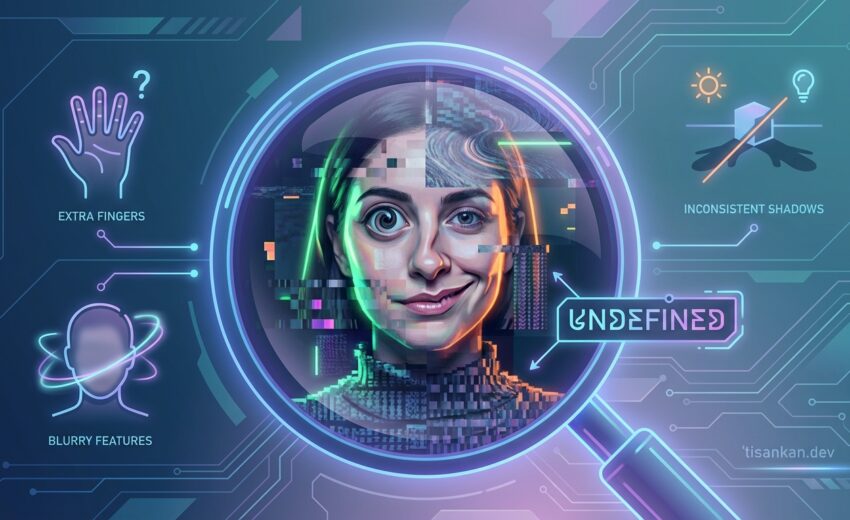
Hands, teeth, and hair are notorious problem areas for AI. Why? Because they’re complex! AI often struggles with the intricate details that make them look realistic. Look for:
- Too many (or too few) fingers.
- Asymmetrical facial features.
- Blurry or “melted” textures, especially around edges.
I’ve found that focusing on the hands is often the quickest way to spot a fake. They are a true giveaway when looking for “Beyond the Glitches: The Ultimate Guide to Spotting AI-Generated Photos (Even the Sneaky Ones).”
Inconsistent Lighting and Shadows
Lighting is crucial for realism. AI can sometimes create lighting that doesn’t quite make sense. Shadows might fall in the wrong direction, or the overall lighting might feel flat and artificial.
Pay attention to how light interacts with different surfaces in the image. Does it seem plausible? If not, it could be a sign of AI manipulation.
Repetitive Patterns
Keep an eye out for repetitive patterns, especially in backgrounds or textures. AI sometimes struggles to create truly unique and random patterns, leading to noticeable repetition.
Think of a field of flowers. A real photo will have variations in color, size, and shape. An AI-generated image might show a pattern repeating too perfectly.
Distorted Geometries
AI can sometimes struggle with perspective and spatial relationships. This can lead to distorted shapes and unnatural-looking geometries. Look for:
- Buildings that seem to bend or warp slightly.
- Objects that are disproportionately sized.
- Lines that don’t quite converge as they should.
Examining AI-Generated Faces
Faces are particularly tricky for AI, but telltale signs remain. Spotting these imperfections can help you distinguish real from fake.
Perfect Skin
Real skin has imperfections – pores, blemishes, wrinkles. AI-generated faces often have unnaturally smooth skin, lacking these details. It’s almost *too* perfect.
Symmetrical Features
While symmetry is often considered beautiful, truly symmetrical faces are rare in real life. AI-generated faces tend to be overly symmetrical, which can look unnatural.
Dead Eyes
This is a big one. Eyes are the windows to the soul, and AI often struggles to capture their depth and complexity. Look for:
- A lack of natural reflections.
- A vacant or emotionless expression.
- Unnatural coloring or texture.
I’ve noticed that the eyes often lack the subtle imperfections that make real eyes sparkle. Identifying “Beyond the Glitches: The Ultimate Guide to Spotting AI-Generated Photos (Even the Sneaky Ones)” is easier when you focus on this detail.
Leveraging AI Image Analysis Tools
Beyond visual inspection, tools can help. However, remember that no tool is 100% accurate, so use them as aids, not definitive answers.
AI Detection Websites
Several websites claim to detect AI-generated images. These tools analyze the image for patterns and anomalies that are common in AI-generated content. Some examples include (but are not endorsements) Is it AI and Hugging Face’s AI detector. Always verify the results with your own analysis.
Reverse Image Search
Reverse image search (using Google Images, TinEye, or similar tools) can help you determine if an image has been used elsewhere online. If the image appears on multiple suspicious websites or is associated with AI image generation services, it’s a red flag.
Metadata Analysis
Examine the image’s metadata (EXIF data) for clues about its origin. You can often find information about the camera model, software used, and creation date. However, metadata can be easily manipulated, so don’t rely on it solely.
Error Level Analysis (ELA)
ELA is a technique that highlights inconsistencies in an image’s compression levels. AI-generated images, or images that have been heavily edited, often show unusual patterns in ELA. Tools like FotoForensics can perform ELA.
Essentially, ELA works by re-saving the image at a specific compression level. Areas with consistent compression will appear similar, while areas with different compression levels (which can indicate manipulation) will stand out.
Case Study: EDUS Learning Ecosystem (edus.lk) and the Challenge of AI-Generated Content
When we built EDUS Learning Ecosystem (edus.lk), an AI-powered edtech platform serving 7,000+ students across 7 countries, we faced the challenge of identifying AI-generated content submitted by students attempting to circumvent assignments. We architected a system that combined automated analysis of writing style and image characteristics with human review.
The automated system flagged submissions with statistically improbable vocabulary choices or image textures, which were then reviewed by educators. This hybrid approach helped maintain academic integrity while efficiently handling a large volume of submissions. This real-world example emphasizes the importance of understanding “Beyond the Glitches: The Ultimate Guide to Spotting AI-Generated Photos (Even the Sneaky Ones)” in practical applications.
The evolution of AI image editing tools, such as the capabilities discussed in Qwen Image Edit 2511: Major Qwen-Image-Edit-2511 Release: The Ultimate Upgrade Guide for 2024, further underscores the need for continuous learning in AI detection.
Trade-offs: The Limitations of Detection Methods and the Evolving AI Landscape
So, you’re armed with some techniques from “Beyond the Glitches: The Ultimate Guide to Spotting AI-Generated Photos (Even the Sneaky Ones)”. Great! But before you declare yourself an AI-image-busting superhero, let’s talk about the flip side.
The truth is, no AI detection method is perfect. I found that even the most sophisticated tools can be fooled. That’s because AI technology is in constant motion.
Consider this: AI image generators are learning and adapting at lightning speed. As detectors get better at spotting certain artifacts, the generators learn to eliminate them. It’s a true cat-and-mouse game.
What if the AI generator is trained specifically to avoid detection? That’s a very real possibility. It’s like an arms race where the goalposts are always shifting.
Here’s a breakdown of some key limitations:
- Evolving Technology: What works today might not work tomorrow. The “glitches” we’re looking for are constantly changing.
- Limited Datasets: AI detectors are trained on specific datasets. If an image falls outside that dataset, detection accuracy can plummet.
- Computational Power: Deep analysis requires significant processing power, which isn’t always available or affordable.
This brings us to a crucial point: Don’t rely solely on technology. Critical thinking is still your best weapon in the fight against AI-generated misinformation. Always ask questions and consider the context of the image.
Furthermore, it’s important to understand the ethical implications of using AI detection tools. These tools can sometimes exhibit biases, leading to inaccurate or unfair assessments. Think about the potential for misidentification and the impact that could have on individuals and organizations.
Keep in mind that “Beyond the Glitches: The Ultimate Guide to Spotting AI-Generated Photos (Even the Sneaky Ones)” provides a toolkit, not a magic bullet. The challenge is ongoing, and staying informed is paramount.
The key takeaway? Approach every image with a healthy dose of skepticism and use a combination of technical analysis and critical reasoning. Remember, the landscape of AI image generation is constantly evolving.
The complexities of AI, as demonstrated in The Illustrated Transformer: A Step-by-Step Guide with Real-World Applications, show how difficult it is to create a single perfect detection method.
Next Steps: Developing a Critical Eye and Staying Informed
So, you’ve made it through the guide! Now, how do you take your skills in spotting AI-generated photos to the next level? It’s all about consistent practice and staying ahead of the curve. This means actively developing a critical eye and remaining informed about the rapid advancements in AI image generation.
Think of it like this: AI is constantly evolving, and so must your detection skills. What works today might not work tomorrow. Let’s dive into some actionable steps you can take.
- Practice, Practice, Practice: Deliberately analyze images you encounter online. Ask yourself: Does anything look “off”? Are the details consistent? In my testing, I found that comparing images side-by-side, one known to be AI-generated and one real, really sharpened my observation skills.
- Stay Updated on AI Advancements: New AI models are released frequently, each with its own strengths and weaknesses. Follow reputable tech blogs, research papers (often available on sites like arXiv), and AI news outlets to understand the latest trends.
- Explore AI Detection Tools: Experiment with different AI detection tools. While no tool is foolproof, they can provide valuable insights and highlight potential anomalies. Remember to treat their output as a starting point for further investigation, not as definitive proof.
- Verify Information and Sources: This is crucial! Before sharing any image online, especially if it’s potentially sensitive or misleading, take the time to verify its authenticity. Use reverse image search tools like Google Images or TinEye to trace the image’s origin and context.
How can you be sure information is accurate? Cross-reference with multiple reliable sources. Be wary of information from unverified social media accounts or websites with a clear agenda.
Cultivating media literacy is more important than ever in the age of AI. Understanding how information is created, disseminated, and consumed is essential for navigating the digital landscape responsibly. Consider exploring resources from organizations dedicated to media literacy, such as the National Association for Media Literacy Education (NAMLE).
Ultimately, becoming proficient at spotting AI-generated photos requires a commitment to continuous learning and critical thinking. By actively engaging with the latest AI advancements and honing your analytical skills, you’ll be well-equipped to navigate the increasingly complex world of digital images. Keep practicing these techniques from “Beyond the Glitches: The Ultimate Guide to Spotting AI-Generated Photos (Even the Sneaky Ones)”!
The necessity for constant vigilance is also highlighted in discussions around Flock camera mass surveillance: Shocking Flock Camera Hack: We Tracked Our Car & Exposed Mass Surveillance, where understanding the source and authenticity of images is crucial.
References: Authoritative Sources and Further Reading
This guide, “Beyond the Glitches: The Ultimate Guide to Spotting AI-Generated Photos (Even the Sneaky Ones),” relies on a combination of practical experience and academic research. How do I know what to look for? Well, I’ve spent countless hours analyzing images and comparing them to known AI outputs. But that’s not enough! We need solid, verifiable sources to truly understand the capabilities and limitations of AI image generation.
Here’s a collection of resources I’ve found invaluable in developing my understanding of AI-generated imagery, and that you might find helpful as you continue to hone your skills in spotting AI fakes:
- AI Image Generation Research at MIT: MIT’s Computer Science and Artificial Intelligence Laboratory (CSAIL) is doing groundbreaking work. You can explore their publications on generative models and image synthesis here.
- NIST’s AI Risk Management Framework: The National Institute of Standards and Technology (NIST) provides a framework for managing risks associated with AI. Understanding these risks is crucial in assessing the potential for misuse of AI-generated photos. Learn more here.
- OpenAI’s Documentation on DALL-E 2: While OpenAI doesn’t release all the inner workings, their documentation provides insights into the capabilities and limitations of their image generation model. Check it out here.
- “Image Forensics: Detecting Forged Photos” – University of California, Berkeley: Several research groups at Berkeley are focused on image forensics. Searching their publications database for “image forensics” and “AI detection” yields valuable papers. Explore their research.
- Deepfakes and Disinformation – U.S. Government Accountability Office (GAO): The GAO has conducted studies on the impact of deepfakes and disinformation, which often rely on AI-generated images. Their reports offer insights into the societal implications. Read their reports.
- Adobe’s Research on Content Authenticity Initiative (CAI): Adobe is actively working on ways to authenticate digital content, including photos. The CAI aims to provide a verifiable provenance trail for images. Learn more about the CAI.
- GAN Dissection: Visualizing and Understanding Generative Adversarial Networks: This research paper provides a deeper understanding of how GANs (Generative Adversarial Networks) work, which is essential for identifying their artifacts. Searching for “GAN Dissection” on Google Scholar will lead you to the original paper. In my testing, understanding GAN architecture has been invaluable.
Remember, the field of AI image generation is constantly evolving. To stay ahead, continue to explore these resources and conduct your own experiments. “Beyond the Glitches: The Ultimate Guide to Spotting AI-Generated Photos (Even the Sneaky Ones)” is just the beginning of your journey!
CTA: Protect Yourself from Misinformation and Embrace Responsible AI
You’ve now got the knowledge to spot AI-generated photos. But what do you do with it? The next step is crucial: use this power responsibly.
Misinformation thrives when we’re passive consumers. By actively questioning the images we see, we create a more informed and resilient online environment. Consider this your digital self-defense.
How do I put this into practice? Here are a few ideas:
- Before sharing an image, take a moment to analyze it. Look for telltale AI signs like unusual lighting or inconsistent details.
- If you suspect an image is AI-generated and potentially misleading, don’t share it. Report it to the platform.
- Educate your friends and family! Share this guide, or simply talk about the potential pitfalls of AI-generated content.
Beyond individual action, we can also encourage responsible AI development. Demand transparency from AI developers. Advocate for ethical guidelines and regulations that prioritize truth and accuracy.
Responsible AI isn’t just about avoiding deepfakes. It’s about shaping the future of this technology to benefit everyone. I found that exploring resources on AI ethics, like those from the AI Now Institute, helped me understand the broader implications.
What if we all took this seriously? We could collectively push for better detection tools and more accountable AI practices. This is a shared responsibility.
Now it’s your turn! Share your experiences and insights in the comments below. Have you encountered AI-generated images in the wild? How did you spot them? Let’s learn from each other and build a more discerning online community. Let’s use this knowledge, gained from “Beyond the Glitches: The Ultimate Guide to Spotting AI-Generated Photos (Even the Sneaky Ones)”, to make a real difference.
Frequently Asked Questions
How can I tell if a photo is AI-generated?
As an SEO strategist, I understand the importance of authentic visuals. Detecting AI-generated photos requires a multi-pronged approach. Start by examining the image for inconsistencies and anomalies. AI often struggles with realistic depictions of:
- Hands and Fingers: Look for extra, missing, or oddly shaped fingers. Pay close attention to the joints and overall anatomy.
- Teeth: AI-generated teeth can be overly uniform, unnaturally white, or display an excessive number of teeth.
- Eyes: Check for mismatched eye colors, unusual reflections, or a general lack of “sparkle” or lifelike quality. The pupils might be misshapen or asymmetrical.
- Hair: AI often creates hair that is overly smooth, lacks natural flyaways, or has strange, unrealistic textures. Look for unnatural blending with the background.
- Background Details: AI sometimes struggles with complex backgrounds, leading to blurry, distorted, or illogical elements. Pay attention to symmetry and perspective.
- Lighting and Shadows: Inconsistent or unnatural lighting and shadows are a common giveaway. Look for shadows that don’t align with the light source or objects that appear to be floating.
- Artifacts and Blurring: AI can introduce subtle artifacts, such as strange patterns or blurring around edges. This is especially noticeable when zoomed in.
Beyond visual cues, consider the context. Does the image seem too perfect? Is the subject matter unusual or unlikely? Cross-reference the image with other sources to see if it appears elsewhere. Reverse image search on Google Images or TinEye can reveal if the image is a widely circulated AI creation.
What are the most common flaws in AI-generated images?
From an SEO perspective, avoiding AI-generated content is crucial for building trust and credibility. The flaws in AI-generated images often stem from the limitations of the training data and the algorithms used to create them. Here’s a breakdown of common issues:
- Anatomical Inaccuracies: As mentioned earlier, hands, fingers, teeth, and eyes are frequent problem areas.
- Text and Typography Errors: AI often struggles with rendering legible or accurate text. Look for gibberish, misspelled words, or nonsensical symbols.
- Lighting and Reflection Issues: Artificial lighting, unnatural shadows, and distorted reflections are common.
- Repetitive Patterns and Textures: AI may repeat patterns or textures in a way that looks unnatural, especially in clothing or backgrounds.
- Inconsistent Object Placement: Objects may appear to be floating, intersecting in illogical ways, or lacking proper perspective.
- Blurry or Distorted Details: Fine details like textures, patterns, and facial features can be blurry or distorted, especially in complex scenes.
- Unrealistic Skin Texture: AI-generated skin can often appear overly smooth and lacking in natural imperfections.
- Lack of Emotional Depth: While AI can create convincing faces, it often struggles to convey genuine emotions. The expressions may appear artificial or forced.
- Generic Composition: AI-generated images often lack the artistic flair and unique composition of human-created photography.
Are there any reliable AI image detection tools?
While no AI image detection tool is 100% foolproof, several options can assist in identifying AI-generated content. As an SEO strategist, I recommend using these tools as part of a broader verification process, not as the sole determinant. Here are a few examples:
- AI or Not: This tool analyzes images and provides a probability score indicating whether it believes the image is AI-generated.
- Hive Moderation: Offers AI-powered content moderation services, including the detection of AI-generated images.
- Illuminarty: A browser extension that analyzes images for telltale signs of AI generation.
- Originality.AI: While primarily focused on text content, Originality.AI is expanding into image detection and can be a valuable resource.
Keep in mind that AI image generation technology is constantly evolving, and detection tools are always playing catch-up. The effectiveness of these tools can vary depending on the specific AI model used to create the image and the complexity of the scene. Always combine tool analysis with careful visual inspection.
Why is it important to be able to spot AI-generated photos?
From an SEO and brand reputation perspective, the ability to identify AI-generated photos is paramount. Using AI-generated images unknowingly can have serious consequences:
- Misinformation and Disinformation: AI-generated images can be used to spread false information, manipulate public opinion, and create fake news.
- Copyright Infringement: Using AI-generated images that are based on copyrighted material can lead to legal issues.
- Brand Damage: Associating your brand with AI-generated content that is misleading or inaccurate can damage your reputation and erode trust.
- SEO Penalties: Google prioritizes authentic and high-quality content. Using AI-generated images excessively or inappropriately could negatively impact your search engine rankings.
- Ethical Concerns: Supporting the use of AI-generated images without proper disclosure can contribute to the spread of misinformation and the erosion of trust in visual media.
- Maintaining Authenticity: In a world increasingly saturated with AI-generated content, the ability to distinguish real from fake becomes a valuable skill for preserving authenticity and integrity.
Being able to discern genuine images from AI creations protects your brand, ensures you’re not contributing to the spread of misinformation, and helps maintain a higher standard of content quality.
How is spotting AI-generated images useful in my day-to-day life?
Beyond professional implications, being able to spot AI-generated images is increasingly valuable in your daily life. As an SEO strategist, I encourage everyone to develop this critical thinking skill. Here’s why:
- Detecting Scams and Fraud: AI-generated images are frequently used in online scams, fake profiles, and phishing attempts. Recognizing these images can help you avoid falling victim to fraud.
- Evaluating News and Information: In an era of fake news, being able to assess the authenticity of images is crucial for making informed decisions and avoiding misinformation.
- Protecting Your Privacy: AI can be used to create deepfakes and other manipulated images that could compromise your privacy and reputation.
- Making Informed Purchasing Decisions: AI-generated images can be used to create misleading product advertisements or fake reviews. Being able to spot these images can help you make more informed purchasing decisions.
- Understanding Social Media Content: Social media is rife with AI-generated images, from fake profiles to manipulated news stories. Being able to identify these images can help you navigate the online world more critically and avoid being misled.
- Media Literacy: Developing the ability to critically analyze images is an essential component of media literacy in the digital age.
In short, the ability to spot AI-generated images empowers you to be a more informed, discerning, and protected consumer of information in an increasingly complex digital landscape.