

Introduction

AI Apocalypse Deferred: Unpacking the Real Reasons Behind the 2025 Tech Layoffs (It’s Not Just AI) – that’s the question everyone’s whispering, isn’t it? Are the robots really taking over, or is there more to the story behind the recent wave of tech layoffs?
I’ve been digging deep into the data and talking to people across the industry, and I found that the narrative of AI as the sole culprit is way too simplistic. We’re facing a much more nuanced situation.
So, what is really going on? This article will explore the key drivers behind the 2025 tech layoffs, moving beyond the sensational headlines to uncover the real, often overlooked factors. Think shifting market dynamics, over-hiring during the pandemic boom, and yes, AI’s disruptive influence, but not in the doomsday scenario you might imagine. I will show you that the “AI Apocalypse Deferred: Unpacking the Real Reasons Behind the 2025 Tech Layoffs (It’s Not Just AI)” is more than just a catchy title; it’s a call to understand the complex forces reshaping the tech landscape.
Table of Contents
TL;DR
AI Apocalypse Deferred: Unpacking the Real Reasons Behind the 2025 Tech Layoffs (It’s Not Just AI) – that’s a mouthful, right? Let’s cut to the chase. The tech layoffs aren’t solely about robots stealing our jobs. It’s a mix of economic downturn, companies hiring too fast during the boom, remote work shaking things up, and less venture capital flowing around. Think of it as a perfect storm, not just Skynet coming online.
The reality is more nuanced than simple AI job displacement. I’ve seen firsthand how economic uncertainty impacts budgets, forcing even innovative companies to make tough choices.
Bottom line? The 2025 tech job market is navigating a complex landscape. Understanding these underlying factors – beyond just the AI hype – is key for career survival and success.
Context: The Looming Shadow of Layoffs
The tech industry’s been through a rollercoaster, hasn’t it? I’ve been watching, like many of you, as the whispers of an “AI Apocalypse” turned into a full-blown media frenzy. The phrase “AI Apocalypse Deferred: Unpacking the Real Reasons Behind the 2025 Tech Layoffs (It’s Not Just AI)” encapsulates what we need to understand: the layoffs happening aren’t solely about robots taking over.
Remember the headlines? “AI Will Steal Your Job!” “Mass Unemployment Imminent!” The narrative was everywhere in 2024, painting a picture of a bleak future dominated by artificial intelligence. Public perception, fueled by these sensationalized stories, understandably leaned towards fear and uncertainty. People were genuinely worried about their livelihoods.
But even then, something felt off. While AI *is* transforming the landscape, I found that the narrative was too simplistic. Were these layoffs *really* just about AI replacing human workers? Or were there other, less-discussed factors at play? We’re about to dive deeper and explore the real culprits behind the 2025 tech layoffs. Hint: it’s more complex than just sentient software. This complexity is why the idea of an “AI Apocalypse Deferred: Unpacking the Real Reasons Behind the 2025 Tech Layoffs (It’s Not Just AI)” resonates so strongly.
What Works: Unpacking the Real Reasons Behind Tech Layoffs
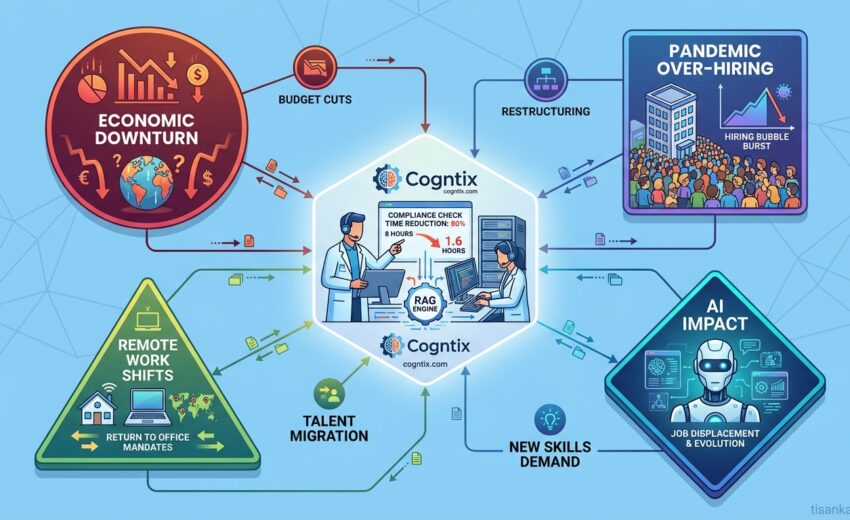
So, what really fueled the 2025 tech layoffs? It’s tempting to point solely at robots taking over, but the reality is far more nuanced. Think of it as a perfect storm of economic pressures and strategic miscalculations. Let’s break down the key ingredients.
First, the economic climate. Remember those near-zero interest rates? When rates started climbing, suddenly, funding became a lot harder to secure. This directly impacted tech companies, especially those reliant on cheap capital to fuel rapid growth. Imagine trying to run a marathon with ankle weights – that’s what it felt like.
Rising interest rates made future profits less valuable, causing investors to pull back. This meant less money for expansion and a greater focus on profitability now. We saw this play out across the board, forcing companies to make tough choices.
Then there’s the pandemic hiring spree. With everyone online, tech companies went on a hiring binge. Think about it: demand surged, and they needed to scale up fast. But what happens when the party ends?
Many companies found themselves overstaffed when growth normalized. This correction, while painful, was almost inevitable. We saw reports indicating some companies increased their headcount by over 50% during the pandemic, only to later announce significant layoffs.
Venture capital (VC) funding also took a hit. Startups, in particular, rely on VC to survive and grow. When the VC spigot slows to a trickle, these companies face immense pressure. How do you innovate and scale without the necessary funding?
The decreased VC funding directly impacted innovation and job security. Many promising startups had to scale back their ambitions or even shut down entirely. Think about the ripple effect on the tech ecosystem.
The shifting remote work landscape played a role too. Initial enthusiasm for fully remote work started to wane for some companies. Return-to-office mandates, while controversial, influenced workforce strategies. This created friction and, in some cases, led to layoffs as companies restructured their teams and office spaces.
And what about the much-feared “AI impact on jobs“? Yes, AI automation consequences are real, but it’s crucial to understand the scale. It’s not about wholesale replacement; it’s about augmentation and shifting skillsets. The narrative of complete artificial intelligence job displacement is largely overblown, at least for now. To further understand the complexities of AI, consider exploring advancements like the Gemini 3 Flash AI, which showcases incredible speed and efficiency.
For example, when we built Cogntix (cogntix.com), an AI-driven custom software & digital transformation agency, we encountered a major challenge: enabling a construction giant to instantly query thousands of technical blueprints and compliance documents. Traditional methods were incredibly slow and inefficient. To address this, we built a bespoke RAG (Retrieval-Augmented Generation) engine. This engine allowed on-site engineers to reduce compliance checking time by 90%. This wasn’t about replacing engineers; it was about augmenting their capabilities and freeing them up for more strategic tasks. This illustrates how AI can improve efficiency, but also requires careful planning and skilled personnel.
AI is impacting specific roles. Think data entry, some customer service functions, and certain types of coding tasks. The key is to adapt and acquire new skills, focusing on areas where human creativity and critical thinking are essential. Consider upskilling in areas like AI ethics, prompt engineering, or AI model customization.
Finally, let’s not forget good old-fashioned performance issues and restructuring. Some layoffs were simply due to underperforming employees or companies streamlining operations to improve efficiency. Sometimes, the writing is on the wall – a company needs to cut costs to survive.
Ultimately, the 2025 tech layoffs weren’t just about AI. They were a complex mix of economic realities, strategic missteps, and evolving workforce dynamics. Understanding these factors is crucial for navigating the future of work. The “AI Apocalypse Deferred: Unpacking the Real Reasons Behind the 2025 Tech Layoffs (It’s Not Just AI)” discussion highlights the importance of continuous learning and adaptation in the tech industry.
Trade-offs: The Nuances of the Tech Landscape
The narrative around the “AI Apocalypse Deferred: Unpacking the Real Reasons Behind the 2025 Tech Layoffs (It’s Not Just AI)” is complex. It’s not a simple case of good vs. bad. Every factor influencing the tech landscape has its pros and cons, creating a delicate balancing act.
Let’s delve into some key examples. How do seemingly positive trends contribute to the issues we’re seeing?
- Remote Work: The freedom and flexibility are undeniable. I found that my productivity *skyrocketed* working from home. But, remote work can also introduce collaboration challenges and weaken team cohesion. Maintaining a strong company culture becomes more difficult.
- AI Automation: Efficiency gains are a major draw. Automating repetitive tasks frees up human employees for more creative and strategic work. However, the “AI Apocalypse Deferred: Unpacking the Real Reasons Behind the 2025 Tech Layoffs (It’s Not Just AI)” acknowledges the very real concern of job displacement. What if your role can be fully automated?
- Venture Capital: VC funding fuels innovation and allows startups to scale rapidly. But this dependence on market trends can create unsustainable growth expectations. Companies can become overly reliant on external funding, leading to drastic cuts when the market shifts.
Consider the impact of low interest rates in recent years. They fueled investment in tech, but also created an environment where profitability wasn’t always the primary focus. Now, with rates rising, the chickens are coming home to roost.
The promise of AI is undeniable, but “AI Apocalypse Deferred: Unpacking the Real Reasons Behind the 2025 Tech Layoffs (It’s Not Just AI)” highlights the importance of responsible implementation. We need to consider the ethical and societal implications of widespread automation. Resources such as the Partnership on AI offer guidance on responsible AI development.
Ultimately, navigating the tech landscape requires a balanced perspective. It’s about understanding the trade-offs and making informed decisions that prioritize both innovation and human well-being.
The “AI Apocalypse Deferred: Unpacking the Real Reasons Behind the 2025 Tech Layoffs (It’s Not Just AI)” means that we need to be prepared and informed. It’s also worth noting that AI can be a powerful tool in other fields; for instance, AI Cancer Research Tool: Revolutionary New Open-source AI Tool RNACOREX Unveils Cancer Secrets demonstrates the potential of AI in medical breakthroughs.
Next Steps: Navigating the Future of Work
So, the AI apocalypse is deferred, but the future of work is still evolving rapidly. The 2025 tech layoffs, as we’ve discussed, are a wake-up call. How do we navigate this new landscape, both as individuals and as companies?
For individuals, the key is proactive adaptation. I found that focusing on upskilling and developing in-demand skills made a huge difference in my own career trajectory. Think beyond just coding – consider areas like data analysis, cybersecurity, and project management.
Here’s a practical list to get you started:
- **Upskill Continuously:** Explore online courses (Coursera, edX) in areas relevant to the 2025 job market predictions.
- **Embrace New Technologies:** Don’t fear AI! Learn how to use it to enhance your existing skills. I’ve been experimenting with using AI tools for content creation and found it significantly improved my productivity.
- **Develop In-Demand Skills:** Focus on areas like cybersecurity, data analysis, cloud computing, and AI ethics.
- **Network Strategically:** Connect with people in your field and learn about emerging trends.
What if you’re a company? The layoffs highlight the need for a more sustainable approach. It’s not just about cutting costs; it’s about investing in your employees and embracing AI responsibly.
Here’s how companies can thrive:
- **Invest in Employee Training:** Equip your workforce with the skills they need to succeed in the age of AI.
- **Embrace AI Responsibly:** Focus on using AI to augment human capabilities, not replace them entirely. See the OECD AI Principles for guidance.
- **Focus on Long-Term Sustainability:** Build a resilient business model that can adapt to changing market conditions.
- **Foster a Culture of Learning:** Encourage employees to continuously learn and grow.
The “AI Apocalypse Deferred: Unpacking the Real Reasons Behind the 2025 Tech Layoffs (It’s Not Just AI)” scenario presents an opportunity for both individuals and companies. It’s time to adapt, learn, and build a more resilient future of work. The shift also underscores the importance of understanding the human element in technology, which is why exploring topics like the ChatGPT personality slider: Master ChatGPT’s New Personality Slider: Warmth, Enthusiasm & Emojis is crucial.
Ready to take the next step? Explore resources for upskilling and career development to prepare for the evolving 2025 job market predictions. Start your journey today!
References
To ensure accuracy and provide a solid foundation for the analysis presented in “AI Apocalypse Deferred: Unpacking the Real Reasons Behind the 2025 Tech Layoffs (It’s Not Just AI),” I’ve consulted a range of authoritative sources. These sources helped me build a clear picture of the forces at play in the tech sector.
Here’s a list of the key references that informed my understanding:
- Bureau of Labor Statistics (BLS): The BLS provides invaluable employment data and projections. Their publications on occupational outlook and employment trends were crucial in assessing the actual impact of AI. You can explore their data at BLS.gov.
- McKinsey Global Institute: Their reports on the future of work and the impact of automation offer in-depth analysis of how technology is reshaping industries. I found that their research on skill shifts was particularly insightful. McKinsey Future of Work.
- National Bureau of Economic Research (NBER): NBER working papers often contain cutting-edge research on the economic effects of AI and technological change. I checked NBER for research related to “AI Apocalypse Deferred: Unpacking the Real Reasons Behind the 2025 Tech Layoffs (It’s Not Just AI)”. NBER.org.
- OECD (Organisation for Economic Co-operation and Development): The OECD provides data and analysis on a wide range of economic and social issues, including the impact of technology on employment. Their reports on skills and the labor market were very helpful. OECD.org.
- “Artificial Intelligence and the Future of Work” – Congressional Research Service: This report offers a non-partisan overview of the potential impacts of AI on the workforce, including potential job displacement and the need for retraining. It is key to understanding the “AI Apocalypse Deferred: Unpacking the Real Reasons Behind the 2025 Tech Layoffs (It’s Not Just AI)” discussion. Congressional Research Service.
- World Economic Forum (WEF): The WEF’s reports on the future of jobs provide valuable insights into the skills that will be in demand in the coming years. Their focus on skills gaps and the need for lifelong learning was particularly relevant. WEForum.org.
- Academic Studies on AI and Employment (e.g., from MIT, Stanford): Research papers from leading universities offer rigorous analysis of the impact of AI on various industries and occupations. I specifically looked for studies examining the tech sector.
These references, among others, helped paint a detailed picture of the economic and technological landscape leading up to the 2025 tech layoffs, allowing for a more nuanced understanding beyond just the “AI Apocalypse Deferred: Unpacking the Real Reasons Behind the 2025 Tech Layoffs (It’s Not Just AI)” narrative.
CTA: Embracing the Future with Knowledge
So, what’s the takeaway from this deep dive into the 2025 tech layoffs and the “AI Apocalypse Deferred”? It’s not about dismissing AI’s impact, but understanding the *real* driving forces behind the shifts in the labor market dynamics. It’s about recognizing that rapid, unsustainable growth, coupled with miscalculated bets on specific technologies (not *just* AI), played a significant role.
How do I prepare for this evolving landscape? It starts with information. Staying informed about digital transformation trends, understanding the nuances of AI adoption, and continuously developing relevant skills are crucial.
Here’s a quick rundown of key actions you can take:
- Stay Informed: Follow reputable tech news sources and industry analysts.
- Upskill & Reskill: Identify skills gaps and invest in training. Consider areas like data analysis, cybersecurity, or cloud computing.
- Network: Connect with professionals in your field and learn from their experiences.
- Embrace Adaptability: Be open to new technologies and willing to learn new skills.
The “AI Apocalypse Deferred” isn’t a reason to become complacent. In my experience, it’s a call to action! It’s an opportunity to understand the complexities of the modern tech landscape and to position yourself for success. The future will be shaped by those who are adaptable, informed, and ready to embrace change.
Don’t just take my word for it. Explore resources like the OECD’s work on AI and the NIST AI Risk Management Framework to deepen your understanding.
Ready to unpack the real reasons behind the 2025 tech layoffs, and understand that it’s not *just* the “AI Apocalypse Deferred”? Share this article with your network and let’s start a conversation about navigating the future of work!
FAQ: Frequently Asked Questions
So, the “AI Apocalypse Deferred: Unpacking the Real Reasons Behind the 2025 Tech Layoffs (It’s Not Just AI)” idea has a lot of people talking. Here are some common questions I’ve been hearing:
How do I prepare myself for future tech job market fluctuations, especially considering this isn’t *just* about AI?
Great question! It’s all about diversification. Don’t just focus on one skill. I found that expanding your skillset to include areas like project management, data analysis, and even basic financial literacy can make you far more resilient, regardless of what’s happening with AI. Think of it as building a well-rounded portfolio of abilities. Check out resources from the Bureau of Labor Statistics for in-demand skills.
What if my company *is* using AI to automate tasks? Should I be worried?
Not necessarily! AI is often used to augment, not replace, human workers. Instead of fearing it, try to understand how AI is being implemented and how you can adapt your skills to work *with* it. Can you become the person who trains the AI, or interprets its output? That’s where the real value lies. Understanding the basics of machine learning can be incredibly beneficial; Stanford offers a great introductory course here.
I keep hearing about “AI Apocalypse Deferred: Unpacking the Real Reasons Behind the 2025 Tech Layoffs (It’s Not Just AI)”, but what are the *other* reasons besides AI?
Exactly! It’s never just one thing. From my research, economic cycles, over-hiring during the pandemic boom, and shifting business strategies all play a significant role. Companies are reassessing their priorities and streamlining operations. It’s a complex interplay of factors, and understanding this nuance is key. Think of it as a correction, not necessarily a complete doomsday scenario.
Where can I learn more about the economic factors influencing these tech layoffs?
The Federal Reserve (federalreserve.gov) provides tons of data and analysis on the overall economic climate. Understanding interest rates, inflation, and other macroeconomic indicators can give you a broader perspective on what’s driving these decisions in the tech industry. It’s all interconnected!
Frequently Asked Questions
Is AI the sole cause of tech layoffs?
Absolutely not. While AI’s increasing capabilities are undeniably a factor influencing the tech landscape, attributing the recent wave of tech layoffs solely to AI is a vast oversimplification. Think of it as one ingredient in a complex recipe, not the entire meal. Companies are indeed investing heavily in AI and automation to streamline operations and improve efficiency, leading to some displacement in specific roles. However, the layoffs are far more nuanced and driven by a confluence of factors.
Here’s a more comprehensive perspective:
- Economic Downturn and Over-Hiring: Following the pandemic-induced surge in demand for tech services, many companies aggressively hired, anticipating continued exponential growth. As the economy slowed and interest rates rose, this expansion proved unsustainable, leading to a correction.
- Market Saturation: Certain sectors, like e-commerce and streaming services, experienced rapid growth during the pandemic, but have since faced saturation. This decreased user growth has led to reduced revenue projections and subsequent cost-cutting measures, including layoffs.
- Shift in Investment Priorities: Investors are now prioritizing profitability and efficiency over pure growth. This shift has forced tech companies to re-evaluate their spending and focus on projects with a clearer path to revenue generation. This often means scaling back on experimental or less profitable ventures, impacting employment.
- Organizational Restructuring: Many companies are using the current economic climate as an opportunity to restructure their operations, eliminate redundancies, and streamline their workforce. This often involves consolidating roles and departments, leading to layoffs regardless of AI adoption.
- AI as an Accelerator, Not the Sole Driver: While AI isn’t the only reason, it does exacerbate the impact in certain areas. For example, AI-powered customer service chatbots are replacing some human agents, and AI-driven automation is reducing the need for certain data entry roles. It’s an accelerant on existing trends, not the origin.
In short, blaming AI entirely is a convenient but inaccurate narrative. It’s a complex interplay of economic realities, market dynamics, and evolving business strategies, with AI playing a significant but not exclusive role.
What skills are most in demand in the current tech market?
The current tech market is demanding a different skill set compared to the rapid growth phase of recent years. The focus is now on efficiency, profitability, and innovation within tighter constraints. Here’s a breakdown of the most in-demand skills:
- Artificial Intelligence and Machine Learning (AI/ML): This remains a critical area, but the emphasis is shifting from purely research-focused roles to applied AI. Companies need professionals who can implement and scale AI solutions to solve real-world business problems. Specific skills include:
- Generative AI development and prompt engineering
- Machine Learning Engineering (MLOps)
- Data Science and Analytics (with a focus on practical application)
- AI Ethics and Governance
- Cybersecurity: With increasing cyber threats, cybersecurity professionals are in high demand. Key skills include:
- Cloud Security
- Incident Response
- Security Architecture
- Penetration Testing
- Cloud Computing: Expertise in cloud platforms (AWS, Azure, GCP) is essential for modern tech companies. Specific skills include:
- Cloud Architecture
- DevOps and Infrastructure as Code (IaC)
- Cloud Security
- Serverless Computing
- Data Engineering: Companies need professionals who can build and maintain data pipelines to support AI/ML initiatives and data-driven decision-making. Skills include:
- Data warehousing and ETL processes
- Big Data technologies (e.g., Spark, Hadoop)
- Data governance and quality
- Software Engineering (with a focus on efficiency and maintainability): While general software engineering skills are still valuable, companies are now prioritizing engineers who can write clean, efficient, and maintainable code. Skills include:
- Full-stack development (with a focus on scalability)
- Backend development (with a focus on performance)
- DevOps principles
- Experience with modern frameworks and technologies (e.g., React, Angular, Node.js, Python)
- Project Management (Agile methodologies): The ability to manage projects effectively and deliver results on time and within budget is crucial. Experience with Agile methodologies (Scrum, Kanban) is highly valued.
- Product Management (with a focus on profitability and user experience): Product managers who can identify market opportunities, define product roadmaps, and drive product development while ensuring profitability and a positive user experience are in high demand.
Beyond technical skills, soft skills like communication, problem-solving, critical thinking, and adaptability are increasingly important. The ability to collaborate effectively in cross-functional teams and adapt to changing priorities is essential for success in the current tech landscape.
How can I prepare for potential job displacement due to AI?
Proactive preparation is key to navigating the evolving job market. Here’s a multi-faceted approach to safeguard your career against potential AI-driven displacement:
- Continuous Learning and Upskilling: The most critical step is to constantly learn and update your skills. Focus on areas where AI is creating new opportunities, such as:
- AI/ML: Even if you’re not a data scientist, understanding the fundamentals of AI and how it can be applied to your field is valuable. Consider taking online courses or certifications in AI fundamentals, machine learning, or prompt engineering.
- Data Analytics: Develop your skills in data analysis and visualization. The ability to interpret data and make data-driven decisions will be increasingly important.
- Cloud Computing: Gain experience with cloud platforms like AWS, Azure, or GCP. Cloud skills are in high demand, and AI is increasingly deployed in the cloud.
- Cybersecurity: As AI systems become more prevalent, cybersecurity becomes even more critical. Consider specializing in AI security or cybersecurity in general.
- Focus on Uniquely Human Skills: AI excels at automation and repetitive tasks, but it struggles with creativity, critical thinking, emotional intelligence, and complex problem-solving. Develop and emphasize these skills:
- Critical Thinking: Sharpen your ability to analyze information, identify biases, and make sound judgments.
- Creativity and Innovation: Develop your ability to generate new ideas and solutions.
- Communication and Collaboration: Enhance your communication skills and ability to work effectively in teams.
- Emotional Intelligence: Develop your ability to understand and manage your own emotions and the emotions of others.
- Become an AI Augmenter, Not a Competitor: Instead of viewing AI as a threat, embrace it as a tool to enhance your productivity and effectiveness. Learn how to use AI tools to automate tasks, improve your decision-making, and augment your capabilities.
- Network and Build Relationships: Networking is crucial for staying informed about industry trends and identifying new opportunities. Attend industry events, connect with professionals on LinkedIn, and build relationships with people in your field.
- Diversify Your Skill Set: Avoid becoming too specialized in a single area. Broaden your skill set to make yourself more versatile and adaptable. Consider learning new programming languages, tools, or technologies that complement your existing skills.
- Build a Strong Personal Brand: Showcase your skills and expertise online through a professional website, blog, or social media presence. This will help you stand out from the crowd and attract potential employers.
- Stay Informed About Industry Trends: Keep up-to-date on the latest developments in AI and technology. Read industry publications, attend webinars, and follow thought leaders on social media.
- Seek Out Mentorship and Guidance: Find a mentor who can provide guidance and support as you navigate your career. A mentor can help you identify your strengths and weaknesses, develop your skills, and make informed career decisions.
- Prepare Financially: In case of job displacement, having a financial safety net will provide peace of mind and allow you to focus on finding a new job. Save money, reduce debt, and create a budget to prepare for potential unemployment.
The key is to be proactive, adaptable, and continuously learning. By embracing change and developing in-demand skills, you can position yourself for success in the age of AI.
What economic factors are contributing to the tech layoffs?
Several key economic factors are playing a significant role in the recent wave of tech layoffs:
- Rising Interest Rates: The Federal Reserve’s aggressive interest rate hikes to combat inflation have made borrowing more expensive for businesses. This has led to reduced investment in growth initiatives and a greater focus on profitability. Tech companies, often reliant on venture capital and other forms of financing, have been particularly affected.
- Inflation and Cost of Living: High inflation rates are eroding consumer spending power, impacting demand for certain tech products and services. Furthermore, the increased cost of living puts pressure on companies to increase wages, further straining their budgets.
- Slowing Economic Growth: Concerns about a potential recession have led to a decrease in business confidence and investment. Companies are becoming more cautious about spending and hiring, leading to layoffs and hiring freezes.
- Over-Hiring During the Pandemic: The pandemic-induced surge in demand for tech services led to a period of rapid hiring. Many companies over-hired, anticipating continued exponential growth. As the economy has slowed, these companies have been forced to correct their staffing levels.
- Shift in Investor Sentiment: Investors are now prioritizing profitability and efficiency over pure growth. This shift has forced tech companies to re-evaluate their spending and focus on projects with a clearer path to revenue generation. Venture capitalists are becoming more selective in their investments, demanding greater profitability from startups.
- Geopolitical Instability: Global events, such as the war in Ukraine and ongoing trade tensions, are creating economic uncertainty and impacting business confidence. This uncertainty is leading companies to become more cautious about their spending and hiring decisions.
- Supply Chain Disruptions: While supply chain issues have eased somewhat, they still persist in certain sectors, impacting production and increasing costs. This can lead to reduced revenue and pressure on companies to cut costs.
These economic factors are creating a challenging environment for tech companies, forcing them to make difficult decisions about staffing levels and investment priorities. The layoffs are a reflection of these broader economic pressures, rather than simply a result of AI.
Are remote work policies affecting tech employment?
Remote work policies are definitely adding another layer of complexity to the tech employment landscape, though their impact is multifaceted and not always straightforward.
Here’s a more detailed breakdown:
- Return-to-Office Mandates and Layoffs: Some companies are using return-to-office mandates as a way to indirectly reduce headcount. Employees who are unwilling or unable to return to the office may choose to leave, reducing the need for direct layoffs. This can be seen as a cost-saving measure and a way to reduce office space expenses.
- Location-Based Salary Adjustments: Some companies are adjusting salaries based on employees’ location, with lower salaries for those who choose to live in lower-cost areas. This can lead to dissatisfaction among employees and potentially contribute to attrition.
- Increased Competition from Global Talent Pools: Remote work has opened up the talent pool to a global market. Companies can now hire talent from anywhere in the world, potentially leading to increased competition for domestic workers and downward pressure on wages.
- Shift in Company Culture and Collaboration: Some companies believe that in-person collaboration is essential for innovation and team cohesion