


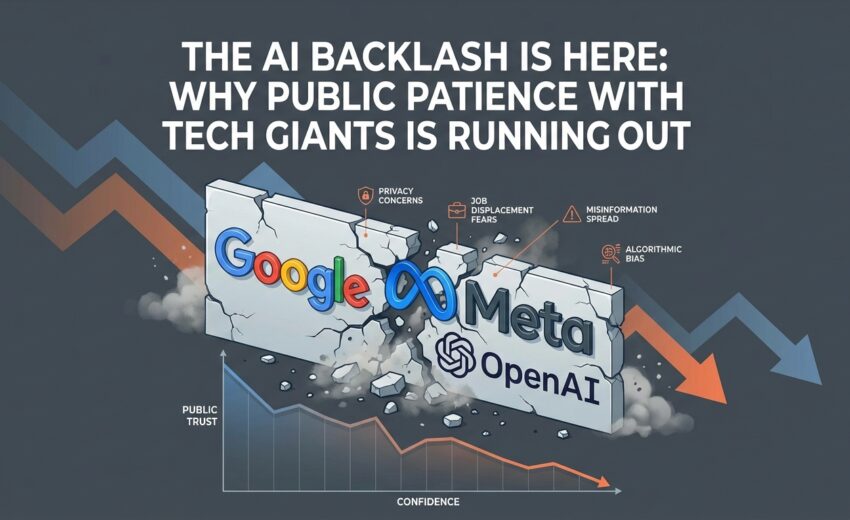
The AI Backlash Is Here: Why Public Patience with Tech Giants Is Running Out. Feeling it? That simmering unease directed at the very companies promising us an AI-powered utopia? As a senior dev who’s seen trends come and go, this feels different. It’s not just Luddites; it’s a widespread questioning of tech’s unchecked power.
- Introduction: The Shifting Sands of Public Opinion
- Data Privacy Concerns: The Unseen Cost of AI
- Algorithmic Bias and Discrimination: When AI Perpetuates Inequality
- Job Displacement Fears: The Automation Anxiety
- Lack of Transparency and Explainability: The Black Box Problem
- Ethical Considerations and the Trolley Problem
- Misinformation and Manipulation: The AI-Powered Propaganda Machine
- Environmental Impact of AI: The Hidden Carbon Footprint
- The Role of Regulation: Can Governments Keep Up?
- Building Trust in AI: A Path Forward
- Case Studies: Examples of AI Backlash
- The Future of AI: Navigating the Backlash
- Conclusion: A Call for Responsible Innovation
- Frequently Asked Questions (FAQ)
Featured Snippet: The AI Backlash Is Here: Why Public Patience with Tech Giants Is Running Out is a growing concern. Data privacy, algorithmic bias, job displacement, lack of transparency, ethical dilemmas, misinformation, and environmental impact are all contributing factors. Public scrutiny is up, and so are calls for AI regulation.
Introduction: The Shifting Sands of Public Opinion Regarding The AI Backlash Is Here: Why Public Patience with Tech Giants Is Running Out
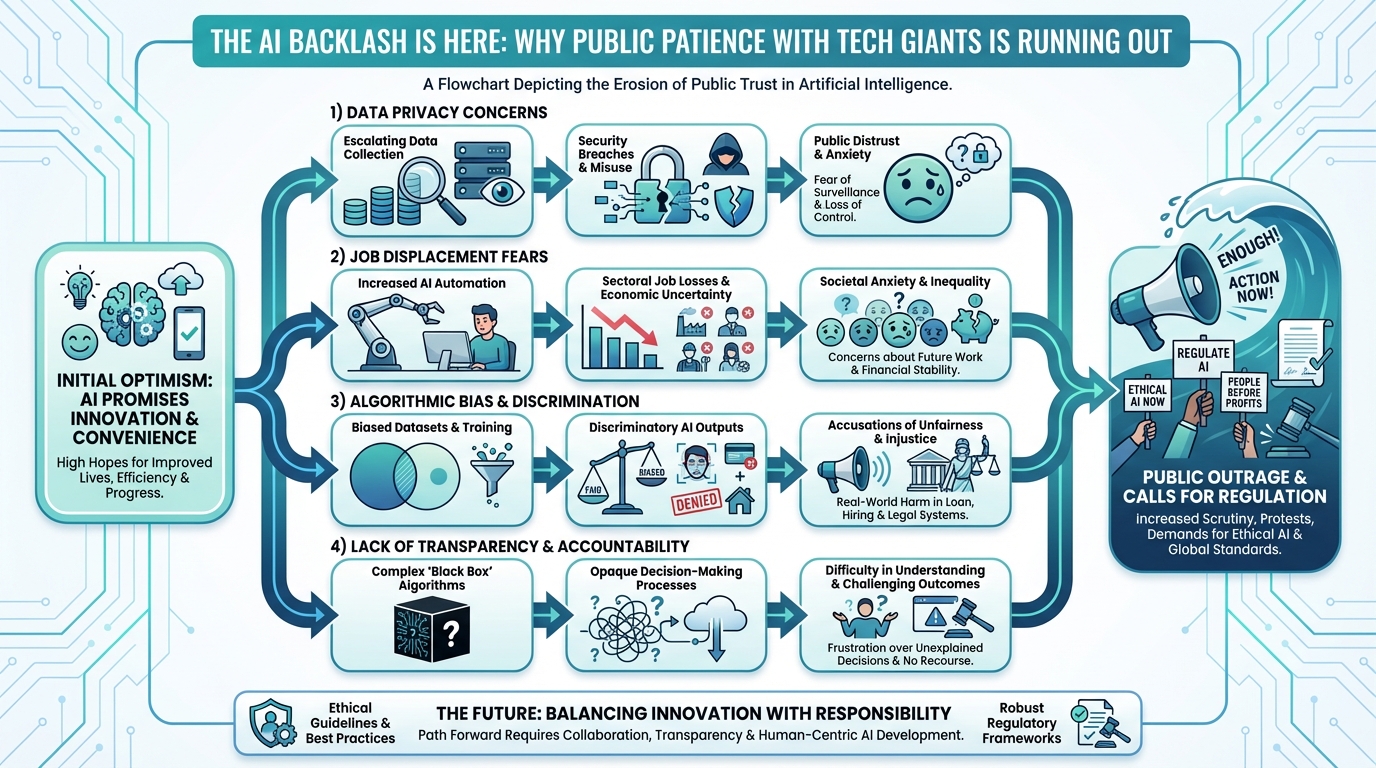
The AI narrative’s flipped. Once hailed as tech’s savior, it’s now viewed with suspicion, even hostility. We’re seeing the dawn of a real backlash, fueled by a perfect storm of discontent that’s brewing for tech giants.
Think about it. We were promised self-driving cars, personalized medicine, and a world without drudgery. Instead, we’re stuck with biased algorithms, privacy breaches, and the feeling that tech’s controlling us, not the other way around. Polling consistently shows declining trust in tech companies, especially with AI.
This isn’t just fear of the unknown; it’s about broken promises, unmet expectations, and a growing awareness of unchecked AI’s potential harms. Understanding these root causes is crucial for anyone developing, deploying, or regulating AI.
Data Privacy Concerns: The Unseen Cost of AI and The AI Backlash Is Here: Why Public Patience with Tech Giants Is Running Out
Data privacy sits at the heart of this AI backlash. AI algorithms, especially in machine learning, need massive datasets to train and function. This data? It often comes from us, the users, without explicit consent or a clear understanding of how it’ll be used.
I remember a project where we collected user data for a recommendation engine. The sheer volume felt…excessive. It raised ethical questions we struggled to answer. That’s a common scenario, and it’s fueling the fire.
The Cambridge Analytica scandal served as a stark reminder of personal data misuse. Wired.com offers a good breakdown. The constant data breaches and privacy violations have eroded public trust, creating the perception that profit matters more than our privacy. This feeling of constant surveillance is a major driver of the backlash.
Algorithmic Bias and Discrimination: When AI Perpetuates Inequality
AI algorithms are only as good as their training data. If that data’s biased, the algorithm will perpetuate and amplify those biases, leading to discriminatory outcomes in hiring, lending, even criminal justice. The AI Backlash Is Here is, in part, a reaction to these unfair, often invisible biases.
Take facial recognition. It’s been shown to be less accurate for people of color, especially women. This can lead to misidentification and wrongful arrests. It’s not just about accuracy; it’s about fairness. If AI systems affect people’s lives, they must be free from bias. This is a critical area where the backlash is justified.
Addressing algorithmic bias requires careful attention to data collection, algorithm design, and ongoing monitoring. It also demands transparency and accountability. We need to understand how these algorithms work and challenge unfair decisions. Speaking of better code, it’s important to build with Clarity Secrets: Build Better with Readable Code in mind, so you can understand and debug issues faster.
Job Displacement Fears: The Automation Anxiety Contributing to The AI Backlash Is Here: Why Public Patience with Tech Giants Is Running Out
Job displacement fears are a significant driver of the AI backlash. As AI and automation get more sophisticated, there’s growing concern they’ll replace human workers across industries. This anxiety is particularly acute in sectors with easily automated routine tasks.
While some argue AI will create new jobs, there’s no guarantee the displaced can access them. Furthermore, these new jobs may require different skills, demanding significant retraining. The potential for widespread unemployment and economic disruption is a major concern, fueling the backlash.
It’s not just blue-collar jobs. AI is increasingly capable of performing tasks once exclusive to white-collar professionals, like data analysis, writing, even medical diagnosis. This creates unease across the workforce. Remember when we thought automation would free us for more creative work? Turns out, it’s just creating more anxiety, contributing to the AI Backlash.
Lack of Transparency and Explainability: The Black Box Problem and The AI Backlash Is Here: Why Public Patience with Tech Giants Is Running Out
Many AI algorithms, especially those based on deep learning, are notoriously opaque. It’s often difficult to understand how they arrive at decisions, even for the developers who created them. This “black box problem” is a major concern and a key driver of the AI backlash.
If we can’t understand how an algorithm works, we can’t be sure it’s making decisions fairly and ethically. This is especially problematic in high-stakes situations like medical diagnosis or criminal justice. We need to audit these algorithms and hold them accountable. This lack of explainability undermines trust and fuels the backlash.
Explainable AI (XAI) aims to develop more transparent algorithms. However, XAI is still in its early stages, and significant challenges remain. The complexity of modern AI systems makes it difficult to create truly explainable models. Until we open the black box, the AI Backlash will continue to grow. You can also look into 7+ Proven Strategies for Tech Pitch for Non-Technical Founders Success in 2025: A Step-by-Step Guide to learn how to explain complex topics in a way that is easier to understand.
Ethical Considerations and the Trolley Problem Fueling The AI Backlash Is Here: Why Public Patience with Tech Giants Is Running Out
AI raises a host of complex ethical questions. The “trolley problem” asks how a self-driving car should respond in a situation where it must choose between harming its passengers or harming pedestrians. There are no easy answers, and the decisions we make will have profound consequences, contributing significantly to the AI Backlash.
The ethical implications extend far beyond self-driving cars. AI is being used to develop autonomous weapons, raising concerns about unintended consequences and the erosion of human control. AI is also creating increasingly sophisticated surveillance systems, raising concerns about privacy and freedom. These vast and complex implications are driving the AI Backlash.
We need a broad societal conversation about the ethical implications of AI, involving technologists, policymakers, ethicists, philosophers, and the general public. We need ethical frameworks that guide AI development and deployment in a way that aligns with our values. It’s not just about what we *can* do, but what we *should* do. And right now, many feel tech companies are ignoring the “should,” which is why The AI Backlash Is Here.
Misinformation and Manipulation: The AI-Powered Propaganda Machine and The AI Backlash Is Here: Why Public Patience with Tech Giants Is Running Out
AI is being used to create increasingly sophisticated forms of misinformation and manipulation. Deepfakes, for example, can create realistic videos of people saying or doing things they never did. These videos can spread false information, damage reputations, and even incite violence. The potential for malicious use is a major concern and a definite contributor to the AI Backlash.
AI is also being used to personalize propaganda and target individuals with tailored messages designed to influence their beliefs and behaviors. This can be particularly effective when combined with data about people’s interests, values, and vulnerabilities. The ability to micro-target individuals with propaganda is a powerful tool, used to spread disinformation and undermine trust in institutions. This erosion of trust is a significant factor in The AI Backlash.
Combating AI-powered misinformation requires a multi-faceted approach, including technologies to detect deepfakes, educating the public about the dangers of misinformation, and holding social media companies accountable. It also requires critical thinking and media literacy. The AI Backlash will only subside when people feel they can trust the information they’re consuming.
Environmental Impact of AI: The Hidden Carbon Footprint and The AI Backlash Is Here: Why Public Patience with Tech Giants Is Running Out
The environmental impact of AI is often overlooked, but it’s a significant concern. Training large AI models requires vast computing power, consuming significant energy. This contributes to greenhouse gas emissions and climate change. The hidden carbon footprint of AI is a growing concern, contributing to the AI Backlash.
The demand for computing power will only increase as AI models get more sophisticated. This means the environmental impact will continue to grow unless we mitigate it. We need more energy-efficient AI algorithms and renewable energy sources to power our data centers. We also need to be mindful of our technology choices. The AI Backlash includes growing awareness of technology’s environmental costs.
It’s not just energy consumption. The production of hardware required for AI, such as GPUs and specialized chips, also has a significant environmental impact. The mining of rare earth minerals used in these devices can cause environmental damage and social disruption. We need to consider the entire lifecycle of AI technologies, from production to disposal, when assessing their environmental impact. Ignoring this adds fuel to The AI Backlash.
The Role of Regulation: Can Governments Keep Up With The AI Backlash Is Here: Why Public Patience with Tech Giants Is Running Out?
The rapid pace of AI development poses a challenge for regulators. Governments are struggling to keep up and develop regulations that are both effective and flexible. The lack of clear regulatory frameworks is creating uncertainty and hindering innovation. The AI Backlash is, in part, a consequence of this regulatory vacuum.
Some argue AI should be left to self-regulation, but this approach has proven ineffective in other industries. Tech companies have a history of prioritizing profits over public safety, and there’s no reason to believe they’ll act differently with AI. Effective regulation is essential to ensure AI is developed and deployed responsibly and ethically. The AI Backlash is unlikely to subside without strong regulatory oversight.
Regulation should focus on areas like data privacy, algorithmic bias, and transparency. It should also address potential job displacement and the misuse of AI for malicious purposes. The EU’s AI Act is a significant step, but it remains to be seen whether it will be effective. Forbes.com provides a good overview. The AI Backlash underscores the need for proactive and comprehensive regulation of AI technologies.
Building Trust in AI: A Path Forward Amidst The AI Backlash Is Here: Why Public Patience with Tech Giants Is Running Out
Overcoming the AI Backlash requires a concerted effort to build trust. This means addressing concerns like data privacy, algorithmic bias, and lack of transparency. It also means engaging in open and honest communication about AI’s potential benefits and risks.
Transparency is key. We need to understand how AI algorithms work and how they’re being used. This requires making algorithms more explainable and providing access to the data they’re trained on. We also need clear lines of accountability so individuals and organizations can be held responsible for AI system decisions. Don’t forget that 7+ Proven Strategies for Minimum Marketable Product (MMP) Success in 2025: Achieving Product-Market Fit Faster with AI and Empathy is a critical factor in building trust, because it will help you deliver products that actually solve real problems and meet user needs.
Ethical considerations must be at the forefront of AI development. We need ethical frameworks that guide the design and deployment of AI systems, based on principles like fairness, accountability, and respect for human rights. We also need to foster a culture of ethical awareness among AI developers and practitioners. The AI Backlash will only subside when people feel AI is being developed and used in a way that aligns with their values.
Case Studies: Examples of AI Backlash and The AI Backlash Is Here: Why Public Patience with Tech Giants Is Running Out
Several real-world examples illustrate the AI Backlash in action:
- Amazon’s Rekognition: The ACLU’s testing revealed inaccuracies in identifying people of color, leading to public outcry and calls for its ban in law enforcement. This highlighted algorithmic bias and fueled the AI Backlash.
- Google’s AI Ethics Team Controversy: The dismissal of Timnit Gebru sparked controversy and accusations of silencing dissenting voices on ethical concerns, further eroding public trust and contributing to the AI Backlash.
- Clearview AI: The use of facial recognition technology that scrapes images from the internet without consent has faced widespread criticism and legal challenges due to privacy concerns and potential for misuse, becoming a prime example of the AI Backlash.
These case studies demonstrate the real-world consequences of unchecked AI development and the importance of addressing ethical concerns. They also highlight the power of public awareness and activism in holding tech companies accountable.
The Future of AI: Navigating The AI Backlash Is Here: Why Public Patience with Tech Giants Is Running Out
The future of AI depends on our ability to navigate the AI Backlash. This requires a shift in mindset, from technological innovation at all costs to responsible and ethical development. We need to prioritize human well-being and societal benefit over short-term profits.
AI has the potential to solve some of the world’s most pressing problems, from climate change to disease. But to realize this potential, we need to address the concerns outlined above and build trust. This requires a collaborative effort involving technologists, policymakers, ethicists, and the general public. We need to create a future where AI is a force for good, not a source of fear and division.
Consider leveraging technologies like Mastering Real-Time Data Updates with WebSocket APIs to provide users with more transparency and control over their data. Real-time updates can show users exactly how their data is being used and allow them to make informed decisions about their privacy. This increased transparency can help to build trust and reduce The AI Backlash.
Conclusion: A Call for Responsible Innovation Regarding The AI Backlash Is Here: Why Public Patience with Tech Giants Is Running Out
The AI Backlash is a wake-up call. The public’s no longer willing to blindly accept tech’s promises without questioning potential harms. It’s a demand for greater transparency, accountability, and ethical responsibility.
As developers, policymakers, and citizens, we have a responsibility to ensure AI benefits humanity. This requires responsible innovation, guided by ethical principles and a deep understanding of the potential consequences. The future of AI depends on it. It’s time to listen to the growing chorus expressing the AI Backlash and take action to build a more trustworthy and equitable AI ecosystem. Also, don’t forget to Mastery Guide: Avoid Route 53 Costs with Free CloudFront
Frequently Asked Questions (FAQ) About The AI Backlash Is Here: Why Public Patience with Tech Giants Is Running Out
- What is The AI Backlash Is Here: Why Public Patience with Tech Giants Is Running Out?
It’s growing public distrust and skepticism towards AI and the tech giants developing it, fueled by concerns over privacy, bias, job displacement, and ethical issues. - What are the main drivers of The AI Backlash Is Here: Why Public Patience with Tech Giants Is Running Out?
Data privacy violations, algorithmic bias, job displacement fears, lack of transparency, ethical concerns, and the spread of misinformation are key. - How can tech companies rebuild trust in AI?
By prioritizing transparency, addressing algorithmic bias, strengthening data privacy protections, and engaging in open communication. - What is the role of regulation in addressing The AI Backlash Is Here: Why Public Patience with Tech Giants Is Running Out?
Effective regulation is essential to ensure AI is developed and deployed responsibly and ethically, addressing concerns like data privacy and algorithmic bias. - What can individuals do to address The AI Backlash Is Here: Why Public Patience with Tech Giants Is Running Out?
Stay informed, advocate for responsible AI, and demand greater transparency and accountability from tech companies. - What is the future of AI in light of The AI Backlash Is Here: Why Public Patience with Tech Giants Is Running Out?
The future of AI depends on addressing the backlash and building trust through responsible innovation and ethical development.