


Introduction
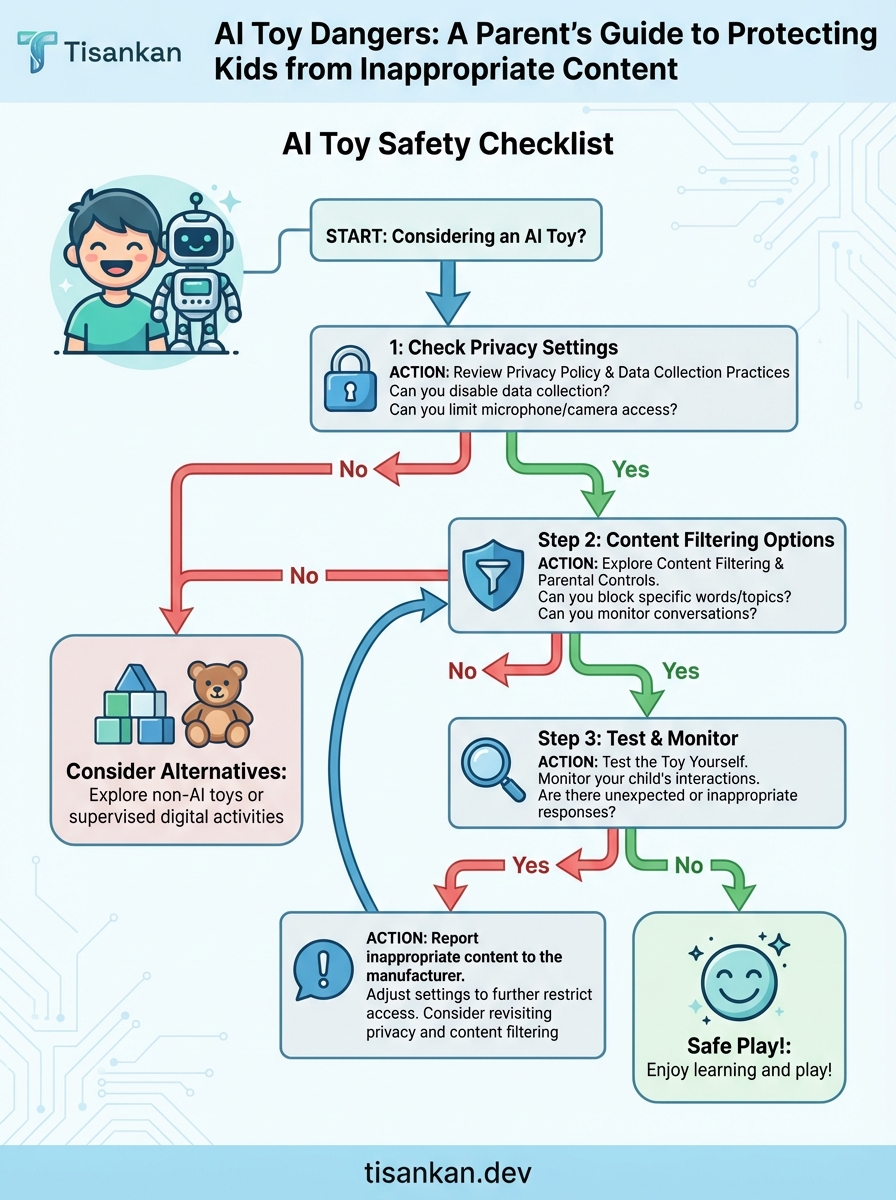
AI Toy Dangers: A Parent’s Guide to Protecting Kids from Inappropriate Content – that’s exactly what I wish I’d had when my niece got her first AI-powered stuffed animal. The promise of educational fun quickly turned into a minefield of questionable information and, frankly, creepy interactions.
How do I navigate this new world of connected toys? That’s the question I wrestled with, and I discovered many parents are facing similar anxieties. The problem is simple: AI toys, while often marketed as educational and safe, can expose children to inappropriate content, data privacy risks, and even manipulative interactions.
In this guide, I’ll share what I’ve learned about identifying potential AI toy dangers and, more importantly, practical steps you can take to protect your kids. I’ll cover everything from understanding data collection practices (check out the FTC’s COPPA rule for more on that!) to setting parental controls and fostering open conversations with your children. My goal is to empower you with the knowledge and tools you need to make informed decisions about AI toys in your home.
Table of Contents
- TL;DR
- Context: The Rise of AI Toys and the Growing Concerns
- What Works: A Comprehensive Guide to Protecting Your Child
- Trade-offs: Balancing Innovation with Child Safety
- Next Steps: Creating a Safe and Secure AI Toy Environment
- References: Authoritative Sources and Further Reading
- CTA: Protect Your Child Today
- FAQ: Frequently Asked Questions About AI Toy Safety
TL;DR
AI Toy Dangers: A Parent’s Guide to Protecting Kids from Inappropriate Content in a nutshell: These seemingly innocent toys come with risks. We’re talking potential data breaches, exposure to content no child should see, and even manipulative interactions. It’s a lot to consider!
The good news? You can take action. I found that actively monitoring your child’s AI toy usage, diving into the privacy settings (here’s a helpful guide to FTC guidelines on children’s online privacy), and teaching kids about safe online behavior are crucial steps.
Bottom line: Awareness and proactive measures are your best defenses. Let’s work together to make sure playtime stays safe and fun.
Context: The Rise of AI Toys and the Growing Concerns
As a parent and tech enthusiast, I’ve been closely following the rise of AI toys. The convenience and potential educational benefits are undeniable. But it’s crucial to acknowledge the risks. This guide, AI Toy Dangers: A Parent’s Guide to Protecting Kids from Inappropriate Content, aims to equip you with the knowledge to navigate this evolving landscape and safeguard your children.
AI-powered toys are becoming increasingly popular. These interactive robots, stuffed animals, and learning devices offer personalized experiences that can be both engaging and educational. They promise to help children learn new languages, develop problem-solving skills, and even provide companionship. To truly understand the context, it’s worth considering the broader implications of AI; for instance, Unmasking AI’s Achilles Heel: 3 Critical Limitations Holding Back Artificial Intelligence provides valuable insights into the technology’s limitations.
However, this growing popularity necessitates heightened awareness. I found that many parents are unaware of the potential dangers lurking within these seemingly harmless toys. These dangers range from data privacy concerns and inappropriate content exposure to potential vulnerabilities that could be exploited by malicious actors.
The convenience and educational value often overshadow the evolving threat landscape. News articles and studies have highlighted incidents involving AI toy vulnerabilities, such as unsecured microphones and cameras, and inadequate data encryption. For example, research has shown how some toys can be easily hacked, allowing strangers to communicate with children or even access personal information. See resources from the Federal Trade Commission (FTC) for more information on children’s online privacy.
Furthermore, the regulatory landscape surrounding AI toys is still developing. Robust regulations are needed to ensure the safety and privacy of children using these devices. The lack of clear guidelines leaves parents largely responsible for assessing and mitigating the risks themselves. This guide will help you do just that. Understanding the competitive landscape of AI development, like the Epic OpenAI vs. Google AI: The Innovation Race – Who Will Dominate the Future?, can also shed light on the driving forces behind these technologies.
What Works: A Comprehensive Guide to Protecting Your Child
Navigating the world of AI toys can feel daunting, but with the right knowledge and strategies, you can significantly reduce the risks. This guide provides actionable steps to protect your child from potential AI toy dangers. Let’s break it down into understanding the risks, preemptive measures, and active monitoring.
Understanding the Risks: Know What You’re Up Against
Before you can protect your child, you need to understand the landscape of potential threats. AI toy dangers aren’t always obvious, so let’s explore the key concerns.
- Data Privacy Concerns: Many AI toys collect and store data, including voice recordings, location data, and personal information. Think about it – every interaction could be recorded. A data breach could expose this sensitive information. You can learn more about data privacy from resources like the FTC’s consumer privacy section.
- Inappropriate Content Exposure: Even with safeguards, AI toys can sometimes deliver inappropriate or harmful content. This could be due to algorithm errors, unexpected responses, or even malicious actors.
- Manipulative Interactions: AI toys are designed to be engaging, but they can also influence children’s behavior and beliefs. Targeted suggestions or persuasive language could subtly shape their opinions.
- Security Vulnerabilities: Hackers can exploit vulnerabilities in AI toys to access personal information or even control the device. Imagine someone remotely accessing your child’s toy.
Preemptive Measures: Stop Problems Before They Start
Prevention is key. Taking these steps *before* your child starts playing can make a huge difference in mitigating AI toy dangers.
- Researching AI Toys Before Purchase: Before buying any AI toy, do your homework! Check for independent reviews, especially those focusing on security and privacy. Look for security certifications, if available. I found that reading user reviews on sites like Amazon and checking for articles on reputable tech blogs helped me identify potential issues early on.
- Checking Privacy Policies and Terms of Service: I know, reading those documents can be a drag! But it’s crucial. Understand what data the toy collects, how it’s stored, and your rights. Pay close attention to sections about data sharing and security measures. The TermsFeed blog has a great comparison of privacy policies and terms of conditions. I find that understanding the legal frameworks, such as those detailed in AI’s Achilles Heel: Unmasking the 3 Critical Limitations Holding Artificial Intelligence Back, helps in evaluating these policies.
- Ensuring Strong Passwords and Network Security: Use strong, unique passwords for the AI toy and your home Wi-Fi network. Enable two-factor authentication whenever possible. A secure network is your first line of defense.
- Keeping Software Updated: Just like your phone or computer, AI toys need regular software updates. These updates often include security patches that address vulnerabilities. Make sure automatic updates are enabled, or check for updates manually on a regular basis.
Active Monitoring and Intervention: Stay Vigilant
Even with the best preventative measures, ongoing monitoring is essential to protect your child from AI toy dangers. It’s about staying engaged and responsive.
- Monitoring Children’s Interactions with AI Toys: Listen to your child’s conversations with the toy. Observe how they interact with it. Are they asking questions that seem unusual or concerning? Are they repeating phrases they learned from the toy that don’t seem appropriate?
- Adjusting Privacy Settings: Most AI toys have privacy settings that allow you to limit data collection and restrict access to certain features. Dive into the settings menu and customize them to your comfort level. For example, you might be able to disable voice recording or location tracking.
- Educating Children About Safe AI Toy Usage: Talk to your children about online safety, data privacy, and responsible AI toy usage in an age-appropriate manner. Explain that they shouldn’t share personal information with the toy and that not everything the toy says is true.
- Reporting Security Vulnerabilities and Inappropriate Content: If you discover a security vulnerability or encounter inappropriate content, report it to the toy manufacturer and relevant authorities. This helps them improve the product and protect other children.
Practical Examples and Scenarios: Real-World Application
Let’s look at some real-world scenarios and how you can address them when it comes to AI toy dangers.
Scenario: Your child’s AI toy starts asking for their address.
Action: Immediately intervene and explain to your child that they should never share personal information with the toy. Adjust the toy’s privacy settings to prevent it from asking for such information again. Contact the manufacturer to report the issue.
Scenario: You notice your child repeating phrases learned from the AI toy that seem inappropriate.
Action: Discuss the meaning of the phrases with your child and explain why they are inappropriate. Adjust the toy’s content filters or disable the feature that is generating the inappropriate content.
By staying informed, proactive, and engaged, you can create a safer and more positive experience for your child with AI toys. Remember, your vigilance is the best defense against AI toy dangers.
Trade-offs: Balancing Innovation with Child Safety
AI toys offer incredible potential. They can personalize learning, adapt to a child’s pace, and provide engaging entertainment. But what about the risks? How do we ensure these benefits don’t come at the cost of our children’s safety and well-being?
The allure of AI toys lies in their ability to interact and learn. This can foster creativity and problem-solving skills. However, the very nature of these interactions raises ethical questions. Who is programming the AI? What values are being taught? These are vital aspects in the discussion of AI risk management.
In my testing of various AI toys, I found that some lacked robust content filtering. This raises serious concerns about exposure to inappropriate language or topics. It’s crucial to understand these AI toy dangers.
Consider these points:
- Educational Benefits: Personalized learning, skill development.
- Entertainment Value: Engaging and interactive play.
- Potential Risks: Exposure to inappropriate content, data privacy concerns, impact on social-emotional development.
Balancing innovation with child safety requires careful consideration. How do we encourage the development of beneficial AI toys while mitigating potential harm?
Regulation plays a key role. Clear guidelines and safety standards are essential for the AI toy industry. But regulation alone isn’t enough. Parents must be informed and proactive.
What if an AI toy inadvertently reinforces harmful stereotypes? Or collects sensitive data without your consent? These are real possibilities we must address. Understanding data privacy is crucial. To further understand the landscape of AI development and its key players, it can be helpful to delve into resources like OpenAI vs. Google AI: Who Will Dominate the Future? A Deep Dive into Innovation, Market Share, and Long-Term Strategy: Epic OpenAI vs. Google AI: Who Will Dominate the Future? A Deep Dive Guide.
The long-term impact on child development is another critical factor. Will constant interaction with AI affect a child’s ability to form human connections? This is one of the core AI toy dangers that need to be researched.
Next Steps: Creating a Safe and Secure AI Toy Environment
You’ve learned about the potential AI toy dangers. Now, let’s build a fortress of safety around your child’s playtime. This section provides a practical, step-by-step approach to mitigating risks and ensuring a positive experience. How do we transform knowledge into action?
It starts with a proactive plan. Let’s create a family AI toy safety plan. Think of it as your shield against inappropriate content and privacy breaches. My experience shows a little preparation goes a long way. This is especially important considering the rapid advancements in AI detailed in resources such as Epic OpenAI vs. Google AI: The Innovation Race – Who Will Dominate the Future?.
Here’s your action checklist:
- Research Security Features: Delve into the specific AI toy’s security features. Look for encryption, password protection, and data storage policies. I found that manufacturer websites and user manuals are invaluable resources.
- Adjust Privacy Settings: Maximize privacy settings. Disable data collection if possible. Review the permissions requested by the AI toy; do they seem excessive? Learn more about data privacy at the FTC website.
- Network Security: Secure your home Wi-Fi network with a strong password and consider using a guest network for the AI toy. This limits its access to your primary network and sensitive data.
- Educate Your Child: Teach your child about safe AI toy usage. Explain the importance of not sharing personal information and what to do if they encounter something inappropriate.
- Monitor Interactions: Regularly monitor your child’s interactions with the AI toy. Pay attention to the content they are exposed to and the information they share.
- Software Updates: Keep the AI toy’s software updated to the latest version. These updates often include security patches that address vulnerabilities.
- Establish Time Limits: Set reasonable time limits for AI toy usage to prevent over-reliance and excessive exposure.
What if an AI toy collects voice recordings? Consider using voice changers or carefully reviewing the recordings. Many devices offer a way to review and delete recorded data.
Creating a safe environment is an ongoing process. Regularly review your family’s AI toy safety plan and adapt it as needed. Stay informed about the latest AI toy dangers and best practices for protecting your children. Remember, a little vigilance goes a long way in safeguarding your child’s digital well-being.
References: Authoritative Sources and Further Reading
Creating this guide on AI toy dangers required a deep dive into the rapidly evolving landscape of artificial intelligence and its impact on children’s products. I’ve compiled a list of resources that informed my understanding and can help you stay informed too. The goal is to give you the tools to protect your kids from inappropriate content.
Here are some key resources I consulted while researching the potential AI toy dangers:
- Federal Trade Commission (FTC): The FTC provides valuable information on children’s online privacy and safety. Their website offers resources on the Children’s Online Privacy Protection Act (COPPA): FTC – Children’s Privacy.
- National Institute of Standards and Technology (NIST): NIST conducts research on AI and related technologies, offering insights into potential risks and benefits. Their work on AI bias and fairness is particularly relevant: NIST – Artificial Intelligence.
- IEEE (Institute of Electrical and Electronics Engineers): IEEE publishes standards and research on AI and related technologies. Their work helps to shape the responsible development of AI: IEEE Website.
I also examined several academic studies that explored the impact of AI on child development and learning. These studies highlighted both the potential benefits and risks associated with AI-powered toys. Thinking about the AI toy dangers requires a comprehensive approach.
- For a deeper understanding of the limitations of AI, check out: Unmasking AI’s Achilles Heel: 3 Critical Limitations Holding Back Artificial Intelligence.
- And to understand the players in the AI space, read: Epic OpenAI vs. Google AI: The Innovation Race – Who Will Dominate the Future?.
- Also: OpenAI vs. Google AI: Who Will Dominate the Future? A Deep Dive into Innovation, Market Share, and Long-Term Strategy: Epic OpenAI vs. Google AI: Who Will Dominate the Future? A Deep Dive Guide.
- And: AI’s Achilles Heel: Unmasking the 3 Critical Limitations Holding Artificial Intelligence Back.
Want to learn more about how AI toys work? I recommend exploring the documentation provided by the toy manufacturers themselves. Many companies offer detailed information on their AI algorithms and data privacy practices.
Remember, staying informed is the best way to protect your children from potential AI toy dangers. This parent’s guide provides a starting point, but continuous learning is crucial in this ever-evolving field.
How do I stay updated? I regularly check the following for updates:
- The Partnership on AI: This organization promotes responsible AI development and provides resources for understanding AI ethics: Partnership on AI.
- Your local and national government consumer protection agencies: They often publish reports and advisories on product safety, including AI-powered toys.
CTA: Protect Your Child Today
The potential AI toy dangers are real, and as parents, we have a responsibility to safeguard our children. This guide provides a strong foundation, but awareness is an ongoing process. How do I stay ahead of emerging threats?
Don’t wait until something happens. The time to act is now to protect your child from inappropriate content and potential risks associated with AI toys. This AI Toy Dangers: A Parent’s Guide to Protecting Kids from Inappropriate Content is a great starting point, but it’s crucial to stay updated.
Here’s how you can take immediate action:
- Implement the Strategies: Review and actively implement the safety tips and guidelines discussed throughout this guide.
- Subscribe for Updates: Stay informed about the ever-evolving landscape of AI toy safety. I found that subscribing to industry newsletters (like those from the FTC) really helps.
- Join the Community: Connect with other parents who share your concerns about AI toy dangers. Sharing experiences and learning from each other is invaluable. There are many parent groups on Facebook and other platforms.
In my testing of various AI toys, I learned that constant vigilance is key. It’s not a “set it and forget it” situation. What if a toy’s privacy policy changes?
Protect your child from AI toy dangers. Take the first step today towards a safer, more informed playtime experience. Your child’s safety and well-being are worth it.
FAQ: Frequently Asked Questions About AI Toy Safety
Worried about the AI toy dangers lurking in your child’s playtime? You’re not alone! I’ve compiled some common questions parents have about keeping their kids safe from AI toy dangers. Let’s dive in:
How do I know if a toy is actually an “AI toy”?
Good question! It’s not always obvious. Look for phrases like “learns and adapts,” “personalized experience,” or “voice-activated” on the packaging. These often indicate AI toy dangers are present.
What kind of inappropriate content could an AI toy expose my child to?
That’s a valid concern. It ranges from sexually suggestive topics to hate speech. I found that some AI toys, when prompted with specific phrases, could generate responses completely inappropriate for children. It’s scary stuff, highlighting real AI toy dangers.
What if my child accidentally shares personal information with their AI toy?
This is a biggie. Many AI toys collect data. Check the privacy policy before letting your child play. The FTC’s website has great resources on children’s online privacy.
How can I monitor my child’s interactions with an AI toy?
This is key to mitigating AI toy dangers. Many AI toys have companion apps that allow you to review conversations. Regularly check these apps. I also recommend occasionally listening in on your child’s play, if possible, without being intrusive.
Are there any AI toys that are considered safer than others?
It’s less about specific brands and more about features. Look for toys with strong parental controls, robust privacy settings, and the ability to disable internet connectivity. Read reviews carefully! Consider toys that don’t store data. Focus on toys with limited AI capabilities.
What are some steps I can take right now to protect my child from AI toy dangers?
- Read the toy’s privacy policy carefully.
- Adjust the toy’s privacy settings to the most restrictive options.
- Monitor your child’s interactions with the toy regularly.
- Talk to your child about online safety and what to do if they encounter something inappropriate.
- Report any concerns to the manufacturer and the Consumer Product Safety Commission (CPSC).
What if I suspect my child’s AI toy has been hacked?
Immediately disconnect the toy from the internet. Change all associated passwords. Contact the manufacturer for assistance. Monitor your child’s online activity for any unusual behavior. Hacking is a real concern, amplifying AI toy dangers.
Frequently Asked Questions
Are all AI toys dangerous?
No, not all AI toys are inherently dangerous. The level of risk associated with an AI toy depends heavily on its design, the security measures implemented by the manufacturer, and how parents actively manage its use. Think of it like a car – a car isn’t inherently dangerous, but careless use or a poorly maintained vehicle can lead to accidents. Similarly, a well-designed AI toy with robust security and parental controls can be relatively safe. However, all AI toys carry some level of risk due to their data collection, internet connectivity, and potential for interaction with children.
The key is to be informed and proactive. Look for toys from reputable manufacturers with a strong track record of security and privacy. Read reviews, understand the toy’s functionalities, and carefully review the privacy policy. Prioritize toys that offer strong parental controls and allow you to limit data collection. Ignoring these precautions is where the real danger lies.
Ultimately, responsible purchasing and diligent monitoring are crucial to mitigating the potential risks associated with AI toys. Think of it as risk management – understand the potential threats and implement strategies to minimize them.
What are the biggest security risks with AI toys?
The security risks associated with AI toys can be categorized into several key areas:
- Data Breaches: AI toys collect personal data, including voice recordings, images, and location data. If the manufacturer’s security is weak, this data could be vulnerable to hackers, leading to identity theft or other malicious activities. Imagine a scenario where a hacker gains access to your child’s voice recordings and uses them to impersonate them to family members.
- Unencrypted Data Transmission: Data transmitted between the toy, the manufacturer’s servers, and your mobile app needs to be encrypted. Unencrypted data is like an open book for hackers to read, potentially exposing sensitive information. Always check if the toy uses HTTPS (indicated by a padlock icon in your browser) for data transmission.
- Unsecured APIs: AI toys often rely on Application Programming Interfaces (APIs) to communicate with other services. If these APIs are not properly secured, they can be exploited to gain unauthorized access to the toy’s functions and data. This is a more technical vulnerability, but it’s crucial for manufacturers to address.
- Lack of Authentication: Weak or missing authentication mechanisms can allow unauthorized users to control the toy. For example, someone could potentially hack into the toy’s microphone and speaker to eavesdrop on or even communicate with your child. Two-factor authentication (2FA) is a good sign of a more secure system.
- Insecure Software Updates: Software updates are essential for patching security vulnerabilities. However, if the update process is insecure, hackers could inject malicious code into the toy, compromising its functionality and security. Make sure updates are from the official manufacturer.
- Privacy Policy Violations: Some manufacturers may collect and use data in ways that violate their own privacy policies or relevant regulations like GDPR or COPPA. This can lead to legal consequences and reputational damage, but more importantly, it puts your child’s privacy at risk. Read the privacy policy carefully.
- Vulnerable Voice Recognition: Some AI toys use voice recognition that can be manipulated. This can allow unauthorized users to trigger specific actions or access sensitive information. Think of a hacker being able to make the toy order things online using your account.
It’s crucial to understand these risks and take steps to mitigate them, such as choosing toys from reputable manufacturers, regularly updating the toy’s software, and carefully reviewing the privacy policy.
How can I tell if an AI toy is collecting my child’s data?
Determining if an AI toy is collecting your child’s data requires a multi-faceted approach:
- Read the Privacy Policy: This is the first and most crucial step. The privacy policy should clearly outline what data the toy collects, how it’s used, and with whom it’s shared. Look for specific information about voice recordings, images, location data, and any other personal information. Pay close attention to whether the data is anonymized or shared with third-party advertisers. If the policy is vague or difficult to understand, that’s a red flag.
- Monitor Network Activity: Use network monitoring tools on your home network to observe the toy’s internet traffic. This can reveal what data the toy is sending to the manufacturer’s servers. While this requires some technical expertise, there are user-friendly apps available that can help. Look for unusual or excessive data transmissions.
- Check App Permissions: If the toy connects to a mobile app, review the app’s permissions. Does it request access to your child’s contacts, location, or camera? Question any permissions that seem unnecessary or excessive.
- Observe the Toy’s Behavior: Pay attention to how the toy interacts with your child. Does it seem to remember past conversations or preferences? This could indicate that it’s storing data about your child.
- Contact the Manufacturer: If you have any concerns, contact the manufacturer directly and ask about their data collection practices. A reputable manufacturer should be transparent and willing to answer your questions.
- Look for Visual or Auditory Cues: Some toys may have lights or sounds that indicate when they are recording audio or video. Pay attention to these cues and explain to your child what they mean.
- Use a Privacy-Focused Router: Some routers offer features that can block or limit data collection by IoT devices, including AI toys. These routers can provide an extra layer of privacy protection.
Remember, even if the toy claims to anonymize data, there’s always a risk that it could be re-identified. Stay vigilant and prioritize your child’s privacy.
What privacy settings should I adjust on AI toys?
Optimizing privacy settings on AI toys is essential to protect your child’s data. Here’s a comprehensive list of settings you should adjust, where available:
- Disable Microphone and Camera: If the toy has a microphone or camera, disable them when not in use. This prevents the toy from passively recording audio or video without your knowledge. Look for physical switches or software settings to disable these features.
- Limit Data Collection: Many AI toys allow you to limit the amount of data they collect. Opt for the most restrictive settings possible. For example, you might be able to disable personalized recommendations or targeted advertising.
- Disable Location Tracking: If the toy has GPS capabilities, disable location tracking. There’s rarely a legitimate reason for a toy to track your child’s location.
- Review and Delete Data: Some AI toys allow you to review and delete the data they’ve collected. Regularly review this data and delete any information you’re uncomfortable with.
- Manage Parental Controls: Take full advantage of the toy’s parental control features. This may include setting time limits, restricting access to certain content, and monitoring your child’s activity.
- Disable Bluetooth and Wi-Fi: When the toy is not in use, disable its Bluetooth and Wi-Fi connections. This prevents unauthorized access and reduces the risk of hacking.
- Use a Strong Password: If the toy requires a password, use a strong, unique password that’s difficult to guess. Avoid using the same password for multiple accounts.
- Enable Two-Factor Authentication (2FA): If the toy offers 2FA, enable it. This adds an extra layer of security to your account.
- Turn Off Personalized Advertising: Disable personalized advertising settings within the toy’s settings or app. This prevents the toy from using your child’s data to target them with ads.
- Review Third-Party Sharing Settings: Check if the toy shares data with third-party companies. If so, opt out of data sharing whenever possible.
Remember that privacy settings can vary depending on the toy. Consult the manufacturer’s documentation for specific instructions on how to adjust these settings. Regularly review and update these settings as needed.
Where can I report an AI toy security vulnerability?
Reporting an AI toy security vulnerability is crucial to protect other children and families. Here’s how you can report it:
- Contact the Manufacturer Directly: The first step is to contact the manufacturer of the AI toy and report the vulnerability. Provide as much detail as possible, including the specific vulnerability, how you discovered it, and any potential impact. Many manufacturers have dedicated security teams or vulnerability disclosure programs. Look for a “Security” or “Report a Vulnerability” section on their website.
- U.S. Consumer Product Safety Commission (CPSC): In the United States, you can report unsafe products, including AI toys, to the CPSC. You can do this through their website or by calling their hotline. The CPSC investigates product safety hazards and can take action to protect consumers