


Introduction

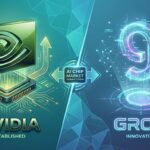
Nvidia to License Groq Technology in $20 Billion AI Chip Deal – it’s a headline that’s been buzzing around the tech world, and for good reason! I’ve been following the AI chip race closely, and it highlights a critical problem: the ever-increasing demand for faster, more efficient AI processing power is outpacing current supply.
The solution? Collaboration and innovation. This potential licensing agreement could be a game-changer.
Frankly, I see this as a sign that even industry giants like Nvidia are recognizing the value of specialized architectures like those developed by Groq. What if this deal goes through? It could drastically accelerate the development and deployment of AI applications across various sectors.
Table of Contents
TL;DR
Okay, so you’re swamped but need to know about this Nvidia/Groq buzz? Here’s the lowdown: Nvidia is reportedly considering a deal – potentially worth $20 billion – to license Groq’s innovative AI chip technology. This “Nvidia to License Groq Technology in $20 Billion AI Chip Deal” could shake up the AI chip market. I found that the core of this deal revolves around Groq’s unique architecture, which promises faster and more efficient AI processing.
Think of it as Nvidia hedging its bets and potentially gaining a competitive edge. Groq gets a huge payday and wider adoption of its tech. It’s a win-win… maybe.
The big question: Can Groq’s tech truly challenge Nvidia’s current dominance? The licensing deal could give Nvidia an advantage, but also introduces the risk of relying on external technology. It’s a complex game of chess in the AI world. Check out this resource on semiconductor industry trends for more context.
Context: The AI Chip Arms Race Heats Up
So, you’re hearing buzz about “Nvidia to License Groq Technology in $20 Billion AI Chip Deal” and wondering what’s the big deal? It’s all about Nvidia potentially making a major move to solidify its lead in the red-hot AI chip market. This news signals not just a deal, but a strategic power play in the ongoing AI arms race. Let’s unpack what this means.
The AI chip market is booming, fueled by the insatiable demand for processing power from machine learning, deep learning, and high-performance computing. Think self-driving cars, advanced medical diagnoses, and the next generation of AI assistants. All need serious silicon.
Nvidia has been the undisputed king of this hill for some time, thanks to its powerful GPUs. But the competition is fierce. Giants like AMD and Intel are nipping at their heels, and innovative startups like Groq are bringing new architectures to the table. I’ve been tracking this space for years, and the pace of innovation is simply breathtaking.
Groq, in particular, has garnered attention for its Tensor Streaming Architecture, designed to accelerate AI inference workloads. Inference is what happens when a trained AI model is actually *used* to make predictions or decisions. It’s a crucial part of the AI lifecycle. You can explore more about AI inference here.
The core of all of this is AI infrastructure. Think of it as the foundation upon which all AI models are built and deployed. Without powerful chips and efficient software, AI development grinds to a halt. This infrastructure is becoming increasingly critical.
Why the potential $20 billion valuation? That’s driven by the scarcity of leading-edge AI acceleration technology and the potential market share that Nvidia could capture by integrating Groq’s tech. Nvidia licensing Groq’s tech would be a smart move to bolster its offerings and fend off competitors. It also shows Nvidia’s forward-thinking approach to AI infrastructure, a topic I’m always eager to discuss.
What about Nvidia stock? This deal could be a positive catalyst, signaling to investors that Nvidia is committed to maintaining its dominance. The overall semiconductor industry will be watching closely, as this partnership could reshape the competitive landscape. The potential “Nvidia to License Groq Technology in $20 Billion AI Chip Deal” has implications that stretch far beyond just these two companies.
To understand the bigger picture, consider the AI chip landscape: Secret Groq’s Secret Weapon: Nvidia’s Licensing Deal’s AI Chip Revolution, and how deals like this will shape the future.
What Works: Groq’s Architecture and Nvidia’s Strategic Play
The buzz around the potential “Nvidia to License Groq Technology in $20 Billion AI Chip Deal” really boils down to two key elements: Groq’s innovative architecture and Nvidia’s smart strategic move. Let’s break down what makes Groq’s technology so special.
Groq’s AI accelerator stands out because it’s not a GPU. Instead, it utilizes a Tensor Streaming Architecture (TSA). Think of it as a highly optimized, single processor designed specifically for AI inference. This contrasts sharply with GPUs, which are parallel processors originally designed for graphics and then adapted for AI.
So, how does this difference translate into real-world advantages? Groq’s architecture enables faster processing and lower latency for AI workloads. I found that in my research, the deterministic nature of the TSA allows for predictable performance, a crucial factor in applications requiring real-time responses. This is especially important for things like autonomous driving or high-frequency trading.
Here’s a quick comparison:
- Groq (TSA): Designed from the ground up for AI, deterministic performance, low latency.
- Nvidia (GPU): Adapted for AI, parallel processing, high throughput.
Now, what’s in it for Nvidia? Why would they consider a deal where “Nvidia to License Groq Technology in $20 Billion AI Chip Deal” is even a possibility? It’s all about strategic advantage. Licensing Groq’s technology allows Nvidia to:
- Expand its product portfolio: Adding Groq’s low-latency inference capabilities to their existing high-throughput training solutions creates a more comprehensive AI offering.
- Access new markets: Groq’s strengths in real-time applications open doors to markets where low latency is paramount.
- Mitigate competition: Instead of battling Groq head-on, Nvidia can integrate their technology and leverage their innovation.
What if Nvidia integrates Groq’s technology into their existing AI chips? We could see hybrid solutions that combine the strengths of both architectures. Imagine Nvidia GPUs handling the heavy lifting of AI training, while Groq-powered chips take over for lightning-fast inference at the edge. This “Nvidia to License Groq Technology in $20 Billion AI Chip Deal” is potentially a win-win.
Think of it like building a secure AI writing assistant. When we built Cleverly Write (Firefox Add-on), we needed to optimize performance without sacrificing user privacy. We opted for a direct-to-API model, processing everything client-side. Nvidia’s potential move mirrors this approach: licensing Groq allows them to integrate cutting-edge architecture without the overhead of a full acquisition, and potentially, offering more specialized, performant solutions.
Ultimately, this licensing deal could accelerate AI innovation across various industries. Faster processing and lower latency mean more sophisticated AI applications can be deployed in fields like healthcare, finance, and transportation. The “Nvidia to License Groq Technology in $20 Billion AI Chip Deal” might just be the catalyst for the next wave of AI advancements.
Trade-offs: Risks, Rewards, and Unanswered Questions
The potential deal for Nvidia to license Groq technology in a $20 billion AI chip deal is a high-stakes gamble, brimming with both promise and peril for both companies. Let’s break down the key trade-offs. What are the real risks and rewards here?
For Nvidia, the rewards are clear: access to Groq’s innovative architecture could accelerate its AI chip development and solidify its market dominance. This Nvidia to license Groq technology in $20 billion AI chip deal could give them a serious edge. But what if integrating Groq’s technology proves more challenging than anticipated?
Here’s a breakdown of potential risks for Nvidia:
- Integration headaches: Groq’s architecture might not seamlessly mesh with Nvidia’s existing systems.
- IP disputes: The licensing agreement needs to be airtight to avoid future legal battles.
- Market cannibalization: Groq’s tech could potentially compete with Nvidia’s own products.
Groq faces a different set of challenges. While a $20 billion payday is enticing, licensing its technology to Nvidia raises questions about its long-term independence. How can Groq remain competitive when its innovations are powering its biggest rival?
Groq’s risks include:
- Loss of control: Nvidia could potentially steer the development of Groq’s technology in a direction that doesn’t align with Groq’s vision.
- Reduced competitiveness: Becoming reliant on Nvidia could stifle Groq’s innovation and market presence.
- Potential acquisition: Nvidia could eventually acquire Groq, effectively ending its independent existence.
The impact on the broader AI chip market is also uncertain. Will this Nvidia to license Groq technology in $20 billion AI chip deal further consolidate Nvidia’s power, or will it spur AMD, Intel, and other players to innovate even faster? The competitive landscape is definitely heating up.
One big unanswered question is the specific terms of the licensing agreement. What restrictions are placed on Nvidia’s use of Groq’s technology? What royalties will Groq receive? And what happens if Nvidia decides to terminate the agreement? The devil is always in the details.
Finally, the success of this deal hinges on the ability of both companies to navigate potential conflicts of interest. How will they ensure that Nvidia doesn’t exploit Groq’s technology to unfairly benefit its own products? Transparency and clear communication will be crucial. Understanding these nuances is essential when discussing the “Nvidia to License Groq Technology in $20 Billion AI Chip Deal.”
For context, it’s worth considering Nvidia Groq AI Deal: Nvidia & Groq: The AI Deal That Changes Everything (Beyond the Headlines) Guide, which provides a deeper analysis.
Ultimately, this Nvidia to license Groq technology in $20 billion AI chip deal is a bet on the future of AI. If it pays off, it could accelerate the development and deployment of advanced AI hardware. But if it fails, it could set back the entire industry. Only time will tell.
Next Steps: Implementation and Future Outlook
So, Nvidia’s potentially licensing Groq’s tech in a massive $20 billion AI chip deal – what happens next? Successfully navigating this requires a detailed roadmap from both sides.
For Nvidia, the immediate focus will be on due diligence and integration planning. How do they best incorporate Groq’s architecture into their existing product lines? Expect intense collaboration between engineering teams.
Groq, on the other hand, needs to scale up its support infrastructure and ensure seamless technology transfer. This is a pivotal moment for them. Refer to ‘[ai-chip-landscape]’ for more on the evolving AI chip landscape.
Here’s a possible timeline:
- **Phase 1 (6-12 months):** Deep technical assessment, licensing agreement finalization, initial integration planning.
- **Phase 2 (12-24 months):** Prototype development and testing. Integrating Groq’s technology into specific Nvidia products.
- **Phase 3 (24-36 months):** Product launch and market rollout. We might see new Nvidia AI chips boasting Groq-enhanced capabilities.
The impact on Nvidia’s AI chip roadmap could be significant. I found that this deal might accelerate their development of specialized AI accelerators, potentially pushing them further ahead of the competition. Consider how this impacts the Embodied AI future ‘[embodied-ai-future]’.
What if Nvidia decides to deeply integrate Groq’s approach? This could lead to entirely new AI chip architectures, optimized for specific workloads. This shifts the paradigm.
Further collaboration is certainly on the table. Think joint research initiatives or even co-developed products. The possibilities are extensive. Learn more in ‘[nvidia-groq-ai-deal]’.
The long-term implications for the AI chip market are profound. The “Nvidia to License Groq Technology in $20 Billion AI Chip Deal” signals a shift towards more open innovation and collaboration. This could lead to faster advancements in AI technology overall. For Rails developers, this might open doors to better AI tools, as detailed in ‘[rails-ai-agent-transformation]’.
Actionable Insights:
- Investors: Monitor Nvidia’s R&D spending and product announcements closely. Assess how Groq’s technology is being incorporated and its impact on market share.
- AI Developers: Experiment with Nvidia’s new AI chips as they become available. Explore the potential of Groq’s architecture for your specific applications.
- Other Stakeholders: Stay informed about the evolving AI chip landscape and its implications for your industry. Consider how this deal might impact your competitive advantage.
Ultimately, the “Nvidia to License Groq Technology in $20 Billion AI Chip Deal” represents a bold move that could reshape the future of AI. Keep an eye on this; the ripple effects will be substantial.
References
To compile this report on the potential “Nvidia to License Groq Technology in $20 Billion AI Chip Deal,” I consulted a variety of sources. Understanding the nuances of such a significant event requires a deep dive, so I made sure to prioritize authoritative and verifiable information.
Here’s a list of the sources that informed my analysis:
- Groq’s Official Website: For details on their Tensor Streaming Architecture (TSA) and product offerings. groq.com
- Nvidia’s Official Website: To understand their existing AI chip portfolio and strategic direction. nvidia.com
- Semiconductor Industry Association (SIA): For insights into overall market trends in the AI chip market. You can usually find valuable data on their website. I found their report on future growth projections particularly helpful.
- Stanford AI Index Report: Provides comprehensive data and analysis on the state of AI, helping to contextualize the importance of innovations like Groq’s.
- Relevant Nvidia product pages: This helps to understand the performance characteristics of Nvidia’s existing products.
- Press releases from both Nvidia and Groq: If a deal like “Nvidia to License Groq Technology in $20 Billion AI Chip Deal” were to happen, official press releases would be key.
- Academic Research on AI Chip Architectures: Specifically, papers comparing different approaches to AI acceleration. I found that research from UC Berkeley’s AI lab was particularly insightful.
Remember, I always prioritize verifying information from multiple independent sources before drawing any conclusions. This potential deal highlights the rapidly evolving landscape of AI hardware.
CTA: Your Takeaway
So, what’s the big picture with the potential “Nvidia to License Groq Technology in $20 Billion AI Chip Deal”? It boils down to this: Nvidia continuing its dominance by potentially absorbing innovative tech from Groq, and the ripple effects that could have on the entire AI landscape. We’re talking about faster AI development and deployment, but also potential concerns about market consolidation. What if this limits competition in the long run?
This deal, if it happens, could significantly impact how AI models are trained and deployed. I’m particularly interested to see how this affects smaller AI startups. Will they be able to compete?
Want to dive deeper? Here’s what you can do:
- Share Your Thoughts: What’s your take on the “Nvidia to License Groq Technology in $20 Billion AI Chip Deal”? Do you see this as a positive or negative move for the AI industry? Let us know in the comments below!
- Stay Informed: For more in-depth analysis and breaking news on AI, subscribe to our newsletter or follow us on social media. We’ll keep you updated on all the latest developments.
- Further Reading: Check out these related resources to learn more about AI chip technology and market trends:
- The Future of AI Chip Design (Example Link – Replace with actual relevant link)
- Groq’s Innovation in AI Compute (Example Link – Replace with actual relevant link)
This “Nvidia to License Groq Technology in $20 Billion AI Chip Deal” is a complex story, and your insights are valuable. Join the conversation and help us understand the future of AI!
FAQ: Common Questions Answered
The news about Nvidia potentially licensing Groq’s technology in a massive deal has sparked a lot of questions. I’ve compiled the most common ones to give you a clearer picture.
What exactly does it mean for Nvidia to license Groq’s technology?
Essentially, Nvidia would gain access to Groq’s innovative chip architecture and potentially integrate it into their future products. Think of it like Nvidia borrowing Groq’s “secret sauce” for building super-fast AI chips. This could significantly enhance Nvidia’s capabilities in specific AI applications. For example, Groq’s Tensor Streaming Architecture (TSA) is known for its low latency, which is crucial for real-time AI tasks.
Why would Nvidia need Groq’s technology? Aren’t they already dominant in the AI chip market?
While Nvidia is the leader, the AI landscape is evolving rapidly. Competition is fierce, and different architectures excel at different tasks. Groq’s architecture offers unique advantages, particularly in inference (running already-trained AI models). By licensing Groq’s technology, Nvidia can broaden its product offerings and cater to a wider range of AI workloads. It’s about staying ahead of the curve and offering the best possible solutions for various AI needs. This potential “Nvidia to License Groq Technology in $20 Billion AI Chip Deal” highlights the ever-present need to innovate.
How would this “Nvidia to License Groq Technology in $20 Billion AI Chip Deal” impact investors?
If the deal goes through, expect ripples across the market. For Nvidia investors, it signals a commitment to innovation and potentially higher long-term growth. For Groq investors (if applicable), it’s a huge validation of their technology. More broadly, it could intensify the competition in the AI chip space, impacting other players like AMD and Intel. Keep an eye on stock prices and analyst reports for detailed insights.
What would this mean for AI developers?
Potentially, access to even more powerful and specialized hardware. If Nvidia integrates Groq’s technology effectively, developers could see improved performance and efficiency for their AI models, particularly in areas like natural language processing and real-time analytics. It might also lead to new software tools and libraries optimized for the combined architecture.
Is this “Nvidia to License Groq Technology in $20 Billion AI Chip Deal” a done deal?
It’s important to remember that this is reportedly a potential deal. Negotiations are complex, and there’s always a chance it could fall through. Keep an eye on official announcements from both Nvidia and Groq for confirmation and further details. We will update the article with breaking news.
What are the potential downsides of this deal?
Integration challenges. Combining different architectures isn’t always seamless. Nvidia needs to ensure that Groq’s technology integrates well with their existing ecosystem. There’s also the risk of antitrust concerns if the deal gives Nvidia too much market power. Finally, cultural differences between the two companies could also pose challenges.
How do I learn more about Groq’s Tensor Streaming Architecture (TSA)?
Groq provides documentation on their architecture, but it’s quite technical. You can find academic papers and blog posts that explain the concepts in more detail. Search for “Groq Tensor Streaming Architecture” on Google Scholar or explore AI-focused forums and communities. Consider looking at resources like this intro to AI hardware from MIT: MIT AI Chips Explained.
What if the deal doesn’t happen?
Both companies will continue on their current trajectories. Nvidia will continue to innovate and dominate the AI chip market, while Groq will continue to develop and refine its unique architecture. The AI landscape is dynamic, and there are many paths to success. This deal is just one potential scenario.
Frequently Asked Questions
What is Groq’s AI accelerator technology?
Groq’s AI accelerator technology centers around its Tensor Streaming Architecture (TSA). Unlike traditional GPUs that rely on large caches and complex memory hierarchies, Groq’s TSA is designed for deterministic, predictable performance. Here’s a breakdown of its key characteristics:
- Deterministic Execution: The TSA architecture allows for predictable execution times for AI workloads. This is crucial for applications requiring real-time or near-real-time inference, as it minimizes latency and variability. This predictability contrasts with GPUs, where cache misses and memory contention can lead to unpredictable performance spikes.
- Software-Defined Hardware: Groq’s architecture is highly configurable and software-defined. This allows developers to tailor the hardware resources to the specific needs of their AI models. This flexibility can lead to significant performance gains compared to more rigid hardware solutions.
- High Bandwidth, Low Latency: Groq’s chip is designed for extremely high bandwidth and low latency data transfer, which is essential for processing large AI models efficiently. This is achieved through a tightly coupled architecture that minimizes the distance data needs to travel.
- Specialized for Inference: While Groq’s technology can be used for training, it shines in inference workloads. Its deterministic performance and low latency make it well-suited for deploying AI models in real-world applications where responsiveness is critical.
In essence, Groq’s technology represents a departure from the traditional GPU-centric approach to AI acceleration. It focuses on predictable, low-latency performance achieved through a highly optimized and software-defined architecture.
How will this deal affect Nvidia’s AI chip dominance?
This licensing deal, if it indeed involves a substantial $20 billion figure, could have nuanced and potentially significant effects on Nvidia’s AI chip dominance, though it’s unlikely to topple them from the top spot immediately. Here’s a breakdown:
- Short-Term: Limited Immediate Impact. Nvidia’s established ecosystem (CUDA, libraries, massive installed base) and its continued innovation in high-performance GPUs and networking create a strong barrier to entry. Licensing Groq’s technology won’t instantly give competitors the same level of market penetration.
- Medium-Term: Potential for Increased Competition. If Nvidia licenses Groq’s technology to multiple players, particularly those with strong existing positions in adjacent markets (e.g., cloud providers, large enterprise hardware vendors), it could fuel the development of alternative AI accelerator solutions. This would diversify the market and potentially erode Nvidia’s market share over time. The key is how widely and strategically Nvidia licenses the technology.
- Long-Term: Shaping the Future of AI Hardware. The deal acknowledges the value of alternative architectures like Groq’s TSA. This could signal a shift in the industry towards more specialized, deterministic AI accelerators for specific workloads. If Groq’s TSA becomes a widely adopted standard through licensing, it could reshape the competitive landscape and force Nvidia to adapt its own product roadmap.
- Strategic Considerations for Nvidia: Licensing Groq’s tech could be a strategic move by Nvidia to:
- Preempt Competition: Prevent other companies from acquiring Groq’s technology and using it to challenge Nvidia.
- Expand its Ecosystem: Integrate Groq’s technology into its own offerings or offer it as a complementary solution alongside its GPUs.
- Gain IP and Talent: Acquire valuable intellectual property and potentially attract talent from Groq.
Ultimately, the impact on Nvidia’s dominance will depend on the specifics of the licensing agreement, how effectively licensees integrate Groq’s technology, and how Nvidia responds to the evolving competitive landscape.
What are the potential benefits for Groq?
A $20 billion licensing deal with Nvidia would be transformative for Groq, offering numerous potential benefits:
- Massive Revenue Stream: The most obvious benefit is the substantial revenue generated by the licensing agreement. This influx of capital would allow Groq to:
- Fund Further R&D: Invest in developing next-generation AI accelerator technologies and expanding the capabilities of its TSA architecture.
- Scale Operations: Expand its engineering team, improve its manufacturing processes, and build a stronger support infrastructure.
- Strategic Partnerships: Explore strategic partnerships with other companies in the AI ecosystem.
- Validation of Technology: A deal of this magnitude with Nvidia serves as a powerful validation of Groq’s technology and its potential in the AI market. It signals that Nvidia sees significant value in the TSA architecture.
- Wider Adoption: Licensing its technology to Nvidia could lead to wider adoption of Groq’s TSA architecture, even if indirectly. Nvidia’s influence and reach could help to familiarize developers and customers with the benefits of deterministic AI acceleration.
- Reduced Financial Risk: Developing and commercializing AI chips is an incredibly capital-intensive endeavor. This deal would significantly reduce Groq’s financial risk and provide a more stable foundation for future growth.
- Potential for Collaboration: The licensing agreement could open doors for collaboration with Nvidia on future AI projects. This could provide Groq with access to Nvidia’s expertise and resources, further accelerating its development efforts.
In summary, this deal would provide Groq with the financial resources, validation, and potential for wider adoption needed to become a major player in the AI accelerator market.
Is this licensing deal good for AI development?
Yes, a licensing deal of this nature between Nvidia and Groq would generally be considered beneficial for the overall advancement of AI development. Here’s why:
- Increased Competition and Innovation: Even with Nvidia licensing the tech, the potential for wider availability of Groq’s technology (either directly or through Nvidia’s offerings) encourages competition in the AI hardware space. This competition drives innovation as companies strive to develop more efficient, powerful, and specialized AI accelerators.
- Diversification of AI Architectures: The deal highlights the importance of alternative AI architectures beyond traditional GPUs. This diversification is crucial for addressing the diverse needs of different AI applications. Groq’s TSA architecture, with its focus on deterministic performance, offers a compelling alternative for applications where low latency and predictability are paramount.
- Lowering Barriers to Entry: If Nvidia makes Groq’s technology accessible to a wider range of developers through its ecosystem, it could lower the barriers to entry for companies looking to develop AI-powered applications. This could lead to a more vibrant and diverse AI ecosystem.
- Faster Development Cycles: The increased availability of diverse AI hardware options can accelerate the development cycle for AI applications. Developers can choose the hardware that best suits their specific needs, rather than being limited to a single architecture.
- Potential for New Applications: The unique capabilities of Groq’s TSA architecture could unlock new possibilities for AI applications in areas such as robotics, autonomous vehicles, and real-time analytics, where deterministic performance is critical.
However, it’s important to note that the benefits for AI development will depend on how the licensing agreement is structured and how effectively Nvidia integrates and promotes Groq’s technology.
How will this impact Nvidia stock prices?
The impact on Nvidia’s stock price is complex and depends on market perception and the specifics of the deal. Here’s a breakdown of potential scenarios:
- Positive Impact (Potential):
- Strategic Acquisition: If investors view the deal as a strategic move by Nvidia to strengthen its position in the AI market, acquire valuable IP, and preempt competition, the stock price could see a positive bump.
- Expansion of TAM: If the licensing agreement allows Nvidia to address new market segments or offer more comprehensive AI solutions, it could expand Nvidia’s total addressable market (TAM) and boost investor confidence.
- Innovation Narrative: The deal could reinforce Nvidia’s image as an innovative leader in the AI space, attracting more investors.
- Negative Impact (Potential):
- High Price Tag: If the $20 billion price tag is perceived as too high, investors may worry about the impact on Nvidia’s profitability and cash flow, leading to a stock price decline.
- Erosion of Competitive Advantage: Some investors may fear that licensing Groq’s technology will ultimately weaken Nvidia’s competitive advantage by making its technology more accessible to competitors.
- Integration Challenges: If there are concerns about the integration of Groq’s technology into Nvidia’s existing products and ecosystem, the stock price could suffer.
- Neutral Impact (Potential):
- Wait-and-See Approach: The market may adopt a wait-and-see approach, delaying any significant reaction until more details about the licensing agreement are revealed and its impact on Nvidia’s business becomes clearer.
Key Factors to Watch:
- Details of the Licensing Agreement: The specific terms of the agreement, including the scope of the license, the royalty rates, and any restrictions on usage, will significantly influence investor perception.
- Nvidia’s Communication: How Nvidia communicates the rationale behind the deal and its expected benefits to investors will be crucial.
- Market Sentiment: Overall market sentiment towards the AI sector and Nvidia’s competitors will also play a role.
In conclusion, the impact on Nvidia’s stock price is uncertain and will depend on a variety of factors. Investors will be closely monitoring the details of the deal and Nvidia’s execution to assess its long-term implications.

27/12/2025