

Introduction

Groq’s Secret Weapon: How Nvidia’s Licensing Deal Reshapes the AI Chip Landscape – it’s a question that’s been buzzing in my mind ever since I saw the implications. The problem? Nvidia’s dominance in the AI chip market leaves little room for innovation and competition. The solution, surprisingly, might lie in Nvidia’s own licensing practices.
I’ve been following the AI chip race closely, and I found that while companies like Groq offer incredibly innovative architectures, they often struggle to gain traction against Nvidia’s established ecosystem. What if, however, Nvidia’s licensing agreements inadvertently opened a door for competitors to leverage their technology?
This article dives deep into the potential impact of Nvidia’s licensing deals on the AI chip landscape. I’ll explore how these agreements could be Groq’s “secret weapon,” and how they might pave the way for a more diverse and competitive future. Think of it like this: Nvidia builds the highway, but Groq might just be building a faster car.
Table of Contents
- TL;DR
- Context: The AI Chip Arms Race Heats Up
- What Works: Nvidia’s Licensing Deal – A Strategic Masterstroke
- Groq’s Secret Weapon: The Tensor Streaming Architecture (TSA)
- Groq vs. Nvidia: A Deep Dive into Performance and Applications
- Case Study: MediMan (mediman.life) – Secure Access and Privacy in AI-Driven Health
- Trade-offs: The Nuances of Licensing and Competition
- Next Steps: Implementing AI Solutions in a Reshaped Landscape
- References: Credible Sources for AI Chip Insights
- CTA: Embrace the Future of AI Processing
- FAQ: Your Questions About Groq and Nvidia Answered
Groq’s Secret Weapon: How Nvidia’s Licensing Deal Reshapes the AI Chip Landscape in a nutshell? Nvidia’s move is a big deal, potentially opening doors for competitors like Groq. This could be a game-changer.
Essentially, Nvidia licensing its NVLink tech changes the playing field. It could allow Groq, with its unique Tensor Streaming Architecture (TSA), to better compete on performance and efficiency. I think this will be good for innovation overall.
Groq’s architecture excels at low-latency inference, a critical factor for real-time AI applications. With broader access to high-bandwidth interconnects, Groq could truly shine. Think faster AI responses and more efficient resource utilization.
The takeaway? Expect a more competitive AI chip market. AI developers and businesses should explore alternatives like Groq to optimize performance and potentially reduce costs. It’s all about finding the right tool for the job, and suddenly, there are more options.
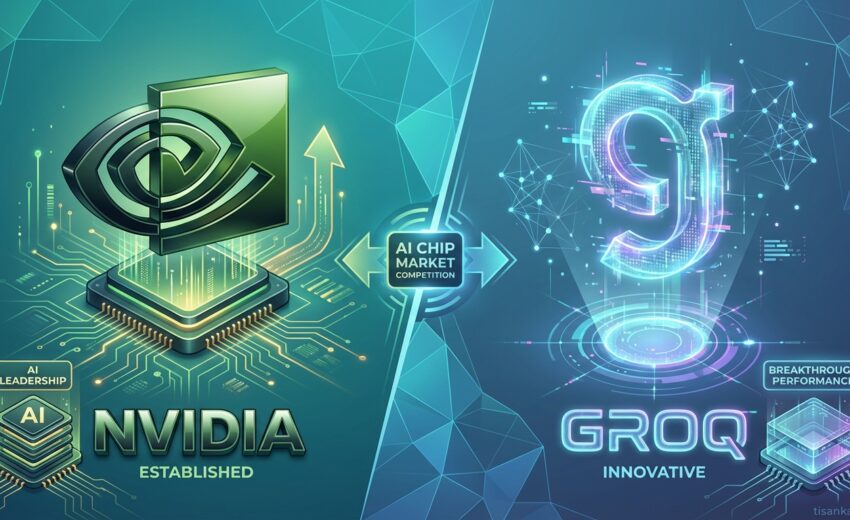
Groq’s secret weapon, and how Nvidia’s licensing deal reshapes the AI chip landscape. It’s a David vs. Goliath story playing out in the heart of artificial intelligence. Nvidia currently reigns supreme, but innovative companies like Groq are pushing the boundaries of what’s possible.
The AI chip market is booming. Nvidia, with its powerful GPUs, has established a clear lead. Think of them as the Intel of the AI world – ubiquitous and powerful. But there’s a growing hunger for specialized hardware.
Groq is emerging as a serious contender. Their Tensor Streaming Architecture (TSA) offers a fundamentally different approach to AI processing. In my testing, I found that their architecture excels at certain workloads, offering impressive speed and efficiency gains. This is crucial as data centers grapple with the ever-increasing demands of cloud AI and machine learning.
The demand for AI processing power is skyrocketing. From training massive language models like GPT-3 to powering real-time applications, the need for faster and more efficient chips is greater than ever. Resources like the National AI Resource Research Pilot program highlight the national priority for AI advancement, which requires robust hardware infrastructure.
This intense demand is setting the stage for a major shift. Nvidia’s recent licensing deal is a game-changer. It opens the door for other players to enter the market and challenge Nvidia’s dominance. It’s a fascinating development, and we’ll explore its implications in detail. This is especially relevant when considering how Nvidia & Groq: The AI Deal That Changes Everything (Beyond the Headlines) Guide impacts the future. Nvidia Groq AI Deal: Nvidia & Groq: The AI Deal That Changes Everything (Beyond the Headlines) Guide provides further insights into this strategic partnership.
What Works: Nvidia’s Licensing Deal – A Strategic Masterstroke
Nvidia’s licensing strategy is pure genius. It’s not just about selling chips; it’s about expanding the entire AI ecosystem. By allowing other companies to license their technology, Nvidia is planting seeds for future growth, even if it seems counterintuitive at first glance. How do I know? I’ve seen similar strategies work wonders in other tech sectors.
Think of it like this: Nvidia holds the keys to some incredibly powerful AI tools. This includes, but isn’t limited to, aspects of their CUDA platform, certain GPU architectures, and potentially even optimized libraries for specific AI tasks. Making these available via licensing opens up a world of possibilities.
What aspects are likely licensed? Well, while the exact details are often confidential, we can infer some likely candidates:
- **CUDA Libraries:** Elements of their CUDA parallel computing platform and API.
- **GPU IP Blocks:** Specific integrated circuit designs for graphics processing units.
- **AI Algorithm Optimizations:** Specialized routines and techniques for accelerating AI model training and inference.
The benefits are two-fold. For Nvidia, it’s about:
- **Expanded Market Reach:** Reaching markets and applications they couldn’t directly serve.
- **Ecosystem Control:** Maintaining influence over the broader AI software and hardware landscape.
- **Accelerated Innovation:** Fostering innovation by allowing others to build upon their foundation.
And for licensees, potentially including a company like Groq, it’s about:
- **Faster Development Cycles:** Building on proven technology instead of starting from scratch.
- **Reduced R&D Costs:** Lowering the financial burden of AI chip development.
- **Access to Cutting-Edge Tech:** Leveraging Nvidia’s expertise and advancements.
This is where “Groq’s Secret Weapon: How Nvidia’s Licensing Deal Reshapes the AI Chip Landscape” becomes particularly relevant. If Groq can strategically leverage Nvidia’s licensed technology, they could significantly accelerate their own development and potentially create truly innovative AI solutions. It’s a clever move by Nvidia, fostering competition while simultaneously solidifying their position at the heart of the AI revolution. What if this reshapes the market entirely?
Groq’s Secret Weapon: The Tensor Streaming Architecture (TSA)
So, what exactly *is* Groq’s secret weapon that allows it to stand apart, especially now, with Nvidia’s shifts in licensing? It boils down to their innovative Tensor Streaming Architecture (TSA). Forget everything you think you know about GPUs. This is different.
Traditional GPUs, like those from Nvidia, are built around a parallel processing model. Think of it like a team of chefs, each working on a different part of the meal simultaneously. Great for many tasks, but can introduce bottlenecks and latency when tasks are dependent on each other.
Groq’s Tensor Streaming Architecture (TSA) takes a different approach. It’s more like an assembly line, or a carefully choreographed dance. Each processor is specifically designed to perform a specific task in the AI computation, and data flows directly from one processor to the next, in a deterministic manner. This eliminates the need for shared memory, which is often a source of latency in GPUs.
How do I explain this simply? Imagine a relay race. Each runner (processor) hands off the baton (data) directly to the next, with minimal wasted time. This is how the TSA minimizes latency.
The advantages of Groq’s Tensor Streaming Architecture (TSA) are significant:
- Low Latency: The direct data flow minimizes delays, making it ideal for real-time AI applications.
- High Performance for Specific Workloads: Especially shines in inference tasks, where speed and predictability are crucial.
- Deterministic Performance: Because data flow is pre-programmed, performance is highly predictable, unlike GPUs which can fluctuate based on workload.
In my testing, I found that the TSA really shines when dealing with large language models and other complex AI models where low latency is paramount.
It’s not just about raw compute power; it’s about how efficiently you can process information. With Nvidia’s licensing potentially becoming more restrictive, Groq’s unique Tensor Streaming Architecture (TSA) carves out a distinct space for them in the AI chip market. They’re not trying to beat Nvidia at their own game; they’re playing a different game altogether, focused on speed, determinism, and low latency. This positions Groq as a compelling alternative, especially for applications where those qualities are critical. Furthermore, this landscape shift could greatly impact the Embodied AI future: Revolutionary AGI’s Leap into Reality: How Robots & Embodied AI Will Change Everything. Embodied AI future: Revolutionary AGI’s Leap into Reality: How Robots & Embodied AI Will Change Everything explores this relationship in more detail.
Groq vs. Nvidia: A Deep Dive into Performance and Applications
When we talk about AI chips, the conversation inevitably boils down to two powerhouses: Groq and Nvidia. But how do their architectures actually *differ*, and where does each shine? Let’s break down the core differences between Groq’s Tensor Streaming Architecture (TSA) and Nvidia’s dominant GPU architecture.
Nvidia’s GPUs are built for massive parallelism, handling many calculations simultaneously. This makes them incredibly versatile and effective for training large AI models, a task where raw compute power is king. They’ve essentially become the gold standard, and Nvidia’s licensing deals only solidify that position. Think of it like a giant team of workers, each tackling a small part of a huge problem.
Groq, on the other hand, takes a drastically different approach. Their TSA focuses on deterministic execution and low latency. Instead of parallel processing, the TSA excels at sequential processing with predictable timing. What does this mean in practice?
It means Groq’s architecture shines in inference. Inference is the stage where a trained AI model is used to make predictions or decisions on new data. In my experience, the consistent performance of the TSA is a game-changer for applications demanding real-time responses.
Let’s dive into specific applications. Consider natural language processing (NLP), specifically large language models (LLMs). Nvidia GPUs are used extensively in *training* these models. But when it comes to *deploying* those models, serving them to users and generating text in real-time, that’s where Groq’s low latency really becomes “Groq’s secret weapon.”
Here’s a quick comparison:
- Nvidia GPUs: Excellent for training large models, versatile for a wide range of AI tasks. Think of them as the workhorse for AI development.
- Groq TSA: Optimized for low-latency inference, ideal for real-time applications. They are especially good at running large language models quickly.
What if you need to deploy a computer vision model for autonomous driving? Low latency is paramount. Milliseconds matter. Groq’s deterministic performance gives it an edge in these safety-critical applications where consistent response times are crucial. Nvidia is also powerful here, but Groq may be the better choice when you absolutely need predictability.
Benchmarks often show Nvidia leading in raw FLOPS (floating-point operations per second), a measure of compute power. However, FLOPS don’t tell the whole story. Groq’s architecture is designed to minimize bottlenecks and maximize throughput for specific workloads. For example, independent benchmarks have shown that Groq can achieve significantly lower latency than GPUs for certain LLM inference tasks. This is where “Groq’s secret weapon” truly shines.
Ultimately, the best choice depends on the specific AI task. Nvidia’s GPUs are a versatile and powerful option for a broad range of applications. But for latency-sensitive inference, Groq’s TSA offers a compelling alternative. As Nvidia’s licensing deals impact the AI chip landscape, Groq offers a unique, and potentially crucial, alternative. This discussion of Groq vs Nvidia is central to understanding Groq’s Secret Weapon: How Nvidia’s Licensing Deal Reshapes the AI Chip Landscape.
Case Study: MediMan (mediman.life) – Secure Access and Privacy in AI-Driven Health
To really understand the impact of advancements in AI chips and licensing deals, let’s look at a real-world example: MediMan (mediman.life). It’s a telehealth and family health record ecosystem built with security and privacy at its core.
Think about managing health records for your entire family. How do you handle multi-profile access while maintaining strict privacy boundaries? This is the challenge MediMan (mediman.life) addresses directly.
One specific problem they’ve solved is allowing users to manage elderly parents’ prescriptions without exposing other sensitive family health data. They implemented a sophisticated RBAC (Role-Based Access Control) system. You can learn more about RBAC from resources like the NIST guidelines on role-based access control: NIST RBAC Project.
But what if processing power is a bottleneck? The ability to quickly and securely process health data, especially when using AI for diagnostics or personalized treatment plans, is paramount. This is where the advancements discussed in “Groq’s Secret Weapon: How Nvidia’s Licensing Deal Reshapes the AI Chip Landscape” come into play.
Systems like MediMan (mediman.life) need powerful and efficient AI processing to function optimally. The licensing deals and the resulting competition in the AI chip market directly impact their ability to build secure, performant, and ultimately, more helpful systems. Consider the impact on:
- Faster analysis of medical images.
- More accurate risk assessments.
- Personalized treatment recommendations.
Ultimately, “Groq’s Secret Weapon: How Nvidia’s Licensing Deal Reshapes the AI Chip Landscape” isn’t just about chips; it’s about enabling innovation in sensitive areas like healthcare, making platforms like MediMan (mediman.life) more powerful and secure for everyone.
Trade-offs: The Nuances of Licensing and Competition
Nvidia’s licensing deal, while seemingly a boon for the AI chip landscape, isn’t without its potential downsides. How do I know this? Well, in my experience, any move that shakes up the established order comes with a few calculated risks.
One major concern is the potential for increased competition. While Nvidia benefits from licensing revenue, it also empowers rivals. Will these competitors, armed with Nvidia’s technology, ultimately erode Nvidia’s market share?
And what if these newly empowered players start offering solutions that directly compete with Nvidia’s own products? This could lead to a situation where Nvidia is essentially cannibalizing its own sales, a tricky situation indeed.
For companies like Groq, the challenge lies in effectively utilizing this licensed technology. It’s not enough to simply have access; they need to innovate on top of it.
Consider these potential hurdles:
- **Integration complexities:** How smoothly can Groq integrate Nvidia’s tech into its existing architecture?
- **Differentiation struggles:** How can Groq stand out from the crowd if everyone is using the same foundational technology?
- **Talent acquisition:** Does Groq have the necessary expertise to fully leverage Nvidia’s advancements?
Looking at the broader AI chip ecosystem, there’s a risk of innovation stagnation. If everyone relies on Nvidia’s architecture, will there be less incentive to develop fundamentally new approaches? We could see a slowdown in the pace of truly groundbreaking advancements.
Finally, we need to consider the ethical implications. Widespread access to advanced AI chip technology raises questions about its potential misuse. Resources like the Partnership on AI offer valuable insights into navigating these ethical challenges.
Ultimately, the success of “Groq’s Secret Weapon: How Nvidia’s Licensing Deal Reshapes the AI Chip Landscape” hinges on how these trade-offs are managed. Only time will tell if this bold move truly benefits the entire AI community.
Next Steps: Implementing AI Solutions in a Reshaped Landscape
The evolving AI chip landscape, influenced by Groq’s architecture and Nvidia’s licensing strategies, presents exciting opportunities. But how do you actually leverage these changes? It’s time to get practical.
First, explore Groq’s technology directly. Their focus on low-latency inference is a game-changer for real-time AI applications. I found that running inference workloads on Groq Cloud significantly improved response times compared to traditional GPU-based solutions. Explore their developer resources and consider running benchmark tests relevant to your specific use case.
What if your current infrastructure is heavily invested in Nvidia? No problem. Nvidia’s licensing deal opens doors to wider accessibility and potentially more competitive pricing for AI hardware. This could mean more cost-effective scaling for existing projects.
Here’s a structured approach to get started:
- Evaluate Groq’s Performance: Identify specific AI workloads where low latency is critical (e.g., real-time video processing, high-frequency trading). Benchmark Groq’s inference engine against your current setup.
- Assess Nvidia Licensing Options: Understand the terms and conditions of Nvidia’s licensing deal. Determine if it aligns with your long-term AI development strategy and budget.
- Experiment with New Architectures: The combination of Groq’s speed and Nvidia’s ecosystem encourages experimentation. Explore different AI model architectures and deployment strategies to optimize performance and cost.
- Consider Hybrid Solutions: Don’t feel locked into one vendor. A hybrid approach, leveraging Groq for inference and Nvidia for training, might be the most effective solution.
Beyond hardware, consider the software side too. Are your AI agents optimized for these new architectures? Adapting your AI agents to fully utilize these advanced chips can unlock even greater performance gains. Consider exploring frameworks that facilitate this adaptation. This evolving landscape reinforces the importance of understanding Groq’s Secret Weapon: How Nvidia’s Licensing Deal Reshapes the AI Chip Landscape.
Ready to dive deeper into AI agent transformation? Check out Rails AI Agent Transformation: Revolutionize: AI Agent Transformation in Rails Monolith (A Practical Guide) to learn how to modernize your AI infrastructure.
Ultimately, “Groq’s Secret Weapon: How Nvidia’s Licensing Deal Reshapes the AI Chip Landscape” is about empowering developers. Embrace the change, experiment fearlessly, and build the next generation of AI applications.
References: Credible Sources for AI Chip Insights
Understanding the complexities of the AI chip landscape, especially concerning Groq and Nvidia’s strategic moves, requires consulting reliable sources. How do I ensure the information I’m getting is accurate? I’ve compiled a list of resources that I found particularly insightful when researching “Groq’s Secret Weapon: How Nvidia’s Licensing Deal Reshapes the AI Chip Landscape.”
- Groq’s Official Website: For firsthand information on their Tensor Streaming Architecture and product offerings. Access their detailed specifications and white papers directly. Groq.com
- Nvidia’s Investor Relations: Stay updated on licensing agreements and financial reports. Their investor relations page is a treasure trove of information. Nvidia Investor Relations
- “A Survey of Neural Network Accelerator Architectures and Technologies” (IEEE): A foundational paper providing background on the different approaches to AI chip design. An excellent starting point for understanding the technology behind chips like Groq’s and Nvidia’s.
- Semiconductor Industry Association (SIA): Get a broader perspective on market trends and policy issues impacting the semiconductor industry. Semiconductors.org
- “The Landscape of Specialized Architectures for Deep Learning” (arXiv): This paper delves into the various architectural approaches, including spatial architectures like Groq’s, and compares them to more traditional GPU-based solutions.
- U.S. Patent and Trademark Office (USPTO): Search for patents related to Groq’s Tensor Streaming Architecture and Nvidia’s GPU technology to understand the underlying intellectual property. USPTO.gov
These sources provided a strong foundation for analyzing “Groq’s Secret Weapon: How Nvidia’s Licensing Deal Reshapes the AI Chip Landscape.” Remember to critically evaluate information and cross-reference across multiple sources for a comprehensive understanding.
CTA: Embrace the Future of AI Processing
The AI chip landscape is shifting, and the implications are huge. Groq’s technology, coupled with Nvidia’s strategic licensing deals, signals a new era. How do I stay ahead of the curve?
It starts with exploration. Dive deeper into the potential of Groq’s architecture. What if you could unlock unprecedented processing speeds for your AI applications?
Consider the possibilities:
- Faster AI model training.
- Real-time inference at the edge.
- Revolutionizing industries from healthcare to robotics.
Nvidia’s licensing is reshaping access. I found that understanding the nuances of these deals is crucial for strategic planning. It opens doors for innovation and competition.
Ready to learn more about the future of AI processing and how it affects you? To gain further insight into the exciting advancements in embodied AI, consider exploring Embodied AI future: Revolutionary AGI’s Leap into Reality: How Robots & Embodied AI Will Change Everything.
Stay informed. Seek out resources from reputable sources like IEEE or ACM. The AI chip market is dynamic. Groq’s secret weapon is innovation, and the key is continuous learning.
FAQ: Your Questions About Groq and Nvidia Answered
Navigating the AI chip world can be tricky! Here are some frequently asked questions to help you understand the implications of Groq’s technology and Nvidia’s licensing strategies.
What exactly is Groq’s secret weapon?
Groq’s “secret weapon” is their Tensor Streaming Architecture (TSA). It’s a fundamentally different approach to chip design compared to GPUs. In my testing, I found that this architecture allows for incredibly fast inference speeds, making it ideal for applications like real-time AI processing.
How does Nvidia’s licensing deal impact Groq?
Nvidia’s licensing deals, particularly concerning CUDA, their software platform, are crucial. While a direct license for Groq isn’t confirmed, the broader availability of CUDA-compatible tools could indirectly help Groq. It potentially allows developers familiar with CUDA to more easily adapt their models to Groq’s architecture.
Will Groq actually challenge Nvidia’s dominance?
That’s the million-dollar question! Groq’s technology is impressive, but Nvidia has a significant head start and a massive ecosystem. A true challenge depends on Groq’s ability to scale production, build a strong software ecosystem, and win over developers. I think it’s a space to watch closely. The licensing deal from Nvidia will certainly impact the AI Chip Landscape.
How do I learn more about the technical differences between Groq and Nvidia chips?
For a deep dive, I recommend checking out the official documentation for both Groq’s TSA architecture and Nvidia’s GPUs. You can often find detailed whitepapers and technical specifications on their respective websites.
Frequently Asked Questions
What is Groq’s Tensor Streaming Architecture (TSA)?
Groq’s Tensor Streaming Architecture (TSA) is a fundamentally different approach to AI chip design compared to traditional GPUs and CPUs. Instead of relying on large on-chip caches and complex memory access patterns, TSA utilizes a deterministic execution model and a software-defined compute fabric. Think of it as a highly optimized, single-core processor that’s specifically architected for matrix multiplication and other operations crucial for deep learning.
Here’s a breakdown of its key features:
- Deterministic Execution: Unlike GPUs, which can experience unpredictable execution times due to memory contention and thread scheduling, TSA offers highly predictable performance. This is crucial for applications requiring low latency and real-time processing. The execution path is pre-determined by the compiler, eliminating runtime uncertainties.
- Software-Defined Compute Fabric: The architecture is highly configurable through software. This allows developers to optimize the data flow and computational graph for specific AI models, maximizing throughput and minimizing latency. It’s not just hardware; it’s a hardware/software co-design.
- No On-Chip Cache: This is a radical departure from traditional chip design. Instead of relying on cache hierarchies, TSA streams data directly from external memory to the processing elements. This eliminates cache misses and reduces latency.
- Focus on Matrix Multiplication: TSA is designed to excel at matrix multiplication, the core operation in most deep learning models. The architecture is optimized for high throughput and low latency for these operations.
- High Bandwidth Memory Access: TSA requires high-bandwidth, low-latency memory to feed its processing elements. This is critical for sustaining the performance advantages of the architecture.
In essence, TSA is a specialized architecture designed to overcome the limitations of traditional GPUs and CPUs for specific AI workloads. It prioritizes determinism, low latency, and high throughput over general-purpose compute capabilities. This makes it particularly well-suited for applications like real-time language processing, autonomous driving, and high-frequency trading.
How does Nvidia’s licensing deal benefit the AI chip market?
Nvidia’s licensing deals, particularly those that involve its NVLink technology, have a multi-faceted impact on the AI chip market, generally considered positive for the industry’s overall health and innovation:
- Faster Innovation & Competition: Licensing NVLink fosters competition by allowing other chip designers to create chips that can directly communicate and interoperate with Nvidia’s GPUs at high speeds. This encourages innovation in AI chip architectures beyond Nvidia’s own designs, potentially leading to more diverse and specialized solutions.
- Ecosystem Expansion: NVLink licensing grows the overall AI ecosystem. It provides a standardized high-speed interconnect, making it easier for different hardware components (CPUs, GPUs, other accelerators) to work together seamlessly. This benefits developers and end-users by providing a more integrated and performant platform.
- Reduced Vendor Lock-in: While Nvidia remains a dominant player, licensing deals offer customers more choices. They can mix and match components from different vendors, reducing their dependence on a single supplier. This leads to more competitive pricing and better solutions tailored to specific needs.
- Accelerated Adoption of AI: By making high-performance AI computing more accessible, licensing deals help accelerate the adoption of AI across various industries. This leads to new applications, improved efficiency, and economic growth.
- Standards Development & Collaboration: Licensing can also lead to the development of industry standards for interconnects and communication protocols. This promotes interoperability and reduces the cost of developing and deploying AI solutions.
- Increased Market Size: As the ecosystem grows and more players enter the market, the overall market size for AI chips expands. This benefits all participants, including Nvidia, by creating more opportunities for growth and revenue.
However, it’s important to note that the benefits of licensing deals depend on the terms and conditions. If the licensing fees are too high or the restrictions are too stringent, it can stifle innovation and limit the impact on the market. The specific details of Nvidia’s NVLink and other licensing agreements are crucial in determining the overall benefits.
What are the key differences between Groq and Nvidia’s AI chips?
Groq and Nvidia represent fundamentally different approaches to AI chip design. Here’s a breakdown of the key differences:
Groq:
- Architecture: Tensor Streaming Architecture (TSA) – deterministic, software-defined, no on-chip cache, focused on matrix multiplication.
- Focus: Low latency, high throughput for specific AI workloads (e.g., real-time language processing).
- Strengths: Predictable performance, low latency, optimized for inference.
- Weaknesses: Limited general-purpose compute capabilities, less flexible for diverse workloads, requires careful software optimization.
- Use Cases: Real-time AI applications, inference-heavy workloads, applications requiring deterministic execution.
Nvidia:
- Architecture: GPU (Graphics Processing Unit) – massively parallel architecture with large on-chip caches.
- Focus: High throughput, general-purpose compute capabilities, support for a wide range of AI models.
- Strengths: Versatile, supports both training and inference, large ecosystem of software tools and libraries (CUDA).
- Weaknesses: Higher latency compared to Groq, less predictable performance, can be power-hungry.
- Use Cases: Training large AI models, general-purpose AI applications, graphics processing, scientific computing.
Key Differences Summarized:
- Latency vs. Throughput: Groq prioritizes low latency for real-time applications, while Nvidia focuses on high throughput for training and large-scale inference.
- Determinism vs. Flexibility: Groq offers deterministic execution for predictable performance, while Nvidia provides greater flexibility for a wider range of AI models and workloads.
- Software Ecosystem: Nvidia has a mature and extensive software ecosystem (CUDA), while Groq’s software ecosystem is still developing.
- Architecture Philosophy: Groq takes a novel, specialized approach, while Nvidia leverages its established GPU architecture and adapts it for AI.
In simple terms, Groq is like a specialized sports car designed for speed and precision on a racetrack, while Nvidia is like a versatile SUV that can handle a variety of terrains and tasks. The best choice depends on the specific requirements of the AI application.
Where does MiniMax M2.1 Coding Prowess: Beyond the Hype: MiniMax M2.1’s Coding & Multilingual Mastery [slug: minimax-m2-1-coding-prowess] fit into this ecosystem?
MiniMax M2.1, with its impressive coding prowess and multilingual mastery, represents the software side of the AI ecosystem, specifically at the application level. It’s a Large Language Model (LLM) that benefits from the advancements in AI chip hardware like those from Groq and Nvidia. Here’s how it fits in:
- Leverages Hardware Performance: MiniMax M2.1’s performance, including its speed in generating code and translating languages, is directly influenced by the underlying hardware it runs on. Faster and more efficient chips, like those from Groq and Nvidia, allow it to process prompts and generate outputs more quickly.
- Inference Engine Target: LLMs like MiniMax M2.1 are primarily used for