



7+ Proven Strategies for Mastering AI Search Engine Ranking in 2025
AI search engine ranking is no longer a guessing game, but a field ripe for strategic analysis and predictive modeling. Are you struggling to keep up with the constant shifts in search algorithms and losing valuable traffic as a result?

The rise of artificial intelligence in search has fundamentally altered the landscape of search engine optimization (SEO). Traditional methods are becoming less effective, and a new approach is needed to understand and predict how AI algorithms will rank content in the future. This article provides a comprehensive guide to reverse engineering these algorithms and leveraging predictive SEO strategies to dominate the search results in 2025 and beyond.
Table of Contents
- Introduction: The AI Revolution in Search
- Understanding AI Algorithms and Ranking Factors
- Reverse Engineering Techniques for AI Search Engine Ranking
- Predictive SEO Strategies for 2025
- Data Analysis and SERP Analysis for AI-Powered SEO
- AI-Powered SEO Tools for Prediction and Analysis
- The Future of Search: Adapting to Continuous AI Evolution
- Case Studies: Successful AI Search Engine Ranking Strategies
- Challenges and Pitfalls in Predicting AI Ranking Shifts
- Conclusion: Mastering AI Search Engine Ranking
- Frequently Asked Questions (FAQ)
Featured Snippet: Decoding AI Search Engine Ranking
AI search engine ranking refers to the process by which search engines use artificial intelligence to determine the order in which web pages appear in search results. This involves analyzing various ranking factors, including content relevance, user experience, and website authority, to provide users with the most relevant and valuable information.
Introduction: The AI Revolution in Search
The advent of AI has ushered in a new era for search engines. Algorithms are now capable of understanding user intent with unprecedented accuracy, leading to more personalized and relevant search results. This shift requires SEO professionals to adapt their strategies and embrace AI-driven approaches to maintain and improve their AI search engine ranking.
Traditional SEO techniques, such as keyword stuffing and link building schemes, are becoming increasingly ineffective as AI algorithms become more sophisticated at detecting and penalizing manipulative practices. The focus must shift towards creating high-quality, user-centric content that aligns with the intent behind search queries.
Understanding the underlying principles of AI and machine learning is crucial for anyone seeking to optimize their website for AI search engine ranking. This involves learning how algorithms analyze content, interpret user behavior, and adapt to evolving search patterns.
Understanding AI Algorithms and Ranking Factors
AI algorithms used by search engines like Google are complex and constantly evolving. However, understanding the core principles behind these algorithms can provide valuable insights into how to improve your AI search engine ranking. Key ranking factors include content relevance, user experience, website authority, and technical SEO.
Content relevance is paramount. AI algorithms analyze the semantic meaning of content to determine how well it matches the user’s search query. This involves understanding the context of keywords, the relationships between different topics, and the overall quality of the information provided. Creating content that is comprehensive, accurate, and engaging is essential for achieving high AI search engine ranking.
User experience is another critical ranking factor. Search engines prioritize websites that provide a positive user experience, including fast loading times, mobile responsiveness, and intuitive navigation. Optimizing your website for user experience can significantly improve your AI search engine ranking. You may also want to examine 7+ Powerful Strategies for Mantine BorderAnimate Performance: A 2025 Deep Dive to enhance UI.
Website authority is a measure of a website’s credibility and trustworthiness. Search engines use various signals to assess website authority, including the quality and quantity of backlinks, the age of the domain, and the website’s reputation within its industry. Building a strong online presence and earning high-quality backlinks from reputable sources are crucial for establishing website authority and improving your AI search engine ranking.
Reverse Engineering Techniques for AI Search Engine Ranking
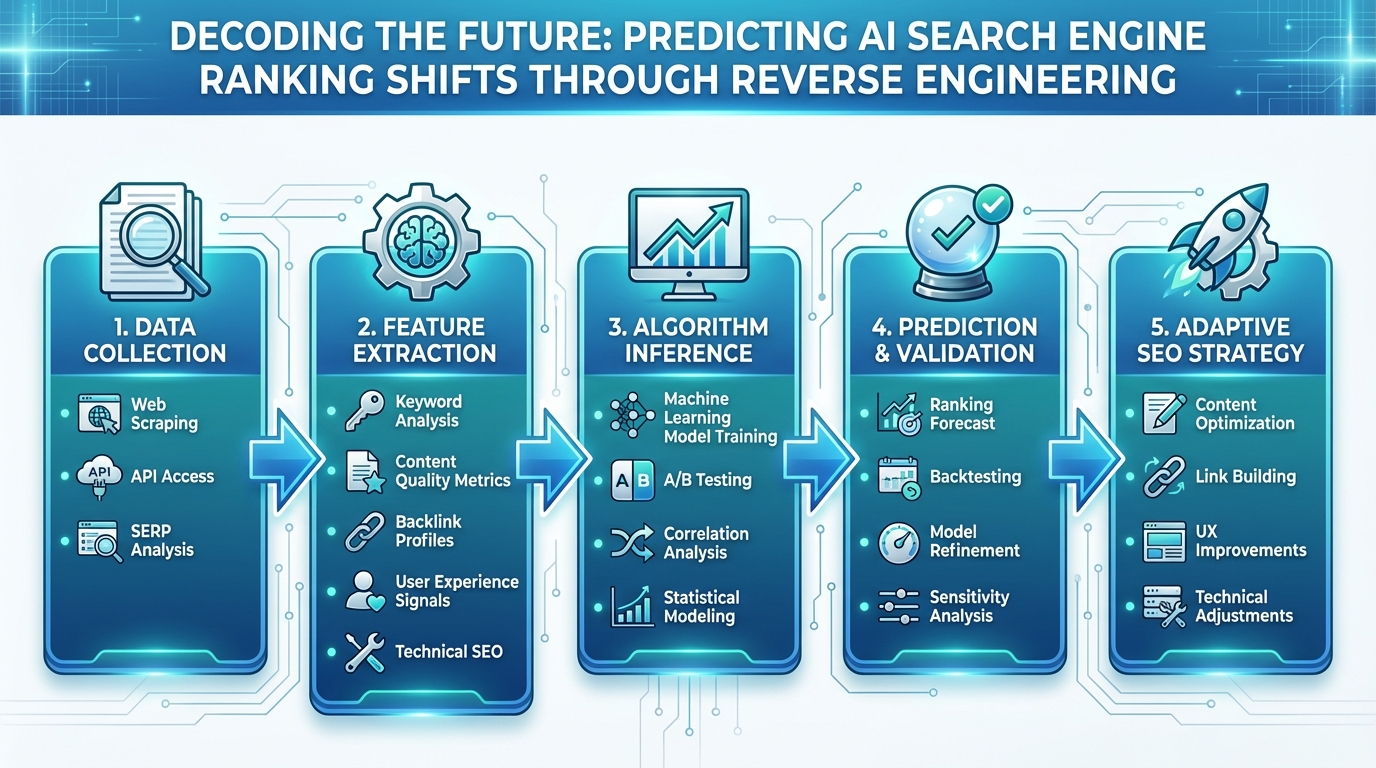
Reverse engineering involves analyzing the behavior of AI algorithms to understand how they rank content. This can be achieved through various techniques, including SERP analysis, A/B testing, and algorithm tracking. By carefully observing how search results change in response to different factors, you can gain valuable insights into the inner workings of AI algorithms and optimize your website accordingly.
SERP analysis involves examining the search engine results pages (SERPs) for specific keywords to identify the ranking factors that are most important to AI algorithms. This includes analyzing the content, structure, and backlinks of the top-ranking websites to identify patterns and best practices. By understanding what works for your competitors, you can develop strategies to improve your own AI search engine ranking. Analyzing SERPs is critical for understanding what content formats are favored.
A/B testing involves creating multiple versions of a web page and comparing their performance to determine which version performs best. This can be used to test different headlines, content formats, and calls to action to identify the elements that are most effective at engaging users and improving AI search engine ranking. For example, testing different title tags can reveal which keywords and phrases resonate most with searchers.
Algorithm tracking involves monitoring changes in search engine algorithms to identify new ranking factors and adjust your SEO strategies accordingly. This can be achieved by following industry news, participating in online forums, and using specialized tools that track algorithm updates. Staying informed about the latest algorithm changes is crucial for maintaining your AI search engine ranking.
Predictive SEO Strategies for 2025
Predictive SEO involves using data analysis and machine learning to forecast future trends in search and optimize your website accordingly. This requires analyzing historical data, identifying patterns, and developing models that can predict how AI algorithms will rank content in the future. By anticipating future trends, you can proactively optimize your website and gain a competitive advantage in the search results.
One key aspect of predictive SEO is identifying emerging keywords and topics that are likely to become popular in the future. This can be achieved by monitoring social media trends, analyzing search query data, and using predictive analytics tools. By creating content around emerging topics, you can position your website as a thought leader and attract a larger audience. You may also find it useful to examine 7+ Proven Strategies for Minimum Marketable Product (MMP) Success in 2025: Achieving Product-Market Fit Faster with AI and Empathy, as this can help guide your SEO content creation.
Another important aspect of predictive SEO is understanding how AI algorithms are likely to evolve in the future. This requires staying informed about the latest advancements in AI and machine learning, and anticipating how these advancements will impact search engine ranking. By understanding the future direction of AI, you can develop SEO strategies that are future-proof and sustainable.
Predictive SEO also involves analyzing user behavior to understand how users are interacting with search results. This includes tracking click-through rates, bounce rates, and time on page to identify patterns and trends. By understanding how users are engaging with your content, you can optimize it to improve user satisfaction and AI search engine ranking.
Data Analysis and SERP Analysis for AI-Powered SEO
Data analysis is the backbone of AI-powered SEO. By collecting and analyzing data from various sources, you can gain valuable insights into user behavior, search trends, and algorithm changes. This data can then be used to inform your SEO strategies and improve your AI search engine ranking. Data sources include website analytics, search console data, social media analytics, and third-party SEO tools.
Website analytics provides data on how users are interacting with your website, including page views, bounce rates, and time on page. This data can be used to identify areas for improvement and optimize your website for user engagement. For example, if you notice that users are leaving a particular page quickly, you may need to improve the content or design of that page.
Search console data provides data on how your website is performing in search results, including impressions, clicks, and average ranking. This data can be used to identify keywords that are driving traffic to your website and optimize your content for those keywords. It can also help you identify technical issues that are preventing your website from ranking well.
SERP analysis involves examining the search engine results pages (SERPs) for specific keywords to identify the ranking factors that are most important to AI algorithms. This includes analyzing the content, structure, and backlinks of the top-ranking websites to identify patterns and best practices. By understanding what works for your competitors, you can develop strategies to improve your own AI search engine ranking.
AI-Powered SEO Tools for Prediction and Analysis
A variety of AI-powered SEO tools are available to help you predict algorithm changes, analyze data, and optimize your website for AI search engine ranking. These tools use machine learning algorithms to identify patterns, predict trends, and provide actionable insights. Examples of AI-powered SEO tools include SEMrush, Ahrefs, and Surfer SEO.
SEMrush offers a suite of tools for keyword research, competitor analysis, and website auditing. Its AI-powered features include keyword magic tool, which helps you discover related keywords and topics, and site audit tool, which identifies technical issues that are impacting your AI search engine ranking. You can also use it to analyze 7+ Proven Strategies for Cybersecurity for SMBs Success in 2025: A Data-Driven Guide of your website.
Ahrefs is another popular SEO tool that offers a range of features for backlink analysis, keyword research, and competitor monitoring. Its AI-powered features include content explorer, which helps you discover trending topics, and site explorer, which provides detailed insights into your competitors’ websites. Ahrefs excels at revealing backlink strategies.
Surfer SEO is a content optimization tool that uses AI to analyze the top-ranking content for a given keyword and provide recommendations for improving your own content. This includes suggestions for keyword usage, content structure, and readability. Surfer SEO helps you create content that is optimized for both users and AI algorithms. Using AI SEO tools can help improve your AI search engine ranking.
The Future of Search: Adapting to Continuous AI Evolution
The future of search is inextricably linked to the evolution of AI. As AI algorithms become more sophisticated, they will be able to understand user intent with even greater accuracy and provide more personalized and relevant search results. This will require SEO professionals to continuously adapt their strategies and embrace new AI-driven approaches to maintain and improve their AI search engine ranking. Staying ahead of the curve is imperative.
One key trend to watch is the increasing importance of voice search. As voice assistants like Siri and Alexa become more prevalent, users are increasingly using voice commands to search for information. This requires optimizing your content for natural language queries and providing concise, direct answers to common questions.
Another important trend is the growing emphasis on user experience. Search engines are increasingly prioritizing websites that provide a positive user experience, including fast loading times, mobile responsiveness, and intuitive navigation. Optimizing your website for user experience will be crucial for achieving high AI search engine ranking in the future. Also, consider 7+ Proven Strategies for Optimizing Respiration for Peak Performance & Longevity in 2025 to ensure your team is at peak performance.
The use of structured data and schema markup will also become increasingly important. Structured data provides search engines with additional information about your content, making it easier for them to understand and index your website. Implementing structured data can improve your visibility in search results and enhance your AI search engine ranking.
Case Studies: Successful AI Search Engine Ranking Strategies
Numerous case studies demonstrate the effectiveness of AI-driven SEO strategies. These case studies highlight the importance of data analysis, algorithm tracking, and predictive modeling in achieving high AI search engine ranking. By examining these case studies, you can gain valuable insights into how to implement successful AI-powered SEO strategies.
One case study involved a website that was struggling to rank for its target keywords. By analyzing the SERPs and identifying the ranking factors that were most important to AI algorithms, the website was able to optimize its content and backlinks. As a result, the website’s AI search engine ranking improved significantly, leading to a substantial increase in traffic and revenue. This case study illustrates the power of data-driven SEO.
Another case study involved a website that was able to predict an upcoming algorithm change and proactively optimize its content. By monitoring industry news and participating in online forums, the website was able to anticipate the algorithm change and adjust its SEO strategies accordingly. As a result, the website maintained its high AI search engine ranking and avoided any negative impact from the algorithm change. This case study demonstrates the importance of algorithm tracking and predictive modeling.
A third case study involved a website that used AI-powered SEO tools to analyze its competitors’ websites and identify their strengths and weaknesses. By understanding what worked for its competitors, the website was able to develop strategies to improve its own AI search engine ranking. As a result, the website was able to outperform its competitors and achieve a higher position in the search results. This case study highlights the value of competitor analysis and AI-powered SEO tools. Don’t forget the importance of 7+ Proven Strategies for Tech Pitch for Non-Technical Founders Success in 2025: A Step-by-Step Guide.
Challenges and Pitfalls in Predicting AI Ranking Shifts
Predicting AI ranking shifts is not without its challenges. AI algorithms are complex and constantly evolving, making it difficult to accurately forecast future trends. Additionally, search engines often keep their algorithms secret, making it challenging to understand how they work and what factors they prioritize. Despite these challenges, there are several strategies you can use to improve your chances of success.
One common pitfall is relying too heavily on historical data. While historical data can provide valuable insights into past trends, it is not always a reliable indicator of future performance. AI algorithms are constantly learning and adapting, so past patterns may not hold true in the future. To avoid this pitfall, it is important to continuously monitor search engine algorithm updates and adjust your strategies accordingly. Don’t place all your eggs in one basket.
Another pitfall is focusing too much on technical SEO and neglecting content quality. While technical SEO is important for ensuring that your website is crawlable and indexable, it is not a substitute for high-quality content. AI algorithms are becoming increasingly sophisticated at analyzing content and identifying websites that provide valuable information to users. To avoid this pitfall, it is important to prioritize content quality and create content that is comprehensive, accurate, and engaging.
A third pitfall is ignoring user experience. Search engines are increasingly prioritizing websites that provide a positive user experience, including fast loading times, mobile responsiveness, and intuitive navigation. To avoid this pitfall, it is important to optimize your website for user experience and ensure that it is easy to use and navigate.
Conclusion: Mastering AI Search Engine Ranking
Mastering AI search engine ranking in 2025 requires a strategic and data-driven approach. By understanding the underlying principles of AI algorithms, reverse engineering their behavior, and leveraging predictive SEO strategies, you can position your website for success in the ever-evolving search landscape. Embrace AI-powered tools, prioritize content quality, and continuously adapt to the latest algorithm changes to maintain your competitive edge and achieve high AI search engine ranking.
The future of search is undoubtedly driven by AI. Those who embrace these changes and proactively adapt their SEO strategies will be the ones who thrive. By focusing on creating high-quality, user-centric content, and leveraging the power of data analysis and predictive modeling, you can unlock the full potential of AI-powered SEO and achieve sustainable success in the years to come. The key is to stay informed, be adaptable, and always prioritize the user experience.

Data Comparison: SEO Tools for AI Search Engine Ranking
| Tool | Key Features | AI-Powered Capabilities | Pricing |
|---|---|---|---|
| SEMrush | Keyword Research, Competitor Analysis, Site Audit | Keyword Magic Tool, Content Template | Starting at $119.95/month |
| Ahrefs | Backlink Analysis, Keyword Research, Rank Tracking | Content Explorer, Site Explorer | Starting at $99/month |
| Surfer SEO | Content Optimization, Keyword Research | Content Editor, SERP Analyzer | Starting at $59/month |
| Moz Pro | Keyword Research, Rank Tracking, Site Audit | Keyword Explorer, On-Page Grader | Starting at $99/month |
Frequently Asked Questions (FAQ)
What is AI search engine ranking?
AI search engine ranking refers to how search engines use artificial intelligence to determine the order of search results, based on factors like content relevance, user experience, and website authority.
How can I improve my AI search engine ranking?
Focus on creating high-quality, user-centric content, optimizing your website for user experience, building website authority, and using AI-powered SEO tools for analysis and prediction.
What are the key ranking factors for AI algorithms?
Key ranking factors include content relevance, user experience, website authority, technical SEO, and the use of structured data.
What is predictive SEO?
Predictive SEO involves using data analysis and machine learning to forecast future trends in search and optimize your website accordingly, anticipating algorithm changes and user behavior.
What are some AI-powered SEO tools I can use?
Examples of AI-powered SEO tools include SEMrush, Ahrefs, and Surfer SEO, which offer features for keyword research, competitor analysis, and content optimization.
How can I stay updated on AI algorithm changes?
Follow industry news, participate in online forums, and use specialized tools that track algorithm updates to stay informed about the latest changes and adjust your SEO strategies accordingly.
External Links: