

AI Solo Startup: Your 2025 Blueprint for One-Person Success
The future of work is increasingly leaning towards autonomy and specialization. Imagine building a thriving business powered by artificial intelligence, all on your own terms. That’s the promise of an AI solo startup. Many aspiring entrepreneurs dream of launching their own AI-driven ventures, but the path can seem daunting. The complexity of AI, coupled with the challenges of running a business solo, often feels overwhelming. This comprehensive guide will walk you through exactly how I would approach building a successful AI solo startup in 2025, providing a practical, step-by-step blueprint for your own venture. We’ll cover essential concepts, real-world applications, and the critical skills you’ll need to succeed.
What is an AI Solo Startup?
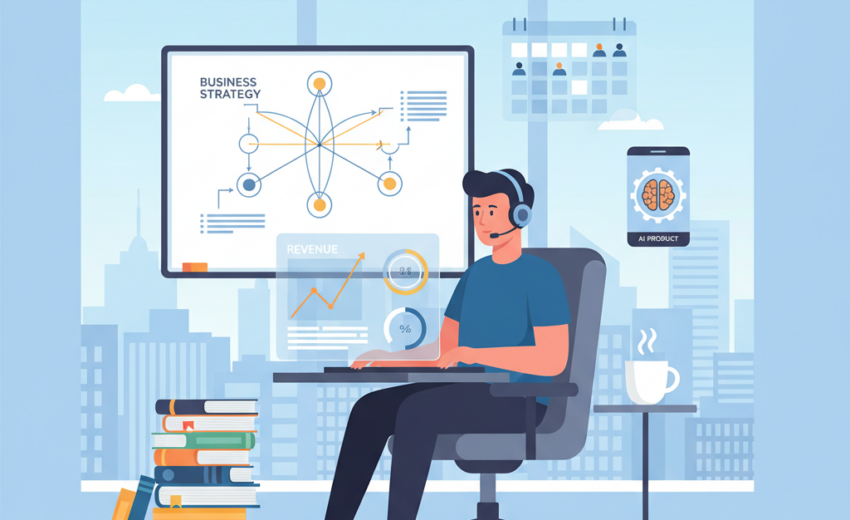
An AI solo startup is a business venture where a single individual leverages artificial intelligence technologies to create and deliver products or services. This differs from traditional startups that typically require a team of engineers, marketers, and sales professionals. The core concept relies on automation, intelligent algorithms, and readily available AI tools to minimize the need for extensive human resources. In essence, you are building a business where AI acts as a significant part of your workforce, enabling you to achieve remarkable results with limited manpower. This model is gaining traction as AI becomes more accessible and user-friendly, empowering individuals to compete with larger organizations in niche markets.
Key Benefits/Advantages of an AI Solo Startup
- Lower Overhead: Reduced expenses on salaries, office space, and benefits allow for faster profitability and greater financial flexibility.
- Agility and Speed: A single decision-maker can quickly adapt to market changes and implement new strategies without bureaucratic delays.
- Direct Customer Connection: Direct interaction with customers provides valuable feedback and allows for personalized service, fostering strong relationships.
- Focus and Specialization: Concentrating on a specific niche allows for deep expertise and the development of highly targeted AI solutions.
- Creative Freedom: You have complete control over the direction of your business and the types of AI projects you pursue.
- Scalability: AI-powered automation enables you to scale your operations and reach a wider audience without proportionally increasing your workload.
- Higher Profit Margins: By minimizing operational costs and focusing on high-value services, you can achieve significant profit margins.
Core Concepts/Mechanisms for Building an AI Solo Startup
Building a successful AI solo startup hinges on a few key concepts and mechanisms. These are the building blocks that will allow you to create a viable and thriving business:
- Niche Selection: Identifying a specific problem or opportunity that can be addressed with AI is crucial. This involves market research, competitor analysis, and understanding customer needs. Consider leveraging tools like Google Trends (anchor text: Google Trends) to identify emerging trends and unmet demands. The more specific your niche, the easier it will be to stand out and attract customers.
- AI Skillset Development: While you don’t need to be a PhD in AI, you need to understand the fundamentals of machine learning, natural language processing (NLP), and computer vision. Platforms like Coursera (anchor text: Coursera) and Udacity (anchor text: Udacity) offer excellent courses on these topics. Focus on practical skills that you can apply directly to your business.
- Leveraging Pre-trained Models and APIs: Instead of building AI models from scratch, utilize pre-trained models and APIs offered by companies like OpenAI (anchor text: OpenAI), Google Cloud AI (anchor text: Google Cloud AI), and Amazon Web Services (AWS) (anchor text: AWS). These tools provide access to cutting-edge AI capabilities without requiring extensive coding or data science expertise.
- Automation and Workflow Optimization: Identify repetitive tasks that can be automated using AI. This could involve automating customer support inquiries, generating marketing content, or analyzing data. Tools like Zapier (anchor text: Zapier) can help you connect different applications and automate workflows.
- Data Acquisition and Management: Data is the lifeblood of AI. You’ll need to find ways to acquire relevant data for training and improving your AI models. This could involve scraping data from the web, purchasing datasets, or collecting data directly from your customers. Implement robust data management practices to ensure data quality and security.
- Minimum Viable Product (MVP) Development: Start with a simple, functional version of your AI product or service. This allows you to test your assumptions, gather feedback, and iterate quickly. Focus on delivering core value to your customers and gradually add more features as needed.
- Marketing and Sales: Develop a marketing strategy to reach your target audience. This could involve content marketing, social media marketing, or paid advertising. Highlight the unique benefits of your AI-powered solution and focus on building trust with your customers.
- Continuous Learning and Adaptation: The field of AI is constantly evolving. Stay up-to-date on the latest advancements and be prepared to adapt your business model as needed. Participate in online communities, attend conferences, and read industry publications.
Real-world Applications/Use Cases for an AI Solo Startup
The possibilities for AI solo startup are vast and varied. Here are a few real-world examples to spark your imagination:
- AI-Powered Content Creation: Develop a tool that uses AI to generate high-quality blog posts, articles, or social media content for businesses. This could involve using NLP to understand the context of a topic and generate relevant and engaging text.
- AI-Driven Virtual Assistant: Create a virtual assistant that can handle tasks such as scheduling appointments, managing emails, and providing customer support. This could involve using NLP to understand user requests and respond accordingly.
- AI-Based Personalized Education: Develop a platform that uses AI to personalize the learning experience for students. This could involve using machine learning to identify students’ strengths and weaknesses and tailor the curriculum accordingly.
- AI-Enhanced E-commerce Recommendations: Build a service that helps e-commerce businesses provide more personalized product recommendations to their customers. This could involve using machine learning to analyze customer data and predict their purchasing behavior.
- AI-Automated Financial Analysis: Offer a service that uses AI to analyze financial data and provide insights to investors. This could involve using machine learning to identify trends and patterns in the market.
- AI-Powered Legal Document Review: Create a tool that uses AI to review legal documents for errors and inconsistencies. This could involve using NLP to understand the legal language and identify potential issues.
- AI-Driven Healthcare Diagnostics: Develop a platform that uses AI to analyze medical images and assist doctors in diagnosing diseases. This would require access to large datasets of medical images and expertise in computer vision.
Challenges & Limitations of Starting an AI Solo Startup
While the prospect of launching an AI solo startup is exciting, it’s important to be aware of the challenges and limitations involved:
- Technical Expertise: You’ll need a solid understanding of AI concepts and programming skills to build and maintain your AI-powered solutions. This requires a significant investment of time and effort in learning and development.
- Data Availability: Access to relevant and high-quality data is crucial for training and improving your AI models. Acquiring and managing data can be a challenging and expensive process.
- Computational Resources: Training complex AI models can require significant computational resources, such as powerful GPUs and cloud computing services. This can add to your startup costs.
- Ethical Considerations: AI raises ethical concerns related to bias, fairness, and privacy. You’ll need to address these issues responsibly and ensure that your AI solutions are used ethically.
- Competition: The AI landscape is becoming increasingly competitive. You’ll need to differentiate your business and offer unique value to stand out from the crowd.
- Funding: Securing funding for an AI solo startup can be challenging, especially if you lack a strong track record or a proven business model.
- Time Commitment: Building and running a successful startup requires a significant time commitment. Be prepared to work long hours and make sacrifices.
- Staying Current: The rapid pace of advancement in AI requires constant learning and adaptation. Keeping up with the latest research and technologies can be demanding.
Future Trends & Outlook for AI Solo Startups
The future of AI solo startup is bright, with several key trends shaping the landscape:
- Democratization of AI: AI tools and technologies are becoming more accessible and user-friendly, making it easier for individuals to build AI-powered solutions without extensive technical expertise. Platforms like Hugging Face (anchor text: Hugging Face) are making advanced AI models readily available.
- Rise of Low-Code/No-Code AI Platforms: These platforms allow you to build AI applications without writing code, further reducing the barrier to entry for aspiring AI entrepreneurs.
- Increased Focus on Explainable AI (XAI): As AI becomes more prevalent, there’s a growing demand for AI models that are transparent and explainable. This will help build trust and ensure that AI is used responsibly.
- Edge AI Computing: Processing data locally on devices (edge computing) will become more common, reducing reliance on cloud computing and enabling faster and more efficient AI applications.
- AI-Driven Automation of More Complex Tasks: AI will be able to automate more complex and creative tasks, further empowering individuals to achieve more with less.
- Integration of AI with Other Technologies: AI will be increasingly integrated with other technologies, such as IoT, blockchain, and augmented reality, creating new opportunities for innovation.
- Growing Demand for AI Skills: As AI becomes more integrated into the economy, there will be a growing demand for individuals with AI skills. This will create opportunities for AI solo startups that offer training and consulting services.
By 2025, the landscape will be even more fertile for AI solo startup. The convergence of accessible AI tools, readily available data, and a growing demand for AI-powered solutions will create a perfect storm for entrepreneurial success. The key will be to identify a niche, develop the necessary skills, and build a product or service that solves a real problem for your target audience. With dedication, creativity, and a strategic approach, you can build a thriving AI solo startup and be part of the AI revolution.
Ready to Launch Your AI Solo Startup?
The time to act on your entrepreneurial dreams is now. Building an AI solo startup in 2025 is within your reach, thanks to the democratization of AI technology and the increasing availability of powerful tools. This guide has provided you with a comprehensive blueprint, covering everything from niche selection to marketing strategies. But knowledge is only the first step. The real magic happens when you take action and start building your vision.
Don’t be intimidated by the complexity of AI. Focus on learning the essential skills, leveraging pre-trained models, and building a minimum viable product that delivers real value to your customers. Embrace the challenges, learn from your mistakes, and never stop innovating. The journey of an entrepreneur is not always easy, but it is incredibly rewarding.
Take the first step today. Start researching your niche, exploring AI tools, and developing your business plan. Connect with other AI enthusiasts, join online communities, and seek mentorship from experienced entrepreneurs. The AI revolution is happening now, and you have the opportunity to be a part of it. Don’t let this opportunity pass you by. Start building your AI solo startup and create a future where you are in control of your destiny.
I encourage you to explore resources like the Entrepreneur Magazine (anchor text: Entrepreneur Magazine) and the Small Business Administration (SBA) (anchor text: SBA) for further guidance and support. Your journey to becoming a successful AI solo entrepreneur starts with a single step. Take that step today, and I’m confident you can achieve your goals and build a thriving AI-powered business.