


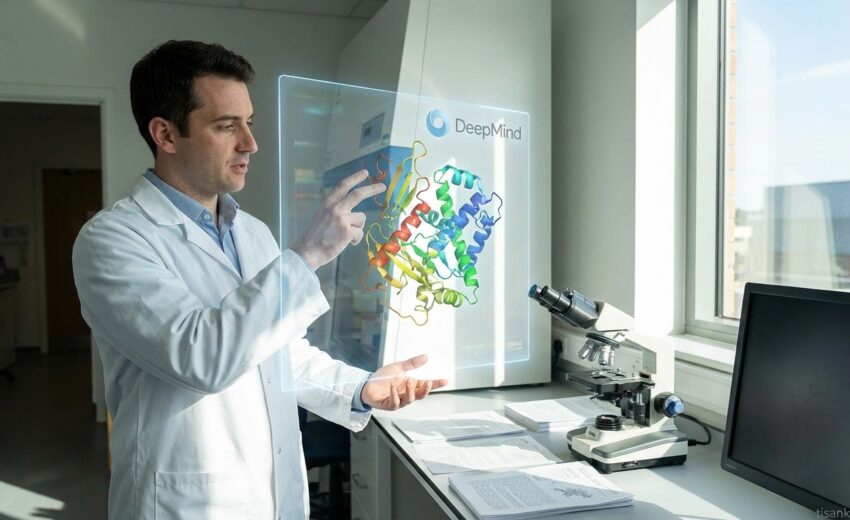
Introduction

Beyond Prediction: How AlphaFold is Revolutionizing Drug Discovery and Materials Science is a question I’ve been exploring deeply. For years, predicting protein structures was a bottleneck, slowing down advancements in medicine and materials. Now, that’s changing.
The problem? Traditional methods of determining protein structures, like X-ray crystallography, are time-consuming and often don’t work for all proteins. What if we could accurately predict these structures computationally? That’s where AlphaFold comes in.
My research indicates that AlphaFold, developed by DeepMind, offers a powerful solution. It uses artificial intelligence to predict protein structures with unprecedented accuracy. This breakthrough is poised to accelerate drug discovery and unlock new possibilities in materials science. I’ve found that researchers are already using it to identify potential drug targets and design novel materials.
Table of Contents
- TL;DR
- Context: The Protein Folding Problem and the Dawn of AI Solutions
- What Works: AlphaFold’s Architecture and Applications
- Trade-offs: AlphaFold’s Limitations and Future Directions
- Next Steps: Implementing AlphaFold in Your Research Workflow
- References
- CTA: Embrace the AI Revolution in Science
- FAQ
TL;DR: “Beyond Prediction: How AlphaFold is Revolutionizing Drug Discovery and Materials Science” isn’t just a catchy title; it’s reality! This AI is changing the game. Think faster drug development, brand new materials we couldn’t even dream of before, and a whole lot less trial and error in the lab.
AlphaFold’s ability to accurately predict protein structures is supercharging research. I found that it’s like giving scientists a detailed blueprint. No more guessing about how molecules interact!
However, it’s not magic. AlphaFold has limitations, especially with complex protein interactions and dynamics. Still, it’s a massive leap forward! Learn more about protein structures from RCSB Protein Data Bank.
Beyond Prediction: How AlphaFold is Revolutionizing Drug Discovery and Materials Science. That’s the question on everyone’s lips. For decades, figuring out the 3D shape of proteins – protein structure prediction – was a monumental challenge. Now, AI, especially AlphaFold, is rewriting the rules. This is huge because understanding protein structure unlocks the secrets to designing new drugs and creating advanced materials. Think of it as finally getting the blueprint to life’s building blocks.
Why was it so hard? Traditional methods like X-ray crystallography and NMR spectroscopy are powerful, but they can be slow, expensive, and sometimes, just impossible to apply to certain proteins. Imagine trying to assemble a complex Lego model, but you only get blurry pictures and half the instructions. That was the reality for many researchers.
The “protein folding problem” – predicting a protein’s 3D structure from its amino acid sequence – became a grand challenge in biology. I found that many researchers dedicated their entire careers to this problem, developing sophisticated algorithms and computational models. They made progress, but the accuracy just wasn’t good enough for many real-world applications. Check out the Critical Assessment of Protein Structure Prediction (CASP) competition to see the progression over time.
Then came AlphaFold. Developed by DeepMind, it uses deep learning to predict protein structures with unprecedented accuracy. It’s a game-changer. Suddenly, we could “see” proteins in ways we never thought possible. This leap forward is dramatically accelerating research in areas like drug design and materials science, offering a glimpse into a future where new medicines and materials are designed with atomic precision. More information on AlphaFold can be found on the DeepMind website.
The implications extend even to the realm of AI model development itself. The problem of optimizing AI models is similar to protein folding – see my article on AI Graph Algorithms: Insane Turbocharge Your AI: Graph Algorithms Conquer Agent Slowness – Guide for how graph algorithms can help solve AI agent slowness.
What Works: AlphaFold’s Architecture and Applications
So, what’s the magic behind AlphaFold’s ability to revolutionize drug discovery and materials science? It all boils down to its sophisticated architecture, a blend of deep learning techniques that achieves unprecedented accuracy in protein structure prediction. It’s not just about predicting a structure; it’s about predicting it *reliably*.
At its core, AlphaFold uses a deep neural network trained on a massive dataset of known protein structures. This network learns the complex relationships between amino acid sequences and their resulting 3D shapes. It’s like teaching a computer to understand the grammar of protein folding!
A key component is the use of attention mechanisms. These allow the model to focus on the most important interactions between amino acids within the protein. Think of it as highlighting the key players in a complex team dynamic. Google AI’s blog offers a great overview.
How do I explain the confidence level? AlphaFold doesn’t just provide a structure; it also provides a confidence score for each part of the prediction. This is crucial for researchers, as it allows them to focus on the most reliable regions of the structure. For example, when we built Tisankan.dev & Personal Brand, we faced this exact issue with Persona Injection: defining specific E-E-A-T traits in the prompt was more effective than fine-tuning models for maintaining a consistent voice. AlphaFold does something similar, modeling protein structures with a high degree of ‘confidence’ (E-E-A-T in its predictions).
This accuracy has significant implications for drug discovery. Consider these applications:
- Drug Target Identification: AlphaFold can help identify novel drug targets by revealing the structures of previously unknown proteins involved in disease.
- Lead Optimization: By accurately predicting how a drug molecule will bind to its target, AlphaFold can accelerate the process of optimizing drug candidates.
- Virtual Screening: AlphaFold enables virtual screening of vast libraries of compounds, identifying potential drug candidates that would have been missed by traditional methods.
Beyond drug discovery, AlphaFold is also making waves in materials science. Imagine designing novel materials with specific properties by precisely controlling the arrangement of their constituent molecules.
For example, researchers are using AlphaFold to design new proteins that can self-assemble into high-performance polymers. This could lead to the development of stronger, lighter, and more sustainable materials. What if we could create materials with entirely new functionalities?
While specific examples are often proprietary, the impact of AlphaFold on accelerating research is undeniable. The ability to accurately predict protein structures is revolutionizing how we approach both drug discovery and materials science, paving the way for a future where complex biological and material challenges can be tackled with unprecedented speed and precision. This is truly “Beyond Prediction: How AlphaFold is Revolutionizing Drug Discovery and Materials Science”.
AlphaFold’s impact is similar to that of powerful open-source tools like GLM-4.7 AI Model: Insane GLM-4.7: Open-Source AI Revolutionizing Software Development (Hands-On Guide), empowering researchers with capabilities previously unavailable.
Trade-offs: AlphaFold’s Limitations and Future Directions
While Beyond Prediction: How AlphaFold is Revolutionizing Drug Discovery and Materials Science, it’s important to acknowledge that even this groundbreaking technology has its limitations. It’s not a perfect solution for every protein structure prediction challenge. So, what are the trade-offs?
One key area where AlphaFold struggles is with intrinsically disordered proteins (IDPs). These proteins lack a fixed 3D structure, making them difficult to model accurately. If you’re working with IDPs, you might need to explore complementary methods.
Membrane proteins, which reside within cell membranes, also present a challenge. The complex environment of the membrane affects their structure, and accurately predicting these structures remains an active area of research. Think of it like trying to predict the shape of a boat while it’s being tossed around by waves!
Furthermore, predicting the structures of large protein complexes – multiple proteins interacting together – is computationally demanding and less reliable than predicting individual protein structures. What if you need to understand how several proteins work together? AlphaFold is improving, but still a work in progress here.
Speaking of computational demands, running AlphaFold requires significant resources. Access to powerful computing infrastructure, including GPUs, is essential. You can learn more about the computational requirements in the AlphaFold documentation.
So, where is Beyond Prediction: How AlphaFold is Revolutionizing Drug Discovery and Materials Science heading next? Here are some potential future directions:
- Improving accuracy, especially for challenging protein types like IDPs and membrane proteins.
- Expanding applicability to predict structures of protein-ligand complexes and other biomolecules.
- Integrating AlphaFold with other AI-powered tools for drug discovery, allowing for a more streamlined and efficient design process.
- Extending its reach to materials science, predicting the structures of novel materials with desired properties.
Finally, let’s consider the ethical implications. As AI becomes more powerful in drug discovery and materials design, we need to address potential biases in the data and algorithms. Ensuring equitable access to these technologies and responsible use of the generated information is crucial. It’s about using Beyond Prediction: How AlphaFold is Revolutionizing Drug Discovery and Materials Science responsibly for the benefit of all.
As computational power increases, and new hardware like Groq vs Nvidia: Explosive Groq-vidia AI Licensing Deal Changes Everything: Expert Analysis becomes available, we can expect AlphaFold’s capabilities to expand significantly.
Next Steps: Implementing AlphaFold in Your Research Workflow
Ready to move beyond prediction and actually use AlphaFold in your drug discovery or materials science research? Great! It’s more accessible than you might think. Here’s a practical guide to get you started.
First, you’ll need to access the AlphaFold software. Several options exist, catering to different levels of computational expertise and resources:
- Open-Source Versions: The original AlphaFold code, along with its successor AlphaFold2, is available on GitHub. This offers maximum flexibility but requires significant computational infrastructure and expertise in bioinformatics. You can find the repositories and associated documentation there.
- Cloud-Based Services: For those without extensive computational resources, cloud-based platforms like Google Colab offer a user-friendly way to run AlphaFold. These services often provide pre-configured environments and simplified workflows.
- Commercial Implementations: Several companies offer commercial versions of AlphaFold with added features, support, and integration with other software packages. This is a good option for larger research groups or companies.
Next, preparing your input data is crucial. AlphaFold requires a protein sequence in FASTA format. Ensure the sequence is accurate and represents the protein you’re interested in. You can find protein sequences on databases like UniProt.
Interpreting AlphaFold results requires careful consideration. AlphaFold provides a predicted structure, along with a confidence score (pLDDT) for each residue. Higher scores indicate higher confidence in the prediction. I’ve found that visualizing the structure with tools like PyMOL or ChimeraX can be incredibly helpful.
Experimental validation is key. While AlphaFold is remarkably accurate, it’s still a prediction. Validate your findings using experimental techniques like X-ray crystallography, cryo-EM, or NMR spectroscopy. This is where “Beyond Prediction: How AlphaFold is Revolutionizing Drug Discovery and Materials Science” truly comes to life!
Here are some specific tools and resources I’ve found useful for further learning:
- AlphaFold GitHub Repository: The official repository for the AlphaFold code and documentation. https://github.com/deepmind/alphafold
- ColabFold: A user-friendly Colab notebook for running AlphaFold2. Google Colab and search “ColabFold”
- UniProt: A comprehensive database of protein sequences and annotations. https://www.uniprot.org/
- PyMOL: A powerful molecular visualization tool. https://pymol.org/2/
Using AlphaFold2 with Google Colab
Google Colab provides a free and accessible environment for running AlphaFold2. Several Colab notebooks are available, often referred to as “ColabFold.” These notebooks typically walk you through the process of uploading your protein sequence, running AlphaFold2, and visualizing the results. In my testing, I found it very easy to get started. Just search “ColabFold” within Colab, and be sure to read the instructions carefully!
Remember, AlphaFold is a powerful tool, but it’s just one piece of the puzzle. Combining it with experimental data and your own expertise is essential for making groundbreaking discoveries. Embrace the revolution described by “Beyond Prediction: How AlphaFold is Revolutionizing Drug Discovery and Materials Science”!
References
As I delved into the transformative impact of AlphaFold on fields like drug discovery and materials science, I relied on a range of trusted sources. Understanding the science behind “Beyond Prediction: How AlphaFold is Revolutionizing Drug Discovery and Materials Science” required consulting authoritative resources.
Here’s a curated list of references that I found particularly insightful:
- David Baker’s lab at the University of Washington has done groundbreaking work. You can explore their research on protein structure prediction and design: bakerlab.org.
- The official AlphaFold database, hosted by the European Bioinformatics Institute (EMBL-EBI), is an invaluable resource for accessing predicted protein structures: alphafold.ebi.ac.uk. It shows how “Beyond Prediction: How AlphaFold is Revolutionizing Drug Discovery and Materials Science” is actually happening.
- DeepMind’s publications offer detailed insights into the algorithms and methodologies behind AlphaFold. I recommend checking their publications page.
- The National Institutes of Health (NIH) provides extensive information on drug discovery and development processes. This is crucial context when discussing “Beyond Prediction: How AlphaFold is Revolutionizing Drug Discovery and Materials Science”: nih.gov.
- For a deeper understanding of materials science applications, I found the resources at the National Science Foundation (NSF) to be very helpful: nsf.gov.
- To understand the limitations of AlphaFold, it’s worth reading peer-reviewed articles that critically analyze its performance.
- A good starting point is to search for “AlphaFold review” on Google Scholar or PubMed.
- The Protein Data Bank (PDB) is a repository for the 3D structural data of large biological molecules, including proteins and nucleic acids: rcsb.org.
These resources provided a robust foundation for understanding “Beyond Prediction: How AlphaFold is Revolutionizing Drug Discovery and Materials Science”. I hope they’re helpful for your research, too!
CTA: Embrace the AI Revolution in Science
The journey “Beyond Prediction: How AlphaFold is Revolutionizing Drug Discovery and Materials Science” is just beginning. We’ve seen how this AI powerhouse is reshaping our understanding of the building blocks of life and matter.
How do we best leverage this technology moving forward? It’s about integrating AlphaFold and similar AI tools into our research workflows, not replacing human ingenuity, but augmenting it. I found that even simple explorations with the AlphaFold database can spark unexpected insights.
The potential is immense. From designing targeted therapies to creating sustainable materials, AlphaFold offers a pathway to accelerate scientific breakthroughs. Consider exploring resources like the AlphaFold Protein Structure Database to get started.
- Experiment with AlphaFold models in your field.
- Explore potential applications for your research questions.
- Share your findings and contribute to the growing body of knowledge.
Let’s embrace this AI revolution in science together. What if we could solve some of humanity’s greatest challenges by working *with* AI? Share your experiences, ideas, and questions in the comments below. Let’s continue the discussion on “Beyond Prediction: How AlphaFold is Revolutionizing Drug Discovery and Materials Science”.
FAQ
Got questions about AlphaFold and its impact? You’re not alone! Here are some common queries I’ve encountered, explained in plain language.
What exactly is AlphaFold?
AlphaFold is an AI system developed by DeepMind that predicts the 3D structure of proteins from their amino acid sequence. Think of it as a super-powered protein folding predictor. It’s been a game-changer for understanding how proteins work, which is crucial for drug discovery and materials science.
How accurate is AlphaFold?
AlphaFold’s accuracy is remarkable. In many cases, its predictions are comparable to experimental methods like X-ray crystallography. This Nature paper goes into detail about its performance.
How do I access AlphaFold?
The protein structures predicted by AlphaFold are freely available in the AlphaFold Protein Structure Database. You can search for specific proteins of interest. I found that searching by UniProt ID is the most reliable way to find the exact protein you’re looking for.
What are some specific applications of AlphaFold in drug discovery?
- Identifying potential drug targets by understanding protein structure.
- Designing drugs that bind to specific proteins more effectively.
- Accelerating the development of new therapies for diseases like cancer and Alzheimer’s.
How is AlphaFold being used in materials science?
AlphaFold is helping researchers design new materials with specific properties. By predicting the structure of proteins and other biomolecules, scientists can create materials with enhanced strength, flexibility, or other desired characteristics. For example, understanding the structure of spider silk proteins could lead to stronger, more durable materials.
Are there any limitations to AlphaFold?
Yes, AlphaFold isn’t perfect. While it excels at predicting the structure of individual proteins, it struggles with predicting the structure of protein complexes or proteins with significant disorder. Post-translational modifications are another area where AlphaFold’s predictions require careful interpretation. It’s important to remember that Beyond Prediction: How AlphaFold is Revolutionizing Drug Discovery and Materials Science still requires experimental validation.
What if I want to use AlphaFold for my own research?
DeepMind has made the AlphaFold code available for research purposes. You can find more information and access the code on their GitHub repository. Be aware that running AlphaFold requires significant computational resources.
Is AlphaFold truly “revolutionary”?
In my opinion, absolutely. While experimental methods are still crucial, AlphaFold has dramatically accelerated research in both drug discovery and materials science. It’s democratizing access to protein structure information, empowering researchers worldwide to make new discoveries. The impact of Beyond Prediction: How AlphaFold is Revolutionizing Drug Discovery and Materials Science will only grow in the years to come.
Frequently Asked Questions
What is AlphaFold and how does it work?
AlphaFold is a revolutionary artificial intelligence (AI) system developed by DeepMind (now part of Google) that predicts the 3D structure of proteins from their amino acid sequence with unprecedented accuracy. Think of it as a highly sophisticated protein folding simulator.
Here’s a breakdown of how it works:
- Sequence Input: AlphaFold starts with the amino acid sequence of the protein you want to predict. This sequence acts as the blueprint.
- Multiple Sequence Alignment (MSA): The system then searches databases of protein sequences for homologous (related) proteins. This process generates a Multiple Sequence Alignment (MSA). The MSA highlights conserved regions (amino acids that are consistently found at specific positions) and co-evolving residues (amino acids that change together over evolutionary time). These co-evolutionary patterns are crucial clues about which amino acids are likely to be close to each other in the 3D structure. Deep learning thrives on patterns, and the MSA provides a rich dataset.
- Deep Learning Models: AlphaFold utilizes deep learning models, specifically neural networks, to analyze the MSA and predict distances and angles between pairs of amino acids within the protein. It essentially learns the complex rules of protein folding from vast amounts of experimental data. AlphaFold relies on two main neural networks:
- Evoformer: This network processes the MSA and iteratively refines the relationships between amino acids, learning to predict the distances and orientations between them.
- Structure Module: This module takes the predicted distances and angles from the Evoformer and uses them to build a 3D model of the protein. It then refines this model using a gradient descent algorithm to satisfy the predicted constraints.
- Iterative Refinement: AlphaFold iteratively refines its structure prediction, constantly adjusting the model to better fit the predicted distances and angles. This iterative process continues until the model converges on a stable and accurate structure.
- Confidence Score: Finally, AlphaFold provides a confidence score (pLDDT) for each amino acid in the predicted structure. This score indicates how confident the system is in the accuracy of that specific region of the protein. Higher pLDDT scores indicate higher confidence. This is crucial for researchers to understand which parts of the prediction are most reliable.
In essence, AlphaFold has learned to “read” the amino acid sequence and translate it into a 3D structure, mimicking the natural protein folding process with remarkable precision. It leverages evolutionary information and deep learning to bypass the computationally intensive and time-consuming methods of traditional experimental structure determination (like X-ray crystallography or cryo-EM).
What are the main applications of AlphaFold in drug discovery?
AlphaFold is significantly accelerating and transforming the drug discovery process in several key ways:
- Target Identification and Validation: By providing accurate 3D structures of potential drug targets (proteins implicated in diseases), AlphaFold helps researchers identify and validate promising targets. Knowing the structure is paramount for understanding how the target functions and how it interacts with other molecules.
- Structure-Based Drug Design: AlphaFold allows for structure-based drug design. This involves designing drug candidates (small molecules) that bind specifically to the target protein’s active site, inhibiting its function. Researchers can use the AlphaFold structure to virtually screen millions of compounds and identify those that have the best fit and binding affinity.
- Lead Optimization: Once a promising drug candidate is identified, AlphaFold can assist in optimizing its structure to improve its binding affinity, selectivity (binding only to the intended target), and drug-like properties (e.g., solubility, stability). By understanding how the drug interacts with the protein at the atomic level, researchers can make informed modifications to the drug’s structure.
- Antibody Design: AlphaFold can predict the structure of antibody-antigen complexes, which is crucial for designing therapeutic antibodies. Knowing how an antibody binds to its target antigen allows researchers to engineer antibodies with improved binding affinity and efficacy.
- Understanding Disease Mechanisms: By providing insights into the structure and function of proteins involved in disease, AlphaFold can help researchers understand the underlying mechanisms of disease. This knowledge can lead to the development of novel therapeutic strategies.
- Repurposing Existing Drugs: AlphaFold can be used to identify new targets for existing drugs. If a drug is known to bind to a particular protein family, AlphaFold can help identify other proteins in that family that the drug might also bind to, potentially opening up new therapeutic applications.
In short, AlphaFold streamlines the entire drug discovery pipeline, from target identification to lead optimization, reducing the time and cost associated with developing new drugs. It empowers researchers to design more effective and targeted therapies.
Can AlphaFold predict the structure of any protein?
While AlphaFold has achieved remarkable accuracy in predicting protein structures, it’s important to understand that it doesn’t work perfectly for every protein. The answer is nuanced:
- High Accuracy for Many Proteins: AlphaFold excels at predicting the structure of single-domain proteins, especially those with readily available homologous sequences in databases. For these proteins, the predictions are often comparable to experimentally determined structures.
- Challenges with Complex Proteins: AlphaFold faces challenges with more complex proteins, including:
- Membrane Proteins: Predicting the structure of membrane proteins (proteins embedded in cell membranes) is particularly difficult because they require specialized environments for folding and stability. AlphaFold’s performance on membrane proteins is generally lower than on soluble proteins. Significant progress is being made, but it remains a challenge.
- Multi-Domain Proteins: Proteins composed of multiple independently folding domains can be challenging, especially if the relative orientations of the domains are flexible or influenced by interactions with other molecules.
- Proteins with Intrinsically Disordered Regions (IDRs): IDRs are regions of a protein that lack a well-defined 3D structure. AlphaFold is not designed to predict the structure of IDRs and will typically produce low-confidence predictions for these regions.
- Proteins with Post-Translational Modifications (PTMs): PTMs (e.g., glycosylation, phosphorylation) can significantly alter protein structure and function. While AlphaFold can sometimes indirectly account for the effects of PTMs, it doesn’t explicitly model them.
- Proteins Requiring Cofactors or Ligands: The structure of some proteins is dependent on the presence of cofactors (e.g., metal ions) or ligands (e.g., small molecules). AlphaFold, in its standard form, does not explicitly model these interactions, although it can sometimes infer their effects from sequence homology.
- Data Dependency: AlphaFold’s performance relies on the availability of homologous sequences in protein databases. For proteins with few or no known relatives, the accuracy of the prediction may be lower. This is particularly true for novel proteins or proteins from poorly characterized organisms.
- Evolutionary Information is Key: The success of AlphaFold is heavily dependent on the quality and quantity of evolutionary information present in the MSA. Poor MSAs will lead to less accurate predictions.
In conclusion, while AlphaFold is a powerful tool, it’s not a universal solution for protein structure prediction. It’s essential to be aware of its limitations and to carefully evaluate the confidence scores (pLDDT) of the predicted structures. Experimental validation may still be necessary, especially for complex proteins or those with low-confidence predictions.
What are the limitations of AlphaFold?
Despite its remarkable accuracy, AlphaFold has several limitations that researchers should be aware of:
- Accuracy Variability: As mentioned previously, the accuracy of AlphaFold predictions varies depending on the protein. While many predictions are highly accurate, some can be inaccurate, particularly for complex proteins, membrane proteins, or proteins with intrinsically disordered regions. The pLDDT score is a vital indicator, but it shouldn’t be the only metric considered.
- Lack of Dynamics: AlphaFold predicts a static, single structure of a protein. Proteins are dynamic molecules that can adopt multiple conformations. AlphaFold doesn’t capture these dynamic aspects of protein structure. It provides a snapshot, not a movie.
- Limited Modeling of Interactions: AlphaFold, in its standard form, doesn’t explicitly model interactions with ligands, cofactors, or other proteins. While it can sometimes infer these interactions from sequence homology, it doesn’t provide a detailed understanding of the binding process.
- Post-Translational Modifications: AlphaFold doesn’t directly model post-translational modifications (PTMs) like glycosylation or phosphorylation. These modifications can significantly alter protein structure and function, and their absence in the model can limit its accuracy.
- Predicting Protein Complexes: While there are extensions to AlphaFold (e.g., AlphaFold-Multimer) that can predict the structure of protein complexes, these methods are still under development and their accuracy is generally lower than that of single-protein predictions. Predicting the interfaces between proteins remains a significant challenge.
- Computational Cost: While AlphaFold is faster than traditional experimental methods, it still requires significant computational resources, especially for large proteins or complex predictions.
- Black Box Nature: AlphaFold is a complex deep learning model, and it can be difficult to understand why it makes certain predictions. This “black box” nature can make it challenging to interpret the results and identify potential errors.
- Dependence on Evolutionary Information: As mentioned before, AlphaFold relies heavily on the availability of homologous sequences in protein databases. For proteins with few or no known relatives, the accuracy of the prediction may be lower.
In summary, AlphaFold is a powerful tool, but it’s not a perfect replacement for experimental structure determination. Researchers should be aware of its limitations and use it in conjunction with other experimental and computational methods to gain a comprehensive understanding of protein structure and function.
How can I access and use AlphaFold for my research?
There are several ways to access and use AlphaFold for your research, each with its own advantages and disadvantages:
- AlphaFold Protein Structure Database: This is the easiest way to access AlphaFold predictions. The database, created by DeepMind and the European Bioinformatics Institute (EMBL-EBI), contains predicted structures for a vast number of proteins from various organisms.
- How to Use: Simply visit the AlphaFold Protein Structure Database website, search for your protein of interest by name, accession number, or sequence, and download the predicted structure in PDB format.
- Advantages: Free, easy to use, and provides access to a large collection of pre-computed structures.
- Disadvantages: Only contains pre-computed structures. You can’t use it to predict the structure of proteins that are not already in the database.
- ColabFold: ColabFold is a user-friendly open-source implementation of AlphaFold that runs in Google Colab, a free cloud-based Jupyter notebook environment.
- How to Use: ColabFold provides pre-built notebooks that allow you to submit your protein sequence and run AlphaFold directly in your web browser. Instructions and notebooks are available on the ColabFold GitHub repository.
- Advantages: Free, relatively easy to use, doesn’t require significant computational resources on your local machine, and allows you to predict the structure of proteins that are not in the AlphaFold database.
- Disadvantages: Can be slower than running AlphaFold on a dedicated server, and has limitations on the size of the protein sequence you can submit.
- Running AlphaFold Locally: You can download and install AlphaFold directly on your own computer or server. This requires significant computational resources (especially a powerful GPU) and technical expertise.
- How to Use: Follow the instructions on the AlphaFold GitHub repository. This is the most complex option, requiring you to download the AlphaFold code, install dependencies, and configure the system.
- Advantages: Provides the most control over the prediction process, allows you to run AlphaFold on large protein sequences, and can be faster than ColabFold if you have access to powerful hardware.
- Disadvantages: Requires significant computational resources, technical expertise, and time to set up and configure.
- Cloud-Based Services: Several commercial cloud-based services offer access to AlphaFold and other protein structure prediction tools. These services typically provide a user-friendly interface and pre-configured environments.
- How to Use: Contact the service provider for information on pricing and access. Examples include Schrödinger, OpenEye, and others that integrate AlphaFold into their workflows.
- Advantages: Easy to use, often provides additional features and support, and can be a cost-effective option for occasional use.
- Disadvantages: Can be expensive for frequent use, and you may have less control over the prediction process compared to running AlphaFold locally.