



To adopt new technology, employees must first discard outdated habits. This isn’t corporate jargon; it’s the brutal truth for organizations pursuing innovation. Rapid technological advancements demand continuous learning, and the primary obstacle is often ingrained, obsolete practices.
The Problem: Why Unlearning is Critical
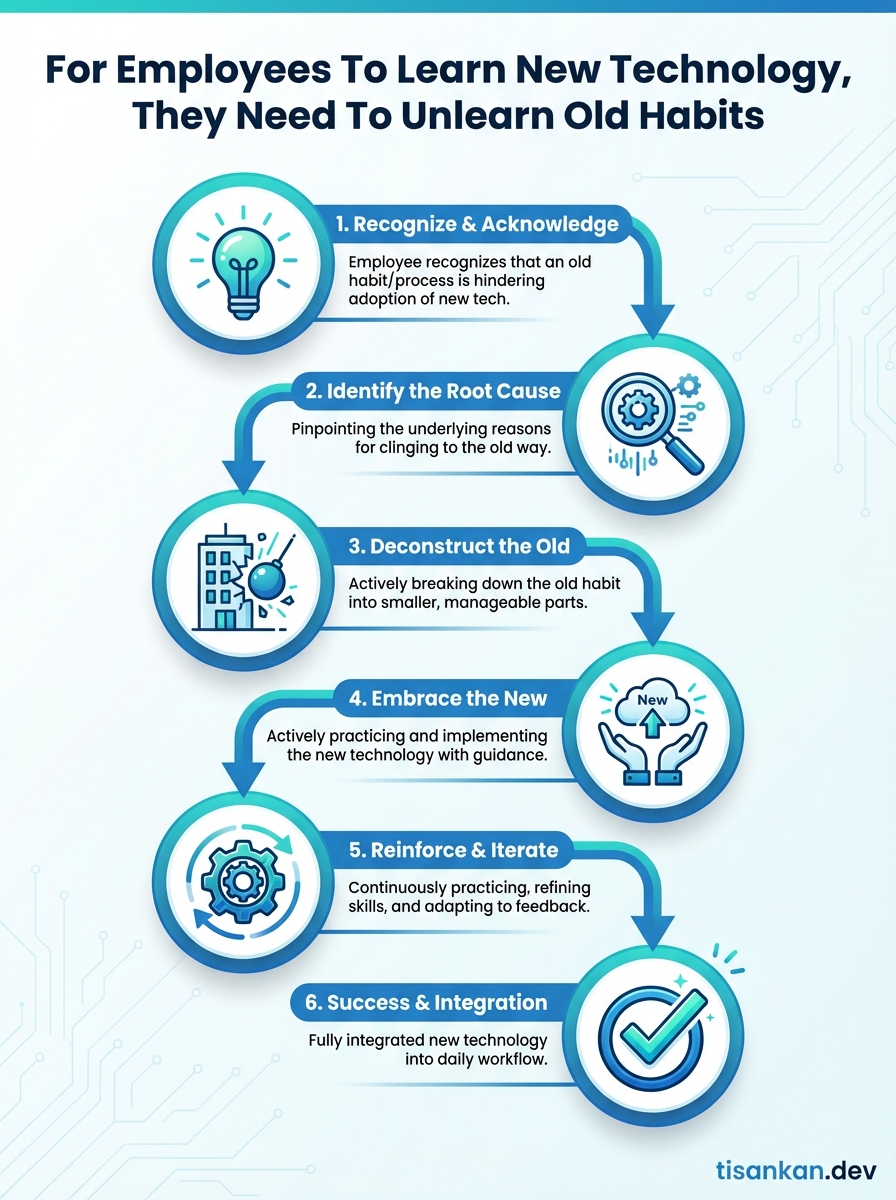
Resistance greets most new technology implementations. People aren’t inherently change-averse; they’re comfortable with established workflows, regardless of inefficiency. This comfort, built on habit, obstructs better methods.
Consider a developer stubbornly using an obsolete coding language despite a modern alternative’s clear advantages. Their investment in the old language, existing codebase, and established routines creates crippling inertia. They reject the new technology, irrespective of its benefits. This isn’t limited to technical skills; it affects processes, communication, and organizational structures.
Prerequisites: Cultivating an Unlearning Environment
Before strategizing, create a supportive environment. This requires transparent communication, visible leadership support, and a culture embracing experimentation.
- Transparent Communication: Clearly articulate the *why* behind the new technology. Detail benefits, role impact, and long-term vision. Don’t sugarcoat potential disruptions.
- Visible Leadership Support: Leaders must actively champion the change. Their actions are paramount. Mandate and visibly use the new technology. Publicly address concerns and lead by example.
- Experimentation-Driven Culture: Foster a culture where failures are learning opportunities. Provide resources for continuous learning and reward experimentation, even if it doesn’t immediately succeed.
Equip employees with the right tools. As our guide to Developer Tools Mastery: 9 Essentials You NEED Now ⚡️ highlights, the right tools significantly impact adoption.
Step 1: Identify and Expose Obsolete Habits
Unlearning starts with identifying habits needing change. This demands honest self-assessment and ruthless honesty within teams.
- Skills Audit: Pinpoint skill gaps and outdated practices. Don’t rely on self-reporting; use objective assessments.
- Brutal Feedback: Solicit candid feedback on current process challenges and frustrations. Anonymize feedback to encourage honesty.
- Workflow Deconstruction: Map workflows to expose bottlenecks and inefficiencies caused by outdated habits. Use process mining tools for data-driven insights.
For example, identify a team relying on manual testing despite available automation tools. Acknowledge this reliance as the first step towards efficient automation.
Step 2: Engineer a Safe Experimentation Zone
Fear of failure paralyzes unlearning. Employees need a safe space to experiment without repercussions for mistakes.
- Isolated Sandboxes: Provide isolated environments for experimentation without affecting production. Implement robust rollback mechanisms.
- Controlled Pilots: Launch small, controlled pilot projects to test new technologies and processes. Define clear success metrics *before* launch.
- Expert Mentorship: Pair experienced employees with those new to the technology. Mentors should provide guidance and *realistic* expectations.
We implemented a sandbox for developers to experiment with AI tools, allowing exploration without breaking existing code. As discussed in 7+ Critical Reasons: Market-Crushing AI Momentum: Top Robotics Technology Stocks Leading the 2026 Growth Trend, AI demands constant experimentation.
Step 3: Deliver Targeted, Ruthlessly Practical Training
Generic training fails. Deliver targeted training tailored to roles and skill levels for effective unlearning and relearning.
- Personalized, Actionable Learning: Customize learning paths based on skill gaps and career goals. Focus on *practical* application, not theory.
- Hands-On, Real-World Workshops: Offer hands-on workshops where employees practice using the new technology in realistic scenarios. Simulate production environments.
- Persistent, Accessible Support: Provide ongoing support through forums, documentation, and dedicated support staff. Implement a robust knowledge base.
Instead of general cloud computing training, provide specific guidance on migrating existing applications, addressing the development team’s particular challenges. This improves knowledge retention and application.
Step 4: Positively Reinforce New Habits (and Ruthlessly Correct Slips)
Unlearning takes time. Positive reinforcement sustains desired changes, but address slippage IMMEDIATELY.
- Recognize and *Tangibly* Reward Progress: Acknowledge and reward employees embracing the new technology and demonstrating positive changes. Monetary rewards are more effective than public praise.
- Showcase Concrete Successes: Highlight success stories of employees who adopted the new technology and achieved tangible results (e.g., reduced errors, faster processing times). Quantify the impact.
- Provide IMMEDIATE Constructive Feedback: Offer constructive feedback to help employees improve and reinforce desired behaviors. Address deviations from the new process *immediately* and privately.
When our QA team automated a manual testing process, we celebrated with a team bonus and highlighted their success in the company newsletter, including specific metrics achieved. This encouraged other teams to explore automation.
Step 5: Embrace Perpetual Learning and Relentless Adaptation
Technology evolves constantly. Unlearning and relearning must be ongoing. Create a culture of continuous learning and adaptation.
- Mandate Knowledge Sharing: Promote knowledge sharing through internal wikis, mandatory lunch-and-learn sessions, and communities of practice. Track participation.
- Stay Abreast of Industry Shifts: Encourage employees to stay updated on industry trends and emerging technologies through conferences, webinars, and online resources. Subsidize subscriptions to industry publications.
- Rigorously Evaluate and Adapt: Regularly evaluate the effectiveness of training and adaptation strategies. Use data to identify areas for improvement and adjust accordingly.
We require developers to attend industry conferences and share learnings. This keeps us informed and helps us adapt. Remember, as discussed in 9 Critical Lessons on maintaining your humanity in the world of AI technology as a Strategic Imperative, human learning is critical.
Common Pitfalls: Troubleshooting Failure
Expect challenges. Here are common pitfalls and how to address them:
- Resistance: Address resistance by actively listening to concerns, providing clear explanations, and *forcing* involvement in the decision-making process. Clearly communicate consequences for non-compliance.
- Time Constraints: Allocate dedicated time for training and experimentation. Mandate learning as part of job responsibilities and track time spent.
- Resource Scarcity: Ensure access to necessary tools, training, and support. Budget adequately.
- Communication Breakdown: Maintain open communication throughout the change. Keep employees informed about progress and challenges. Use multiple channels.
The biggest pitfall is underestimating the time and effort required for transformation. Over-communicate and over-resource the effort.
Advanced Tips: Elevating Unlearning
Consider these advanced tips:
- Gamification with Real Stakes: Introduce gamification to make learning engaging. Tie rewards to performance reviews and compensation.
- Microlearning for Hyper-Efficiency: Break down complex topics into smaller modules. Use spaced repetition for better retention.
- Thriving Community: Create online communities where employees connect, share knowledge, and support each other. Appoint moderators to ensure active participation.
We implemented a gamified learning platform for our DevOps team, awarding points and badges tied to performance reviews for completing training and participating in knowledge-sharing. This increased engagement and retention. Remember, technology is reshaping many areas, and continuous learning is key.
FAQ: Unlearning Realities
- Q: How long to unlearn a habit?
- A: Varies by habit complexity and individual willingness. Consistency and reinforcement are key. Expect setbacks.
- Q: What if employees resist?
- A: Address concerns, explain clearly, and involve them. Highlight benefits and consequences. Escalate non-compliance.
- Q: How to measure success?
- A: Track adoption rates, productivity, and satisfaction. Gather feedback. Use metrics to drive improvement.
- Q: Leadership’s role?
- A: Critical. Champion change, provide resources, and foster learning. Lead by example.
- Q: How to engage?
- A: Gamification, microlearning, and community. Make it interactive and rewarding.
- Q: Long-term benefits?
- A: Increased innovation, improved efficiency, and an adaptable workforce. Competitive advantage.
Unlearning is a journey, not a destination. Embrace the process, adapt, and create a culture of continuous learning. Explore Coursera, Udemy, and other platforms. Remember, quantum technology moves from lab to life, demanding constant knowledge updates.