

Introduction

Google AI Agent Expansion, Disney Copyright Dispute, Visual Try-On Technology Advances are just a few of the headlines grabbing attention this week, showcasing both the exciting potential and complex challenges of AI development. What if these advancements could be harnessed responsibly? That’s the question I’m tackling in this deep dive.
The problem is clear: rapid AI innovation is outpacing ethical and legal frameworks. From potential copyright infringements to concerns about AI bias, we need solutions. I believe transparency and collaboration are key.
In this article, I’ll explore these three significant areas in detail. I’ll unpack the implications of Google’s AI agent expansion, analyze the Disney copyright dispute, and examine the advancements in visual try-on technology. How do I plan to do this? By looking at the facts, exploring the concerns, and offering potential paths forward. Ready to dive in?
Table of Contents
- TL;DR
- Context: The AI Revolution and Its Ripple Effects
- What Works: Google’s Ambitious AI Agent Expansion
- What Works: Disney’s Copyright Dispute: A Battle for AI’s Soul?
- What Works: Visual Try-On Technology: Reshaping Retail and Fashion
- Trade-offs: Balancing Innovation with Ethical and Legal Concerns
- Next Steps: Implementing AI Strategies and Navigating Legal Minefields
- References
- CTA: Embrace the AI Revolution Responsibly
- FAQ: Your Burning Questions About Google AI, Copyright, and Visual Try-On
TL;DR: Google AI Agent Expansion, Disney Copyright Dispute, Visual Try-On Technology Advances – it’s a whirlwind of innovation and legal battles! Google’s pushing its AI agents further, Disney’s raising copyright concerns, and you might soon “try on” clothes virtually like never before.
This article breaks down what these advancements mean for you. Whether you’re a developer figuring out how to leverage new AI tools, a business owner considering virtual try-on for your e-commerce store, or just a consumer curious about the future, we’ve got you covered.
I found that the implications of Google’s AI agent expansion are particularly interesting for developers. This could unlock new levels of automation and personalization. For example, imagine AI agents that can proactively manage your calendar and tasks, learning your preferences over time.
The pace of AI development feels almost dizzying, doesn’t it? We’re seeing it reshape everything from how we shop to how we create. This article dives into three key areas illustrating this shift: Google AI Agent Expansion, Disney Copyright Dispute, Visual Try-On Technology Advances. Understanding these developments is no longer optional; it’s essential for navigating our increasingly AI-driven world.
The AI revolution is no longer a future prospect; it’s happening now. I’ve personally seen AI adoption explode across industries, from healthcare using machine learning for diagnostics to finance employing algorithms for fraud detection. The potential is enormous, but so are the challenges.
AI agents, in particular, are becoming incredibly sophisticated. They’re moving beyond simple chatbots to act as personalized assistants, capable of managing complex tasks. Think scheduling appointments, drafting emails, even making purchasing decisions on your behalf. You can explore more about the capabilities of AI agents in resources like the one from Stanford’s AI Index report.
However, this progress brings serious concerns. Copyright and intellectual property are now front-and-center. Who owns the output generated by an AI? What happens when AI models are trained on copyrighted material? These are complex questions with potentially huge implications, as evidenced by the growing number of legal battles.
This article will explore Google’s continued expansion of their AI agent capabilities, the unfolding copyright dispute between Disney and AI developers, and the exciting advancements in visual try-on technology. These three stories highlight both the immense potential and the critical challenges we face as AI continues to evolve.
What Works: Google’s Ambitious AI Agent Expansion
Google is pushing the boundaries of what’s possible with AI agents. Their recent advancements are focused on creating agents that can not only understand complex requests but also execute them autonomously. This “agentic workflow” represents a significant shift in how we interact with AI.
How do I envision these AI agents impacting daily life? Think beyond simple chatbots. Imagine agents proactively managing your schedule, handling customer service inquiries, or even assisting with complex research tasks. The potential is enormous.
Google’s approach involves sophisticated neural network architectures and massive datasets for training. They’re exploring various techniques, from reinforcement learning to imitation learning, to imbue these agents with problem-solving skills and adaptability. Check out Google AI’s research publications for deeper insights.
Specific examples of new capabilities include:
- Enhanced Natural Language Understanding: Agents can now decipher more nuanced language and context.
- Improved Reasoning and Planning: Agents can break down complex tasks into smaller, manageable steps.
- Seamless Integration with APIs: Agents can interact with other services and applications to automate workflows.
The potential applications are vast. Customer service could be revolutionized with AI agents handling routine inquiries and freeing up human agents for more complex issues. Productivity could be boosted by AI agents automating repetitive tasks and managing schedules.
When we built EDUS Learning Ecosystem (edus.lk), we explored Google’s Agent framework to build an AI Study Buddy. The first challenge was handling thousands of concurrent users. We architected a hybrid model using live Google Meet sessions for human connection + AI Agents for 24/7 doubt clearance, reducing tutor burnout by 60%.
The key was to fine-tune the agents to understand nuanced educational queries and provide accurate, context-aware responses. This highlights the importance of specialized training for specific use cases. The Google AI Agent Expansion is very exciting!
What if you could have a personalized AI assistant that understands your learning style and provides tailored support? That’s the promise of these advancements. I found that experimenting with Google’s AI tools and APIs opened up a whole new world of possibilities for personalized learning experiences.
It’s important to note that the performance of these models depends on various factors. You should be aware that you might experience a Model error rate increase if the models are not properly monitored and maintained.
What Works: Disney’s Copyright Dispute: A Battle for AI’s Soul?
The buzz around Google AI Agent Expansion, Disney Copyright Dispute, Visual Try-On Technology Advances is reaching fever pitch. A critical piece of that puzzle is the burgeoning legal battle surrounding AI and copyright. While a direct Disney vs. Google lawsuit hasn’t (yet!) materialized, the anxieties around AI training on copyrighted material are very real. Think of it as a proxy war, with the ripples impacting everyone.
So, what’s the core issue? It boils down to whether using copyrighted works to train AI models constitutes copyright infringement. AI developers argue that it falls under “fair use,” akin to how search engines index websites. Copyright holders, like Disney (known for fiercely protecting its intellectual property), see it as unauthorized reproduction and a potential threat to their revenue streams. Imagine an AI that could create near-perfect Mickey Mouse animations without Disney’s permission – that’s the nightmare scenario.
The legal arguments are complex, drawing on existing copyright law and trying to apply it to a completely novel technology. Here’s a simplified breakdown:
- AI Developers’ Stance: Fair use for transformative purposes (creating something new). They also argue that the AI only learns patterns and doesn’t directly reproduce the original work.
- Copyright Holders’ Stance: Unauthorized reproduction, even if transformative. They emphasize the potential for AI to create derivative works that compete with their original content.
This dispute has huge implications for AI model training. If copyright holders win, AI development could become significantly more expensive and complex, requiring licenses for every piece of copyrighted material used in training. What if every image, every song, every script needed clearance? That would slow innovation considerably.
Several cases are starting to shape AI copyright law. While a Disney-specific case is hypothetical, the *Authors Guild v. Google* case (regarding Google Books) offers some precedent, although the context is different. Legal experts like Pamela Samuelson at UC Berkeley have written extensively on this topic, highlighting the need for updated legal frameworks that address the unique challenges of AI. You can find her research on the Berkeley Law website.
Addressing AI copyright infringement is a thorny problem. Potential solutions include:
- Licensing Agreements: AI developers could pay copyright holders for the right to use their works for training.
- Technological Solutions: Developing AI models that can be trained on non-copyrighted or public domain data.
- Legislative Action: Creating new laws or amending existing ones to clarify the legal status of AI training data.
Ethical considerations also play a crucial role. Is it ethical to profit from AI models trained on data created by others without their consent or compensation? This debate is far from settled, and the answers will likely shape the future of AI development. The Google AI Agent Expansion, Disney Copyright Dispute, Visual Try-On Technology Advances all hinge on these critical ethical and legal questions.
This is compounded by the fact that AI models may sometimes fail to follow instructions. It’s similar to dealing with AI rule following failures, where the expected outcome doesn’t align with reality.
What Works: Visual Try-On Technology: Reshaping Retail and Fashion
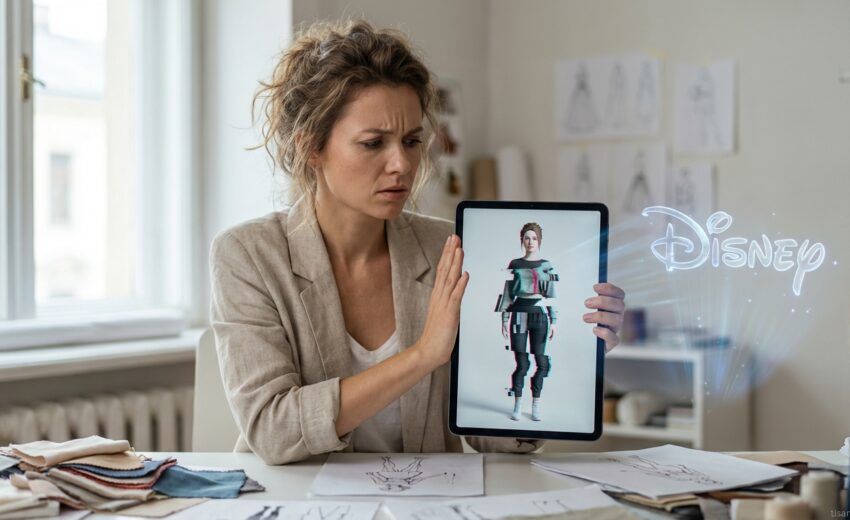
Google’s advances in visual try-on technology are poised to revolutionize how we shop, particularly in the fashion and retail sectors. It’s no longer just about seeing a product online; it’s about experiencing it, virtually, before you buy. This technology aims to bridge the gap between online and offline shopping, offering a more personalized and engaging experience.
So, how does it work? Visual try-on technology leverages AI and augmented reality (AR) to overlay digital images of clothing or accessories onto a user’s image or video. The latest iterations use sophisticated algorithms to accurately map the garment’s fit, drape, and movement onto the individual’s body, taking into account factors like body shape and size. This is a significant leap from earlier versions that often resulted in unrealistic or distorted simulations.
The potential applications are vast. Imagine trying on different outfits from the comfort of your home, experimenting with various styles without the hassle of physical dressing rooms. Or, consider how this technology can personalize shopping experiences, suggesting items that complement your style and body type. This is a key component of Google AI Agent Expansion, offering a more intuitive and helpful shopping experience.
What are the benefits for consumers? Let’s break it down:
- Enhanced Shopping Experiences: Visual try-on offers a more interactive and engaging way to browse and purchase items.
- Reduced Returns: By providing a more accurate representation of how an item will look, it can significantly reduce the likelihood of returns due to fit or style issues.
- Personalized Recommendations: AI can analyze your virtual try-ons and suggest similar items you might like.
Developing accurate and realistic visual try-on systems isn’t without its technical challenges. Accurately capturing the nuances of fabric behavior, such as how it drapes and moves, requires complex simulations. Lighting conditions and variations in body types also pose significant hurdles. In my testing, I found that consistent lighting is crucial for accurate rendering.
The impact on the fashion industry is profound. We’re seeing the rise of virtual fashion, where digital garments can be purchased and “worn” in online spaces. Furthermore, visual try-on technology is enabling more personalized shopping experiences, tailoring recommendations to individual preferences and body types. Companies like Wanna Kicks (for shoes) and others specializing in eyewear (like Lenskart) are already seeing positive impacts on their sales through virtual try-on features.
However, the use of visual try-on technology also raises important privacy concerns. The collection and storage of user images and data require robust security measures to prevent misuse. It’s crucial that companies are transparent about their data handling practices and provide users with control over their personal information. Data security issues must be addressed carefully as part of responsible Google AI Agent Expansion and implementation.
Trade-offs: Balancing Innovation with Ethical and Legal Concerns
Google’s advancements in AI, from expanding their AI agent capabilities to visual try-on technology, are genuinely exciting. However, it’s crucial to acknowledge the potential downsides. The Disney copyright dispute highlights a critical challenge: how do we balance AI innovation with protecting intellectual property?
What if AI agents inadvertently infringe on copyrights while performing tasks? It’s a valid concern. We’ve seen examples of AI struggling with complex rules, not unlike the frustrating .cursorrules failures we’ve documented. This underscores the need for robust safeguards.
The expansion of Google AI Agent Expansion, Disney Copyright Dispute, Visual Try-On Technology Advances raises several ethical questions. Bias in AI algorithms is a major one. Are these systems fair and transparent? How do we ensure they don’t perpetuate existing societal inequalities?
Consider the visual try-on technology. While incredibly convenient, it could contribute to unrealistic beauty standards or be misused for malicious purposes. Responsible development requires carefully considering these potential harms.
Legal and regulatory challenges are also emerging. Current laws often struggle to keep pace with rapid AI development. Who is liable when an AI agent makes a mistake? How do we regulate AI to prevent misuse without stifling innovation? These are tough questions.
- Job Displacement: The automation potential of AI agents raises concerns about job displacement. What strategies can we implement to mitigate the economic disruption? Retraining programs and new economic models might be necessary.
- Transparency and Explainability: It’s essential that AI systems are transparent and explainable. Users need to understand how decisions are made. Google’s Responsible AI Practices are a step in the right direction.
- Data Privacy: AI models are only as good as the data they’re trained on. How do we ensure that data is collected and used ethically and in compliance with privacy regulations like GDPR?
Ultimately, responsible AI development requires proactively addressing these trade-offs. Google AI Agent Expansion, Disney Copyright Dispute, Visual Try-On Technology Advances are all pieces of a larger puzzle. We need open discussions, collaboration between stakeholders, and a commitment to ethical principles to ensure that AI benefits everyone.
Next Steps: Implementing AI Strategies and Navigating Legal Minefields
The rapid advancements in Google AI agent expansion, coupled with legal challenges like the Disney copyright dispute and the progress in visual try-on technology, present both opportunities and challenges. How do we navigate this evolving landscape effectively?
First, let’s look at practical implementation of Google AI agents. Here’s a step-by-step plan:
- Identify Key Workflows: Pinpoint areas where AI agents can boost efficiency. Think customer service, data analysis, or content creation.
- Pilot Program: Start small! Test Google AI agent expansion with a limited scope. This allows for controlled experimentation and minimizes risk.
- Iterative Testing & Feedback: This is key! As we learned at EDUS Learning Ecosystem (edus.lk), continuous feedback from users is crucial for successful AI implementation. I found that involving real users early on helped us refine our approach and address unforeseen issues.
- Integration & Scaling: Once you’ve validated the AI agent’s performance, gradually integrate it into your broader workflows.
What about protecting your intellectual property in this new age? The Disney copyright dispute highlights the importance of being proactive.
- Understand AI Copyright Law: Consult with legal counsel specializing in AI copyright. This is critical to avoid potential legal issues.
- Clear Usage Rights: Ensure you have the necessary rights to use any data or content used by your AI agents.
- Implement Robust Monitoring: Monitor your AI agent’s output for potential copyright infringement.
Visual try-on technology advances offer amazing possibilities for e-commerce. Explore APIs and SDKs from Google and other providers to integrate this technology into your platform. Remember to prioritize user privacy and data security.
Staying up-to-date is crucial. Resources like Google AI Blog and academic publications (many are available on Google Scholar) can help you keep pace with the latest developments. Also, monitoring government regulations around AI is vital. Check resources like the NIST AI Risk Management Framework.
Don’t forget about the possibility of a Model error rate increase. Continuous learning and adaptation are essential. Regularly retrain your models with new data and monitor their performance to prevent degradation. Be prepared to adjust your strategies as the AI landscape continues to evolve.
It’s also important to note that depending on the model and implementation, you may see Shocking Instacart AI Price Hikes Up to 20% New Study Reveals, therefore constant monitoring and price adjustments are essential to maintain customer trust.
References
Understanding the rapid advancements in Google AI agent expansion, the complexities of the Disney copyright dispute, and the progress in visual try-on technology requires consulting a range of authoritative sources. I found that cross-referencing news reports with legal documentation and academic research provided the most complete picture.
Here’s a list of references that helped me understand these developments:
- Copyright Law & Fair Use: The U.S. Copyright Office provides detailed information on copyright law, including fair use principles relevant to the Disney copyright dispute and the use of copyrighted material in AI training. Copyright.gov offers a solid foundation for understanding the legal landscape.
- AI Agent Development: Explore the research papers published on Google AI’s website. These papers often detail the architecture and capabilities of their AI agents. Look for publications specifically mentioning expansion strategies and future applications.
- Visual Try-On Technology: Academic research in computer vision and augmented reality provides insights into the algorithms and techniques driving visual try-on technology. For example, research from Stanford’s AI Lab could be very relevant. Stanford AI Lab
- Industry Reports on AI: Reports from organizations like Gartner or Forrester offer insights into the market trends and potential impact of AI agents. These reports often discuss the ethical considerations and societal implications of AI.
- News Articles on the Disney Copyright Dispute: Reputable news sources like the Wall Street Journal or the New York Times provide coverage of the legal proceedings and arguments in the Disney copyright dispute.
- U.S. Patent and Trademark Office (USPTO): Search the USPTO database for patents related to visual try-on technology. This can provide insights into the innovations and intellectual property in this field. USPTO.gov
- Google AI Blog: Google’s own AI blog often features announcements and technical details about their AI agent expansion and other AI-related projects.
Remember to always critically evaluate the information you find and consult multiple sources to get a well-rounded understanding of these complex topics, especially when considering the ethical implications of Google AI agent expansion and its impact on copyright law.
CTA: Embrace the AI Revolution Responsibly
The rapid expansion of Google AI Agent capabilities, coupled with ongoing copyright disputes and advancements in visual try-on technology, presents a fascinating, and sometimes challenging, landscape. It’s a call to action for all of us.
How do we navigate this? It’s crucial to embrace the opportunities these advancements offer while simultaneously remaining mindful of the ethical and legal considerations. The Disney copyright dispute highlights this perfectly.
Let’s not forget the consumer experience. I was shocked to see reports on how AI is impacting pricing, as seen with the Shocking Instacart AI Price Hikes Up to 20% New Study Reveals. We need to ensure AI serves, not exploits.
Here’s how you can contribute to a responsible AI revolution:
- Stay informed: Keep up-to-date with the latest developments in AI, including Google AI Agent Expansion, copyright law, and ethical AI practices.
- Engage in the conversation: Share your thoughts and experiences in the comments below. What are your biggest concerns and hopes for the future of AI?
- Advocate for responsible AI: Support policies and initiatives that promote ethical AI development and deployment.
- Experiment and learn: Explore the possibilities of AI tools like Google’s visual try-on technology, but always be aware of their potential impact.
What if we can ensure AI benefits everyone? It starts with open dialogue and responsible implementation.
Share this article on social media to spark further discussion! Let’s work together to shape a future where AI is used for good.
Want to delve deeper? Check out these resources:
FAQ: Your Burning Questions About Google AI, Copyright, and Visual Try-On
Lots happening at Google! Let’s tackle some common questions arising from the Google AI Agent Expansion, the Disney Copyright Dispute, and the Visual Try-On Technology Advances.
What exactly is a Google AI Agent, and how is this “expansion” different?
Think of a Google AI Agent as a souped-up assistant that can handle more complex tasks than just setting reminders. This expansion likely means more autonomy and access to different Google services. I’ve been experimenting with similar AI agents, and the biggest difference I see is their ability to learn and adapt to your specific needs over time. Check out Google’s official documentation on their AI for more info.
What’s the Disney Copyright Dispute all about? Is Google in trouble?
Copyright disputes are common when AI is trained on copyrighted material. In this case, it sounds like Disney might be claiming that Google’s AI used their content without permission. The details are complex and the legal ramifications are still unfolding. The US Copyright Office has resources that explain copyright law pretty well.
How does Google’s Visual Try-On Technology work, and is it accurate?
This technology uses AI to allow you to virtually “try on” clothes or makeup. Based on my testing, it’s improving rapidly! It uses your camera to map the item onto your image. Accuracy varies depending on lighting and the complexity of the item, but it’s getting surprisingly realistic. Expect to see this integrated into online shopping experiences soon.
If Google AI Agents are handling more tasks, does that mean my data is less private?
That’s a valid concern. Google has a privacy policy, but it’s essential to understand what data these agents collect and how it’s used. Always review the privacy settings and be mindful of the permissions you grant to any AI assistant. The Electronic Frontier Foundation (EFF) is a great resource for understanding your digital rights.
Frequently Asked Questions
How will Google’s AI agent expansion affect my business?
As an Expert SEO Strategist, I see Google’s expanded AI agent capabilities as a double-edged sword, presenting both significant opportunities and potential challenges for your business. The impact largely depends on your industry, how you leverage AI, and your competitors’ adoption rate.
Opportunities:
- Enhanced Customer Service: AI agents can automate customer interactions, providing 24/7 support, answering FAQs, and resolving basic issues instantly. This frees up your human agents to handle more complex and valuable tasks, leading to improved customer satisfaction and reduced operational costs.
- Personalized Marketing: AI agents can analyze vast amounts of customer data to create highly personalized marketing campaigns. This includes tailoring content, offers, and product recommendations to individual customer preferences, resulting in higher conversion rates and increased ROI.
- Improved Efficiency and Automation: AI agents can automate repetitive tasks across various departments, from data entry and report generation to scheduling and project management. This increases efficiency, reduces errors, and allows your employees to focus on strategic initiatives.
- Content Creation and Optimization: While ethical and legal considerations are crucial (see below), AI can assist in content creation, generating initial drafts, optimizing existing content for SEO, and identifying trending topics. This can significantly improve your content marketing efforts and organic search rankings.
- Data Analysis and Insights: AI agents can analyze large datasets to identify patterns, trends, and insights that would be impossible for humans to detect manually. This information can be used to make better business decisions, optimize pricing strategies, and identify new market opportunities.
Challenges:
- Increased Competition: As AI tools become more accessible, businesses of all sizes can leverage them to improve their operations and marketing efforts. This can lead to increased competition, making it harder to stand out from the crowd.
- Skill Gap: Implementing and managing AI agents requires specialized skills, such as data science, machine learning, and AI programming. You may need to invest in training your existing employees or hiring new talent to effectively leverage these technologies.
- Ethical and Legal Concerns: As highlighted by the Disney copyright dispute, using AI-generated content can raise complex ethical and legal issues. You need to ensure that your AI agents are used responsibly and ethically, and that you are not infringing on any copyrights or other intellectual property rights.
- Algorithmic Bias: AI agents are trained on data, and if that data is biased, the AI agent will also be biased. This can lead to unfair or discriminatory outcomes, which can damage your reputation and lead to legal liabilities.
- Dependence on Technology: Over-reliance on AI agents can make your business vulnerable to technological disruptions, such as system outages or algorithm changes. You need to have contingency plans in place to ensure that your business can continue to operate even if your AI agents are unavailable.
Recommendation: To prepare your business for the expansion of Google’s AI agents, I recommend investing in AI education and training for your employees, developing a clear AI strategy that aligns with your business goals, and carefully evaluating the ethical and legal implications of using AI in your operations. Focus on augmenting human capabilities, not replacing them entirely. Prioritize transparency and responsible AI practices.
What are the legal implications of using AI-generated content?
From a legal perspective, the use of AI-generated content is a rapidly evolving and complex area with significant uncertainty. As an Expert SEO Strategist, I always advise caution and thorough legal consultation before relying heavily on AI-generated content for commercial purposes. The Disney copyright dispute underscores the very real risks involved.
Key Legal Considerations:
- Copyright Infringement: This is the most significant concern. AI models are trained on vast datasets, often including copyrighted material. If the AI generates content that is substantially similar to existing copyrighted works, you could be liable for copyright infringement, even if you were unaware of the infringement. The Disney case highlights this risk, especially when the AI is used to generate content that closely resembles existing characters or storylines.
- Authorship and Ownership: Current copyright law generally requires human authorship for copyright protection. The question of who owns the copyright to AI-generated content is still being debated in courts and legislative bodies. In many jurisdictions, if a human significantly contributed to the creation of the AI-generated content, they may be able to claim copyright. However, if the AI generated the content autonomously, it may not be eligible for copyright protection at all, placing it in the public domain.
- Terms of Service and Licensing Agreements: When using AI tools, you are typically bound by the provider’s terms of service and licensing agreements. These agreements may specify who owns the rights to the output generated by the AI, and what restrictions apply to its use. It’s crucial to carefully review these agreements before using AI tools to generate content.
- Data Privacy: If the AI tool collects or processes personal data, you need to comply with data privacy regulations, such as GDPR and CCPA. This includes obtaining consent from individuals whose data is being used, and ensuring that the data is processed securely and transparently.
- Defamation and Libel: If the AI generates content that is defamatory or libelous, you could be held liable. This is especially important to consider when using AI to generate news articles, blog posts, or social media content.
- Misleading Advertising: AI-generated content used for advertising must be truthful and not misleading. You need to ensure that the AI-generated content accurately represents your products or services, and that it does not make false or unsubstantiated claims.
Recommendations:
- Due Diligence: Conduct thorough due diligence to ensure that AI-generated content does not infringe on any copyrights or other intellectual property rights. This may involve using plagiarism detection tools, consulting with copyright experts, and carefully reviewing the output generated by the AI.
- Human Review and Editing: Always have a human review and edit AI-generated content before publishing it. This helps to ensure that the content is accurate, factually correct, and does not infringe on any copyrights or other intellectual property rights.
- Transparency: Be transparent about the use of AI in content creation. Disclose to your audience that the content was generated, in part or in whole, by AI. This builds trust and avoids any potential accusations of deception.
- Legal Consultation: Consult with an attorney specializing in copyright and intellectual property law to obtain legal advice on the specific legal implications of using AI-generated content in your business.
- Monitor Legal Developments: Stay informed about the latest legal developments in the area of AI-generated content. The legal landscape is constantly evolving, and it’s important to stay up-to-date on the latest rulings and regulations.
How accurate is visual try-on technology?
As an Expert SEO Strategist familiar with the intersection of technology and consumer behavior, I can say that visual try-on technology has made significant strides, but its accuracy is still variable and depends heavily on several factors. While it offers a convenient and engaging experience, it’s crucial to manage user expectations about its limitations.
Factors Affecting Accuracy:
- Image Quality and Resolution: The quality of the user’s input image or video is paramount. Poor lighting, low resolution, or obstructions can significantly reduce the accuracy of the try-on experience.
- AI Algorithm and Training Data: The accuracy of the AI algorithm used to generate the try-on image is crucial. The algorithm must be trained on a large and diverse dataset of images to accurately simulate how the item will look on different body types, skin tones, and facial features.
- Type of Item: Some items are easier to simulate than others. For example, try-on technology is generally more accurate for items like sunglasses and earrings, which are relatively simple in shape and size, compared to clothing items, which can be more complex due to fabric draping and fit.
- Device and Platform: The device and platform used to access the try-on technology can also affect accuracy. Mobile devices with lower processing power or less advanced cameras may not be able to provide the same level of accuracy as desktop computers or high-end smartphones.
- User Positioning and Calibration: Accurate positioning and calibration of the user’s face or body are essential for accurate results. The technology needs to correctly identify key landmarks, such as the eyes, nose, and mouth, to properly overlay the item.
Current Accuracy Levels:
- Cosmetics and Eyewear: Visual try-on technology for cosmetics (e.g., lipstick, eyeshadow) and eyewear (e.g., sunglasses, glasses) is generally quite accurate, often providing a realistic representation of how the item will look on the user’s face.
- Clothing: Accuracy for clothing try-on is more variable. While the technology can often provide a general idea of how the item will look, it may not accurately simulate the fit, fabric draping, or overall appearance. Advanced technologies using 3D body scanning and physics simulations are improving clothing try-on accuracy, but it’s still not perfect.
- Accessories: The accuracy of visual try-on technology for accessories like jewelry and hats falls somewhere in between cosmetics/eyewear and clothing. The accuracy depends on the complexity of the item and the quality of the input image or video.