

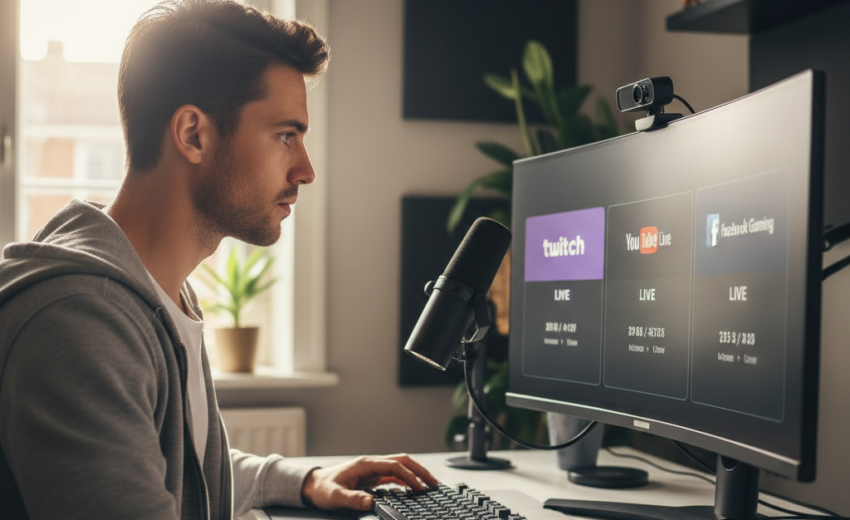
The internet is a vast ocean of content, and capturing attention requires more than just creating engaging videos. You need to be where your audience already is. That’s where multi-streaming comes in. Imagine broadcasting your live content to Twitch, YouTube, Facebook, and other platforms simultaneously, effortlessly expanding your reach and maximizing viewer engagement. This isn’t just a futuristic fantasy; it’s a readily available strategy that can revolutionize your content creation. Many streamers struggle with the technical complexities and perceived difficulty of setting up multi-streaming. This guide will demystify the process, offering a comprehensive exploration of multi-streaming, its benefits, challenges, and future trends, empowering you to stream to every platform with ease.
What is Multi-streaming?
Multi-streaming, at its core, is the act of broadcasting a single live video feed to multiple online platforms concurrently. Instead of limiting your content to a single destination like Twitch or YouTube, you leverage multi-streaming to distribute it across various channels simultaneously. This allows you to tap into diverse communities, reach a broader audience, and significantly increase your overall viewership. Think of it as casting a wider net – the more platforms you broadcast to, the greater your chances of attracting new viewers and growing your online presence. It transcends simply re-uploading content; it’s about creating a unified, real-time experience across various platforms. The evolution of streaming technology has made multi-streaming increasingly accessible, moving from complex setups requiring specialized hardware to user-friendly software solutions designed for streamers of all levels.
To understand the context, consider the historical landscape of online broadcasting. Early streaming was limited by bandwidth and platform restrictions, forcing creators to choose a single platform. As internet infrastructure improved and platforms opened their APIs, the possibility of multi-streaming emerged. However, the initial solutions were often cumbersome and technically demanding, requiring significant expertise and investment. Today, thanks to advancements in encoding, transcoding, and cloud-based services, multi-streaming is within reach of anyone with a decent internet connection and the right software. The rise of platforms like Restream and StreamYard has further democratized the process, offering intuitive interfaces and streamlined workflows.
Key Benefits of Multi-streaming
The advantages of embracing multi-streaming are numerous and can significantly impact your streaming career. Here are some key benefits:
- Increased Reach and Viewership: By broadcasting to multiple platforms, you expose your content to a much larger audience pool, potentially attracting viewers who might not have discovered you otherwise.
- Enhanced Engagement: Reaching more viewers translates to more potential interactions, comments, and overall engagement with your content.
- Platform Diversification: Relying solely on one platform can be risky. Multi-streaming mitigates this risk by diversifying your audience and reducing your dependence on any single platform’s algorithm or policies.
- Community Building: Multi-streaming allows you to connect with different communities on various platforms, fostering a more diverse and engaged audience.
- Content Optimization: By analyzing audience behavior across different platforms, you can gain valuable insights into what resonates with specific demographics, allowing you to tailor your content accordingly.
- Monetization Opportunities: A larger audience opens up more avenues for monetization, including subscriptions, donations, sponsorships, and advertising revenue.
- Brand Awareness: Multi-streaming helps you build brand awareness by exposing your content to a wider audience and establishing your presence on multiple platforms.
- Competitive Advantage: In a crowded streaming landscape, multi-streaming can give you a competitive edge by allowing you to reach more viewers and stand out from the competition.
Core Concepts and Mechanisms of Multi-streaming
Understanding the underlying concepts and mechanisms of multi-streaming is crucial for a successful implementation. Here’s a deep dive into the key components:
Encoding: Encoding is the process of converting your live video feed into a digital format suitable for streaming. This involves compressing the video and audio data to reduce its size and make it easier to transmit over the internet. Efficient encoding is essential for maintaining video quality while minimizing bandwidth usage. Software like OBS Studio and XSplit Broadcaster offer robust encoding capabilities, allowing you to customize settings like bitrate, resolution, and frame rate to optimize your stream for different platforms.
Transcoding: Transcoding is the process of converting your encoded video feed into multiple different resolutions and bitrates. This is crucial for multi-streaming because different platforms and viewers have varying bandwidth capabilities. By providing multiple streams, you can ensure that viewers with slower internet connections can still watch your content without buffering or lag. Multi-streaming services typically handle transcoding automatically, allowing you to focus on creating content without worrying about technical details. Some advanced encoders, like those found in professional-grade streaming software, also offer local transcoding capabilities.
Streaming Protocols: Streaming protocols are the rules and standards that govern how video and audio data are transmitted over the internet. Common streaming protocols include RTMP (Real-Time Messaging Protocol), HLS (HTTP Live Streaming), and WebRTC (Web Real-Time Communication). RTMP is a widely used protocol for sending live video to streaming platforms, while HLS is commonly used for delivering video to web browsers and mobile devices. WebRTC is a newer protocol that enables real-time communication and is often used for interactive streaming applications. Choosing the right streaming protocol is essential for ensuring compatibility with different platforms and devices. Most multi-streaming services handle the protocol conversion automatically, simplifying the process for streamers.
Content Delivery Network (CDN): A CDN is a network of servers distributed around the world that cache and deliver content to users based on their geographic location. Using a CDN can significantly improve the performance and reliability of your stream by reducing latency and ensuring that viewers can access your content quickly and easily. When you stream to a multi-streaming service, it typically distributes your content to a CDN, which then delivers it to the various platforms. Popular CDNs include Cloudflare, Akamai, and Amazon CloudFront. The use of a CDN is often transparent to the streamer, but it plays a vital role in ensuring a smooth and high-quality viewing experience.
Multi-streaming Platforms/Services: These platforms act as central hubs, receiving your single stream and distributing it to multiple destinations. They handle the complexities of transcoding, protocol conversion, and CDN distribution, allowing you to focus on creating engaging content. Popular options include Restream, StreamYard, Castr, and Melon. Each platform offers different features, pricing plans, and integrations, so it’s essential to research and choose the one that best suits your needs and budget. These platforms often provide additional features such as chat aggregation, analytics, and branding options to further enhance your multi-streaming experience.
Real-world Applications and Use Cases of Multi-streaming
Multi-streaming is not just a theoretical concept; it has numerous practical applications across various industries and content creation niches. Here are some real-world examples:
- Gaming: Gamers can use multi-streaming to reach viewers on Twitch, YouTube Gaming, and Facebook Gaming simultaneously, maximizing their exposure and building a larger community. Popular games for multi-streaming include Fortnite, League of Legends, and Valorant.
- eSports: eSports tournaments and events can leverage multi-streaming to broadcast to multiple platforms, reaching a wider audience and increasing viewership for sponsors and advertisers.
- Live Music Performances: Musicians and bands can use multi-streaming to broadcast live concerts and performances to multiple platforms, reaching fans who may not be able to attend in person.
- Conferences and Webinars: Businesses and organizations can use multi-streaming to broadcast conferences, webinars, and presentations to multiple platforms, reaching a larger audience and increasing engagement.
- Educational Content: Educators and instructors can use multi-streaming to broadcast lectures, tutorials, and workshops to multiple platforms, reaching students who may not be able to attend in person.
- News and Journalism: News organizations can use multi-streaming to broadcast live news coverage and breaking stories to multiple platforms, reaching a wider audience and providing real-time updates.
- Religious Services: Churches and religious organizations can use multi-streaming to broadcast services and events to multiple platforms, reaching members who may not be able to attend in person.
- Fitness Classes: Fitness instructors can use multi-streaming to broadcast live workout classes to multiple platforms, reaching clients who may not be able to attend in person.
Consider the example of a small indie game developer launching a new title. By multi-streaming the gameplay on Twitch, YouTube, and Facebook, they can reach different segments of the gaming community, increasing visibility and driving sales. Similarly, a musician can use multi-streaming to broadcast a live performance from their home studio, connecting with fans across various platforms and generating revenue through virtual tips and merchandise sales. These examples illustrate the versatility and potential of multi-streaming across diverse fields.
Challenges and Limitations of Multi-streaming
While multi-streaming offers numerous benefits, it’s important to be aware of the potential challenges and limitations:
- Platform Restrictions: Some platforms may have restrictions on multi-streaming, such as exclusivity agreements or limitations on concurrent streams. It’s crucial to review the terms of service of each platform before multi-streaming. For example, Twitch has specific guidelines regarding simulcasting, and violating these guidelines can result in penalties.
- Bandwidth Requirements: Multi-streaming requires a significant amount of bandwidth, as you’re essentially sending multiple streams simultaneously. A stable and high-speed internet connection is essential for avoiding buffering and lag.
- Hardware Requirements: Encoding and transcoding multiple streams can be resource-intensive, requiring a powerful computer with a dedicated graphics card. Insufficient hardware can lead to performance issues and reduced stream quality.
- Chat Management: Managing chat across multiple platforms can be challenging, as each platform has its own chat system. Multi-streaming services often provide chat aggregation tools, but it can still be overwhelming to monitor and respond to all the messages.
- Audience Fragmentation: While multi-streaming increases your overall reach, it can also fragment your audience across multiple platforms, making it difficult to build a cohesive community.
- Content Adaptation: Different platforms have different content formats and audience expectations. It may be necessary to adapt your content to suit each platform, which can be time-consuming.
- Technical Issues: Multi-streaming can be technically complex, and issues such as encoding errors, connection problems, and platform outages can occur. It’s important to have a backup plan in place in case of technical difficulties.
- Cost: While some multi-streaming services offer free plans, the more robust features and higher bandwidth allowances typically come with a cost. It’s important to factor in the cost of the service when evaluating the benefits of multi-streaming.
One significant challenge is maintaining consistent engagement across all platforms. Each platform has its own unique culture and community, requiring tailored communication and moderation strategies. Ignoring the specific nuances of each platform can lead to a disjointed and less engaging experience for viewers.
Future Trends and Outlook for Multi-streaming
The future of multi-streaming is bright, with several key trends shaping its evolution:
- Increased Accessibility: As technology advances and internet infrastructure improves, multi-streaming will become even more accessible to streamers of all levels. User-friendly software and affordable services will continue to democratize the process.
- Enhanced Integration: Multi-streaming platforms will increasingly integrate with other tools and services, such as social media platforms, marketing automation tools, and e-commerce platforms.
- AI-Powered Features: Artificial intelligence (AI) will play a growing role in multi-streaming, automating tasks such as chat moderation, content adaptation, and audience analysis.
- Personalized Experiences: Multi-streaming platforms will offer more personalized experiences for viewers, such as custom overlays, interactive elements, and tailored content recommendations.
- Virtual and Augmented Reality: As virtual and augmented reality technologies become more mainstream, multi-streaming will expand to include these immersive platforms, offering new and exciting ways to engage with audiences.
- Decentralized Streaming: Blockchain technology and decentralized platforms are emerging as alternatives to traditional streaming services, offering greater control and ownership to creators.
- Mobile Multi-streaming: The rise of mobile streaming will drive the development of mobile-friendly multi-streaming solutions, allowing creators to broadcast from anywhere with a smartphone or tablet.
- Interactive Streaming: Interactive elements such as polls, quizzes, and Q&A sessions will become increasingly integrated into multi-streaming, enhancing viewer engagement and creating more dynamic experiences.
Consider the potential of AI-powered chat moderation that automatically detects and removes toxic comments across all platforms, ensuring a safe and positive environment for viewers. Or imagine personalized content recommendations that suggest relevant streams to viewers based on their past viewing history, regardless of the platform they’re using. These advancements will transform multi-streaming from a simple broadcasting tool into a sophisticated platform for audience engagement and community building.
The convergence of 5G technology and cloud computing will further accelerate the adoption of multi-streaming, enabling seamless and high-quality broadcasts from anywhere in the world. As bandwidth limitations become less of a concern, creators will be able to focus on creating engaging content without worrying about technical constraints. The future of multi-streaming is about empowering creators to reach their full potential and connect with audiences in meaningful ways, regardless of the platform they choose.
Ready to Unleash the Power of Multi-streaming?
You’ve now journeyed through the world of multi-streaming, understanding its core concepts, benefits, challenges, and future potential. It’s time to take action and implement this powerful strategy to amplify your reach and engagement.
The first step is to assess your current streaming setup and identify your target platforms. Consider your audience demographics, content format, and technical capabilities. Research different multi-streaming platforms and choose one that aligns with your needs and budget. Many offer free trials or basic plans to get you started.
Next, optimize your content for each platform. Tailor your titles, descriptions, and thumbnails to resonate with the specific audience on each platform. Engage with viewers in chat and respond to their comments and questions. Use analytics to track your performance and identify areas for improvement.
Don’t be afraid to experiment and try new things. Multi-streaming is an evolving field, and there’s always something new to learn. Stay up-to-date with the latest trends and technologies, and adapt your strategy accordingly. The most successful multi-streamers are those who are constantly learning and innovating.
We encourage you to explore Restream, a popular and user-friendly multi-streaming platform, to begin your journey. Its intuitive interface and comprehensive features make it an excellent choice for both beginners and experienced streamers. Restream offers a variety of plans to suit your needs, and their support team is always available to assist you with any questions or issues.
Embrace the power of multi-streaming and unlock your full potential as a content creator. The world is waiting to see what you have to offer. Start streaming to every platform today!