

Quantum Computing Mastery: The Ultimate Guide for 2024
Quantum Computing, a revolutionary paradigm shift in computation, leverages the principles of quantum mechanics to solve problems far beyond the reach of classical computers. This guide dives deep into the core concepts, practical applications, and the future potential of this transformative technology. We’ll explore what makes quantum computers tick, how they’re being used today, and the best practices for navigating this exciting new frontier. Whether you’re a seasoned researcher or just curious about the possibilities, this comprehensive overview will equip you with the knowledge you need to understand and engage with the world of Quantum Computing.
TL;DR
Quantum Computing uses quantum mechanics (superposition and entanglement) to perform complex calculations impossible for classical computers. It promises breakthroughs in medicine, materials science, finance, and AI. Current quantum computers are still in their early stages (‘noisy intermediate-scale quantum’ or NISQ era), facing challenges like decoherence and error correction. Practical applications are emerging in areas like drug discovery and optimization. Understanding the fundamentals, exploring existing quantum algorithms, and staying updated on hardware advancements are crucial for anyone interested in contributing to the field. The potential impact of Quantum Computing is immense, promising to reshape industries and solve some of humanity’s biggest challenges, but realizing this potential requires continued research and development.
Introduction
Imagine a computer that doesn’t just process information as bits (0s or 1s), but leverages the bizarre and powerful principles of quantum mechanics. That’s the promise of Quantum Computing. Unlike classical computers, which rely on bits, quantum computers use qubits. Qubits can exist in a state of superposition, meaning they can be both 0 and 1 simultaneously. This, combined with the phenomenon of entanglement (where qubits become linked and share their fate), allows quantum computers to perform calculations in a fundamentally different way, opening doors to solving previously intractable problems.
The field of Quantum Computing is rapidly evolving. From theoretical research to prototype hardware development, progress is being made on many fronts. While still in its nascent stages, the potential impact of this technology is immense. Industries ranging from pharmaceuticals and materials science to finance and artificial intelligence are poised to be revolutionized by the capabilities of quantum computers. This guide aims to provide a comprehensive overview of the key concepts, current state, and future prospects of Quantum Computing, enabling you to understand its potential and navigate its complexities. The journey into Quantum Computing is one of both theoretical understanding and practical application, and this guide will serve as a valuable resource in that journey.
However, it’s crucial to acknowledge the challenges. Building and maintaining stable quantum computers is incredibly difficult. Qubits are extremely sensitive to environmental noise, leading to errors in calculations. Error correction in Quantum Computing is a major area of research. Despite these challenges, the potential rewards are so significant that governments, corporations, and academic institutions worldwide are investing heavily in Quantum Computing research and development. This investment is driving innovation and accelerating the progress towards fault-tolerant, practical quantum computers. The future of computing is undoubtedly intertwined with the advancements in Quantum Computing.

What Works: Quantum Computing Principles and Algorithms
The power of Quantum Computing stems from its ability to exploit quantum mechanical phenomena. Superposition, as previously mentioned, allows a qubit to exist in multiple states simultaneously. This dramatically increases the computational possibilities. Instead of processing one possibility at a time, a quantum computer can explore a vast number of possibilities concurrently. Entanglement further enhances this capability by linking qubits together, allowing them to act in unison and perform coordinated calculations. These principles are the foundation upon which quantum algorithms are built.
One of the most famous quantum algorithms is Shor’s algorithm, which can factor large numbers exponentially faster than the best-known classical algorithms. This has significant implications for cryptography, as many widely used encryption methods rely on the difficulty of factoring large numbers. Another important algorithm is Grover’s algorithm, which provides a quadratic speedup for searching unsorted databases. While not as dramatic as Shor’s algorithm, Grover’s algorithm has broad applicability across a wide range of search and optimization problems. These algorithms demonstrate the potential for Quantum Computing to outperform classical computers in specific tasks. You can learn more about the basics of quantum mechanics at Quanta Magazine’s explanation of quantum mechanics.
However, it’s important to understand that Quantum Computing is not a universal solution. It’s not going to make your everyday tasks like browsing the web or writing emails faster. Quantum computers are designed for specific types of problems where their unique capabilities can be leveraged. Identifying these problems and developing new quantum algorithms tailored to specific applications is an ongoing area of research. The development of quantum algorithms requires a deep understanding of both quantum mechanics and computer science. Researchers are exploring new algorithms for a variety of applications, including drug discovery, materials science, financial modeling, and machine learning. For example, Google Quantum AI is actively researching and developing new quantum algorithms and hardware.
The current state of Quantum Computing hardware also plays a crucial role in determining what “works.” The “Noisy Intermediate-Scale Quantum” (NISQ) era refers to the current generation of quantum computers, which have a limited number of qubits and are prone to errors. These limitations constrain the complexity of the quantum algorithms that can be executed. Researchers are focusing on developing algorithms that are robust to noise and can be executed on NISQ devices. Variational Quantum Eigensolver (VQE) and Quantum Approximate Optimization Algorithm (QAOA) are examples of algorithms designed for NISQ computers. These algorithms combine quantum computations with classical optimization techniques to find approximate solutions to complex problems. As quantum hardware improves and the number of qubits increases, more sophisticated and powerful quantum algorithms will become feasible. The progress in Quantum Computing hardware is closely intertwined with the development of new quantum algorithms.
The success of Quantum Computing also depends on the development of suitable quantum programming languages and software tools. These tools are essential for enabling researchers and developers to design, simulate, and execute quantum algorithms. Several quantum programming languages have emerged, including Qiskit (developed by IBM), Cirq (developed by Google), and PennyLane (developed by Xanadu). These languages provide high-level abstractions for working with qubits and quantum gates, making it easier to develop quantum algorithms. Quantum simulators are also crucial for testing and debugging quantum algorithms before running them on actual quantum hardware. These simulators allow researchers to explore the behavior of quantum algorithms and identify potential issues. As Quantum Computing technology matures, the development of robust and user-friendly quantum programming tools will be essential for widespread adoption. You can explore Qiskit for quantum programming.
Deep Dive: Quantum Computing Hardware and Architectures
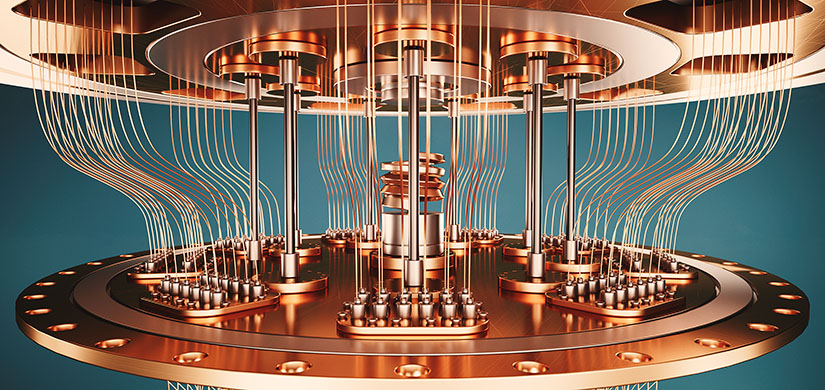
The physical realization of qubits is a significant engineering challenge. Several different qubit technologies are being explored, each with its own advantages and disadvantages. Superconducting qubits are one of the most mature and widely used technologies. These qubits are based on superconducting circuits that exhibit quantum behavior. Trapped ion qubits are another promising technology, using individual ions held in electromagnetic traps to represent qubits. Photonic qubits use photons (particles of light) to encode quantum information. Each of these technologies faces its own set of challenges related to qubit coherence (how long a qubit can maintain its quantum state), scalability (how easily the number of qubits can be increased), and control (how accurately qubits can be manipulated). The choice of qubit technology depends on the specific application and the trade-offs between these factors.
Superconducting qubits, like those used by IBM’s quantum computers, are fabricated using similar techniques to those used in the semiconductor industry. This allows for relatively easy integration and scalability. However, superconducting qubits are very sensitive to electromagnetic noise, which can lead to decoherence. Trapped ion qubits, on the other hand, have longer coherence times but are more difficult to scale up. Photonic qubits offer the potential for long-distance quantum communication but require complex optical setups. The development of new qubit technologies and the improvement of existing ones are crucial for advancing Quantum Computing. The race to build a fault-tolerant quantum computer is driving innovation in qubit technology.
The architecture of a quantum computer also plays a crucial role in its performance. Quantum computers are not simply scaled-up versions of classical computers. They require specialized architectures to handle the unique challenges of quantum computation. One important aspect of quantum computer architecture is the connectivity between qubits. In some architectures, each qubit is directly connected to every other qubit, allowing for efficient execution of quantum algorithms. However, this approach becomes increasingly difficult to implement as the number of qubits increases. Other architectures use a more limited connectivity, requiring qubits to be moved around to interact with each other. This can introduce additional overhead and errors. The design of efficient and scalable quantum computer architectures is a complex engineering problem. The architecture must also consider the cooling requirements, as many qubit technologies require extremely low temperatures to operate. For example, superconducting qubits typically operate at temperatures close to absolute zero.
Error correction is a critical challenge in Quantum Computing. Qubits are very susceptible to environmental noise, which can cause them to lose their quantum state and introduce errors into calculations. Quantum error correction techniques are used to protect quantum information from these errors. These techniques involve encoding a single logical qubit using multiple physical qubits. By monitoring the physical qubits, errors can be detected and corrected without disturbing the logical qubit. However, quantum error correction is computationally expensive and requires a significant overhead in terms of the number of qubits. Building a fault-tolerant quantum computer that can reliably perform complex calculations requires significant advances in quantum error correction techniques. The development of efficient and scalable quantum error correction codes is one of the major challenges in Quantum Computing. The quest for fault-tolerant Quantum Computing is a central driving force in the field.
Best Practices for Engaging with Quantum Computing
Engaging with Quantum Computing effectively requires a multi-faceted approach, encompassing education, experimentation, and collaboration. Start with a solid foundation in the underlying principles of quantum mechanics and computer science. Understanding linear algebra, complex numbers, and probability theory is essential for grasping the concepts of superposition and entanglement. Familiarize yourself with the basics of classical computer science, including algorithms, data structures, and programming languages. There are numerous online resources, textbooks, and courses available to help you build this foundation. edX offers courses on quantum computing fundamentals.
Once you have a grasp of the fundamentals, begin exploring quantum programming languages and software tools. Experiment with Qiskit, Cirq, or PennyLane to design, simulate, and execute simple quantum algorithms. Use quantum simulators to test your algorithms and gain experience with the unique challenges of quantum programming. Participate in online communities and forums to learn from other researchers and developers. Contribute to open-source projects to gain hands-on experience and collaborate with experts in the field. The best way to learn Quantum Computing is by doing.
Stay up-to-date with the latest advancements in Quantum Computing hardware and software. The field is rapidly evolving, with new qubit technologies, algorithms, and software tools being developed constantly. Follow research publications, attend conferences, and participate in workshops to stay informed about the latest breakthroughs. Pay attention to the progress being made by leading companies and research institutions in the field. arXiv is a great resource for pre-prints of scientific papers. Consider focusing on a specific area of Quantum Computing that interests you, such as quantum algorithm development, quantum error correction, or quantum hardware design. Deepening your knowledge in a specific area will allow you to make more meaningful contributions to the field.
Collaborate with researchers and developers from different disciplines. Quantum Computing is an interdisciplinary field that requires expertise in physics, computer science, mathematics, and engineering. Working with people from different backgrounds will broaden your perspective and allow you to approach problems from new angles. Participate in hackathons and challenges to collaborate with others and develop innovative solutions. Consider joining a research group or company that is working on Quantum Computing. This will provide you with valuable experience and opportunities to contribute to cutting-edge research. Remember that the field of Quantum Computing is still in its early stages, and there are many opportunities to make a significant impact.
Understand the limitations of current Quantum Computing technology. While Quantum Computing holds tremendous promise, it’s important to be realistic about its current capabilities. Quantum computers are not yet capable of solving all problems faster than classical computers. The “quantum supremacy” experiments have demonstrated that quantum computers can perform specific tasks faster than the best-known classical algorithms, but these tasks are often contrived and not directly relevant to real-world applications. Focus on identifying problems where Quantum Computing has a clear advantage and develop algorithms that can be executed on current or near-term quantum hardware. Avoid hype and focus on realistic and achievable goals. The future of Quantum Computing depends on careful and deliberate progress.
Implementation: Practical Applications of Quantum Computing
Despite the challenges, Quantum Computing is already finding practical applications in various fields. One promising area is drug discovery. Quantum computers can be used to simulate the behavior of molecules and materials with greater accuracy than classical computers. This can help researchers design new drugs and materials with specific properties. For example, Quantum Computing can be used to simulate the interactions between a drug molecule and a target protein, allowing researchers to predict the efficacy of the drug. Pharmaceutical companies are actively exploring the use of Quantum Computing in drug discovery. Nature discusses the use of quantum computing in drug discovery.
Another area where Quantum Computing is showing promise is materials science. Quantum computers can be used to simulate the properties of materials at the atomic level, allowing researchers to design new materials with improved strength, conductivity, or other desired characteristics. This can lead to breakthroughs in areas such as energy storage, transportation, and construction. For example, Quantum Computing can be used to design new battery materials with higher energy density or new superconductors that operate at higher temperatures.
Quantum Computing is also being explored for applications in finance. Quantum algorithms can be used to optimize investment portfolios, detect fraud, and manage risk. For example, Quantum Computing can be used to solve complex optimization problems that are intractable for classical computers, allowing financial institutions to make better investment decisions. However, the use of Quantum Computing in finance is still in its early stages, and significant research is needed to develop practical algorithms and applications.
Quantum machine learning is another promising area. Quantum algorithms can be used to speed up machine learning tasks, such as classification, clustering, and regression. For example, Quantum Computing can be used to train machine learning models faster than classical computers, allowing for the development of more accurate and efficient AI systems. Quantum machine learning is a rapidly growing field, with new algorithms and applications being developed constantly. The combination of Quantum Computing and machine learning has the potential to revolutionize many industries.
FAQs About Quantum Computing
Q: What is a qubit?
A: A qubit is the basic unit of information in a quantum computer. Unlike a classical bit, which can be either 0 or 1, a qubit can exist in a superposition of both states simultaneously.
Q: How does Quantum Computing differ from classical computing?
A: Quantum Computing leverages quantum mechanical phenomena like superposition and entanglement to perform calculations in a fundamentally different way than classical computers. This allows quantum computers to solve certain types of problems much faster than classical computers.
Q: What are the challenges in building quantum computers?
A: Building quantum computers is extremely difficult. Qubits are very sensitive to environmental noise, leading to errors in calculations. Maintaining qubit coherence and scaling up the number of qubits are major engineering challenges. Error correction in Quantum Computing is a major area of research.
Q: What are some potential applications of Quantum Computing?
A: Quantum Computing has the potential to revolutionize many industries, including drug discovery, materials science, finance, and artificial intelligence. It can be used to simulate molecules, optimize portfolios, and accelerate machine learning algorithms.
Q: When will Quantum Computing become mainstream?
A: It is difficult to predict exactly when Quantum Computing will become mainstream. While significant progress has been made, many challenges remain. It is likely that Quantum Computing will initially be used for specialized applications in specific industries before becoming more widely adopted.
Q: Is Quantum Computing going to replace classical computing?
A: No, Quantum Computing is not going to replace classical computing. Quantum computers are designed for specific types of problems where their unique capabilities can be leveraged. Classical computers will continue to be used for most everyday tasks.
Q: How can I get started learning about Quantum Computing?
A: Start with a solid foundation in the underlying principles of quantum mechanics and computer science. Explore quantum programming languages and software tools like Qiskit, Cirq, or PennyLane. Participate in online communities and forums to learn from other researchers and developers.
Q: What is Quantum Supremacy?
A: Quantum supremacy refers to the point at which a quantum computer can perform a calculation that is practically impossible for any classical computer. This milestone has been achieved for specific, contrived tasks, but practical quantum supremacy for real-world problems is still a goal.
References
- IBM Quantum Computing – IBM’s Quantum Computing platform and resources.
- Google Quantum AI – Google’s Quantum AI research and development.
- Qiskit – An open-source quantum computing software development kit.
- arXiv – A repository of pre-prints of scientific papers, including many on Quantum Computing.
- Nature – Quantum computers are starting to earn their keep – An article discussing the application of Quantum Computing in drug discovery.
- Quanta Magazine – Quantum Mechanics Explained – A clear explanation of the fundamentals of quantum mechanics.
- edX – Quantum Computing Fundamentals – Online course covering the basics of Quantum Computing.
- Quantum Computing for Everyone – An interactive textbook on Quantum Computing.
- NIST Quantum Information – National Institute of Standards and Technology resources on quantum information science.
Take the Next Step in Quantum Computing
The world of Quantum Computing is brimming with potential, and now is the perfect time to get involved. Whether you’re a seasoned professional or just starting your journey, the opportunities are vast. Explore the resources mentioned in this guide, experiment with quantum programming tools, and connect with the vibrant Quantum Computing community. The future of computation is quantum, and your contributions can help shape that future. Start learning more about Quantum Computing today!
Ready to delve deeper? Contact us to explore how Quantum Computing can transform your organization and unlock new possibilities. Let’s build the future, one qubit at a time.