

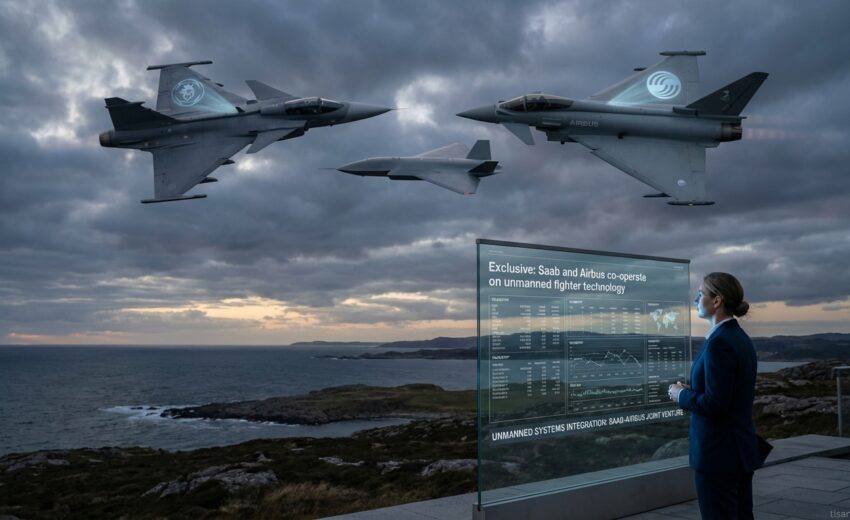
Saab and Airbus are collaborating on unmanned fighter technology, signaling a significant shift in aerospace. The partnership aims to develop advanced unmanned fighter aircraft, poised to reshape air combat and defense strategies by delivering superior autonomous capabilities.
Saab and Airbus Strategic Alliance: Unmanned Fighter Technology Takes Flight
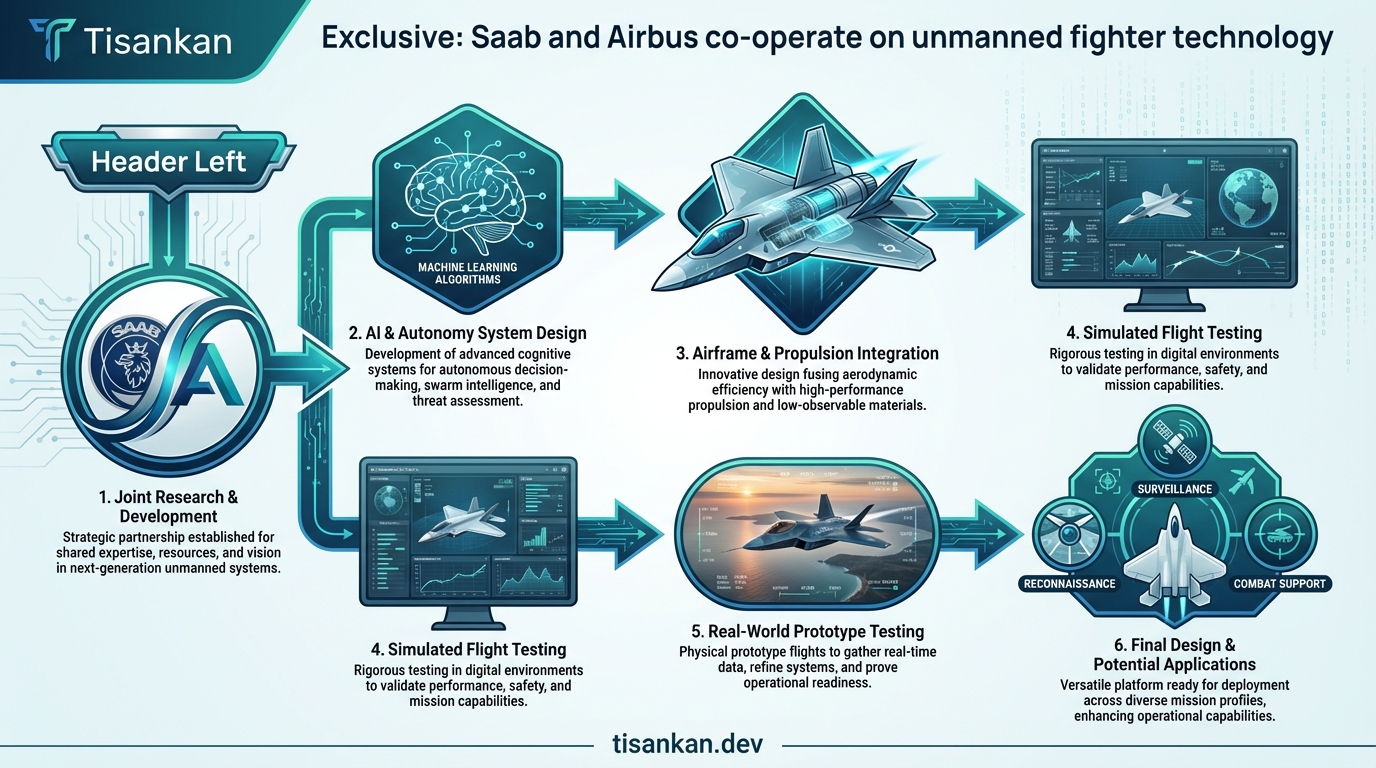
This partnership is a calculated move in the defense sector. Saab, renowned for its innovative aircraft design and sensor tech (like the Gripen’s), joins forces with Airbus, a global aerospace and defense giant. The aim? Pool resources and accelerate unmanned fighter tech development. This isn’t just about building drones; it’s about creating adaptable, AI-driven aerial combatants. Forget parallels to dementia tech; this is about projecting power.
The collaboration focuses on autonomous flight control, advanced sensor integration (think multi-spectral imaging and hypersonic target tracking), and AI-driven decision-making capable of processing terabytes of data per second. The objective is to create unmanned fighters that can operate effectively in complex, heavily contested environments. Saab’s Gripen experience coupled with Airbus’s manufacturing and systems integration prowess provides a strong foundation.
Technical Deep Dive: Unmanned Fighter Capabilities – Beyond Remote Control
The unmanned fighter aircraft will incorporate advanced technologies. We’re talking sophisticated sensor suites capable of detecting and classifying targets beyond visual range (BVR), coupled with secure, jam-resistant communication systems using advanced encryption. Electronic warfare capabilities will be more than robust; they’ll be proactive, anticipating and neutralizing enemy countermeasures. This isn’t about reactive defense; it’s about electronic dominance.
Autonomous flight control systems are critical. These systems will enable the aircraft to perform complex maneuvers – think high-G turns and evasive actions – and make real-time decisions without human intervention. AI algorithms will analyze sensor data, identify threats (including spoofing attempts), and prioritize targets based on mission parameters. We’re pushing the boundaries of AI, moving beyond simple pattern recognition to true tactical reasoning.
The integration presents challenges. Reliability and security of autonomous systems are paramount. Protecting against cyberattacks requires more than just firewalls; it demands a layered security architecture with constant monitoring and adaptive threat response. Rigorous testing and validation are non-negotiable. This isn’t just about avoiding crashes; it’s about preventing weaponized AI from being turned against its creators. Forget bone regeneration; this is about preventing digital disintegration.
Expert Opinion: Game Changer for Air Power
As Tisankan, a CTO and Strategic Tech Advisor, this collaboration will reshape the defense landscape. Unmanned fighter aircraft represent a fundamental shift towards autonomous systems in air combat. This tech reduces risk to pilots and enhances military operational effectiveness. The implications extend beyond simple force multiplication; they redefine the very nature of aerial warfare.
“This partnership is a paradigm shift,” a defense analyst might say. “It merges two aerospace leaders to forge an innovative solution. Unmanned fighter aircraft will revolutionize air combat, granting a decisive advantage to adopting nations. The geopolitical ramifications are enormous.”
However, widespread adoption raises ethical and strategic questions. Autonomous weapons systems demand accountability and prevent unintended escalation. Development and deployment must be responsible, with robust safeguards. We need fail-safes and kill switches, not just promises. Forget the Ukrainian conflict; this is about preventing global conflict.
Future Trajectory: From Prototype to Production
The Saab and Airbus collaboration will continue for years, developing and testing prototype unmanned fighter aircraft. Flight tests are anticipated soon. If successful, this tech could be integrated into existing and future military aircraft platforms, potentially retrofitting existing fighters with autonomous wingman capabilities. Imagine a Gripen squadron augmented by loyal, tireless unmanned aircraft.
Success hinges on funding, technical problem-solving, and acceptance of autonomous weapons systems. Despite challenges, the potential benefits are substantial. The current AI boom is irrelevant; this project stands or falls on its own merits. This isn’t about chasing trends; it’s about forging the future.
The implications extend beyond military applications. Technologies developed for unmanned fighter aircraft could be used in civilian applications, such as search and rescue, border patrol (detecting smuggling and illegal crossings), and environmental monitoring (tracking oil spills and deforestation). This is about leveraging military R&D for societal benefit.
Real-World Scenario
Imagine a near-future conflict where a squadron of manned Gripen fighters, supported by a flight of these autonomous fighters, engage enemy aircraft over contested airspace. The unmanned fighters, acting as loyal wingmen, use their advanced sensors to detect and track enemy aircraft, relaying targeting data to the manned fighters. They can also engage enemy fighters directly, drawing fire and protecting the manned aircraft. If a pilot is incapacitated, an unmanned fighter can autonomously escort the damaged aircraft back to base, ensuring the pilot’s safety. This is not science fiction; it’s the future of air combat.
Unmanned Fighter FAQs
Q: What is the goal?
A: Develop advanced unmanned fighter aircraft for military applications, enhancing air combat capabilities.
Q: What technologies are being used?
A: Autonomous flight control, advanced sensor integration (multi-spectral, BVR), and AI-driven decision-making with real-time threat assessment.
Q: What are the potential benefits?
A: Reduced pilot risk, improved operational effectiveness, force multiplication, and potential civilian applications.
Q: What are the ethical concerns?
A: Accountability, unintended consequences, and the need for robust safeguards and fail-safe mechanisms.
Q: When are the first flight tests expected?
A: In the near future. Specific timelines are classified, but progress is accelerating.
Q: What is the long-term outlook?
A: Integration into existing and future military aircraft platforms, as well as potential for civilian applications. Expect a gradual shift towards greater autonomy in air combat.