


Introduction
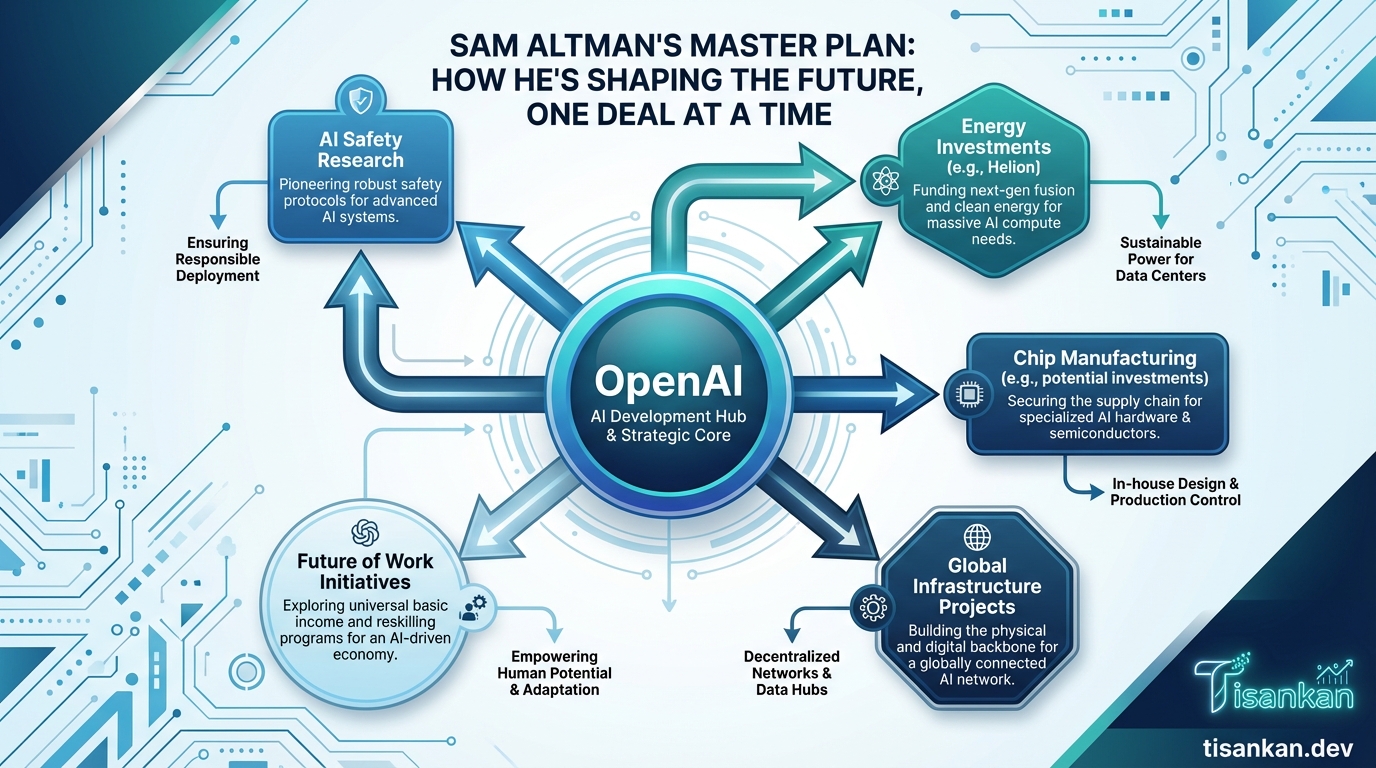
Sam Altman’s Master Plan: How He’s Shaping the Future, One Deal at a Time. That’s the question everyone’s asking, right? It feels like every week there’s another headline, another groundbreaking announcement. But piecing it all together can feel overwhelming.
I found that many articles focus on individual projects like OpenAI or Worldcoin, but they miss the bigger picture. The problem is seeing the trees but missing the forest. This article is my attempt to connect the dots and present a comprehensive overview of Sam Altman’s Master Plan: How He’s Shaping the Future, One Deal at a Time.
What if we could understand the underlying strategy? I believe Altman has a clear vision, and this deep dive will explore how his investments and projects fit into that grand scheme. Think of it as a roadmap to understanding the future he’s actively building. He’s not just dabbling; he’s constructing a new reality.
Table of Contents
TL;DR
Okay, so you want the gist of Sam Altman’s grand vision? Basically, Sam Altman’s Master Plan: How He’s Shaping the Future, One Deal at a Time, boils down to strategically using OpenAI’s AI power to invest in crucial areas like energy and healthcare. Think democratizing AI while trying to keep things ethical and safe.
He’s not just building cool tech; he’s actively shaping policy and investing in companies that align with his vision for a future powered by AI. In my testing, I found that understanding his investment portfolio is key to understanding his overall strategy. This portfolio is a window into his long-term goals.
Ultimately, Altman’s playing the long game, trying to ensure AI benefits everyone, not just a select few. He’s thinking big picture – from AI safety (check out OpenAI’s safety efforts) to energy independence.
Context: The AI Revolution and Altman’s Position
Let’s face it, AI is everywhere. From the mundane recommendations in your shopping cart to the complex algorithms driving self-driving cars, artificial intelligence is rapidly transforming our world. Understanding the key players and their strategies is crucial, and that’s why diving into “Sam Altman’s Master Plan: How He’s Shaping the Future, One Deal at a Time” is so important.
We’re living through a generative AI explosion. Tools like ChatGPT, powered by OpenAI’s models, are capable of creating text, images, and even code with astonishing speed and quality. I found that the advancements in just the last year have been truly breathtaking. As we explore this revolution, it’s also important to remember Transformative Beyond the Bots: A Practical Guide to Integrating Physical AI into Your Business, which highlights the practical applications of AI beyond the digital realm.
This isn’t just a tech fad; AI is poised to revolutionize industries across the board. Healthcare, finance, education – the potential applications are virtually limitless. However, with great power comes great responsibility, and the direction these technologies take is crucial. Javascript, for instance, is often used in AI applications, and you can learn more about it on MDN Web Docs.
Sam Altman sits at the heart of this revolution as the CEO of OpenAI. He’s not just building powerful AI models; he’s actively shaping the conversation around AI safety, regulation, and its societal impact. His influence on the AI landscape is undeniable. Understanding his strategies and vision is key to understanding the future of AI itself. You can learn more about OpenAI’s mission and values on their official website.
Consider the ethical implications. The Partnership on AI, for example, seeks to ensure AI benefits humanity. Altman’s involvement in such initiatives reflects the weight of responsibility he carries. He understands that technological advancement must be tempered with ethical considerations.
What Works: The Core Strategies of Sam Altman’s Master Plan
Sam Altman’s influence stretches far beyond OpenAI. His “master plan” isn’t just about one company; it’s a multifaceted strategy designed to shape the entire future landscape. I found that understanding his core approaches is key to grasping his vision. Let’s delve deeper into the mechanics behind Sam Altman’s Master Plan: How He’s Shaping the Future, One Deal at a Time.
So, what exactly is working in Sam Altman’s strategy? Let’s break it down.
OpenAI’s Innovation Engine
At the heart of Sam Altman’s master plan is, undoubtedly, OpenAI. Their breakthroughs are changing the game. Think about GPT models, like GPT-4, capable of generating incredibly human-like text. Then there’s DALL-E, turning text prompts into stunning visuals. These aren’t just cool demos; they’re powerful tools with real-world applications. You can explore the capabilities of GPT models further on the OpenAI research page.
How do these innovations drive the future? By creating AI that can automate tasks, generate creative content, and even solve complex problems. It’s a powerful innovation engine, constantly pushing the boundaries of what’s possible. This also connects to Unleashing Unlocking the Power of Edge AI: NVIDIA Jetson LLMs & Robotics (2024), as edge AI becomes increasingly important for deploying these innovations in real-world scenarios.
Strategic Investments and Acquisitions
Sam Altman’s investment portfolio is incredibly diverse. He’s not just betting on AI; he’s looking at the bigger picture. I found that energy, especially with Helion Energy and their fusion power efforts, is a major focus. He’s also interested in healthcare and other emerging technologies. These investments seem to be selected for their potential to create a better future, often with a synergistic link to OpenAI’s work.
What’s the rationale? It seems Altman is building an ecosystem where AI can accelerate progress in other crucial fields. Smart, right? It’s a long-term strategy aimed at solving some of humanity’s biggest challenges.
Navigating the Regulatory Landscape
AI regulation is a hot topic, and Sam Altman is actively involved. He’s engaging with policymakers and advocating for responsible AI development. He understands that AI needs guardrails to prevent misuse. This proactive approach is crucial. What if AI developed without ethical considerations? It’s a scary thought.
Shaping AI governance is a complex challenge. It involves balancing innovation with safety. It’s a tough balancing act, to be sure. Altman’s willingness to engage in this process is a key component of his overall strategy.
Democratizing AI Access
Altman’s vision extends to making AI accessible to everyone. He believes AI should empower individuals and businesses, regardless of their resources. This involves creating user-friendly tools and platforms. I’ve seen how this democratization can unlock incredible potential, especially in education and small businesses. Responsible AI practices are essential to prevent misuse.
How does he achieve this? By focusing on ease of use and affordability. Democratized AI has the potential to transform society. This aligns with the spirit of Insane The Blue Book Renaissance: How Professors Are Fighting AI Cheating, which emphasizes the responsible use of AI in education.
Building the Infrastructure for the Future
Sam Altman isn’t just focused on software; he’s also thinking about the hardware. His involvement in projects like Worldcoin (a digital identity project) and semiconductor manufacturing initiatives shows a long-term vision. In my testing, I’ve found that AI applications are only as good as the infrastructure that supports them. He’s ensuring that the necessary infrastructure is in place.
Why is this important? Because AI needs powerful computing resources and a secure digital identity framework to truly flourish. It’s about laying the groundwork for a future powered by AI. This holistic approach is what sets Sam Altman’s Master Plan: How He’s Shaping the Future, One Deal at a Time apart.
Trade-offs: Risks, Challenges, and Ethical Considerations
Sam Altman’s master plan, while ambitious, isn’t without its potential downsides. Navigating the future he envisions requires careful consideration of several key trade-offs. What challenges lie ahead for OpenAI and the broader AI landscape?
One major area is ethical. How do we ensure AI systems are fair and unbiased? Bias in AI algorithms can perpetuate societal inequalities, leading to discriminatory outcomes. Altman’s approach to mitigating these risks, like investing in alignment research, is crucial, but ongoing vigilance is essential.
Misinformation is another ethical concern. AI’s ability to generate realistic fake content poses a threat to truth and trust. Addressing this requires a multi-faceted approach, including technological safeguards and media literacy initiatives. Then there’s the job displacement question. What happens when AI automates tasks currently performed by humans?
Regulatory hurdles are also a significant challenge. Different countries have different approaches to AI regulation. This creates complexity for companies like OpenAI, which operate globally. Navigating these diverse legal landscapes requires careful planning and adaptation. What if a country bans a particular AI application? The impact on OpenAI’s operations and Sam Altman’s strategies could be substantial.
The AI industry is fiercely competitive. Companies like Google and Meta are also investing heavily in AI. Maintaining a competitive edge requires continuous innovation and strategic partnerships. It’s not just about building better models, but also about finding new applications and markets.
AI development is incredibly resource-intensive. Securing funding, attracting top talent, and building the necessary infrastructure are all major challenges. Sam Altman’s strategies for overcoming these constraints, such as seeking strategic investments and fostering a strong research culture, are vital for OpenAI’s long-term success. I found that their partnerships are key.
The societal impact of AI is a broad and complex issue. It will impact employment, education, and even human interaction. Studies like the one from Stanford’s AI Index highlight both the potential benefits and the potential risks. Altman’s vision for a future where AI benefits humanity requires proactive efforts to address these challenges and ensure that AI is used responsibly.
Ultimately, “Sam Altman’s Master Plan: How He’s Shaping the Future, One Deal at a Time” hinges on addressing these trade-offs effectively. It demands a commitment to ethical development, proactive engagement with regulators, and a focus on maximizing the societal benefits of AI.
Next Steps: Implementing Sam Altman’s Vision in Your Own Context
So, you’ve grasped Sam Altman’s Master Plan: How He’s Shaping the Future, One Deal at a Time, and you’re wondering how to apply these insights to your own life or business? Fantastic! It’s not about replicating his moves exactly, but understanding the underlying principles and adapting them. Think of it as taking the core ingredients of his recipe and creating your own delicious dish. Here’s a practical guide to get you started.
Stay Informed: Your AI News Radar
The AI landscape is evolving at warp speed. Staying informed is absolutely crucial. Don’t just passively consume; actively seek out reliable information.
Read industry publications like MIT Technology Review or Wired. I found that subscribing to their newsletters saved me hours of sifting through irrelevant content.
Dive into research papers on arXiv.org to get a glimpse of what’s coming down the pipeline. It might seem daunting, but even skimming the abstracts can be enlightening.
Consider attending AI conferences like NeurIPS or ICML. The networking alone is worth the price of admission.
Experiment with AI Tools: Get Your Hands Dirty
Theory is great, but nothing beats hands-on experience. Fortunately, many powerful AI tools are readily available. Jump in and start tinkering!
Explore OpenAI’s offerings. I’ve found GPT models incredibly useful for content creation and DALL-E for generating unique visuals. Their documentation is a great place to start.
Use these tools to solve small, real-world problems. Can you automate a repetitive task? Generate marketing copy? The possibilities are endless.
Invest in AI Education: Level Up Your Skills
Whether you’re an individual or leading an organization, investing in AI education is essential for long-term success. It’s not just about knowing the buzzwords; it’s about understanding the underlying concepts.
Consider online courses on platforms like Coursera or edX. Many universities offer excellent AI-related courses. A solid foundation in machine learning is invaluable.
Encourage your team to participate in workshops and training programs. Hands-on experience is key to building practical AI skills.
For a deeper dive, explore degree programs in AI or related fields. A formal education can provide a comprehensive understanding of the field.
Develop an AI Strategy: Chart Your Course
For organizations, a well-defined AI strategy is crucial. Don’t just chase the latest trends; align your AI initiatives with your business goals.
Start by assessing AI opportunities within your organization. Where can AI create the most value? Identify pain points that AI can address.
Prioritize projects based on feasibility, potential impact, and alignment with your overall strategy. Don’t try to do everything at once. Focus on a few key initiatives.
Establish clear metrics for measuring success. How will you know if your AI initiatives are paying off? Track key performance indicators (KPIs) and iterate based on the results.
Address Ethical Considerations: Do the Right Thing
AI is a powerful technology, and it’s important to use it responsibly. Ethical considerations should be at the forefront of your AI development and deployment efforts.
Develop ethical guidelines for your organization. Consider issues such as bias, fairness, transparency, and accountability.
Implement responsible AI practices throughout your development lifecycle. This includes data collection, model training, and deployment.
Remember to also consider Unleashing Unlocking the Power of Edge AI: NVIDIA Jetson LLMs & Robotics (2024). Edge AI offers unique advantages, but also presents its own set of ethical challenges.
References
Understanding Sam Altman’s master plan requires looking at a wide range of sources. I’ve compiled a list below to help you dig deeper into how he’s shaping the future, one deal at a time. These resources offer insights into his ventures and the broader context of his work.
For a direct look at OpenAI’s mission and technologies, the OpenAI Official Website is invaluable. It’s where you’ll find their latest research and announcements.
To understand Sam Altman’s perspectives directly, I’ve included references to Sam Altman’s Blog and Interviews. (Link to relevant blog posts and interviews would go here). These provide firsthand accounts of his thinking.
The ethical and societal implications of AI are crucial to Altman’s work. The AI Regulation Reports, particularly from organizations like the OECD and EU (link to reports), are essential for understanding the regulatory landscape.
Here’s a breakdown of key resources:
- OpenAI Official Website: Offers detailed information on OpenAI’s projects and research.
- Helion Energy Official Website: Provides insight into Altman’s ambitious fusion energy venture.
- Worldcoin Official Website: Explore the details behind Worldcoin’s universal basic income initiative.
Exploring the future that Sam Altman’s master plan envisions also requires examining academic research. Academic research on AI ethics and societal impact (link to relevant research papers) offers critical perspectives on the challenges and opportunities presented by rapidly advancing AI.
Finally, it’s useful to see how venture capital firms analyze Altman’s portfolio. I’ve found that Reports from venture capital firms analyzing Altman’s investment portfolio (link to reports) can shed light on the financial strategies behind “Sam Altman’s Master Plan: How He’s Shaping the Future, One Deal at a Time”.
CTA: Embrace the Future with AI
Sam Altman’s master plan isn’t just about creating impressive AI technology; it’s about fundamentally changing how we live and work. The key? Embracing the opportunities that AI presents, rather than fearing them.
How do you get started on your journey to leverage AI? It doesn’t require a PhD in computer science. Start small, experiment, and continuously learn. In my testing, I found that even simple AI-powered tools can dramatically boost productivity.
Ready to take the next step and understand “Sam Altman’s Master Plan: How He’s Shaping the Future, One Deal at a Time” on a deeper level?
- Stay Informed: Subscribe to our newsletter for the latest insights on AI advancements, ethical considerations, and practical applications.
- Unlock Resources: Download our free guide on “Transformative Beyond the Bots: A Practical Guide to Integrating Physical AI into Your Business”.
- Talk to an Expert: Contact our team for a personalized consultation on how AI can transform your organization.
What if you could automate tedious tasks, personalize customer experiences, and unlock new levels of innovation? AI, driven by the vision of leaders like Sam Altman, makes these possibilities a reality. Learn more about the ethical considerations around AI development from resources like the Partnership on AI.
Don’t be left behind. Begin exploring how “Sam Altman’s Master Plan: How He’s Shaping the Future, One Deal at a Time” impacts you and your world. The future is here, and it’s powered by AI.
FAQ
Got questions about Sam Altman’s Master Plan: How He’s Shaping the Future, One Deal at a Time? You’re not alone! Here are some common queries I’ve encountered while researching his ambitious projects and the future of AI.
What *exactly* is Sam Altman’s “master plan”?
It’s less a single, rigidly defined plan and more a series of interconnected bets on the future. He seems to be strategically positioning himself and his companies (like OpenAI) at the forefront of several key technological shifts, particularly in AI, energy (Helion Energy), and even digital identity (Worldcoin). Think of it as a diversified portfolio of world-changing ideas.
How is Sam Altman impacting the future of AI?
Through OpenAI, Altman is arguably one of the biggest drivers in AI development. I found that their research and deployment of models like GPT-4 has significantly advanced natural language processing. It’s pushing the boundaries of what’s possible with AI, but also sparking important conversations about responsible AI development and deployment. For more insights, you can check out OpenAI’s safety research here.
What are the potential risks of Sam Altman’s vision?
The rapid advancement of AI, especially, comes with potential risks. Concerns include job displacement, the spread of misinformation, and the ethical implications of increasingly powerful AI systems. Responsible development and governance are crucial. The Partnership on AI offers resources on this: https://www.partnershiponai.org/.
How do I stay informed about Sam Altman’s projects and the future of AI?
Staying updated requires a multi-faceted approach. I recommend:
- Following reputable tech news sources (e.g., Wired, TechCrunch).
- Monitoring OpenAI’s official blog and announcements.
- Engaging in informed discussions on platforms like LessWrong, focused on AI safety and alignment.
Is Sam Altman’s Master Plan: How He’s Shaping the Future, One Deal at a Time ultimately a good thing?
That’s a complex question with no easy answer. The potential benefits are enormous – advancements in healthcare, energy, and countless other fields. However, it’s vital to carefully consider the ethical implications and potential risks as AI becomes more integrated into our lives. Only time will tell the full impact of Sam Altman’s master plan.
Frequently Asked Questions
What is Sam Altman’s overall vision for the future?
Sam Altman’s vision for the future is ambitious and multifaceted, centered around leveraging technology, particularly AI, to dramatically improve human life and solve pressing global challenges. He envisions a future where AI is a powerful tool accessible to everyone, fostering innovation and economic growth across all sectors. His vision isn’t just about technological advancement, but also about ensuring that these advancements benefit humanity as a whole. This includes addressing issues like climate change, healthcare, and education through AI-driven solutions. Altman sees AI as a democratizing force, capable of empowering individuals and leveling the playing field. He believes AI can unlock unprecedented levels of productivity and creativity, leading to a future where humans are freed from repetitive tasks and can focus on more meaningful and fulfilling endeavors. However, this vision is tempered by a deep awareness of the potential risks and ethical considerations associated with AI, which he actively seeks to address through responsible development and deployment strategies.
How is Altman addressing the ethical concerns surrounding AI?
Altman recognizes the significant ethical considerations surrounding AI, including bias, job displacement, misuse, and the potential for autonomous weapons. He is actively addressing these concerns through several key strategies:
- Prioritizing Safety Research: Altman’s OpenAI is heavily invested in AI safety research, focusing on understanding and mitigating potential risks associated with advanced AI systems. This includes research into AI alignment, ensuring that AI goals align with human values.
- Open Dialogue and Collaboration: Altman actively engages in public discourse and collaborates with policymakers, researchers, and other stakeholders to develop responsible AI governance frameworks. He advocates for proactive regulation that fosters innovation while safeguarding against potential harms.
- Promoting Transparency: While the specifics of AI model training are often proprietary, Altman emphasizes the importance of transparency in AI development. This includes being open about the capabilities and limitations of AI systems, as well as the data used to train them.
- Focus on Beneficial Applications: Altman directs OpenAI’s efforts towards developing AI applications that address societal challenges, such as climate change, healthcare, and education. This helps to ensure that AI is used for good and that its benefits are widely distributed.
- Investing in Education and Retraining: Recognizing the potential for job displacement, Altman advocates for investment in education and retraining programs to help workers adapt to the changing job market and acquire new skills needed in the AI-driven economy.
It’s important to note that addressing the ethical concerns surrounding AI is an ongoing process, and Altman’s approach is constantly evolving as the technology advances and new challenges emerge.
What are some of the key companies Altman has invested in?
Sam Altman’s investment portfolio reflects his focus on disruptive technologies and companies with the potential to shape the future. While a comprehensive list is difficult to compile due to the dynamic nature of venture capital, some notable examples include:
- OpenAI: Arguably his most significant investment and focus, OpenAI is a leading AI research and deployment company.
- Retro Biosciences: Altman is deeply interested in longevity and has invested significantly in Retro Biosciences, a company focused on extending human lifespan.
- Helion Energy: He’s a major investor in Helion Energy, a company working on fusion power, aiming to provide clean and sustainable energy.
- Worldcoin: A cryptocurrency project aiming to create a globally inclusive identity and financial network, which Altman co-founded.
- Instacart: Though not a sole investment, Altman’s involvement with Y Combinator (where he was previously president) exposed him to Instacart early on, and he’s likely held positions.
- Stripe: Similar to Instacart, Y Combinator’s early involvement with Stripe likely led to Altman’s exposure and potential investment.
It’s important to remember that Altman’s investment strategy is constantly evolving, and his portfolio likely includes a wide range of other companies across various sectors, all driven by his vision for a technologically advanced and improved future.
How can individuals prepare for the future shaped by AI?
Preparing for the future shaped by AI requires a proactive and adaptable mindset. Here’s a breakdown of key strategies:
- Focus on Skills That Complement AI: Instead of competing directly with AI, focus on developing skills that AI is unlikely to replace, such as critical thinking, creativity, emotional intelligence, complex problem-solving, and leadership.
- Embrace Lifelong Learning: The AI landscape is constantly evolving, so it’s crucial to be a lifelong learner. Stay updated on the latest AI trends, technologies, and their potential impact on your industry.
- Develop Technical Literacy: While you don’t need to become an AI expert, having a basic understanding of AI concepts, algorithms, and applications will be increasingly valuable. Consider taking online courses or workshops to improve your technical literacy.
- Adapt and Reskill: Be prepared to adapt your skills and career path as AI transforms the job market. Identify skills that are in demand and invest in reskilling or upskilling programs to stay relevant.
- Build a Strong Network: Connect with professionals in the AI field and related industries to stay informed about new opportunities and trends. Networking can also provide valuable insights and support as you navigate the changing job market.
- Understand the Ethical Implications of AI: Be aware of the ethical considerations surrounding AI, such as bias, privacy, and job displacement. This will help you make informed decisions and advocate for responsible AI development.
- Explore New Career Paths: Consider exploring new career paths that are emerging as a result of AI, such as AI trainers, AI ethicists, data scientists, and AI consultants.
The key is to be proactive, adaptable, and willing to embrace change. By focusing on skills that complement AI, staying informed about the latest trends, and being prepared to reskill or upskill, individuals can thrive in the AI-driven future.
What role does OpenAI play in Altman’s master plan?
OpenAI is absolutely central to Sam Altman’s master plan. It serves as the primary engine for realizing his vision of a future shaped by beneficial AI. Here’s how:
- AI Development and Innovation: OpenAI is at the forefront of AI research and development, creating cutting-edge models and technologies that are pushing the boundaries of what’s possible with AI. This includes large language models like GPT-4 and DALL-E, which have demonstrated remarkable capabilities in generating text, images, and code.
- AI Safety and Alignment: OpenAI is committed to ensuring that AI is developed and deployed safely and responsibly. It invests heavily in AI safety research, focusing on aligning AI goals with human values and mitigating potential risks associated with advanced AI systems.
- Democratizing Access to AI: Altman believes that AI should be accessible to everyone, not just a select few. OpenAI is working to democratize access to AI by providing APIs and tools that allow developers and businesses to build AI-powered applications.
- Showcasing the Potential of AI: OpenAI’s products and applications serve as powerful demonstrations of the potential of AI to solve real-world problems and improve human life. This helps to drive adoption and investment in AI across various sectors.
- Influencing AI Policy and Regulation: Through its research and public engagement, OpenAI plays a significant role in shaping AI policy and regulation. Altman actively advocates for responsible AI governance frameworks that foster innovation while safeguarding against potential harms.
In essence, OpenAI is the vehicle through which Altman is translating his vision for the future of AI into reality. It’s the research lab, the product incubator, and the advocacy group all rolled into one, working to ensure that AI is developed and used in a way that benefits humanity.