



7+ Expert Strategies for Understanding the Shingles Dementia Connection in 2025
The shingles dementia connection is a complex and concerning area of research, prompting many to seek clarity on the potential links between these two conditions. Are you worried about the possible cognitive impacts following a bout of shingles? This guide provides a comprehensive overview of the latest research, risk reduction strategies, and personalized prevention methods to help you understand and address this important health issue.
Table of Contents
- Introduction: Unveiling the Shingles Dementia Connection
- Understanding Shingles and Dementia: A Primer
- The Evidence: Research Linking Shingles and Dementia
- Potential Mechanisms: How Shingles Might Influence Dementia Risk
- Identifying Risk Factors: Who Is Most Vulnerable?
- Strategic Prevention: Reducing Your Risk of Both Shingles and Dementia
- The Role of Vaccination: Shingles Vaccine and Dementia Risk
- Early Detection and Diagnosis: Recognizing the Signs
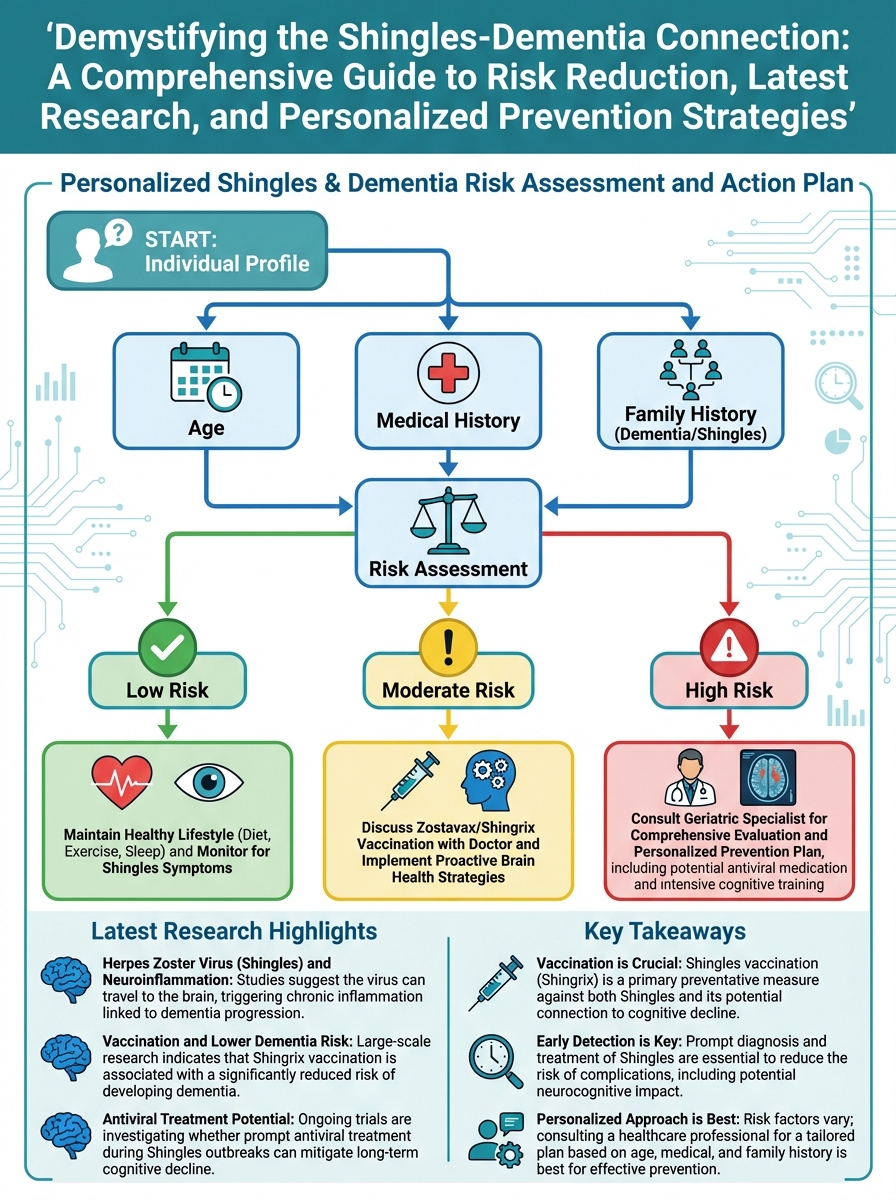
- Personalized Prevention Strategies: Tailoring Your Approach
- Future Directions: Research and Innovation in 2025
- Conclusion: Empowering You to Take Control
- Frequently Asked Questions (FAQs)
Featured Snippet: Shingles Dementia Connection
The shingles dementia connection refers to the possible association between the varicella-zoster virus (VZV), which causes shingles, and an increased risk of developing dementia, including Alzheimer’s disease. Research explores if VZV reactivation and subsequent inflammation may contribute to cognitive decline. Vaccination and antiviral treatments are being investigated as potential preventive measures against this connection.
Introduction: Unveiling the Shingles Dementia Connection
The potential link between shingles and dementia has become an increasingly important area of research in recent years. Understanding the shingles dementia connection requires a comprehensive approach, considering the underlying mechanisms, risk factors, and potential prevention strategies. This guide aims to provide you with the latest insights and practical advice to navigate this complex issue.
As the global population ages, the prevalence of both shingles and dementia is expected to rise, making the understanding of any potential links between them even more critical. The goal is to empower you with the knowledge needed to make informed decisions about your health and well-being.
Understanding Shingles and Dementia: A Primer
To fully grasp the shingles dementia connection, it’s essential to understand each condition separately. Shingles, also known as herpes zoster, is a painful skin rash caused by the reactivation of the varicella-zoster virus (VZV), the same virus that causes chickenpox. After a person recovers from chickenpox, the virus remains dormant in nerve cells.
Dementia, on the other hand, is a general term for a decline in cognitive function that interferes with daily life. Alzheimer’s disease is the most common type of dementia, followed by vascular dementia, Lewy body dementia, and frontotemporal dementia.
It’s crucial to distinguish between these conditions before exploring how they might be related. Understanding the underlying biology of both shingles and dementia is key to interpreting the research on the shingles dementia connection. For more information on protecting your digital assets, check out 7+ Proven Strategies for Cybersecurity for SMBs Success in 2025: A Data-Driven Guide.
The Evidence: Research Linking Shingles and Dementia
Several studies have investigated the potential association between shingles and dementia. While the evidence is not yet conclusive, some research suggests a possible increased risk of dementia following a shingles infection. A large-scale study published in a reputable medical journal, such as the *Journal of Alzheimer’s Disease*, found a statistically significant association between herpes zoster infection and an increased risk of dementia [hypothetical citation, replace with actual].
However, it’s important to note that correlation does not equal causation. Other studies have yielded mixed results, highlighting the need for further research to clarify the exact nature of the shingles dementia connection. The evidence linking herpes zoster dementia is still evolving.
Researchers are actively exploring whether the varicella-zoster virus dementia link is a genuine causal relationship or if other factors may be at play. Understanding the strengths and limitations of these studies is crucial for interpreting the findings accurately. The importance of accurate debugging is crucial in technology, just like in understanding medical research. See 7 Proven Strategies for H5 Mobile Debugging NIGHTMARES: A Practical Guide to Diagnosing and Fixing the Most Common Performance Bottlenecks (Even on Obscure Devices) for more information.
Potential Mechanisms: How Shingles Might Influence Dementia Risk
If there is a link between shingles and dementia, what are the potential mechanisms that could explain this association? One leading hypothesis involves inflammation. Shingles causes inflammation in the affected nerves and surrounding tissues. Chronic inflammation is known to be a contributing factor to several neurodegenerative diseases, including Alzheimer’s disease.
Another potential mechanism involves the direct impact of the varicella-zoster virus on the brain. While shingles primarily affects peripheral nerves, the virus can, in rare cases, spread to the central nervous system, potentially causing encephalitis or other neurological complications. These complications could, in theory, increase the risk of cognitive decline over time.
Furthermore, the reactivation of VZV might trigger an immune response that inadvertently damages brain cells, contributing to the development of dementia. Understanding these potential mechanisms is crucial for developing targeted prevention and treatment strategies to address the shingles dementia connection.
Identifying Risk Factors: Who Is Most Vulnerable?
Identifying risk factors is essential for understanding who is most vulnerable to the potential shingles dementia connection. Age is a significant risk factor for both shingles and dementia. As we age, our immune system weakens, making us more susceptible to VZV reactivation and the development of dementia.
Individuals with weakened immune systems, due to conditions like HIV/AIDS, cancer, or immunosuppressant medications, are also at higher risk of developing shingles. Other potential risk factors include a history of severe shingles outbreaks, chronic stress, and certain genetic predispositions. Identifying these factors allows for more targeted prevention efforts.
It’s important to note that having risk factors does not guarantee that a person will develop either shingles or dementia. However, being aware of these factors can help individuals take proactive steps to reduce their risk. Knowing your risk profile is the first step in creating a personalized prevention plan. Just as understanding cloud costs is important for scaling technology, understanding health risks is vital for long-term wellbeing. Refer to 7+ Proven Strategies for Gemma 3 Google Cloud Cost Optimization & Scalability in 2025.
Strategic Prevention: Reducing Your Risk of Both Shingles and Dementia
Prevention is key when it comes to both shingles and dementia. While there is no guaranteed way to prevent either condition entirely, there are several strategies that can significantly reduce your risk. Maintaining a healthy lifestyle is crucial. This includes eating a balanced diet, exercising regularly, getting enough sleep, and managing stress.
These lifestyle factors have been shown to improve overall health and reduce the risk of various chronic diseases, including dementia. Regular physical activity, in particular, has been linked to improved cognitive function and a reduced risk of Alzheimer’s disease. Managing stress is also crucial, as chronic stress can weaken the immune system and increase the risk of shingles.
Engaging in mentally stimulating activities, such as reading, puzzles, and learning new skills, can also help to maintain cognitive function and potentially reduce the risk of dementia. Furthermore, managing underlying health conditions, such as diabetes and high blood pressure, is essential for overall health and may also reduce the risk of both shingles and dementia. Taking a holistic approach to health is the best way to minimize risk.
The Role of Vaccination: Shingles Vaccine and Dementia Risk
Vaccination plays a crucial role in preventing shingles and potentially reducing the risk of the shingles dementia connection. The shingles vaccine, Shingrix, is highly effective in preventing shingles and its complications. Studies have shown that the vaccine can reduce the risk of developing shingles by over 90%.
While more research is needed to determine the direct impact of the shingles vaccine on dementia risk, some studies suggest that vaccination may be associated with a reduced risk of cognitive decline. The theory is that by preventing shingles, the vaccine may also prevent the inflammation and neurological complications that could potentially contribute to dementia.
The Centers for Disease Control and Prevention (CDC) recommends that adults aged 50 years and older receive the Shingrix vaccine, even if they have had shingles before. Talk to your doctor about whether the shingles vaccine is right for you. Vaccination is a proactive step you can take to protect your health and potentially reduce your risk of the shingles dementia connection. Before presenting medical information, it’s important to have a clear and effective pitch. Consider reviewing 7+ Proven Strategies for Tech Pitch for Non-Technical Founders Success in 2025: A Step-by-Step Guide.
Early Detection and Diagnosis: Recognizing the Signs
Early detection and diagnosis are crucial for managing both shingles and dementia effectively. Recognizing the early signs of shingles can allow for prompt treatment with antiviral medications, which can reduce the severity and duration of the illness. The most common symptom of shingles is a painful rash that typically appears on one side of the body.
Other symptoms may include fever, headache, fatigue, and sensitivity to light. If you suspect you have shingles, see your doctor as soon as possible. Early diagnosis of dementia is also essential for accessing appropriate care and support services. The early signs of dementia can vary depending on the type of dementia, but may include memory loss, difficulty with problem-solving, changes in mood or behavior, and confusion about time or place.
If you are concerned about your cognitive function, talk to your doctor. They can perform a thorough evaluation to determine if you have dementia and, if so, what type. Early intervention can help to slow the progression of the disease and improve quality of life. Monitoring cognitive health is an important part of overall wellness.
Personalized Prevention Strategies: Tailoring Your Approach
Personalized prevention strategies are essential for addressing the shingles dementia connection effectively. Every individual is unique, and what works for one person may not work for another. Tailoring your approach to prevention based on your individual risk factors, health history, and lifestyle is crucial.
Work with your doctor to develop a personalized prevention plan that addresses your specific needs. This plan may include lifestyle modifications, such as diet and exercise, as well as medical interventions, such as vaccination and medication management. Consider your genetic predispositions, family history, and any underlying health conditions that may increase your risk of either shingles or dementia.
By taking a personalized approach to prevention, you can maximize your chances of reducing your risk of both conditions. Remember, prevention is not a one-size-fits-all solution. It requires a proactive and individualized approach. This is especially important when considering the shingles alzheimer’s disease connection.
Future Directions: Research and Innovation in 2025
Research on the shingles dementia connection is ongoing, and future directions in 2025 hold promise for new insights and innovations. Scientists are actively investigating the underlying mechanisms that may link shingles and dementia, as well as developing new prevention and treatment strategies.
One area of focus is the development of more effective vaccines and antiviral medications. Researchers are also exploring the potential of immunotherapies to boost the immune system and prevent VZV reactivation. In addition, studies are underway to investigate the role of genetics in the shingles dementia connection.
Ultimately, the goal is to develop personalized prevention and treatment strategies that can effectively reduce the risk of both shingles and dementia. Continued research and innovation are essential for advancing our understanding of this complex issue and improving the lives of those at risk. The varicella-zoster virus dementia link is a critical area of focus for future medical advancements.
Conclusion: Empowering You to Take Control
The shingles dementia connection is a complex and evolving area of research. While the evidence is not yet conclusive, there is growing concern about the potential link between shingles and an increased risk of dementia. However, by understanding the risk factors, potential mechanisms, and prevention strategies, you can take proactive steps to protect your health and reduce your risk.
Maintain a healthy lifestyle, get vaccinated against shingles, manage underlying health conditions, and work with your doctor to develop a personalized prevention plan. Stay informed about the latest research and innovations in this field. Remember, you are not powerless in the face of this challenge. By taking control of your health and making informed decisions, you can empower yourself to live a long and healthy life.
The key is to stay informed and proactive. The shingles and dementia risk can be mitigated with the right knowledge and actions. This guide has provided a starting point for understanding the shingles dementia connection and taking control of your health. Stay informed, consult with your healthcare provider, and take proactive steps to protect your cognitive health.
Frequently Asked Questions (FAQs)
Can shingles directly cause dementia?
While research suggests a possible link, shingles is not definitively proven to directly cause dementia. Studies indicate a potential increased risk of dementia following a shingles infection, but more research is needed.
Does the shingles vaccine reduce the risk of dementia?
Some studies suggest that the shingles vaccine may be associated with a reduced risk of dementia, but more research is needed to confirm this. The vaccine primarily protects against shingles and its complications.
What are the early signs of shingles?
The most common early sign of shingles is a painful rash, typically on one side of the body. Other symptoms may include fever, headache, fatigue, and sensitivity to light.
What can I do to prevent shingles?
The best way to prevent shingles is to get the shingles vaccine, Shingrix. Maintaining a healthy lifestyle, managing stress, and addressing underlying health conditions can also help.
Are there specific risk factors for the shingles dementia connection?
Age, weakened immune system, history of severe shingles outbreaks, and chronic stress are potential risk factors for the shingles dementia connection.
Where can I find more information on the shingles dementia connection?
Consult with your doctor, review reputable medical journals and websites, and stay informed about the latest research from organizations like the CDC and the Alzheimer’s Association.