

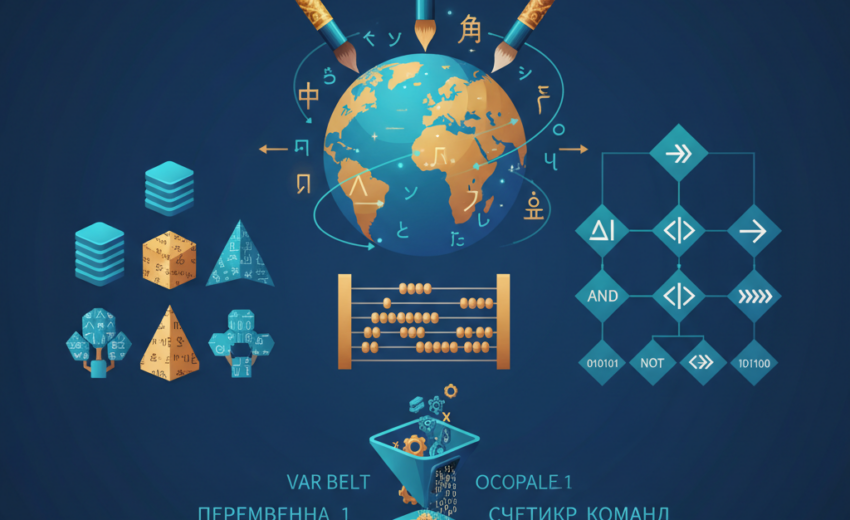
The dominance of English in programming is undeniable, but the world is multilingual. Imagine the possibilities if more developers could code in their native languages. This article explores the burgeoning field of non-English programming, examining its potential to democratize software development and unlock new levels of innovation. We’ll delve into the benefits, challenges, and future trends of this exciting area, providing a comprehensive guide for developers and anyone interested in the evolution of coding.
What is Non-English Programming?
Non-English programming refers to the practice of writing code using programming languages or tools that allow for identifiers, keywords, comments, or even the entire syntax to be expressed in languages other than English. While most mainstream programming languages use English keywords (like `if`, `else`, `while`, `for`), non-English programming explores alternatives that cater to developers who are not native English speakers or who prefer to code in their own language for various reasons. This can range from simply allowing variable names in languages like Chinese or Spanish to creating entirely new programming languages with a non-English syntax. The goal is often to lower the barrier to entry for aspiring programmers and to foster a more inclusive and diverse coding community.
Key Benefits/Advantages of Non-English Programming
- Lowering the Barrier to Entry: For non-native English speakers, learning to code can be daunting, as they must simultaneously learn a new programming language and a new natural language. Non-English programming can reduce this cognitive load, making it easier for beginners to grasp fundamental programming concepts.
- Increased Accessibility and Inclusivity: By providing tools and languages that support multiple languages, we can create a more inclusive coding environment that welcomes developers from all backgrounds. This can lead to a more diverse and innovative software development landscape.
- Improved Code Readability and Maintainability (in Specific Contexts): In certain domains or industries where specific terminology is more naturally expressed in a language other than English, using a non-English programming language or tool can improve code readability and maintainability for developers familiar with that domain.
- Enhanced Learning and Understanding: Studies suggest that learning and understanding concepts are often easier when presented in one’s native language. This principle applies to programming as well, where using a non-English programming language can facilitate a deeper understanding of underlying concepts.
- Fostering Local Innovation: By empowering developers to code in their native languages, we can encourage the development of software solutions that are tailored to the specific needs and cultural contexts of local communities.
- Reducing Cognitive Load: Constantly switching between a native language and English, especially when encountering errors or complex logic, can be mentally taxing. Non-English programming can alleviate some of this cognitive burden.
Core Concepts/Mechanisms of Non-English Programming
The implementation of non-English programming involves several key concepts and mechanisms:
- Unicode Support: The foundation of non-English programming lies in Unicode, a character encoding standard that allows computers to represent text from virtually all writing systems around the world. Programming languages and tools must fully support Unicode to handle non-English characters in identifiers, comments, and strings.
- Internationalized Identifiers: One of the most common approaches is to allow developers to use non-English characters in variable names, function names, and other identifiers. This allows for more descriptive and meaningful code, especially in domains where English terminology is less suitable. For example, a program calculating currency conversion might use variables named `yuan` or `euro`.
- Localized Keywords and Syntax: Some languages go further by providing localized versions of keywords and syntax. For example, instead of `if`, a Spanish version might use `si`, or a Chinese version might use `如果`. This requires a more substantial modification of the language’s parser and compiler.
- Transpilers and Preprocessors: A transpiler converts source code from one programming language to another. In the context of non-English programming, a transpiler could translate a language with localized keywords into standard English-based code for execution. Preprocessors perform similar transformations before compilation.
- Language Extensions and Libraries: Some languages offer extensions or libraries that provide non-English interfaces. These extensions might allow developers to define aliases for English keywords or provide functions and classes with non-English names.
- Integrated Development Environments (IDEs) Support: IDEs play a crucial role in facilitating non-English programming by providing features such as syntax highlighting, code completion, and debugging tools that support non-English characters and keywords.
- Natural Language Programming (NLP) Integration: An emerging trend involves integrating NLP techniques to allow developers to express programming logic in natural language, which can be translated into executable code. This opens up new possibilities for non-English programming by enabling developers to code in their native languages more naturally. IBM’s NLP offerings demonstrate the power of this approach.
Real-world Applications/Use Cases for Non-English Programming
While non-English programming is still an emerging field, there are several real-world applications and use cases where it can provide significant benefits:
- Education: Non-English programming can be a valuable tool for teaching programming concepts to students who are not native English speakers. By using languages or tools that support their native language, students can focus on learning the fundamentals of programming without being hindered by language barriers. For example, ScratchJr allows young children to program using visual blocks with text that can be localized to various languages.
- Domain-Specific Languages (DSLs): In certain domains, such as finance or healthcare, where specific terminology is more naturally expressed in a language other than English, creating a DSL with non-English keywords and syntax can improve code readability and maintainability.
- Cultural Heritage Preservation: Non-English programming can be used to develop software applications that preserve and promote cultural heritage by allowing developers to create interactive experiences and educational resources in their native languages.
- Accessibility Tools: Developing accessibility tools for individuals with disabilities can benefit from non-English programming by allowing developers to create interfaces and functionalities that are tailored to the specific needs of users who speak languages other than English.
- Localization and Internationalization: While not strictly non-English programming itself, tools that facilitate the localization and internationalization of software applications rely heavily on Unicode support and the ability to handle non-English characters and text. Phrase is a great example of a localization platform.
- Game Development: Creating games that cater to specific cultural audiences can benefit from using non-English programming for scripting and content creation, allowing developers to create more immersive and engaging experiences.
- Scientific Computing: In some scientific fields, researchers may find it more natural to express algorithms and models using their native language. Non-English programming can facilitate this by allowing them to use non-English identifiers and comments in their code.
Challenges & Limitations of Non-English Programming
Despite its potential benefits, non-English programming also faces several challenges and limitations:
- Lack of Standardization: The absence of standardized non-English programming languages and tools can lead to fragmentation and interoperability issues. It is difficult to share code or collaborate on projects when different developers are using different non-English dialects or languages.
- Limited Resources and Support: Compared to English-based programming languages, non-English languages often have limited resources, documentation, and community support. This can make it more challenging for developers to learn and use these languages effectively.
- Compatibility Issues: Ensuring compatibility with existing libraries, frameworks, and tools can be a significant challenge for non-English programming languages. Many of these resources are designed with English in mind and may not fully support non-English characters or syntax.
- Performance Overhead: In some cases, using non-English characters or keywords can introduce performance overhead due to the increased complexity of parsing and processing the code.
- Developer Adoption: Overcoming the inertia of the existing English-dominated programming ecosystem can be difficult. Convincing developers to adopt non-English programming languages or tools requires demonstrating clear benefits and addressing concerns about compatibility and support.
- Searchability and Documentation: Searching for solutions and documentation in non-English can be more difficult, as most online resources are geared toward English-speaking developers.
- Code Maintainability: If a project is handed off to a developer unfamiliar with the non-English language used, maintaining the code can become significantly more challenging.
Future Trends & Outlook for Non-English Programming
Despite the challenges, the future of non-English programming looks promising. Several trends are driving its growth and adoption:
- Increased Globalization of Software Development: As the software development industry becomes more globalized, the demand for programming languages and tools that support multiple languages will continue to grow.
- Advancements in NLP and Machine Translation: Advancements in NLP and machine translation are making it easier to translate code between different languages, potentially enabling seamless collaboration between developers who speak different languages. Google Translate and similar services are constantly improving.
- Rise of Low-Code/No-Code Platforms: Low-code/no-code platforms are becoming increasingly popular, allowing individuals with limited programming experience to create software applications using visual interfaces and intuitive tools. These platforms often support multiple languages, making them accessible to a wider audience. OutSystems is a leading low-code platform.
- Growing Focus on Accessibility and Inclusivity: As the software development industry becomes more aware of the importance of accessibility and inclusivity, there will be a greater demand for programming languages and tools that cater to developers from diverse backgrounds.
- Community-Driven Initiatives: The emergence of community-driven initiatives that promote non-English programming, such as the development of non-English programming languages and tools, will play a crucial role in fostering its growth and adoption.
- AI-Powered Code Generation: AI-powered code generation tools are becoming increasingly sophisticated, and they may eventually be able to generate code in multiple languages based on natural language descriptions. OpenAI and other AI research organizations are actively working on this area.
- Increased Support in IDEs and Tools: As non-English programming gains traction, IDEs and other development tools will likely provide better support for non-English characters, keywords, and syntax.
In conclusion, while challenges exist, the trend towards greater accessibility and inclusivity in software development suggests a bright future for non-English programming. The key will be fostering standardization, building robust communities, and leveraging advancements in AI and NLP to bridge language barriers.
Ready to Embrace the Future of Coding?
The world of non-English programming is rapidly evolving, offering exciting opportunities for developers and organizations alike. By embracing this trend, you can unlock new levels of innovation, foster a more inclusive coding environment, and tap into a wider pool of talent. This isn’t just about changing the language of code; it’s about changing the landscape of software development to be more accessible and representative of the global community. Are you ready to be a part of this transformation?
Take the first step today! Explore the resources mentioned in this article, experiment with non-English programming tools, and join the growing community of developers who are passionate about democratizing software development. Consider contributing to open-source projects that support non-English languages, or even creating your own tools to address specific needs in your region or industry. The possibilities are endless, and the impact can be profound.
Don’t let language barriers hold you or your team back. Embrace the power of non-English programming and unlock your full potential in the world of code. Start exploring and experimenting today!
Micro FAQs
- What are the main benefits of non-English programming?
- Lowering the barrier to entry for non-native English speakers, increasing accessibility and inclusivity, and potentially improving code readability in specific contexts.
- What are some challenges of non-English programming?
- Lack of standardization, limited resources and support, compatibility issues, and potential performance overhead.
- Is non-English programming widely used?
- Not yet, but it is gaining traction, particularly in education and domain-specific applications.
- What is Unicode and why is it important for non-English programming?
- Unicode is a character encoding standard that allows computers to represent text from virtually all writing systems. It’s essential for non-English programming because it enables the use of non-English characters in code.
- Are there programming languages that are entirely non-English?
- Yes, there are programming languages designed with non-English keywords and syntax, although they are not as widely used as English-based languages.
- How can I get started with non-English programming?
- Explore languages or tools that support non-English identifiers and comments, and look for resources and communities that focus on non-English programming.