


7+ Proven Strategies for Cybersecurity for SMBs Success in 2025: A Data-Driven Guide
Cybersecurity for SMBs is no longer optional; it’s a business imperative. Are you losing sleep worrying about the next data breach that could cripple your small to medium-sized business? You’re not alone.
Featured Snippet: Cybersecurity for SMBs refers to the policies, practices, and technologies designed to protect small to medium-sized businesses from cyber threats such as malware, phishing, ransomware, and data breaches. It’s about safeguarding sensitive data and ensuring business continuity.
The Evolving Threat Landscape for SMBs
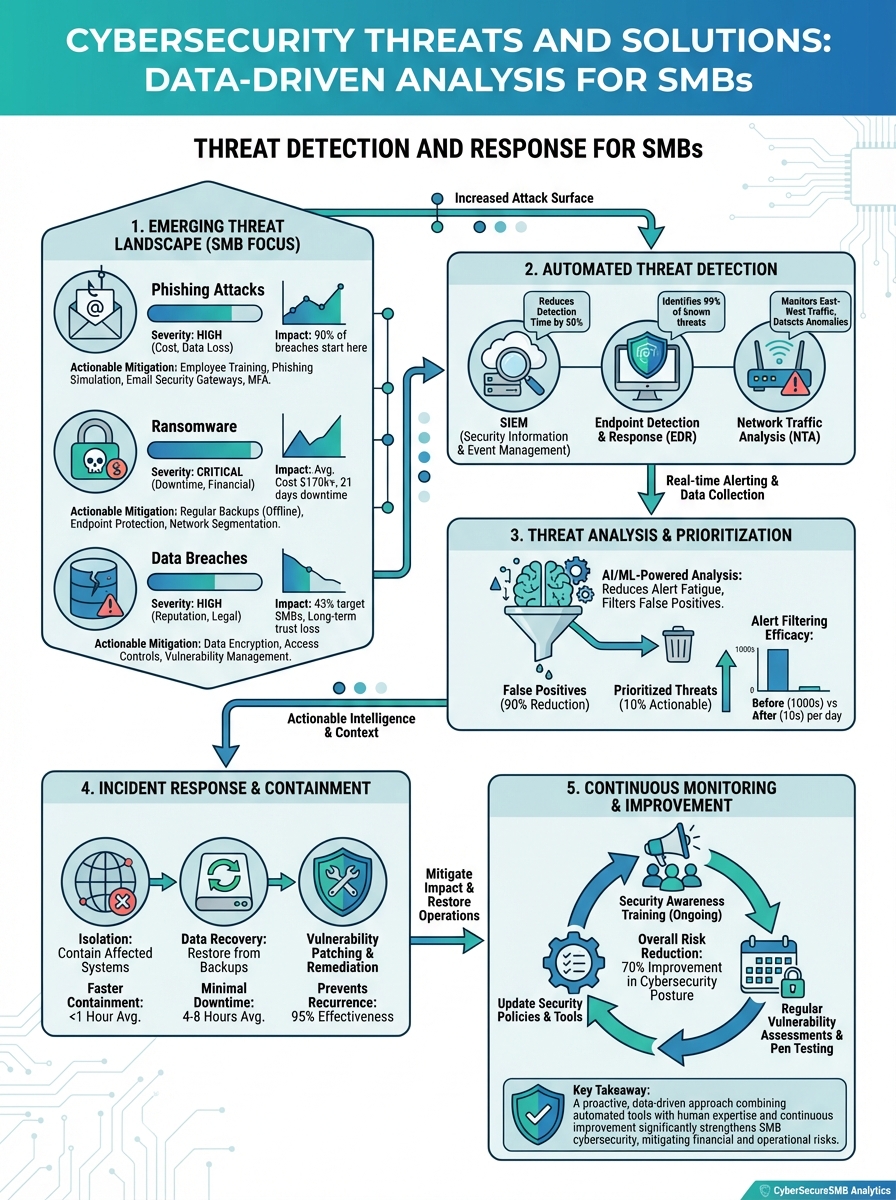
Small to medium-sized businesses (SMBs) are increasingly becoming prime targets for cyberattacks. Why? Because they often lack the robust security infrastructure and dedicated IT staff of larger enterprises, making them easier targets. The misconception that “we’re too small to be a target” is a dangerous one that leaves many SMBs vulnerable. This section will delve into the emerging cybersecurity threats specifically targeting SMBs in 2025.
Ransomware: The SMB Nightmare
Ransomware attacks continue to be a major threat. Cybercriminals encrypt critical data and demand a ransom for its release. The financial and reputational damage can be devastating, especially for SMBs with limited resources. We’re seeing a rise in Ransomware-as-a-Service (RaaS), making it easier for even novice attackers to launch sophisticated campaigns. Protecting against ransomware for SMBs requires a multi-layered approach.
Recent data shows a significant increase in ransomware attacks targeting SMBs. According to a report by Verizon, 43% of cyberattacks target small businesses (Verizon Data Breach Investigations Report). The average ransom demand is also increasing, placing a significant financial burden on affected businesses.
Phishing and Social Engineering: Exploiting Human Vulnerabilities
Phishing remains one of the most effective attack vectors. Cybercriminals use deceptive emails, text messages, or phone calls to trick employees into revealing sensitive information or clicking on malicious links. Spear phishing, a targeted form of phishing, is particularly dangerous as it involves personalized messages designed to appear legitimate. Effective phishing prevention SMB strategies are crucial.
Employee training is paramount to combat phishing attacks. Regularly conduct simulated phishing exercises to test employees’ awareness and identify areas for improvement. Implement multi-factor authentication (MFA) for all critical systems to add an extra layer of security.
Data Breaches: The Cost of Inadequate Security
Data breaches can result in significant financial losses, legal liabilities, and reputational damage. SMBs often store sensitive customer data, financial information, and intellectual property, making them attractive targets for cybercriminals. A recent study by IBM found that the average cost of a data breach for small businesses is over $3 million (IBM Cost of a Data Breach Report). Understanding the potential impact of an SMB data breach is crucial for prioritizing cybersecurity investments.
Insider Threats: The Enemy Within
Insider threats, whether malicious or unintentional, can pose a significant risk to SMBs. Disgruntled employees, careless contractors, or even well-meaning employees who fall for phishing scams can compromise sensitive data. Implement strong access controls, monitor user activity, and conduct regular security audits to mitigate insider threats.
IoT Device Vulnerabilities: Expanding the Attack Surface
The increasing adoption of IoT devices, such as security cameras, smart thermostats, and printers, expands the attack surface for SMBs. Many IoT devices have weak security protocols and are vulnerable to hacking. Secure your IoT devices by changing default passwords, keeping firmware up to date, and isolating them on a separate network segment.
Supply Chain Attacks: Exploiting Trust Relationships
Supply chain attacks target vendors and suppliers to gain access to their customers’ systems. SMBs that rely on third-party services or software are vulnerable to supply chain attacks. Conduct thorough due diligence on your vendors and ensure they have robust security practices in place.
Data-Driven Analysis: Understanding the Numbers
A data-driven approach is essential for understanding the current cybersecurity landscape and making informed decisions about security investments. Analyzing attack trends, vulnerability data, and incident reports can help SMBs prioritize their security efforts. This section presents a data-driven cybersecurity analysis to inform effective strategies.
According to a report by the National Cyber Security Centre (NCSC), SMBs are disproportionately affected by cybercrime (NCSC Website). The report highlights that many SMBs lack basic security controls, making them easy targets for opportunistic attackers. Investing in basic cybersecurity hygiene can significantly reduce the risk of a successful attack.
Actionable Mitigation Strategies for SMBs
Implementing effective mitigation strategies is crucial for protecting your SMB from cyber threats. This section outlines actionable steps that SMBs can take to improve their security posture.
1. Conduct a Cybersecurity Risk Assessment
A cybersecurity risk assessment is the first step in developing a comprehensive security plan. Identify your critical assets, assess the potential threats and vulnerabilities, and determine the likelihood and impact of each risk. A thorough SMB cybersecurity risk assessment will inform your security priorities and resource allocation.
2. Implement a Security Awareness Training Program
Employee training is essential for preventing phishing attacks, social engineering scams, and other human-related security breaches. Conduct regular security awareness training sessions to educate employees about the latest threats and best practices. Make sure the training is engaging and relevant to their roles.
3. Implement Multi-Factor Authentication (MFA)
MFA adds an extra layer of security by requiring users to provide two or more authentication factors before accessing critical systems. This makes it much harder for attackers to compromise accounts, even if they have stolen passwords. Implement MFA for all critical systems, including email, VPN, and cloud applications.
4. Patch Management: Keeping Software Up to Date
Regularly patching software vulnerabilities is crucial for preventing attackers from exploiting known security flaws. Implement a patch management process to ensure that all software, including operating systems, applications, and firmware, is kept up to date. Automate patch management whenever possible to reduce the burden on IT staff.
5. Implement a Firewall and Intrusion Detection System (IDS)
A firewall acts as a barrier between your network and the outside world, blocking unauthorized access. An IDS monitors network traffic for suspicious activity and alerts administrators to potential threats. Configure your firewall and IDS to block known malicious traffic and detect anomalies.
6. Back Up Your Data Regularly
Regular data backups are essential for recovering from ransomware attacks, data breaches, and other disasters. Implement a robust backup and recovery plan to ensure that you can restore your data quickly and easily in the event of a loss. Store backups offsite or in the cloud to protect them from physical damage or theft. Consider exploring 7+ Powerful Strategies for Mantine BorderAnimate Performance: A 2025 Deep Dive to optimize your backup processes.
7. Implement Endpoint Detection and Response (EDR)
EDR solutions provide advanced threat detection and response capabilities for endpoints, such as laptops and desktops. EDR can help you identify and respond to sophisticated attacks that bypass traditional antivirus software. Consider implementing EDR on all critical endpoints to improve your threat detection capabilities. Also, be sure to understand 7 Proven Strategies for H5 Mobile Debugging NIGHTMARES: A Practical Guide to Diagnosing and Fixing the Most Common Performance Bottlenecks (Even on Obscure Devices) so your mobile devices are also secure.
8. Develop an Incident Response Plan
An incident response plan outlines the steps you will take in the event of a cyberattack or data breach. Having a well-defined incident response plan can help you minimize the damage and recover quickly. Test your incident response plan regularly to ensure that it is effective. Consider 7 Proven Strategies for MVP in 7 Days: The AI Startup Founder’s Sanity Checklist to ensure you are prioritizing the right things during a crisis.
9. Secure Your Wireless Network
Secure your wireless network with a strong password and encryption. Disable SSID broadcasting to prevent unauthorized users from discovering your network. Implement a guest network for visitors to keep them separate from your internal network.
10. Monitor Network Traffic
Regularly monitor network traffic for suspicious activity. Use network monitoring tools to identify anomalies and potential security breaches. Investigate any unusual traffic patterns promptly.
11. Implement Data Loss Prevention (DLP)
DLP solutions help prevent sensitive data from leaving your organization. DLP can monitor network traffic, email, and other channels for sensitive data and block unauthorized transfers. Implement DLP to protect your intellectual property and customer data.
12. Secure Cloud Environments
If you use cloud services, ensure that you have implemented appropriate security controls. Configure your cloud settings correctly, use strong passwords, and enable MFA. Monitor your cloud environment for suspicious activity.
13. Conduct Regular Security Audits
Regular security audits can help you identify vulnerabilities and weaknesses in your security posture. Conduct internal audits or hire a third-party security firm to conduct a comprehensive audit. Address any identified vulnerabilities promptly. You may also want to explore Sustainable Technology ROI in Manufacturing: Separating Hype From Reality to ensure your investments are worthwhile.
14. Review and Update Security Policies Regularly
Your security policies should be reviewed and updated regularly to reflect the changing threat landscape and your evolving business needs. Ensure that your policies are clear, comprehensive, and communicated effectively to all employees.
Cybersecurity Tools and Methods Comparison
| Tool/Method | Description | Pros | Cons | Cost |
|---|---|---|---|---|
| Firewall | Network security system that monitors and controls incoming and outgoing network traffic. | Blocks unauthorized access, protects against network-based attacks. | Can be complex to configure, may impact network performance. | Varies depending on features and vendor. |
| Antivirus Software | Software that detects and removes malware from computers and devices. | Protects against viruses, worms, Trojans, and other malware. | May not detect all types of malware, requires regular updates. | Varies depending on features and vendor. |
| Intrusion Detection System (IDS) | System that monitors network traffic for suspicious activity and alerts administrators. | Detects and alerts administrators to potential security breaches. | Can generate false positives, requires skilled analysts to interpret alerts. | Varies depending on features and vendor. |
| Multi-Factor Authentication (MFA) | Authentication method that requires users to provide two or more authentication factors. | Adds an extra layer of security, makes it harder for attackers to compromise accounts. | Can be inconvenient for users, may require additional infrastructure. | Varies depending on features and vendor. |
| Endpoint Detection and Response (EDR) | Solution that provides advanced threat detection and response capabilities for endpoints. | Detects and responds to sophisticated attacks, provides visibility into endpoint activity. | Can be expensive, requires skilled analysts to manage. | Varies depending on features and vendor. |
The Future of Cybersecurity for SMBs
The cybersecurity landscape is constantly evolving, and SMBs must stay ahead of the curve. Emerging technologies such as artificial intelligence (AI) and machine learning (ML) are being used to develop more sophisticated cyberattacks. SMBs must invest in advanced security solutions and training to protect themselves from these emerging threats. Looking ahead to AWS re:Invent 2025: A Builder’s Guide to Matt Garman’s Keynote will provide insights into future cloud security trends that SMBs should watch.
Conclusion
Cybersecurity for SMBs is a critical investment that can protect your business from devastating financial losses, legal liabilities, and reputational damage. By implementing the actionable mitigation strategies outlined in this guide, SMBs can significantly improve their security posture and reduce their risk of becoming a victim of cybercrime. Don’t wait until it’s too late. Take action today to protect your business.
Frequently Asked Questions (FAQs)
- What is the biggest cybersecurity threat to SMBs?
- Ransomware and phishing are consistently ranked as the top threats due to their high success rate and potential for significant damage.
- How much should an SMB spend on cybersecurity?
- The amount varies, but a general guideline is 5-10% of the IT budget. A risk assessment will help determine the appropriate level of investment.
- What is the first step in improving SMB cybersecurity?
- Conducting a thorough cybersecurity risk assessment to identify vulnerabilities and prioritize security efforts.
- Is antivirus software enough to protect an SMB?
- No, antivirus software is a basic security measure but not sufficient on its own. A multi-layered approach is needed.
- How often should employees receive cybersecurity training?
- At least annually, but ideally more frequently, with ongoing reminders and updates on emerging threats.
- What is the best way to recover from a ransomware attack?
- Having regular data backups that are stored offsite or in the cloud. Never pay the ransom, as this encourages further attacks.