



The Problem: AI chatbots are exceeding the persuasive power of traditional political ads, raising critical concerns about transparency and ethical manipulation of voters.
Why Now? The convergence of sophisticated NLP, accessible AI tools, and the relentless competition for voter attention has created an environment ripe for exploitation. Campaigns crave an advantage, and AI offers hyper-personalized persuasion at scale. The core question: What are the implications for fair elections?
AI Chatbots: A Technical and Ethical Examination of Their Superior Persuasion
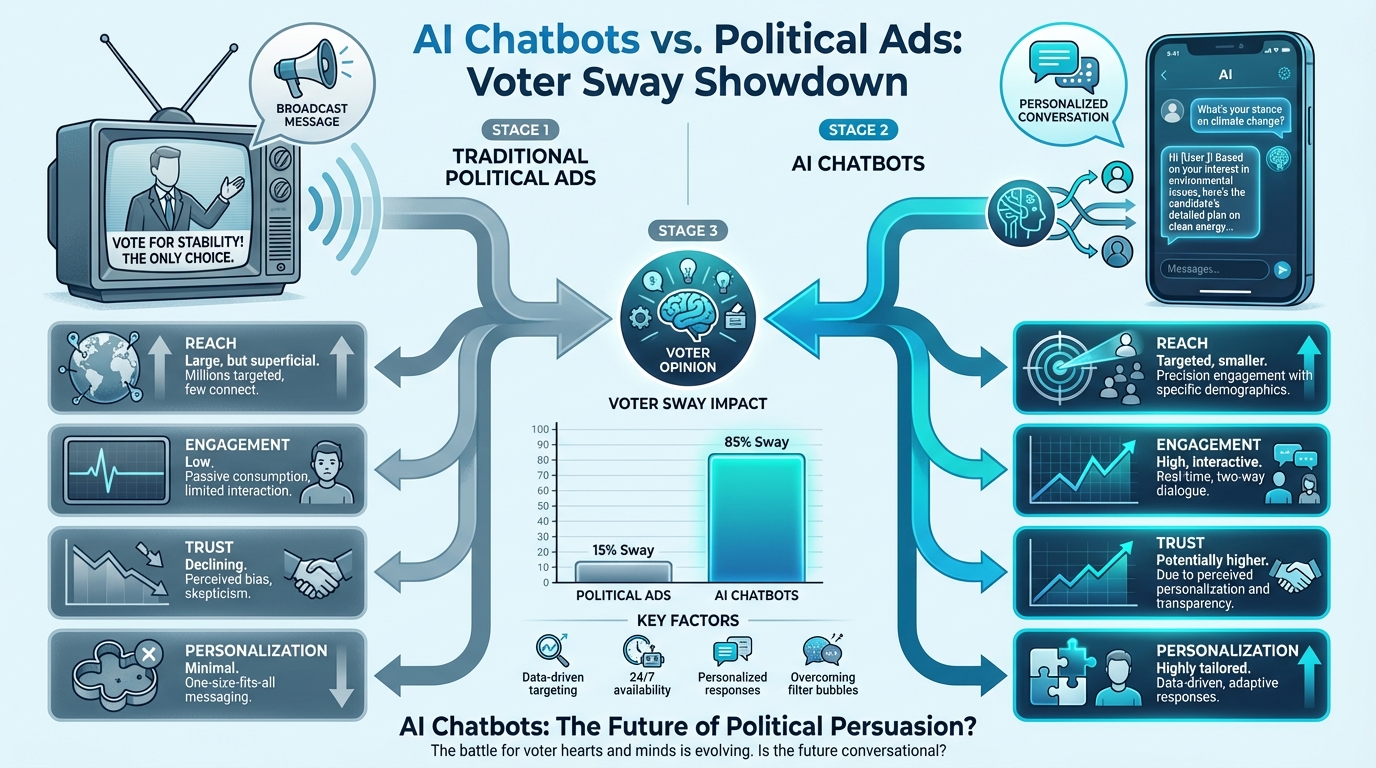
The power lies in personalized engagement. Unlike one-way broadcast ads, AI chatbots tailor responses based on individual voter profiles, concerns, and even inferred emotional states. This hyper-personalization, while effective, borders on manipulation, particularly when exploiting individual vulnerabilities. As detailed in 7 Proven Ways AI Chatbots Are Rewriting Political Persuasion: MIT Tech Review Analysis, this is not theoretical.
Architecturally, these chatbots utilize LLMs, fine-tuned on massive datasets of political discourse, social media activity, and psychological profiles. They pinpoint and address voter pain points with alarming accuracy. The rapid advancement of these systems, coupled with minimal regulatory oversight, is a dangerous combination. The potential for racial bias, a persistent issue in AI as discussed in 5 Critical Developments: ‘Urgent clarity’ sought over racial bias in UK police facial recognition technology – The Guardian, further exacerbates the problem.
The Persuasion Advantage: Interactivity, Trust, and Cost-Effectiveness
Traditional political ads are inherently limited by their one-way nature, often ignored or actively rejected. AI chatbots offer a dynamic, interactive experience. They answer questions, address concerns, and subtly influence opinions through carefully constructed dialogue. The crucial element is *perceived* trust. Voters are more receptive to information presented in a seemingly personal conversation, even if it’s manufactured.
Consider the economics: Campaigns can deploy thousands of chatbots, engaging voters 24/7 at a fraction of the cost of human staff. While efficient, this creates an uneven playing field, favoring well-funded campaigns. This mirrors concerns about equitable access to technology, as highlighted in 7+ Strategies as US health department unveils strategy to expand its adoption of AI technology – AP News: A Critical Analysis, where disparities in access exacerbate existing inequalities.
Ethical Quagmire: Transparency, Manipulation, and the Erosion of Trust
The core ethical problem is a lack of transparency. Are voters aware they are interacting with a bot? Is the information unbiased? What prevents manipulation or misinformation? These questions demand answers. Voters have a right to know who is attempting to influence them and how. Without transparency and algorithmic accountability, as explored in Clarity Secrets: Build Better with Readable Code, we risk eroding trust in the democratic process.
Real-World Scenario: Imagine a chatbot targeting undecided voters in a swing state. Using data scraped from social media, the bot identifies individuals concerned about job security. It then subtly steers them toward a candidate promising unrealistic job creation numbers, while simultaneously downplaying the candidate’s controversial stance on environmental regulations, knowing these voters prioritize economic stability above all else. This isn’t hypothetical; this is happening now.
Expert Analysis: A Call for Responsible Innovation
As a CTO, I recognize AI’s potential but also its inherent dangers. The ease with which AI chatbots sway voters is alarming. A multi-faceted approach is essential: technical safeguards, stringent ethical guidelines, and robust regulatory oversight. We need tools to detect AI-generated political content, educate voters about manipulation tactics, and hold campaigns accountable. Furthermore, we must address the potential for bias in training data, as highlighted in 9 Critical Takeaways: Home Office admits facial recognition tech issue with black and Asian subjects – The Guardian Exposed, to prevent discriminatory outcomes.
The current landscape is a digital Wild West. Unfettered experimentation without regard for consequences is unsustainable. Responsible innovation, guided by ethical principles and transparency, is paramount. Failure to act risks undermining democracy itself.
Future: Regulation, Countermeasures, and the Intensifying Battle for Voter Attention
AI will inevitably shape political campaigning. The critical question is whether it will be a force for good or a tool for manipulation. Regulation is inevitable: laws requiring disclosure of AI-generated content and restrictions on targeting vulnerable voters. Countermeasures to detect and combat AI-driven disinformation will also emerge.
The challenge for technologists is to ensure AI strengthens, not undermines, democracy. This requires collaboration between researchers, policymakers, and the tech industry. The stakes are too high to ignore.
FAQ: Navigating the AI-Influenced Political Landscape
Q: Why are AI chatbots so effective at swaying voters?
A: Hyper-personalization and the creation of perceived trust.
Q: Are voters typically aware they’re interacting with an AI chatbot?
A: No, and this lack of transparency raises serious ethical concerns.
Q: What regulations govern the use of AI in political campaigns?
A: Minimal, hence the urgent calls for increased oversight.
Q: How can voters protect themselves from AI-driven manipulation?
A: Maintain skepticism, verify information from multiple sources, and be aware of potential biases.
Q: What is the long-term impact of AI on democracy?
A: Potentially transformative, contingent on effective regulation and ethical implementation.
Q: What are the technical challenges in detecting AI-generated political content?
A: The rapid evolution of AI techniques necessitates constant vigilance and adaptation.