



Nature Positive: The Technology Sector’s Imperative. The tech industry, a significant contributor to environmental degradation, uniquely possesses the capacity to reverse this damage. The question isn’t *if* but *how* the narrative shifts from ecological burden to champion.
The Unsustainable Status Quo and the Nature Positive Imperative
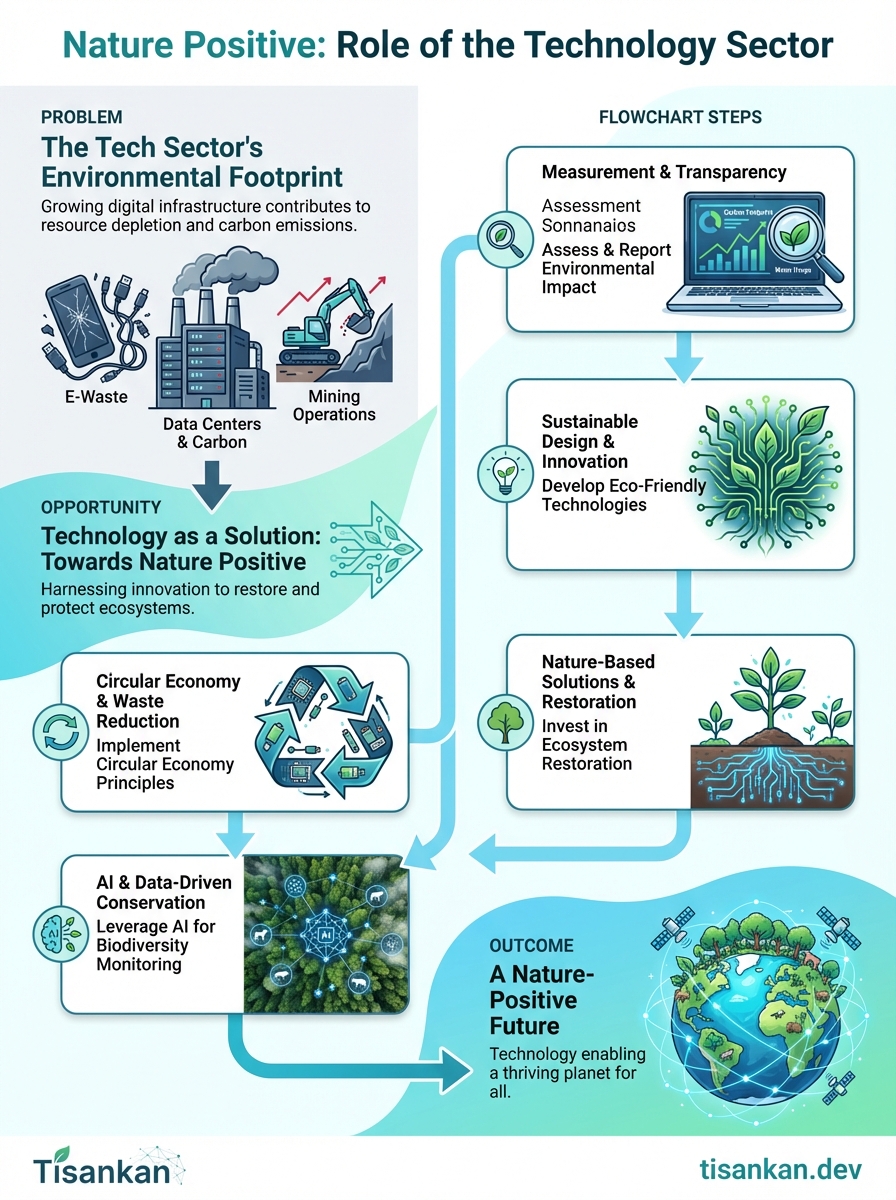
Technological advancement has historically exacted a steep environmental price. From rare earth mineral mining to energy-guzzling data centers, the tech sector’s footprint is undeniable and unsustainable. Acknowledging this isn’t enough; a fundamental shift towards actively creating positive change is paramount. ‘Nature Positive’ transcends net-zero, demanding active contribution to ecosystem restoration and regeneration. Consider the implications of unchecked practices, as detailed in 7+ Critical Reasons: Japan is facing a dementia crisis – can technology help?, where long-term consequences are devastating.
Critical Strategies for a Nature Positive Tech Sector
- Sustainable Hardware: Circularity by Design. Prioritize circular economy principles. Design for durability, repairability, and *radical* recyclability. Apple’s recycled material usage is a starting point, but industry-wide adoption, driven by legislation forcing standardization of components, is the goal. [Apple Environmental Progress Report]
- Energy-Efficient Infrastructure: Beyond Carbon Neutrality. Data centers must move beyond carbon neutrality. Invest in on-site renewable energy generation (not just purchasing credits), implement closed-loop liquid cooling systems, and utilize AI-driven predictive power management. Google’s carbon-neutral commitment is insufficient; true sustainability requires minimizing energy *consumption*, not just offsetting it.
- AI-Powered Conservation: Actionable Insights, Not Just Data. AI should analyze datasets to proactively detect environmental threats. Conservation Metrics’ biodiversity monitoring is valuable, but the next step is AI-driven *intervention* – autonomous drone swarms deploying targeted seed dispersal or pollutant remediation based on real-time analysis.
- Precision Agriculture: Autonomous Optimization. Optimize agricultural practices with autonomous systems. John Deere’s developments are promising, but the focus should be on closed-loop systems: AI-driven analysis of soil conditions triggering automated, localized nutrient delivery, minimizing waste and maximizing yield.
- Smart Cities: Beyond Buzzwords, Real Impact. Move beyond superficial “smart” solutions. Implement smart grids with bidirectional energy flow, incentivize public transport through dynamic pricing based on real-time congestion, and mandate energy-positive building designs.
- Blockchain: Traceability and Accountability. Use blockchain to enforce supply chain accountability. Focus on verifiable, tamper-proof records of origin and ethical sourcing. Combat “greenwashing” by requiring suppliers to provide cryptographic proof of sustainable practices.
- Digital Twins: Predictive Ecosystem Management. Create dynamic digital twins of ecosystems to simulate interventions and optimize conservation. Go beyond static models; incorporate real-time sensor data and AI-driven predictive analytics to forecast ecosystem responses to various stressors.
- Nature-Based Solutions: Technology as an Enabler. Support nature-based solutions with technological tools. Drones for reforestation are a start, but combine them with AI-powered species selection algorithms to maximize biodiversity and resilience. Sensors should monitor ecosystem health *and* trigger automated interventions when needed.
- Environmental Awareness: Personalized Education. Use technology to deliver personalized environmental education. Move beyond generic online platforms; leverage AI to tailor content to individual interests and learning styles, promoting behavioral changes through gamification and personalized feedback.
Quantum Computing: A Potential Game Changer
Quantum computing’s potential lies in solving complex optimization problems. This could revolutionize materials science, enabling the discovery of truly sustainable materials. Crucially, it could dramatically improve climate modeling, leading to more accurate predictions and data-driven policy. The progress in bone regeneration, detailed in 5 Revolutionary Advances: Bone Regeneration Technology Used in First Patient Surgery, showcases the potential of advanced materials, potentially unlocked by quantum computing.
Addressing Technology’s Limitations
Technology is not a panacea. The environmental cost of manufacturing and disposing of electronics remains a critical concern. Address the digital divide, ensuring equitable access to the benefits of Nature Positive initiatives. Furthermore, avoid over-reliance on complex solutions when simpler, nature-based alternatives exist. The lessons on maintaining humanity in the age of AI, discussed in 9 Critical Lessons on maintaining your humanity in the world of AI technology as a Strategic Imperative, are crucial in ensuring that technology serves humanity and the planet.
Collaboration and Open Innovation
A Nature Positive future demands collaboration across sectors. Open innovation initiatives must facilitate knowledge sharing and accelerate sustainable technology development. The adaptability shown by Ukrainian women in combat, highlighted in undefined Critical Strategies: Ukrainian women embrace combat roles as technology reshapes the battlefield, underscores the power of inclusivity and resilience – principles vital to the Nature Positive movement.
Nature Positive as Core Corporate Strategy
Integrating Nature Positive principles into corporate strategy is no longer optional; it’s a business imperative. Sustainability attracts investment, customers, and top talent, and prepares companies for increasing environmental regulations. Differentiate through *measurable* impact, not just marketing claims.
Tech companies have a unique opportunity to lead the way. Embrace the strategies outlined above to transform the sector into a force for ecological restoration. Move beyond incremental improvements and embrace radical innovation.
The market’s enthusiasm for AI and robotics, detailed in 7+ Critical Reasons: Market-Crushing AI Momentum: Top Robotics Technology Stocks Leading the 2026 Growth Trend, demonstrates technology’s potential to drive economic growth. Align these technologies with Nature Positive goals to create a future where innovation and sustainability are inseparable.
Real-World Scenario: Redwood Forest Restoration
Consider a hypothetical scenario: a tech company partners with a conservation organization to restore a degraded redwood forest. Drones equipped with LiDAR sensors create a detailed 3D map of the forest floor. AI algorithms analyze the data to identify optimal planting locations, taking into account soil composition, sunlight exposure, and existing vegetation. Autonomous robots then plant redwood seedlings, carefully placing them in the designated spots. Sensors monitor the seedlings’ growth and health, and AI algorithms adjust irrigation and fertilization as needed. Blockchain technology tracks the origin of the seedlings and ensures that the restoration efforts are carried out ethically and sustainably. This integrated approach demonstrates the power of technology to accelerate and enhance nature-based solutions.
A Call to Action
The path to a Nature Positive future demands bold leadership, innovative thinking, and a willingness to challenge the status quo. The rewards are a healthier planet, a more resilient economy, and a brighter future.
Frequently Asked Questions
What does “Nature Positive” mean for the tech sector?
“Nature Positive” means actively contributing to ecosystem restoration, exceeding mere impact minimization. It involves strategies yielding a net positive impact on biodiversity, carbon sequestration, and ecological health. Think active healing, not just reduced harm.
How can AI monitor the environment without privacy violations?
Implement privacy safeguards like federated learning (training models on decentralized data) and data anonymization/aggregation. Focus on environmental data, not individual data, and maintain transparent data practices.
What can a small tech company do to be Nature Positive?
Start with an environmental audit. Source sustainable hardware, use renewable energy, reduce waste, and offset your carbon footprint. Partner with environmental organizations and support local conservation.
How does blockchain ensure sustainable supply chain transparency, and what are its limitations?
Blockchain provides an immutable record of product origins and certifications, verifying sustainability. However, its effectiveness hinges on accurate initial data. Flawed input perpetuates inaccuracy. Also, consider the energy consumption of certain blockchain technologies.
What challenges exist in creating digital twins of ecosystems?
Accurate digital twins require vast, high-quality data (satellite imagery, sensor data). Integrating diverse datasets into a representative model is challenging. Simulating complex ecological processes demands sophisticated algorithms and deep understanding. Computational costs can be substantial.
How can technology address e-waste’s environmental impact?
Enable better tracking and management of electronics. Use AI to optimize recycling, sorting materials efficiently. Design for disassembly and modularity to ease repair and recycling. Promote Extended Producer Responsibility (EPR) to incentivize sustainable product design.
What government policies encourage Nature Positive tech practices?
Incentivize through tax breaks for sustainable tech investments, regulations mandating recycled materials, and public procurement prioritizing eco-friendly products. Carbon pricing and EPR schemes also encourage impact reduction. Clear regulations are crucial.