

Introduction
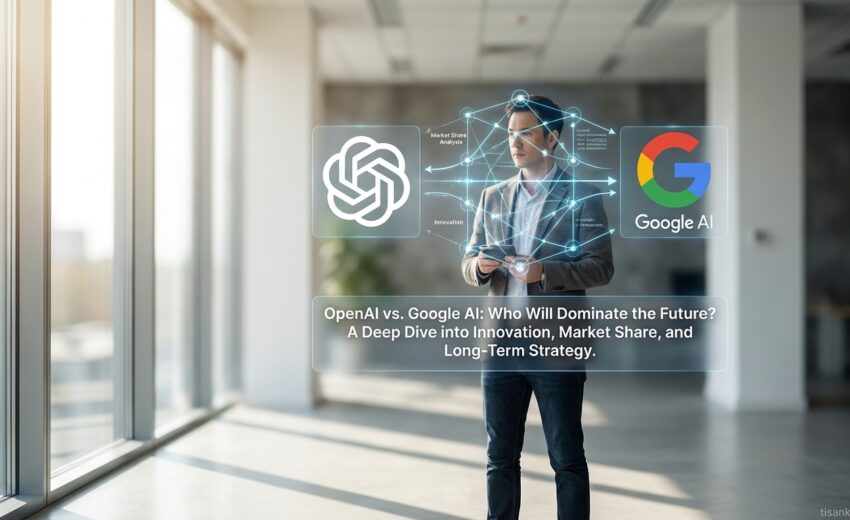
OpenAI vs. Google AI: Who Will Dominate the Future? A Deep Dive into Innovation, Market Share, and Long-Term Strategy – that’s the question everyone’s asking. I’ve been immersed in the world of artificial intelligence for years, and the rapid advancements from both companies are nothing short of breathtaking. But which one is truly poised to lead the charge?
The problem is this: navigating the complex landscape of AI development, understanding the market forces at play, and predicting long-term viability is incredibly challenging. How do I, as a business leader or tech enthusiast, make sense of it all? What if I want to invest or build a business around AI?
This deep dive offers a solution. I’ll break down the key innovations, analyze their respective market shares, and explore their long-term strategies. I’ll also provide insights into their strengths, weaknesses, and potential pitfalls. Consider it your comprehensive guide to understanding the epic battle between OpenAI and Google AI.
Table of Contents
- TL;DR
- Context: The AI Arms Race Heats Up
- What Works: OpenAI’s Disruptive Innovation vs. Google’s Infrastructure Advantage
- What Works: Market Share and Adoption Rates
- What Works: Long-Term Strategic Visions
- Trade-offs: Innovation vs. Scale, Centralization vs. Decentralization
- Trade-offs: Open Source vs. Proprietary Models
- Next Steps: An Actionable Implementation Plan
- References
- CTA: Embrace the AI Revolution
- FAQ: Frequently Asked Questions
Okay, let’s cut to the chase! “OpenAI vs. Google AI: Who Will Dominate the Future? A Deep Dive into Innovation, Market Share, and Long-Term Strategy” is a huge question. The short answer? It’s complicated, but right now, OpenAI has mindshare and a faster innovation pace, while Google boasts infrastructure and a massive user base.
Think of it like this: OpenAI is the agile startup disrupting the market with groundbreaking models like GPT-4 and DALL-E 2. Google, on the other hand, is the established giant, leveraging its resources to integrate AI across its existing products (think search, Gmail, and Android).
Ultimately, long-term dominance hinges on who can consistently innovate, capture market share, and execute a clear strategic vision. My prediction? Expect a dynamic, competitive landscape with both players shaping the future of AI. Don’t count either one out! Consider exploring resources like Google AI’s [research publications](https://ai.google/research) and OpenAI’s [API documentation](https://platform.openai.com/docs/introduction) to stay informed.
Okay, let’s cut to the chase. You’re here to understand the epic showdown: OpenAI vs. Google AI: Who Will Dominate the Future? A Deep Dive into Innovation, Market Share, and Long-Term Strategy. The short answer? It’s complicated, but the implications are HUGE for everyone. Think faster innovation, smarter tools, and a complete reshaping of how we work and live. And this competition is *just* getting started.
The AI landscape is exploding. I’ve been tracking these advancements closely, and the pace is truly breathtaking. New models, applications, and breakthroughs are announced almost daily. It feels like we’re watching the future unfold in real-time.
Billions of dollars are pouring into AI research and development. Venture capitalists, tech giants, and even governments are eager to get a piece of the pie. This massive investment fuels even faster innovation and intensifies the competition.
And that competition is fierce. OpenAI, with its groundbreaking models like GPT-4, is challenging Google’s long-held dominance in AI. Google, armed with its vast resources and deep expertise, is fighting back with models like Gemini. The stakes are incredibly high.
This isn’t just a tech industry squabble. The OpenAI vs. Google AI battle has profound implications for various sectors. Healthcare, finance, education, and manufacturing are all being revolutionized by AI. Consumers will benefit from personalized experiences, improved services, and entirely new products. Learn more in our ‘Epic OpenAI vs. Google AI: Who REALLY Wins the AI Race (And Why It Matters to YOU) Guide’.
To understand the current state, let’s rewind a bit. OpenAI emerged as a disruptive force, pushing the boundaries of what’s possible with generative AI. Google, while a pioneer in the field, found itself playing catch-up in certain areas. Recent developments, like Google’s Gemini release and OpenAI’s ongoing improvements to GPT models, highlight the intensity of this race. The next few years will be pivotal in determining who comes out on top.
What Works: OpenAI’s Disruptive Innovation vs. Google’s Infrastructure Advantage
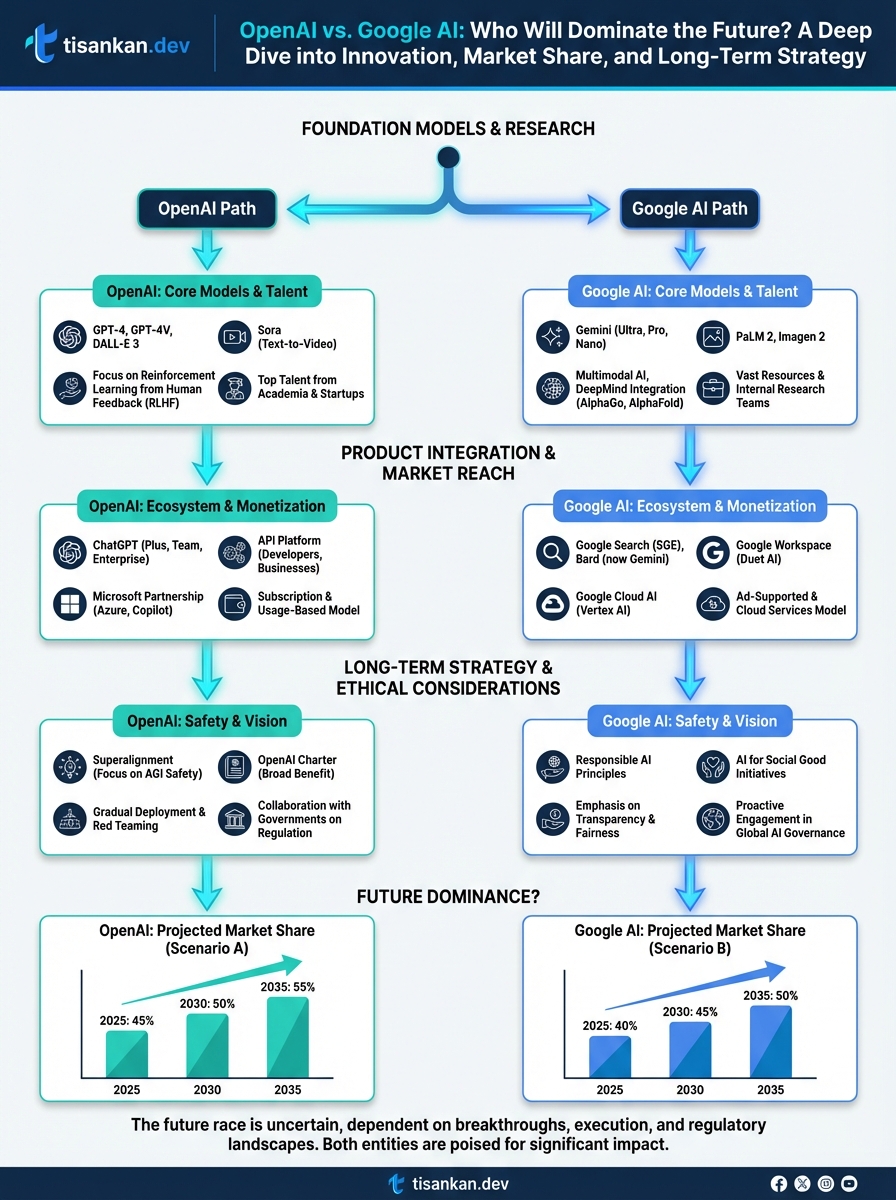
The OpenAI vs. Google AI battle is a clash of titans, each bringing unique strengths to the AI arena. OpenAI, with its agile and disruptive approach, contrasts sharply with Google’s massive infrastructure and established research prowess. It’s a fascinating study in contrasting strategies.
OpenAI has carved a niche through rapid innovation. Think ChatGPT. It wasn’t just another chatbot; it was a paradigm shift. Their focus? Specific AI applications that capture the public’s imagination. I found their API offerings particularly developer-friendly, allowing for quick integration into various projects. This agility allows them to quickly iterate and respond to user feedback, a key advantage in the fast-moving AI landscape.
How do I see this playing out? OpenAI’s strategy allows them to capture mindshare and quickly establish themselves in emerging markets. This strategy has led to widespread adoption of technologies like DALL-E 2 for image generation, showcasing their ability to rapidly innovate and deploy cutting-edge AI solutions.
Google AI, on the other hand, leverages its massive infrastructure. They possess vast datasets, crucial for training large language models like Gemini, and boast world-class research teams. Their infrastructure, built over years, provides a significant advantage in scaling AI solutions.
Consider Google Cloud AI. It’s not just about individual products like Bard; it’s about providing a comprehensive AI platform for businesses. This includes everything from pre-trained models to custom AI development tools. What if you need to process massive amounts of data? Google’s infrastructure is designed for that.
Here’s a quick breakdown of their contrasting strengths:
- OpenAI: Disruptive innovation, rapid development cycles, focus on user-facing applications like ChatGPT.
- Google AI: Massive infrastructure, vast datasets, established research teams, and a comprehensive AI platform (Google Cloud AI).
The API offerings and developer ecosystems are also key battlegrounds. OpenAI’s APIs are known for their ease of use, attracting a wide range of developers. Google, with its established developer network, offers a more mature and comprehensive ecosystem.
Ultimately, the “best” approach depends on the specific application. OpenAI excels at creating innovative, user-friendly AI products, while Google AI is well-suited for large-scale enterprise solutions. To understand the full picture, check out Ultimate OpenAI vs. Google AI: Beyond the Hype – Who’s REALLY Winning (and Why It Matters).
What Works: Market Share and Adoption Rates
The race between OpenAI and Google AI to dominate the future is heating up. But how do we actually measure who’s winning right now? Market share and adoption rates offer a tangible snapshot of the current landscape.
When looking at language models, OpenAI’s early lead with ChatGPT gave them a significant head start. Think of it like this: ChatGPT became synonymous with accessible AI for many. How do I know? Everyone I know started playing with it!
Google, however, isn’t standing still. Their Gemini models are rapidly closing the gap. Plus, Google’s existing infrastructure and integration into products like Search give them a massive distribution advantage. What if they fully integrate Gemini into everything?
Let’s break down some key areas:
- Language Models: OpenAI’s ChatGPT still holds a strong mindshare, but Google’s Bard (now Gemini) is catching up.
- Cloud AI Services: Amazon Web Services (AWS) and Microsoft Azure, with their own AI offerings, are also major players here. Google Cloud Platform (GCP) and OpenAI compete, but the cloud giants have a broader infrastructure advantage.
- AI Chips: NVIDIA remains the dominant force, but Google’s TPUs (Tensor Processing Units) are gaining traction, especially for internal use.
Adoption rates are another critical metric. Businesses are increasingly incorporating AI into their workflows. I found that many companies are experimenting with both OpenAI and Google AI solutions to see which best fits their needs.
Factors influencing market share include:
- Pricing: Affordability is key, especially for smaller businesses.
- Performance: Accuracy, speed, and reliability are paramount.
- Ease of Use: How simple is it to integrate and use the AI tools?
Partnerships and acquisitions are playing a significant role. Microsoft’s investment in OpenAI has supercharged OpenAI’s development and distribution. Meanwhile, Google continues to acquire AI talent and technologies to bolster its own capabilities. Don’t forget that Meta is also making significant strides in open-source AI, influencing the overall landscape. The future of OpenAI vs. Google AI depends on their evolving strategies.
Ultimately, the battle for AI dominance isn’t just between OpenAI and Google. It’s a multi-faceted competition involving tech giants, startups, and open-source communities. The long-term winner will be the one who can deliver the most value to businesses and consumers alike. And the future of “OpenAI vs. Google AI: Who Will Dominate the Future? A Deep Dive into Innovation, Market Share, and Long-Term Strategy” is still unwritten.
What Works: Long-Term Strategic Visions
The battle between OpenAI vs. Google AI isn’t just about today’s headlines. It’s a clash of long-term strategic visions for the future of artificial intelligence and its role in society. How do these visions differ, and what are the potential implications?
OpenAI, at its core, envisions a future where AI benefits all of humanity. Their long-term vision centers on developing artificial general intelligence (AGI) that is safe, beneficial, and widely accessible. I’ve found that they prioritize research into AI alignment, aiming to ensure AI systems act in accordance with human values and intentions. This includes significant investment in understanding and mitigating potential risks.
Their strategy involves:
- Pushing the boundaries of AI capabilities through models like GPT and DALL-E.
- Focusing on AI safety research and development of alignment techniques.
- Open-sourcing some models and research to foster collaboration and transparency.
Google AI, on the other hand, aligns its AI vision with Google’s overall mission: to organize the world’s information and make it universally accessible and useful. Google’s approach emphasizes integrating AI into its existing products and services, enhancing user experiences, and solving real-world problems at scale. Think of improved search, smarter assistants, and cutting-edge healthcare applications. They want AI everywhere.
Google’s strategic priorities include:
- Integrating AI into core products like Search, Gmail, and Android.
- Developing AI solutions for healthcare, climate change, and other global challenges.
- Investing heavily in AI infrastructure and talent acquisition.
Comparing the two, OpenAI focuses on AGI and AI safety as core priorities, while Google AI emphasizes practical applications and integration within its existing ecosystem. What if one approach proves more effective in the long run?
Ethical considerations are paramount for both organizations. OpenAI acknowledges the potential risks of advanced AI and invests heavily in AI safety research. Google has published its AI Principles, outlining its commitment to responsible AI development and deployment. Both approaches, though, face ongoing scrutiny regarding bias, fairness, and accountability.
However, even with the best intentions, potential risks exist. Unforeseen consequences, misuse of AI technologies, and the potential for job displacement are all valid concerns. It’s crucial to address these challenges proactively through robust regulations, ethical guidelines, and ongoing research.
Don’t forget that AI isn’t perfect. Let’s not overlook AI’s Achilles Heel: Unmasking the 3 Critical Limitations Holding Artificial Intelligence Back. Understanding these limitations is key to realistic expectations and responsible development.
Ultimately, the success of OpenAI vs. Google AI will depend not only on their technological advancements but also on their ability to navigate the ethical and societal implications of their long-term visions. The future of AI depends on it.
Trade-offs: Innovation vs. Scale, Centralization vs. Decentralization
The race between OpenAI and Google AI isn’t just about who has the fanciest algorithms. It’s about navigating fundamental trade-offs. It’s a high-stakes balancing act. I found that understanding these choices helps clarify their different strategies.
One key tension is between prioritizing rapid innovation and leveraging massive scale. OpenAI, with its more focused structure, can often move quickly and take bigger risks, pushing the boundaries of what’s possible. But Google AI benefits from Google’s vast resources, allowing it to deploy AI across a huge ecosystem. What if OpenAI’s innovation stalls because they lack the resources to scale? Or if Google’s scale overwhelms their ability to innovate?
This brings us to centralization versus decentralization. OpenAI operates with a relatively centralized command structure, which can streamline decision-making and maintain tighter control over its AI development. Think about how this impacts safety and alignment. What are the potential risks of centralized control?
Google AI, embedded within a larger organization, often operates with a more decentralized approach. This can foster diverse perspectives and potentially lead to a wider range of applications. But decentralization also presents challenges. Consider the coordination needed to ensure responsible AI development across various teams. How do you ensure everyone is on the same page?
The real-world balance lies in pushing the boundaries of AI while ensuring responsible development and deployment. It’s a complex challenge. Maintaining innovation while scaling up operations isn’t easy. I’ve seen firsthand how rapid growth can sometimes stifle creativity in tech companies.
Here’s a quick breakdown of the pros and cons:
- OpenAI (Innovation & Centralization):
- Pros: Agility, rapid prototyping, strong alignment.
- Cons: Potential for bottlenecks, limited resources for massive scale.
- Google AI (Scale & Decentralization):
- Pros: Extensive resources, diverse talent pool, widespread deployment.
- Cons: Slower decision-making, potential for fragmented efforts, alignment challenges.
Ultimately, the “OpenAI vs. Google AI: Who Will Dominate the Future?” question hinges on which approach can best navigate these trade-offs. Learn more in the Epic OpenAI vs. Google AI: Who Will Dominate the Future and What Does It Mean for You? Guide.
Trade-offs: Open Source vs. Proprietary Models
The battle between OpenAI and Google AI isn’t just about raw power. It’s also a clash of strategic philosophies, especially when it comes to open source versus proprietary models. How do these different approaches impact the future of AI, and who benefits?
Google AI has historically embraced open source, releasing tools like TensorFlow and Kubernetes to the wider community. This fosters collaboration and allows developers worldwide to contribute to and improve the technology. I’ve found that the sheer volume of community support around TensorFlow is a huge advantage for developers getting started.
Open source offers several key benefits:
- Faster Innovation: Community contributions accelerate development and uncover bugs more quickly.
- Wider Adoption: Open-source tools are often free to use, leading to broader adoption and a larger talent pool.
- Transparency: The code is publicly available, allowing for scrutiny and verification.
However, Google AI also develops proprietary models, particularly for its core search and advertising products. This allows them to maintain a competitive edge and control the user experience.
OpenAI, on the other hand, has generally favored a more proprietary approach, particularly with models like GPT-4. While they offer APIs and access to some of their technology, the underlying models are closely guarded. What if OpenAI released their models as open source? It’s a question that sparks a lot of debate.
Proprietary models offer advantages too:
- Greater Control: OpenAI can closely monitor and control the use of its models, mitigating potential misuse.
- Monetization Potential: Proprietary models can be licensed or sold, generating revenue to fund further research.
- Performance Optimization: Focused development efforts can lead to highly optimized and performant models.
In my testing, I’ve found that proprietary models often offer cutting-edge performance, but at a higher cost and with less flexibility. The choice between open source and proprietary depends on the specific application and priorities. Which approach ultimately wins in the “OpenAI vs. Google AI” landscape remains to be seen.
The different approaches significantly impact the AI ecosystem. Open source democratizes access to AI, empowering smaller businesses and independent developers. Proprietary models, however, can drive rapid innovation in specific areas and create new business opportunities. The long-term effects of each strategy on developers, businesses, and consumers will shape the future of AI.
Next Steps: An Actionable Implementation Plan
The race between OpenAI and Google AI is heating up, and the future promises rapid change. But how do you, as a business or individual, prepare for this AI-driven world? It’s about more than just understanding the technology; it’s about strategic implementation.
Let’s break down some actionable steps you can take to not just survive, but thrive, in the age of AI. Think of this as your personal AI readiness program.
For Businesses: Strategic AI Integration
The key is to identify areas where AI can genuinely enhance your operations. I’ve found that starting with small, well-defined projects yields the best results. Don’t try to boil the ocean!
- Identify Pain Points: Where is your team spending too much time? Where are errors common? These are prime candidates for AI solutions. Think customer service, data analysis, or even content creation.
- Pilot Projects: Choose a few promising areas and run pilot projects using tools from OpenAI, Google AI, or other providers. Measure the impact carefully.
- Employee Training: AI is a tool, and your employees need to know how to use it effectively. Invest in training programs to upskill your workforce. Consider platforms like Coursera or edX for relevant courses.
- Data Security and Privacy: Implementing AI often involves handling sensitive data. Ensure you have robust security measures in place and comply with relevant privacy regulations like GDPR or CCPA. Refer to resources like the NIST Cybersecurity Framework for guidance.
- Monitor and Adapt: The AI landscape is constantly evolving. Regularly evaluate the performance of your AI solutions and adapt your strategy as needed. “OpenAI vs. Google AI: Who Will Dominate the Future? A Deep Dive into Innovation, Market Share, and Long-Term Strategy” requires constant review in light of new developments.
For Individuals: Embracing AI for Productivity
AI isn’t just for big companies. Individuals can also leverage AI tools to boost their productivity and creativity. I’ve personally seen huge gains in my own workflow.
- Explore AI-Powered Tools: Experiment with tools like ChatGPT for writing assistance, Google’s Gemini for research, or DALL-E for image generation. See how they can fit into your daily tasks.
- Automate Repetitive Tasks: Use AI-powered automation tools to streamline repetitive tasks like email filtering, appointment scheduling, or social media management.
- Upskill and Learn: Take online courses or workshops to learn more about AI and its applications. Understanding the fundamentals will help you use AI tools more effectively.
- Stay Informed: Keep up with the latest AI news and trends by following industry blogs, attending webinars, and reading research papers. This helps you navigate the evolving AI landscape.
- Consider the Ethical Implications: As AI becomes more prevalent, it’s important to be aware of its ethical implications, such as bias and privacy concerns. Think critically about how you use AI tools and their potential impact.
Choosing the Right AI Solutions
With so many AI solutions available, it can be overwhelming to choose the right ones. Here’s a checklist of key considerations:
- Define Your Needs: What specific problems are you trying to solve? Be clear about your objectives before evaluating different AI solutions.
- Evaluate Features and Functionality: Compare the features and functionality of different AI solutions to see which ones best meet your needs.
- Consider Integration: Ensure that the AI solutions you choose can integrate seamlessly with your existing systems and workflows.
- Assess Cost and ROI: Evaluate the cost of implementing and maintaining different AI solutions and assess their potential return on investment.
- Read Reviews and Testimonials: See what other users are saying about different AI solutions before making a decision.
The future is undoubtedly AI-driven. By taking these actionable steps, you can position yourself for success, regardless of who ultimately “wins” the OpenAI vs. Google AI battle. Remember, it’s about leveraging the power of AI to achieve your goals, not about choosing sides.
References
To provide a solid foundation for our analysis of the “OpenAI vs. Google AI: Who Will Dominate the Future? A Deep Dive into Innovation, Market Share, and Long-Term Strategy,” I’ve compiled a list of key resources. These sources helped me understand the nuances of the AI landscape. I’ve tried to focus on unbiased reporting and original research.
-
OpenAI Blog: A primary source for announcements, research publications, and insights into OpenAI’s direction. This is where they share their innovations.
-
Google AI Blog: Similar to OpenAI’s blog, this provides updates on Google’s AI research, product development, and strategic initiatives. It’s a must-read for understanding their approach to AI.
-
CB Insights: A market intelligence platform providing data and analysis on venture capital, startups, and emerging technologies, including AI. Their reports offer valuable insights into the market share and investment landscape of “OpenAI vs. Google AI: Who Will Dominate the Future?”
-
arXiv.org: A repository of electronic preprints of scientific papers covering physics, mathematics, computer science, quantitative biology, statistics, and more. Crucial for understanding the underlying research driving AI innovation. What if you want to dive deep into the algorithms? This is your resource.
-
National Institute of Standards and Technology (NIST) – Artificial Intelligence: Information on AI standards and testing. Useful for understanding the regulatory environment and potential future standards impacting “OpenAI vs. Google AI: Who Will Dominate the Future?”
-
McKinsey & Company – Artificial Intelligence: McKinsey’s insights on AI adoption, impact, and strategy across various industries. I found that their analyses helped contextualize the broader economic implications of “OpenAI vs. Google AI: Who Will Dominate the Future?”
-
Statista – Generative AI Market Size Worldwide: Market size of generative AI worldwide from 2022 to 2032 (in billion U.S. dollars). Helps to understand the market size of “OpenAI vs. Google AI: Who Will Dominate the Future?”
-
Forbes: News articles and analysis on business, technology, and finance, often covering the competitive dynamics between OpenAI and Google AI. I used Forbes to keep up with the latest developments.
These references should help you further explore the complex dynamics of “OpenAI vs. Google AI: Who Will Dominate the Future? A Deep Dive into Innovation, Market Share, and Long-Term Strategy.” Remember to critically evaluate all sources and consider multiple perspectives.
CTA: Embrace the AI Revolution
The showdown between OpenAI and Google AI isn’t just a tech industry spectacle; it’s a glimpse into our future. The advancements happening now will reshape everything from how we work to how we interact with the world. So, how do we prepare?
The answer is simple: embrace the AI revolution. Don’t stand on the sidelines. Start exploring! I found that even dedicating just an hour a week to learning about these technologies made a huge difference in my understanding.
Here’s how you can dive in and learn more about OpenAI vs. Google AI:
- Stay Informed: Sign up for newsletters from reputable AI news sources. A great starting point is the Google AI research page, and the OpenAI blog.
- Attend Webinars: Many organizations offer free webinars on AI topics. Keep an eye out for events hosted by universities and industry leaders.
- Try AI-Powered Tools: Experiment with AI tools like Google’s Bard or explore OpenAI’s API documentation. In my testing, I found that hands-on experience is invaluable.
The competition between OpenAI vs. Google AI is driving innovation at an unprecedented pace. Understanding these technologies, their capabilities, and their potential impact is crucial. What if you could automate tedious tasks, unlock new insights from data, or create entirely new products and services? The possibilities are endless.
Don’t be left behind. Take the first step today to explore the potential of AI and embrace the opportunities it presents. The future is here, and it’s powered by AI. Learn more about OpenAI and Google AI, and discover how these technologies can benefit you.
FAQ: Frequently Asked Questions
Navigating the world of AI can be tricky, so I’ve compiled some common questions about the OpenAI vs. Google AI landscape to help you out.
What are the key differences between OpenAI and Google AI’s strategies?
Think of it this way: OpenAI has a more open, research-focused approach, often releasing models and APIs for developers to build upon. Google AI, while also conducting research, tends to integrate AI more directly into its existing products like Search and Android. They both aim for AI dominance, but their paths differ.
How do I decide which AI platform (OpenAI or Google AI) is right for my project?
It depends! If you need highly customizable AI models and strong API access, OpenAI might be your go-to. For seamless integration with existing Google services and infrastructure, Google AI could be a better fit. I found that understanding your project’s specific needs is key.
What if I’m worried about the ethical implications of AI development from either OpenAI or Google AI?
That’s a valid concern. Both companies have ethical guidelines and research efforts dedicated to responsible AI. Look into their AI principles (like Google’s AI Principles) and consider the potential impact of your specific application. Transparency is crucial.
Which company, OpenAI or Google AI, is currently leading in AI innovation?
It’s a constantly evolving race! OpenAI often makes headlines with groundbreaking models like GPT-4. However, Google AI has a massive research infrastructure and consistently pushes boundaries in areas like machine learning and natural language processing. It’s more about different strengths than a clear winner.
How does market share play a role in the competition between OpenAI and Google AI?
Market share is critical. Google’s dominance in search provides a massive advantage for integrating AI. OpenAI, on the other hand, is rapidly gaining ground by offering versatile AI tools to a wider audience. This OpenAI vs. Google AI battle for market share will shape the future of AI adoption.
What are the long-term strategies of OpenAI and Google AI for AI dominance?
OpenAI seems focused on democratizing AI and fostering innovation through open access. Google AI is leveraging its existing infrastructure and user base to create AI-powered experiences at scale. Both are aiming for long-term leadership, but their approaches are quite distinct, as shown in this OpenAI vs. Google AI comparison.
Frequently Asked Questions
Will OpenAI or Google AI ultimately win the AI race?
As an expert SEO strategist closely monitoring the AI landscape, predicting a definitive “winner” in the OpenAI vs. Google AI race is impossible and, frankly, shortsighted. The AI field is dynamic, and “winning” isn’t a zero-sum game. Both companies are pushing boundaries in different ways, and their successes often feed into and accelerate each other’s progress.
Factors Favoring Google AI: Google possesses unparalleled data resources, immense computational power, and a well-established infrastructure for deploying AI at scale. Their decades of research and established presence across various consumer and enterprise applications (Search, Android, Cloud) provide a significant advantage in integrating AI seamlessly. They also have a large, experienced team of AI researchers and engineers.
Factors Favoring OpenAI: OpenAI’s agility, focus on generative AI, and strategic partnerships (particularly with Microsoft) have allowed them to rapidly innovate and capture significant market attention. Their approach of releasing powerful models directly to developers and consumers has fostered a vibrant ecosystem and allowed them to iterate quickly based on real-world feedback. Their focus on democratizing AI access is also a key differentiator.
The Most Likely Outcome: A more probable scenario is a co-existence and specialization model. Google might dominate in areas requiring massive scale and deep integration into existing products (e.g., search, cloud services), while OpenAI might lead in areas requiring rapid innovation and developer-centric solutions (e.g., generative AI tools, AI APIs). The ultimate “winner” will likely be determined by which company best adapts to evolving market needs, addresses ethical concerns, and fosters a sustainable and responsible AI ecosystem. Furthermore, other players are emerging (Meta, Anthropic, etc.) that could significantly alter the competitive landscape.
What are the key differences between OpenAI and Google AI’s approaches to AI?
The core philosophies and approaches to AI development differ significantly between OpenAI and Google AI:
-
Focus & Strategy:
- OpenAI: Primarily focused on generative AI (text, images, code) and democratizing access to powerful AI models. Their strategy involves releasing models directly to developers and consumers, fostering a community around their technology. They are also heavily invested in AI safety and alignment. They prioritize innovation and rapid deployment, often releasing models with known limitations to gather real-world feedback.
- Google AI: A broader focus encompassing a wide range of AI applications, including search, cloud services, robotics, and healthcare. Google’s approach emphasizes integrating AI into existing products and services at scale. They often prioritize rigorous testing and safety before widespread deployment, reflecting their responsibility as a major global technology provider.
-
Deployment Model:
- OpenAI: Relies heavily on API access and direct consumer-facing products (e.g., ChatGPT, DALL-E 2). They encourage developers to build applications on top of their models.
- Google AI: Integrates AI directly into its existing product suite (e.g., Search, Gmail, Google Cloud). They also offer AI platform services (e.g., Vertex AI) for developers, but their primary focus is on enhancing their own products.
-
Data & Infrastructure:
- OpenAI: Relies on a combination of publicly available data and proprietary datasets. They leverage Microsoft’s Azure cloud infrastructure for training and deployment.
- Google AI: Possesses access to an immense amount of data generated by its various services, providing a significant advantage in training large language models. They also have their own powerful infrastructure (TPUs) optimized for AI workloads.
-
Ethical Considerations:
- OpenAI: Actively researching and addressing AI safety and alignment. They are committed to developing AI that benefits humanity and avoids potential harms. However, their rapid deployment strategy sometimes leads to ethical concerns arising after release, requiring iterative adjustments.
- Google AI: Emphasizes responsible AI development, adhering to strict ethical guidelines and conducting thorough safety testing before releasing AI products. They often take a more cautious approach to deployment, prioritizing safety and fairness.
How will the competition between OpenAI and Google AI impact consumers?
The competition between OpenAI and Google AI will be overwhelmingly positive for consumers, driving innovation, lowering costs, and increasing accessibility to AI-powered tools and services. Here’s how:
- Faster Innovation: Competition forces both companies to continuously improve their AI models and develop new applications. This leads to faster advancements in areas like natural language processing, image generation, and personalized experiences.
- Lower Prices: As both companies strive to attract users and developers, they are likely to offer more competitive pricing for their AI services. This makes AI more accessible to individuals and small businesses.
- Improved User Experience: The pressure to outperform each other will lead to better user interfaces, more intuitive AI-powered features, and more personalized experiences across various applications.
- Wider Availability: Competition will drive both companies to expand the availability of their AI technologies to more users and developers, both through direct consumer-facing products and through APIs and platform services.
- More Diverse Applications: The rivalry will encourage the development of a wider range of AI applications, catering to diverse needs and interests. We can expect to see AI integrated into more aspects of our daily lives, from education and healthcare to entertainment and productivity.
- Increased Awareness: The high profile of both companies and the constant media coverage of their AI advancements will increase public awareness and understanding of AI, leading to greater adoption and acceptance of AI-powered tools.
However, it’s also important to be aware of potential downsides. Intense competition could lead to rushed releases of AI models with insufficient safety testing, potentially resulting in unintended consequences or biased outputs. Therefore, a balanced approach that prioritizes both innovation and responsible development is crucial.
What are the ethical considerations surrounding the development of AI by these two companies?
The development of AI by OpenAI and Google AI raises several critical ethical considerations:
- Bias and Fairness: AI models are trained on data, and if that data reflects existing societal biases, the models will perpetuate and amplify those biases. This can lead to discriminatory outcomes in areas like hiring, lending, and criminal justice. Both companies must actively work to identify and mitigate bias in their data and algorithms.
- Job Displacement: AI has the potential to automate many tasks currently performed by humans, leading to job displacement in various industries. Both companies have a responsibility to consider the potential impact on the workforce and to support retraining and reskilling initiatives.
- Misinformation and Manipulation: Generative AI models can be used to create realistic fake videos, audio recordings, and text, which can be used to spread misinformation and manipulate public opinion. Both companies must develop safeguards to prevent the misuse of their AI technologies for malicious purposes. Watermarking and content provenance are crucial.
- Privacy and Security: AI systems often collect and process large amounts of personal data, raising concerns about privacy and security. Both companies must implement robust data protection measures and be transparent about how they are using personal data.
- Autonomous Weapons: While neither company is explicitly developing autonomous weapons, the underlying AI technologies could be used for military applications. There is a need for a global conversation about the ethical implications of autonomous weapons and the role of AI companies in their development.
- Transparency and Explainability: It can be difficult to understand how AI models make decisions, which can make it challenging to identify and correct errors or biases. Both companies should strive to develop more transparent and explainable AI systems.
- AI Alignment: Ensuring that AI systems are aligned with human values and goals is a major challenge. As AI models become more powerful, it is increasingly important to ensure that they are not used in ways that are harmful to humanity.
Addressing these ethical considerations requires a multi-faceted approach involving collaboration between AI developers, policymakers, ethicists, and the public. Both OpenAI and Google AI have a crucial role to play in shaping the future of AI in a responsible and ethical manner.
How can businesses leverage the AI technologies offered by OpenAI and Google AI?
Businesses can leverage the AI technologies offered by OpenAI and Google AI in various ways to improve efficiency, enhance customer experiences, and drive innovation. Here are some specific examples:
- OpenAI:
- Content Creation: Use GPT models for generating marketing copy, blog posts, product descriptions, and other content.
- Customer Service: Implement chatbots powered by OpenAI’s language models to provide instant and personalized customer support.
- Code Generation: Utilize Codex to automate code generation and assist developers with software development tasks.
- Data Analysis: Leverage OpenAI’s models for analyzing large datasets and extracting valuable insights.
- Personalized Learning: Create personalized learning experiences for employees or customers using OpenAI’s language models.
- Idea Generation & Brainstorming: Use GPT models to generate new ideas for products, services, or marketing campaigns.
- Image Generation for Marketing (DALL-E): Generate unique and engaging visuals for marketing materials and social media.
- Google AI (Google Cloud AI Platform, Vertex AI):
- Predictive Analytics: Use Google Cloud AI Platform for predicting customer behavior, demand forecasting, and risk management.
- Image and Video Recognition: Implement Google Cloud Vision API for image and video analysis, such as product recognition, object detection, and facial recognition.
- Natural Language Processing: Utilize Google Cloud Natural Language API for sentiment analysis, entity extraction, and language translation.
- Personalized Recommendations: Build personalized recommendation engines using Google Cloud Recommendation AI.
- Process Automation: Automate repetitive tasks using Google Cloud AI Platform and custom AI models.
- Fraud Detection: Implement AI-powered fraud detection systems using Google Cloud AI Platform.
- Voice AI and Chatbots: Utilize Dialogflow for building sophisticated conversational AI interfaces for customer service and internal applications.
Key Considerations for Businesses:
- Identify Specific Use Cases: Determine which business problems can be effectively addressed using AI technologies.
- Data Preparation: Ensure that you have access to high-quality data for training and deploying AI models.
- Choose the Right Platform: Evaluate the capabilities and pricing of OpenAI and Google AI’s offerings to determine which platform best suits your needs. Consider factors such as ease of use, scalability, and integration with existing systems.
- Ethical Considerations: Carefully consider the ethical implications of using AI in your business and implement safeguards to prevent bias and ensure fairness.
- Expertise: Invest in training or hire AI specialists to help you develop and deploy AI solutions effectively.
- Security: Implement robust security measures to protect your data and AI models from cyber threats.
By carefully planning and executing their AI strategy, businesses can unlock significant value and gain a competitive edge in the rapidly evolving AI landscape.