



7+ Proven Strategies for Tech Pitch for Non-Technical Founders Success in 2025: A Step-by-Step Guide
Crafting a compelling tech pitch for non-technical founders can feel like navigating a minefield. Are you a founder with a brilliant tech idea but struggle to articulate it to investors because you lack the deep technical expertise? You’re not alone. Many non-technical founders face this challenge, but with the right strategies, you can confidently pitch your vision and secure the funding you need.
What is a Tech Pitch for Non-Technical Founders?
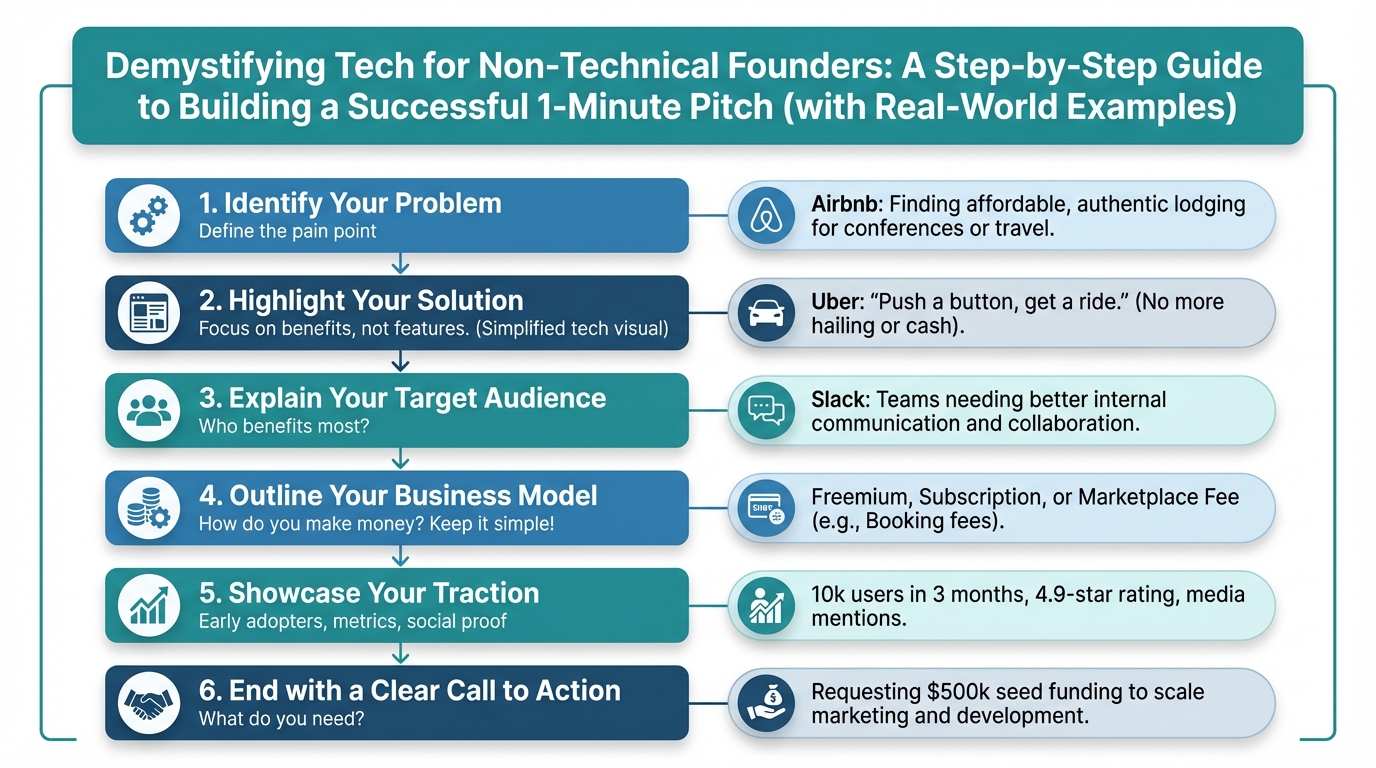
A tech pitch for non-technical founders is a concise and persuasive presentation delivered to investors, potential partners, or stakeholders. It explains a technology-based startup’s value proposition, business model, and market opportunity, focusing on the ‘what’ and ‘why’ rather than the ‘how,’ making it accessible to a non-technical audience. It aims to generate interest and secure further investment or collaboration.
Why Non-Technical Founders Need a Strong Tech Pitch
As a non-technical founder, your ability to clearly and persuasively communicate your vision is paramount. Investors need to understand the problem you’re solving, your solution, and your path to profitability, even if they don’t understand the underlying code. A well-crafted 1-minute pitch can be the difference between securing funding and being passed over. It demonstrates your leadership skills, your understanding of the market, and your ability to build a strong team.
Step-by-Step Guide to Building a Successful 1-Minute Tech Pitch
Step 1: Understand Your Audience
Before you start writing your pitch, understand who you’re pitching to. Are they venture capitalists, angel investors, or potential strategic partners? What are their investment criteria? What are their technical backgrounds? Tailoring your pitch to your audience will significantly increase your chances of success. Research their past investments and look for patterns in the types of companies they fund. This will help you frame your pitch in a way that resonates with their interests.
Step 2: Define the Problem Clearly
Start your pitch by clearly defining the problem you’re solving. Make it relatable and easy to understand, even for someone unfamiliar with your industry. Use data and statistics to illustrate the size and scope of the problem. Avoid technical jargon and focus on the pain points your target audience is experiencing. For example, instead of saying “We’re using AI to optimize logistics,” say, “Businesses lose millions each year due to inefficient delivery routes. We solve this by…”.
Step 3: Present Your Solution (Without the Technical Jargon)
Once you’ve defined the problem, present your solution in a way that’s easy to grasp. Focus on the benefits and outcomes, not the technical details. Use analogies and metaphors to explain complex concepts. For example, instead of saying, “Our platform uses a distributed ledger,” say, “Our platform is like a secure, shared ledger that everyone can trust”. Emphasize how your solution addresses the pain points you identified in the previous step. Highlight the unique value proposition of your solution and why it’s better than existing alternatives.
Step 4: Articulate Your Business Model
Explain how you plan to make money. Be clear and concise about your revenue streams, pricing strategy, and target market. Investors need to understand how your business will generate sustainable revenue. If you are looking for strategies to launch your product, consider these 7+ Proven Strategies for Minimum Marketable Product (MMP) Success in 2025: Achieving Product-Market Fit Faster with AI and Empathy. For example, “We’ll offer a subscription-based service with tiered pricing based on usage.” or “We’ll generate revenue through a freemium model, offering basic features for free and charging for premium add-ons”.
Step 5: Showcase Your Team
Highlight the strengths and expertise of your team. Even if you’re a non-technical founder, emphasize the technical expertise of your co-founders or advisors. Showcase your team’s experience and accomplishments. Investors are investing in the team as much as they are investing in the idea. If you are building a mobile app, make sure you have a team member well-versed in 7 Proven Strategies for H5 Mobile Debugging NIGHTMARES: A Practical Guide to Diagnosing and Fixing the Most Common Performance Bottlenecks (Even on Obscure Devices). Highlight any relevant experience or accomplishments that demonstrate your team’s ability to execute your vision. For example, “Our CTO has 15 years of experience building scalable platforms” or “Our advisor is a renowned expert in cybersecurity”.
Step 6: Demonstrate Market Traction
Showcase any early traction you’ve achieved, such as user growth, customer feedback, or pilot programs. This demonstrates that there’s a demand for your product and that you’re making progress towards your goals. Even if you’re pre-revenue, you can showcase metrics like website traffic, social media engagement, or email sign-ups. Quantify your achievements whenever possible. For example, “We’ve acquired 1,000 users in the past month” or “We’ve received positive feedback from 90% of our beta testers”.
Step 7: End with a Clear Call to Action
Tell investors what you want them to do. Do you want them to invest in your company? Do you want them to schedule a follow-up meeting? Be specific and direct. Make it easy for them to take the next step. For example, “We’re seeking $500,000 in seed funding to scale our operations” or “We’d love to schedule a follow-up meeting to discuss our business plan in more detail”.
Real-World Examples of Successful 1-Minute Tech Pitches
Example 1: AI-Powered Healthcare Platform
“Healthcare is drowning in paperwork, leading to errors and delays. Our AI-powered platform automates administrative tasks, reducing costs and improving patient care. We’re like a virtual assistant for healthcare providers, freeing them up to focus on what matters most: their patients. Our business model is a subscription service, and we’ve already secured pilot programs with three major hospitals. Our team combines healthcare expertise with cutting-edge AI development. We are seeking $1 million to expand our platform and scale our sales efforts. We aim to revolutionize healthcare administration.”
Example 2: Sustainable Agriculture Technology
“Farmers are facing increasing challenges due to climate change and resource scarcity. Our technology uses sensors and data analytics to optimize irrigation and fertilization, reducing water consumption and increasing crop yields. We’re like a precision agriculture system that helps farmers grow more with less. Our business model is a combination of hardware sales and software subscriptions, and we’ve already secured partnerships with several agricultural cooperatives. Our team includes agricultural scientists and software engineers with a passion for sustainability. We are seeking $750,000 to expand our product line and reach more farmers.”
Example 3: EdTech Platform for Personalized Learning
“Traditional education is failing to meet the needs of individual learners. Our EdTech platform uses AI to personalize learning paths, providing students with customized content and feedback. We’re like a personal tutor for every student, helping them learn at their own pace and achieve their full potential. Our business model is a subscription service for schools and parents, and we’ve already secured contracts with several school districts. Our team includes experienced educators and AI developers with a passion for education. We are seeking $1.2 million to expand our platform and reach more students.”
Key Considerations for Non-Technical Founders
Focus on the “Why” and the “What,” Not the “How”
As a non-technical founder, your strength lies in understanding the market, identifying the problem, and articulating the vision. Leave the technical details to your technical team. Focus on explaining why your solution is valuable and what it does, rather than how it works. Investors are more interested in the outcomes and benefits than the underlying technology. They want to know that you understand the market and have a clear plan for building a successful business.
Build a Strong Technical Team
Surround yourself with talented technical experts who can bring your vision to life. A strong technical team will not only build your product but also provide credibility to your pitch. Highlight the expertise and experience of your technical team members in your pitch. Investors want to see that you have the right people in place to execute your plan. If you are building an app, it’s important to understand 7+ Powerful Strategies for Mantine BorderAnimate Performance: A 2025 Deep Dive. Consider offering equity to attract top talent.
Practice Your Pitch Extensively
Practice makes perfect. Rehearse your pitch until you can deliver it confidently and naturally. Practice in front of friends, family, and mentors, and ask for feedback. Record yourself and watch the recording to identify areas for improvement. The more you practice, the more comfortable you’ll become with your pitch, and the better you’ll be able to handle questions from investors. Aim for a conversational tone, rather than a robotic delivery.
Be Prepared to Answer Technical Questions
Even though you’re a non-technical founder, you should be prepared to answer basic technical questions. Work with your technical team to develop concise and easy-to-understand answers to common technical questions. You don’t need to be able to explain the code, but you should be able to explain the architecture and key technologies used in your product. If you don’t know the answer to a question, don’t be afraid to say, “I don’t know, but I’ll find out and get back to you”.
Embrace the Power of Visuals
Use visuals to enhance your pitch and make it more engaging. A well-designed pitch deck can help you communicate complex information in a clear and concise way. Use images, charts, and graphs to illustrate your points. Avoid cluttering your slides with too much text. Keep your visuals simple and easy to understand. A compelling visual can leave a lasting impression on investors and help them remember your pitch.
Tools and Resources for Building Your Tech Pitch
Several tools and resources can help you build a compelling tech pitch. Here’s a comparison of some popular options:
| Tool/Resource | Description | Pros | Cons |
|---|---|---|---|
| Canva | Online graphic design platform for creating pitch decks | Easy to use, wide range of templates, affordable | Limited customization options, can look generic |
| Pitch.com | Presentation software specifically designed for pitch decks | Collaboration features, analytics, professional templates | More expensive than Canva, steeper learning curve |
| Slidebean | AI-powered presentation software that helps you create pitch decks | AI-driven design, content suggestions, investor network | Can be expensive, requires a clear understanding of your business |
| Gust | Platform for startups to connect with investors | Investor database, pitch deck templates, fundraising tools | Can be expensive, requires a well-developed business plan |
| AngelList | Platform for startups to raise funding and recruit talent | Large investor network, startup resources, job board | Highly competitive, requires a strong track record |
Overcoming Common Challenges
Non-technical founders often face unique challenges when pitching their tech startups. Here are some common challenges and how to overcome them:
- Lack of Technical Credibility: Build a strong technical team and highlight their expertise.
- Difficulty Explaining Complex Concepts: Use analogies and metaphors to simplify technical jargon.
- Answering Technical Questions: Prepare concise and easy-to-understand answers to common technical questions.
- Convincing Investors of Your Vision: Focus on the problem you’re solving and the value you’re creating.
- Building a Compelling Pitch Deck: Use visuals to enhance your pitch and make it more engaging.
The Future of Tech Pitches for Non-Technical Founders
The future of tech pitches for non-technical founders will likely involve increased use of AI and automation. AI-powered tools can help non-technical founders create compelling pitch decks, identify potential investors, and even practice their pitches. As technology continues to evolve, non-technical founders will need to adapt and embrace new tools and strategies to effectively communicate their vision and secure funding. Additionally, focusing on building a 7 Proven Strategies for MVP in 7 Days: The AI Startup Founder’s Sanity Checklist can help validate your idea quickly and showcase real-world progress to investors.
Conclusion
Crafting a successful tech pitch for non-technical founders requires a strategic approach, a clear understanding of your audience, and a willingness to embrace your strengths. By focusing on the problem you’re solving, articulating your vision, and building a strong team, you can confidently pitch your startup and secure the funding you need to succeed. Remember to practice your pitch extensively, be prepared to answer questions, and embrace the power of visuals. With the right strategies, you can overcome the challenges of being a non-technical founder and build a thriving technology company. Don’t forget the importance of data security; consider 7+ Proven Strategies for Cybersecurity for SMBs Success in 2025: A Data-Driven Guide to protect your startup and maintain investor confidence.
FAQ
- What is the ideal length of a tech pitch?
- Aim for a 1-minute pitch, focusing on the most important information.
- What should I focus on as a non-technical founder?
- Focus on the problem, solution, market, and business model.
- How important is the pitch deck?
- A well-designed pitch deck is crucial for communicating your vision.
- How do I handle technical questions?
- Prepare concise answers and be honest if you don’t know something.
- What if I don’t have any traction yet?
- Showcase early metrics like website traffic or social media engagement.
- How do I find investors for my tech startup?
- Use platforms like AngelList and Gust to connect with investors.
Disclaimer: This blog post provides general information and should not be considered financial or investment advice.
For further reading on related topics, consider exploring articles on Forbes about startup funding, Wired for technology trends, and Wikipedia for definitions and background information on key concepts.