



US health department unveils strategy to expand its adoption of AI technology – AP News marks a pivotal moment in the integration of artificial intelligence within the healthcare sector. This initiative, driven by the Department of Health and Human Services (HHS), aims to leverage AI to improve public health outcomes, enhance efficiency, and reduce costs across various healthcare operations. The implications are far-reaching, impacting everything from disease diagnosis to drug discovery.
Why This Matters Now: The Urgency Behind AI in Healthcare
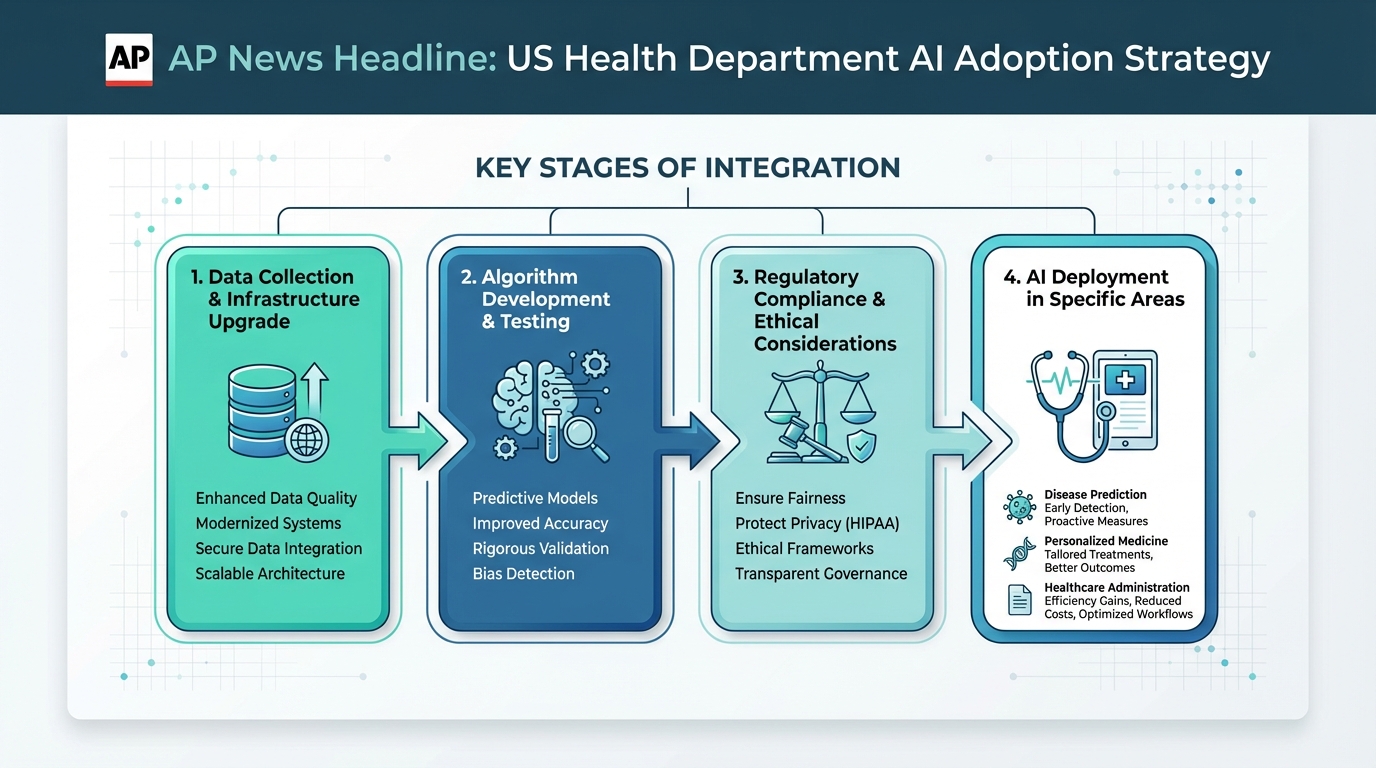
The timing of this announcement is crucial. Healthcare systems globally face increasing pressures: aging populations, rising costs, and the constant threat of new health crises. AI offers potential solutions to these challenges, promising faster diagnoses, personalized treatments, and more efficient resource allocation. But, there is a catch. The technology must be deployed responsibly.
This is not simply about automating tasks; it’s about transforming how healthcare is delivered. We must proceed with caution and foresight.
Deep Dive: Key Components of the HHS AI Strategy
The HHS strategy outlines several key areas for AI adoption. These include:
- Improving Disease Detection and Diagnosis: AI algorithms can analyze medical images and patient data to identify diseases earlier and more accurately.
- Enhancing Drug Discovery and Development: AI can accelerate the identification of potential drug candidates and predict their efficacy.
- Personalizing Treatment Plans: AI can tailor treatment plans to individual patients based on their genetic makeup, lifestyle, and medical history.
- Streamlining Administrative Processes: AI can automate tasks such as claims processing, appointment scheduling, and data entry, freeing up healthcare professionals to focus on patient care.
- Public Health Emergency Response: AI can aid in tracking and predicting disease outbreaks, enabling more effective responses.
Each of these areas presents both opportunities and challenges. Data privacy, algorithm bias, and the need for skilled personnel are all critical considerations.
The Technical Backbone: Infrastructure and Data
Successful implementation of this strategy hinges on robust infrastructure and high-quality data. The HHS will need to invest in:
- Data Standardization: Ensuring that data from different sources is compatible and can be easily integrated.
- Cloud Computing: Providing scalable computing resources to handle the massive amounts of data required for AI applications.
- Cybersecurity: Protecting sensitive patient data from unauthorized access and cyberattacks.
These are not trivial tasks. Data silos, legacy systems, and security vulnerabilities are all potential roadblocks. Speaking of vulnerabilities, it’s crucial to consider Sustainable Technology ROI in Manufacturing: Separating Hype From Reality, as the principles of ROI and realistic expectations also apply to healthcare AI.
Expert Opinion: A CTO’s Perspective on the US health department unveils strategy to expand its adoption of AI technology – AP News
As a CTO and strategic tech advisor, I see immense potential in this initiative. However, I also recognize the inherent complexities. “The key to success lies in a phased approach,” I often advise. “Start with well-defined use cases, build trust through transparency, and prioritize ethical considerations.”
One major concern I have is the potential for bias in AI algorithms. If the data used to train these algorithms is skewed, the resulting AI systems could perpetuate and even amplify existing health disparities. We need to be vigilant about identifying and mitigating bias at every stage of the AI development process.
Another challenge is the need for skilled personnel. Healthcare professionals will need to be trained to use and interpret AI-powered tools effectively. Data scientists and AI engineers will be needed to develop and maintain these systems. This requires a significant investment in education and training.
The Ethical Imperative: Maintaining Humanity in the Age of AI
While the promise of AI is exciting, we must not lose sight of the human element. AI should augment, not replace, human healthcare professionals. Doctors, nurses, and other caregivers bring empathy, intuition, and critical thinking skills that AI cannot replicate. We need to ensure that AI is used in a way that enhances these human qualities, not diminishes them. It’s crucial to consider 11 Essential Lessons on maintaining your humanity in the world of AI technology – ASU News: A Strategic Guide.
We also need to address concerns about data privacy and security. Patients need to be confident that their data is being used responsibly and that their privacy is protected. This requires strong data governance policies and robust security measures. This is a constant battle.
Future Outlook: What’s Next for AI in Healthcare?
The HHS strategy is just the beginning. In the coming years, we can expect to see even more widespread adoption of AI in healthcare. This will lead to:
- More personalized and proactive healthcare: AI will enable healthcare providers to anticipate and prevent health problems before they occur.
- More efficient and cost-effective healthcare: AI will automate tasks and streamline processes, reducing costs and improving efficiency.
- Improved health outcomes: AI will help healthcare providers diagnose diseases earlier, personalize treatments, and improve patient outcomes.
However, realizing these benefits will require careful planning, collaboration, and a commitment to ethical principles. We need to create a future where AI is used to improve the health and well-being of all people. Consider the challenges outlined in 11 Expert Strategies for Opinion | A.I. Technology Needs the Bubble to Burst – The New York Times Reality Check. AI’s potential is real, but so are the pitfalls of unchecked hype.
US health department unveils strategy to expand its adoption of AI technology – AP News: The Path Forward
The AP News report highlights a crucial turning point. The US health department unveils strategy to expand its adoption of AI technology – AP News, and it’s up to us, as technologists and healthcare professionals, to ensure it’s implemented responsibly. We need to collaborate, share best practices, and learn from each other’s experiences. This is a journey, not a destination.
The US health department unveils strategy to expand its adoption of AI technology – AP News is a significant move. It is a step that can transform healthcare, but only if we proceed with caution, foresight, and a deep commitment to ethical principles. The success of this initiative depends on our ability to navigate the complex challenges ahead and to harness the power of AI for the benefit of all.
The Impact on Robotics
The HHS strategy will also indirectly boost the robotics sector. AI-powered robots are increasingly being used in healthcare for tasks such as surgery, rehabilitation, and medication dispensing. The expansion of AI in healthcare will create new opportunities for robotics companies to develop and deploy innovative solutions. We also need to keep in mind 11 Proven Strategies: Market-Crushing AI Momentum: Top Robotics Technology Stocks Leading the 2026 Growth Trend – Seeking Alpha, and understand the financial incentives driving this technological transformation.
This is not just about robots replacing human workers. It’s about robots augmenting human capabilities and improving the efficiency and quality of care. From AI-driven prosthetics to robotic surgery, the possibilities are endless.
Meta’s Pivot and Healthcare
Even companies like Meta are exploring AI applications beyond social media. The shift towards AI smart glasses, as discussed in 11 Proven Strategies for Meta pivots to AI smart glasses as metaverse bet struggles – BBC Success in 2024, could have implications for healthcare. Smart glasses could be used to provide remote assistance to healthcare providers, to monitor patients’ vital signs, or to deliver personalized health information.
The convergence of AI, robotics, and augmented reality is creating a new era of healthcare innovation. This is an exciting time, but we must proceed with caution and ensure that these technologies are used responsibly and ethically.
US health department unveils strategy to expand its adoption of AI technology – AP News: Frequently Asked Questions
- What is the main goal of the HHS AI strategy? To improve public health outcomes and enhance efficiency in healthcare through AI.
- What are some key areas of AI adoption in healthcare? Disease detection, drug discovery, personalized treatment, and administrative streamlining.
- What are the main challenges to implementing AI in healthcare? Data privacy, algorithm bias, and the need for skilled personnel.
- How can we ensure ethical use of AI in healthcare? By prioritizing transparency, accountability, and human oversight.
- What role will robotics play in the future of AI-powered healthcare? AI-powered robots will augment human capabilities in surgery, rehabilitation, and other areas.
- How will this impact the healthcare industry? It promises improved efficiency, personalized care, and better patient outcomes.