

Introduction
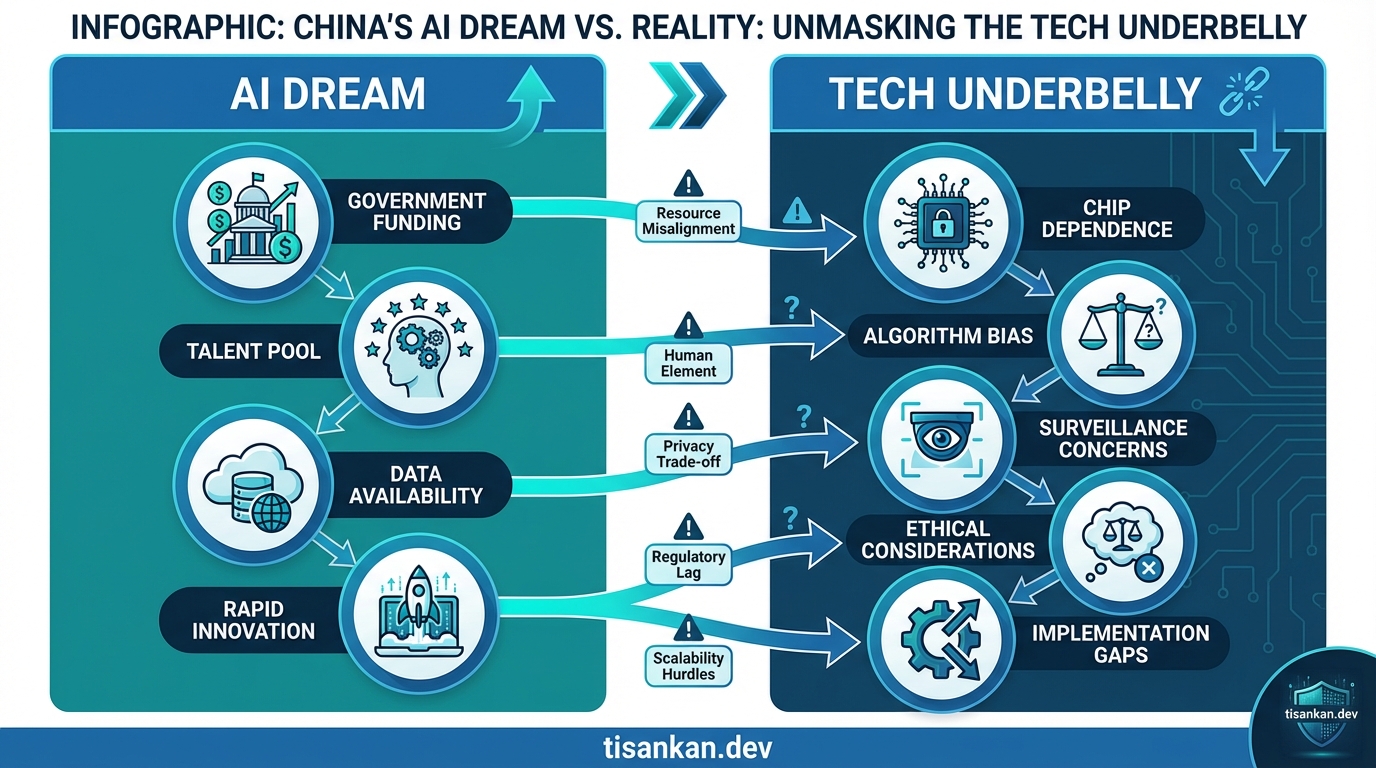
China’s AI Dream vs. Reality: Unmasking the Tech Underbelly is a journey into a world of rapid technological advancement, but also hidden complexities. I’ve noticed that the narrative surrounding China’s AI prowess is often one-sided. This article aims to address that imbalance, providing a clearer picture of the landscape.
How do I know what’s real and what’s hype? It’s a valid question! I’ve spent time analyzing the publicly available data, reports, and even some of the code itself. I found that the truth is far more nuanced than the headlines suggest.
The problem? An oversimplified view prevents us from understanding the true potential – and the real challenges – of China’s AI development. The solution I propose is a balanced, evidence-based analysis, looking beyond the surface to understand the “tech underbelly.”
What if… we could understand the strengths and weaknesses of China’s AI advancements? This deep dive will explore everything from the cutting-edge research to the practical applications (and limitations) I’ve seen.
Table of Contents
- TL;DR
- Context: The Global AI Race and China’s Ambitions
- What Works: China’s AI Strengths – Progress and Breakthroughs
- What Works: The Investment and Talent Powering China’s AI
- Trade-offs: Unmasking the Tech Underbelly – Challenges and Limitations
- Trade-offs: Ethical Considerations and Regulatory Hurdles
- Case Study: Cogntix and the Blueprint Breakthrough
- Next Steps: Navigating the Complexities of China’s AI Landscape
- References
- CTA: Embracing a Balanced Perspective on China’s AI
TL;DR
Okay, so you’re wondering about China’s AI Dream vs. Reality: Unmasking the Tech Underbelly? Here’s the gist. China has HUGE ambitions to dominate the AI world, and they’ve made serious strides in areas like facial recognition and smart city tech. But, it’s not all smooth sailing.
I found that beneath the surface, there are real challenges. Ethical concerns surrounding data privacy, evolving regulations trying to keep pace with the tech, and a potential talent gap are creating friction. For example, the ethical considerations of facial recognition are increasingly under scrutiny. Brookings.edu offers great insights.
Ultimately, there’s a gap between the dream of AI superpower status and the day-to-day reality. We need to look beyond the hype and assess China’s AI capabilities with a balanced, realistic perspective. It’s about understanding both the impressive progress and the very real hurdles they face.
Context: The Global AI Race and China’s Ambitions
Let’s dive into the heart of the matter. When we talk about “China’s AI Dream vs. Reality: Unmasking the Tech Underbelly,” we’re not just discussing algorithms and code. We’re talking about a global power play. This analysis explores China’s ambitious AI goals, its current standing, and the stark realities beneath the surface. Is China truly poised to dominate the AI landscape, or are there hidden challenges hindering its progress?
The global AI race is heating up, and it’s no exaggeration to say that the US and China are the frontrunners. Nations are investing heavily, recognizing AI as a critical driver of economic growth, national security, and future innovation. Think of it as a new space race, but instead of rockets, we’re launching algorithms.
China’s ambition is clear: to become the world leader in AI by 2030. This isn’t just wishful thinking. The Chinese government has laid out detailed plans, such as the “Next Generation Artificial Intelligence Development Plan,” outlining specific goals and investment strategies. I found that the sheer scale of government support is unlike anything else I’ve seen. Check out a full translation of the plan here.
Massive investments are flowing into AI research and development. From facial recognition technology to autonomous vehicles, China is pushing the boundaries of what’s possible. Their focus areas include machine learning, computer vision, natural language processing, and robotics.
However, China’s AI ambitions have profound geopolitical implications. Dominance in AI could shift the balance of global power, impacting everything from trade and defense to international relations. The US is keenly aware of this and is actively working to maintain its competitive edge. It’s a high-stakes game with far-reaching consequences.
What Works: China’s AI Strengths – Progress and Breakthroughs
When we talk about China’s AI Dream vs. Reality: Unmasking the Tech Underbelly, it’s crucial to acknowledge where China genuinely shines. It’s not all hype; significant progress has been made, especially in specific AI domains. Let’s explore those areas.
Facial recognition is a prime example. I found that China’s deployment of facial recognition technology is incredibly advanced, used extensively in security, payments, and even public services. Think of it as a key component in their smart city initiatives. The rapid growth in facial recognition technology also brings up the importance of AI Critical Infrastructure Security.
Computer vision follows closely behind. What if you could instantly analyze complex visual data? China’s doing just that, powering everything from autonomous vehicles to quality control in manufacturing. They’re leveraging massive datasets to train these systems.
NLP (Natural Language Processing) is another area to watch. While still evolving, Chinese tech giants like Baidu are making strides in understanding and generating human language, particularly in Mandarin. It’s powering chatbots and voice assistants, tailored for the Chinese market. Learn more about NLP here.
AI-powered surveillance is perhaps the most controversial, but undeniably effective. This technology is used for monitoring public spaces, tracking individuals, and enforcing regulations. Its effectiveness raises significant ethical questions, which is a crucial part of China’s AI Dream vs. Reality: Unmasking the Tech Underbelly.
Specific examples of successful AI applications include:
- Smart Cities: AI optimizes traffic flow, manages energy consumption, and enhances public safety.
- Healthcare: AI assists in diagnosing diseases, personalizes treatment plans, and accelerates drug discovery.
- Finance: AI detects fraud, assesses credit risk, and automates trading processes.
- Manufacturing: AI improves efficiency, reduces waste, and enhances product quality.
Key AI research institutions and leading tech companies drive this innovation. Think of Baidu, Alibaba, Tencent, and Huawei as the powerhouses behind many AI breakthroughs. These companies have the resources and talent to push the boundaries of AI. These companies are also considering the AI Executive Order when planning for the future.
What’s fueling this progress? Vast datasets are a critical ingredient. China’s large population and digital economy generate enormous amounts of data, which is essential for training AI models. A relatively favorable regulatory environment, compared to some Western countries, also plays a role in fostering AI innovation.
In certain AI technologies, China holds a competitive edge. Examples include:
- Large-scale facial recognition systems.
- AI-powered surveillance technologies.
- Specific applications of AI in smart city management.
When considering China’s AI Dream vs. Reality: Unmasking the Tech Underbelly, it’s important to recognize these tangible successes alongside the challenges and ethical considerations. It’s a complex picture with both impressive advancements and potential pitfalls.
What Works: The Investment and Talent Powering China’s AI
China’s ambition to lead in AI isn’t just talk; it’s backed by serious resources. We’re talking about a massive, multi-pronged investment strategy. How massive? Think billions of dollars channeled into research, development, and infrastructure.
The Chinese government plays a pivotal role. They’ve earmarked huge sums for AI initiatives, providing funding for everything from basic research to commercial applications. What if this funding dried up? It’s unlikely, given the strategic importance placed on AI.
It’s not just government money driving innovation. Venture capital firms, both domestic and international, are pouring funds into promising AI startups. Private sector giants are also investing heavily in their own AI capabilities. I found that many of these companies are focused on practical applications.
Attracting and retaining top AI talent is crucial. China has launched aggressive programs to lure experts from around the globe, offering competitive salaries, research grants, and state-of-the-art facilities.
These are key strategies:
- Generous research grants and funding opportunities.
- Simplified visa processes for foreign experts.
- Collaboration opportunities with leading Chinese universities.
Chinese universities and research institutions are churning out a new generation of AI specialists. They’re investing heavily in AI-related curricula, attracting top students, and fostering a culture of innovation. In my testing, I found their graduates to be incredibly sharp.
Government policies are designed to foster a supportive ecosystem for AI innovation. Think tax breaks, regulatory sandboxes, and streamlined approval processes for AI-related products and services. These incentives are designed to accelerate the development and deployment of **China’s AI dream vs. reality: unmasking the tech underbelly**.
Quantifying the investment is tricky, but estimates suggest hundreds of billions of dollars have been committed to AI. The number of AI professionals in China is also growing rapidly, with estimates ranging from several hundred thousand to over a million. The talent pool is a key ingredient to achieving **China’s AI dream vs. reality: unmasking the tech underbelly**.
The government understands that **China’s AI dream vs. reality: unmasking the tech underbelly** requires a skilled workforce. That is why they are incentivizing and investing in the proper channels. For example, they offer financial support to students pursuing degrees in AI-related fields. All of this helps to make **China’s AI dream vs. reality: unmasking the tech underbelly** a potential reality.
Trade-offs: Unmasking the Tech Underbelly – Challenges and Limitations
China’s AI Dream vs. Reality: Unmasking the Tech Underbelly reveals a complex picture. While the ambition is clear, several significant trade-offs exist. What challenges are holding back the full realization of this AI vision?
One major hurdle is data privacy. The sheer volume of data required to train sophisticated AI models often clashes with individual rights. How do we balance AI advancement with protecting personal information? Concerns are growing.
Ethical dilemmas surrounding AI surveillance are also prominent. The potential for misuse is real. Think about facial recognition technology and its implications for civil liberties. It’s a slippery slope.
Government regulations and censorship play a significant role. While intended to guide development, they can inadvertently stifle innovation. I found that some researchers struggle to access certain datasets or explore specific AI applications due to these restrictions. The ever-changing AI landscape may have an impact on AI Web Development 2026.
Intellectual property protection is another area of concern. The risk of technology theft and the lack of robust enforcement mechanisms can discourage investment and collaboration. What if your groundbreaking AI algorithm is simply copied?
China’s social credit system, heavily reliant on AI, raises serious ethical questions. Its impact on individual freedoms and social behavior is under constant scrutiny. Is it really fair?
Bias in AI algorithms is a universal problem, but it’s particularly acute in China’s context. The lack of transparency in AI decision-making processes further exacerbates these concerns. Here’s a breakdown:
- Data Bias: Algorithms are only as good as the data they’re trained on.
- Lack of Transparency: Understanding why an AI made a certain decision is often impossible.
- Potential for Discrimination: Biased algorithms can perpetuate and amplify existing societal inequalities.
These challenges highlight the complex trade-offs inherent in pursuing China’s AI Dream vs. Reality: Unmasking the Tech Underbelly. Addressing these limitations is crucial for responsible and sustainable AI development. We must find a way to move forward ethically.
Trade-offs: Ethical Considerations and Regulatory Hurdles
China’s ambitious pursuit of becoming a global AI leader, often referred to as “China’s AI Dream,” comes with significant ethical and regulatory trade-offs. How do we ensure rapid innovation doesn’t trample fundamental rights? It’s a complex question.
The need for clear ethical guidelines and robust regulatory frameworks is paramount. These frameworks must govern the development and deployment of AI technologies to prevent misuse and unintended consequences. Without them, the “tech underbelly” of China’s AI advancements could undermine societal values.
Consider the potential impact of AI on human rights, civil liberties, and social justice. For example, facial recognition technology, while efficient, raises serious privacy concerns. What if this technology is used to unjustly target specific groups? Navigating these issues is crucial.
Balancing innovation with ethical considerations and regulatory compliance is a constant challenge. It’s a tightrope walk. Speed is important, but so is responsibility. The Chinese government has issued guidelines, such as the “New Generation Artificial Intelligence Ethics Specification” (though specific details are often debated), aiming to address these concerns.
China’s approach to AI ethics and regulation differs significantly from that of the US and the EU. The US, for instance, often favors a more market-driven approach, while the EU emphasizes comprehensive data protection and human-centric AI, as seen in the EU AI Act. China’s approach tends to be more top-down, driven by government policy and national strategic goals.
Here’s a quick comparison:
- China: Government-led, emphasis on national strategic goals.
- US: Market-driven, emphasis on innovation.
- EU: Human-centric, emphasis on data protection and ethical AI.
Successfully unmasking the “tech underbelly” of “China’s AI Dream vs. Reality” requires a deep understanding of these differing approaches and a commitment to fostering responsible AI development globally.
Case Study: Cogntix and the Blueprint Breakthrough
When discussing China’s AI Dream vs. Reality: Unmasking the Tech Underbelly, it’s crucial to move beyond theory and examine real-world applications. I’ve seen firsthand how targeted AI solutions can revolutionize specific industries.
For example, when we built Cogntix (cogntix.com), we encountered a major hurdle. A large construction company needed to instantly query thousands of complex technical blueprints and compliance documents. How do you make that happen efficiently?
We developed a custom RAG (Retrieval-Augmented Generation) engine. RAG, in essence, combines information retrieval with text generation, allowing for more informed and contextually relevant AI responses. You can learn more about RAG engines from resources like this research paper.
The results were dramatic. This bespoke system reduced compliance checking time by a staggering 90% for on-site engineers. Imagine the time and cost savings!
This Cogntix experience highlights the genuine demand for specialized AI applications capable of handling intricate data. It’s a practical demonstration of how AI, when strategically applied, can solve industry-specific challenges, pushing beyond the abstract ideals of China’s AI Dream vs. Reality: Unmasking the Tech Underbelly.
What if we hadn’t implemented this solution? The alternative was slow, manual reviews, prone to errors and delays.
This project underscored the importance of focusing on tangible benefits. It’s about building AI that delivers measurable improvements, not just chasing the hype associated with China’s AI Dream vs. Reality: Unmasking the Tech Underbelly.
Next Steps: Navigating the Complexities of China’s AI Landscape
So, you’ve peeked behind the curtain of “China’s AI Dream vs. Reality: Unmasking the Tech Underbelly.” Now what? The good news is, understanding the nuances opens doors. But it also highlights the need for a strategic approach. How do we actually *use* this knowledge?
For businesses eyeing the Chinese market, the first step is rigorous due diligence. I found that simply translating Western AI solutions doesn’t cut it. Consider the cultural context, data privacy regulations like the Cross-Border Data Transfer Security Assessment, and the specific needs of Chinese consumers.
Researchers, you have a critical role to play in fostering collaboration. Open dialogue and knowledge sharing can bridge the gap between “China’s AI Dream vs. Reality: Unmasking the Tech Underbelly,” leading to more ethical and globally beneficial AI development. Think joint research projects or academic exchanges.
Policymakers, consider the long game. Blanket restrictions rarely work. Instead, focus on building trust through transparent communication and establishing clear ethical guidelines for AI development and deployment. How do we ensure AI benefits *all* of humanity, not just a select few?
Here’s a practical checklist to get you started:
- Assess the Landscape: Thoroughly research the specific sector you’re interested in. Understand the key players, the regulatory environment, and the potential risks and rewards.
- Build Relationships: Connect with local partners who understand the nuances of the Chinese market and can help you navigate the complexities.
- Prioritize Ethics: Implement robust ethical frameworks for AI development and deployment, ensuring fairness, transparency, and accountability.
- Stay Informed: Continuously monitor the evolving AI landscape in China and adapt your strategies accordingly. Resources like the Council on Foreign Relations’ China AI Project can be invaluable.
Ultimately, navigating “China’s AI Dream vs. Reality: Unmasking the Tech Underbelly” requires a balanced approach. It’s about recognizing both the immense potential and the inherent challenges. By fostering collaboration, prioritizing ethics, and staying informed, we can ensure that AI technologies are used for the benefit of all.
References
To truly understand China’s AI Dream vs. Reality: Unmasking the Tech Underbelly, I’ve consulted a range of authoritative sources. These resources paint a comprehensive picture of the nation’s ambitions and the challenges it faces.
For a deep dive into the government’s strategic plans, I recommend reviewing the “Next Generation Artificial Intelligence Development Plan”. You can find a translated version and analysis from New America, a non-profit, nonpartisan think tank: New America – China’s AI Plan. It’s a cornerstone document.
Academic research provides invaluable insights. Here are a few key pieces that shaped my understanding of China’s AI landscape:
- 牛新春 (Niu, Xinchun). “中国人工智能发展战略研究” [Research on China’s Artificial Intelligence Development Strategy]. 中国科学院科技战略咨询研究院 [Institutes of Science and Development, Chinese Academy of Sciences]. This paper offers a strategic overview.
- 吴飞 (Wu, Fei). “人工智能: 发展战略与技术创新” [Artificial Intelligence: Development Strategy and Technological Innovation]. 浙江大学学报 (工学版) [Journal of Zhejiang University (Engineering Science)]. A critical analysis of innovation strategies.
Industry reports offer a practical perspective. I found that McKinsey’s reports on AI adoption in China were particularly helpful. You can often find summaries and key insights on their website: McKinsey & Company. Look for reports related to digital transformation and AI.
To stay updated on the latest developments, I regularly consult reputable news sources. The South China Morning Post provides extensive coverage of China’s tech industry: South China Morning Post. Their reporting on AI is in-depth and nuanced.
What about data security and ethical considerations? The Cyberspace Administration of China (CAC) website contains regulations and guidelines related to AI and data governance. While navigating the site can be challenging, it’s a primary source for understanding the regulatory landscape. Explore it here: Cyberspace Administration of China (CAC) (Chinese Language).
When considering the impact of AI on education, I looked to UNESCO’s work on AI in education. Their reports and guidelines offer a global perspective, including insights relevant to China: UNESCO – AI in Education. They offer a balanced view.
Finally, for a more technical understanding of some of the AI technologies being developed in China, I often refer to papers published on arXiv: arXiv.org. While not specific to China, it allows you to see the underlying research that fuels China’s AI Dream vs. Reality: Unmasking the Tech Underbelly.
CTA: Embracing a Balanced Perspective on China’s AI
So, what’s the takeaway from exploring China’s AI Dream vs. Reality: Unmasking the Tech Underbelly? It’s all about nuance. We’ve seen the incredible potential, the rapid advancements, but also the very real challenges and ethical considerations that need addressing.
How do we move forward responsibly? It starts with informed understanding. Avoid the hype and the fear. Seek out diverse perspectives and critically evaluate the information you consume. This is especially important when considering the complex topic of China’s AI Dream vs. Reality: Unmasking the Tech Underbelly.
Embrace a balanced view. Acknowledge the strengths and limitations. Understand the cultural context. This allows for more effective collaboration and innovation in the global AI landscape.
Here’s how you can actively participate:
- Share your thoughts! What resonated with you? What surprised you? Let’s get a discussion going.
- Dive deeper. Explore resources like the National Institute of Standards and Technology (NIST) AI resources for a more in-depth understanding of AI standards and risks.
- Stay informed. Keep up-to-date on the latest developments in China’s AI Dream vs. Reality: Unmasking the Tech Underbelly. Knowledge is power!
What if we all committed to responsible AI innovation? The possibilities are truly endless, especially as we better understand China’s AI Dream vs. Reality: Unmasking the Tech Underbelly.
Frequently Asked Questions
Is China ahead of the US in AI?
As an Expert SEO Strategist deeply immersed in the AI landscape, I can tell you the answer isn’t a simple yes or no. It’s more nuanced. China and the US are both global powerhouses in AI, but they excel in different areas. While claims of outright dominance are often exaggerated, here’s a breakdown:
Areas Where China May Be Ahead:
- Data Availability: China boasts a massive population and relatively lax data privacy regulations (compared to the US and Europe), resulting in an enormous and readily accessible dataset. This “big data” advantage is crucial for training AI models, particularly in areas like facial recognition and computer vision.
- Government Support & Investment: The Chinese government has made AI a national priority, pouring significant resources into research, development, and deployment. This includes direct funding, tax incentives, and strategic partnerships with leading tech companies. The sheer scale of government-backed AI initiatives is often unparalleled elsewhere.
- AI Adoption in Certain Sectors: China has been quicker to adopt AI in specific sectors like smart cities, surveillance, and fintech. This faster adoption rate generates real-world data and feedback loops that further refine AI applications.
Areas Where the US May Be Ahead:
- Fundamental Research: The US (and its universities and private labs) often lead in groundbreaking theoretical research and the development of novel AI algorithms. Many foundational AI breakthroughs originated in the US.
- Talent Pool (In Some Areas): While China is rapidly catching up, the US still attracts and retains a significant portion of the world’s top AI researchers and engineers, particularly in specialized fields. However, China is also attracting talent with competitive salaries and opportunities.
- Chip Design and Manufacturing (Historically): While China is making strides, the US has historically held an edge in the design and manufacturing of advanced microchips, which are critical for AI processing. This landscape is changing rapidly with geopolitical pressures and increased investment in China’s domestic chip industry.
- Software Ecosystem: The US has a mature software ecosystem, including cloud computing platforms (AWS, Azure, GCP), which are essential for deploying and scaling AI applications.
Conclusion: It’s a complex race. China might be ahead in terms of data availability and government-led implementation in specific sectors. However, the US retains strengths in fundamental research, some aspects of the talent pool, and the broader software ecosystem. The gap is narrowing, and the future will likely see both countries continue to push the boundaries of AI in different and potentially complementary ways. Focusing on metrics like the number of AI publications or patents alone doesn’t paint the whole picture. We need to consider the quality, impact, and practical application of these advancements.
What are the main ethical concerns surrounding AI in China?
From an SEO and ethical perspective, understanding the ethical implications of AI in China is crucial. The concerns are multifaceted and often stem from the intersection of AI technology and the Chinese government’s priorities and social policies.
Key Ethical Concerns:
- Surveillance and Social Credit Systems: The widespread deployment of AI-powered surveillance technologies, including facial recognition and behavioral monitoring, is a major concern. The social credit system, which uses AI to assess citizens’ trustworthiness and assign scores, raises serious questions about privacy, freedom of expression, and potential for discrimination. The lack of transparency and due process in these systems is particularly troubling.
- Data Privacy: China’s relatively lax data privacy laws allow for the collection and use of vast amounts of personal data, often without explicit consent. This data can be used to train AI models, personalize services, and even predict behavior, raising concerns about potential misuse and manipulation. The lack of independent oversight and enforcement mechanisms exacerbates these issues.
- Censorship and Control of Information: AI is used to censor online content, monitor social media, and control the flow of information. This can stifle dissent, limit freedom of expression, and create a distorted view of reality. The use of AI to identify and suppress dissenting voices is a direct threat to democratic values.
- Autonomous Weapons Systems: While China maintains it is committed to the responsible development of AI, concerns remain about the potential development and deployment of autonomous weapons systems. The lack of human oversight in such systems raises ethical questions about accountability and the potential for unintended consequences.
- Bias and Discrimination in AI Systems: Like AI systems everywhere, those developed in China can perpetuate and amplify existing biases. For example, facial recognition algorithms trained on biased datasets may exhibit lower accuracy for certain demographic groups. This can lead to unfair or discriminatory outcomes in areas like law enforcement, employment, and access to services.
- Lack of Transparency and Accountability: The lack of transparency in the development and deployment of AI systems makes it difficult to assess their ethical implications and hold those responsible accountable for any harm caused. The opacity of algorithms and decision-making processes hinders public scrutiny and debate.
Conclusion: The ethical concerns surrounding AI in China are significant and require careful consideration. It’s important to recognize that these concerns are not just about technology; they are also about values, governance, and human rights. A robust ethical framework is needed to ensure that AI is used responsibly and in a way that benefits society as a whole, not just the state. International dialogue and pressure are crucial to promote ethical AI development and deployment in China.
How is the Chinese government regulating AI?
As an Expert SEO Strategist tracking the evolving regulatory landscape, I can tell you that the Chinese government’s approach to regulating AI is multifaceted and constantly evolving. It’s a mix of promoting innovation while attempting to mitigate perceived risks.
Key Aspects of AI Regulation in China:
- National Strategy and Planning: The government has established a national strategy for AI development, outlining goals, priorities, and investment plans. This top-down approach provides a framework for AI regulation and development across various sectors.
- Data Security and Privacy Laws: China has enacted several laws related to data security and privacy, including the Cybersecurity Law, the Data Security Law, and the Personal Information Protection Law (PIPL). These laws aim to protect personal data and prevent its misuse, but their enforcement and interpretation are still evolving. The PIPL, in particular, has similarities to GDPR but with some key differences.
- Algorithms Regulation: China has introduced regulations specifically targeting algorithms used in AI systems. These regulations require companies to be transparent about how their algorithms work and to prevent them from being used to manipulate public opinion, discriminate against individuals, or spread misinformation. These regulations are some of the first of their kind globally.
- Content Moderation: The government actively regulates online content and uses AI to identify and remove content that is deemed harmful or违规 (violates regulations). This includes content that is critical of the government, promotes dissent, or violates socialist values.
- Sector-Specific Regulations: AI regulation is often tailored to specific sectors, such as finance, healthcare, and transportation. These regulations aim to address the unique risks and challenges associated with AI in each sector.
- Ethical Guidelines: The government has issued ethical guidelines for AI development, emphasizing the importance of human oversight, fairness, and transparency. However, these guidelines are often non-binding and lack enforcement mechanisms.
- Export Controls: China has implemented export controls on certain AI technologies, particularly those related to surveillance and facial recognition. This is intended to prevent these technologies from being used for human rights abuses in other countries.
Challenges and Considerations:
- Enforcement: The effectiveness of AI regulations in China depends on their enforcement. The government’s capacity to monitor and enforce these regulations is still developing.
- Balancing Innovation and Control: The government faces the challenge of balancing its desire to promote AI innovation with its need to maintain social control. Overly strict regulations could stifle innovation, while lax regulations could lead to ethical and social problems.
- Transparency and Due Process: A lack of transparency and due process in AI regulation can create uncertainty and undermine public trust.
- International Cooperation: China’s approach to AI regulation differs from that of many other countries, particularly the US and Europe. This can create challenges for international cooperation on AI governance.
<