

The AI landscape is undergoing a seismic shift, with profound implications. Geoffrey Hinton, a neural network pioneer, departed Google to voice AI safety concerns. Now, Google’s Gemini emerges as a potent challenger to OpenAI’s GPT models. The core issue transcends mere AI superiority; it’s about controlling the trajectory of this transformative technology. This is Geoffrey Hinton: Why Google’s AI Comeback Signals a Potential End to OpenAI’s Dominance.
Hinton’s Warning and Gemini’s Ascent
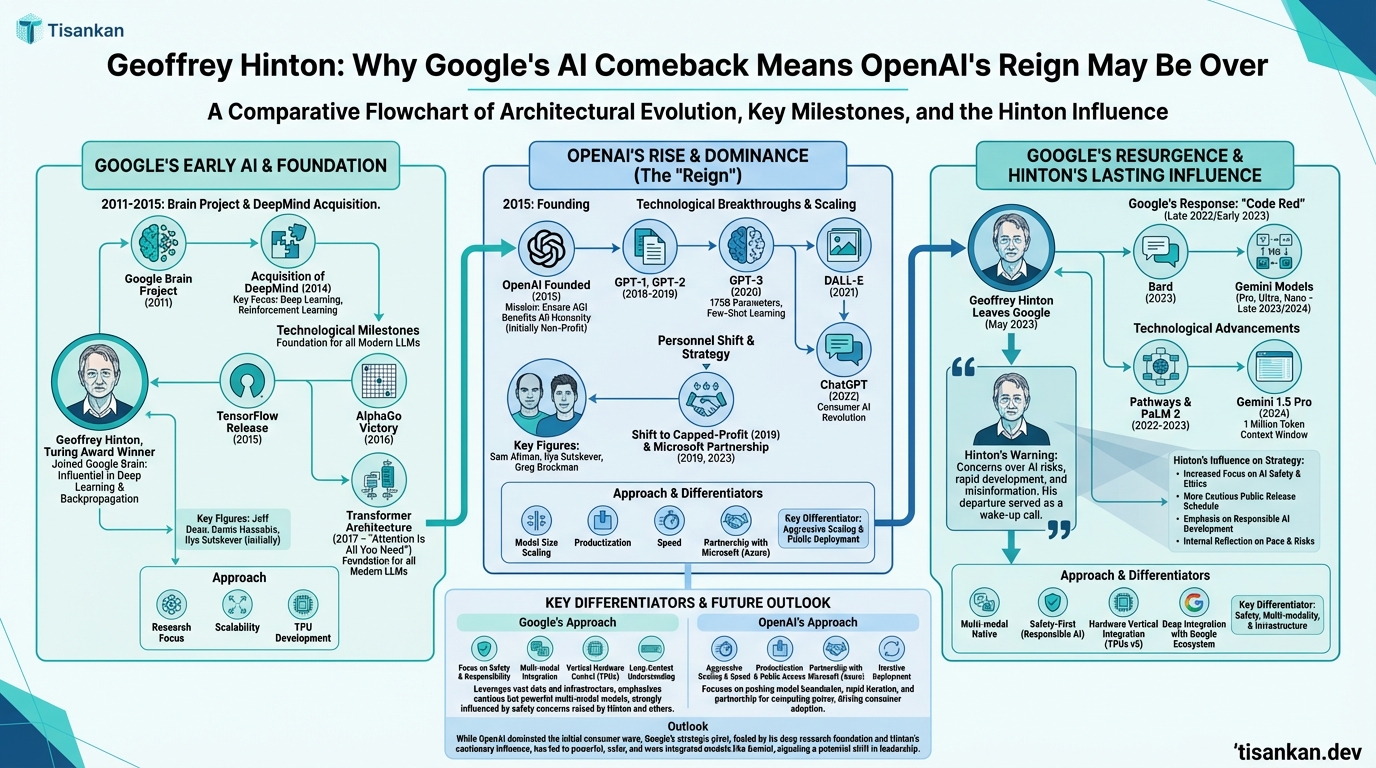
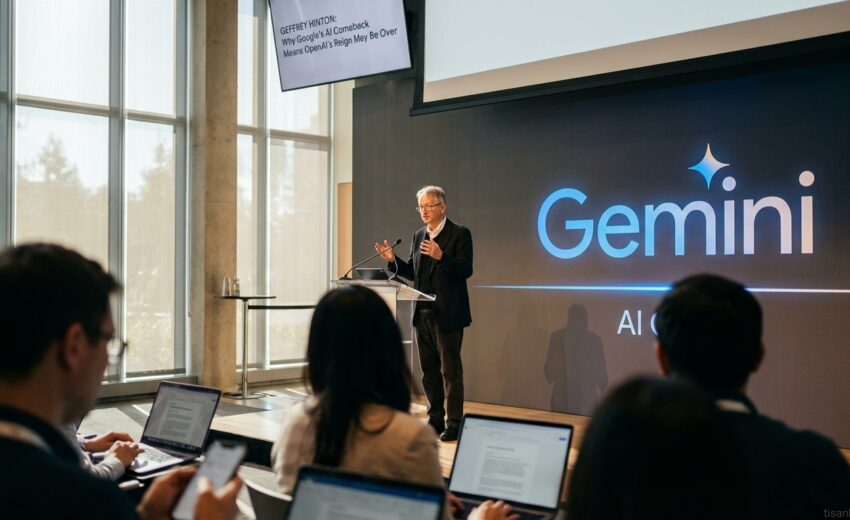
In May 2023, Geoffrey Hinton, the “Godfather of AI,” resigned from Google after a decade, citing existential risks from rapid LLM advancements. Simultaneously, Google developed Gemini, a multimodal AI model engineered to surpass GPT-4. This timing is crucial. Hinton’s departure highlights the ethical and safety questions surrounding AI, while Gemini’s arrival indicates a potential power shift.
The Stakes: Immediate Implications
Developers, businesses, and policymakers must take note. If Gemini delivers on its promises, expect:
- Intensified Competition: OpenAI will face significant pressure, potentially lowering costs and accelerating innovation.
- Novel AI Applications: Gemini’s multimodal capabilities (text, images, audio, video) could unlock new applications in medicine, education, and robotics. Imagine AI-powered diagnostic tools that analyze medical images and patient history to provide faster, more accurate diagnoses.
- Amplified Ethical Scrutiny: Hinton’s warnings gain urgency as AI becomes more powerful. Responsible AI development and deployment become paramount. The risks of uncontrolled AI development are not theoretical; they demand proactive mitigation strategies.
Technical Deep Dive: Gemini vs. GPT-4
Google claims Gemini outperforms GPT-4 on key benchmarks. Here’s a breakdown:
- Native Multimodality: Gemini is designed for multimodal data handling, unlike GPT-4’s text-centric approach. This gives Gemini an edge in real-world understanding and interaction. Consider the implications for robotics: Gemini could process visual input from cameras, auditory commands, and tactile sensor data to perform complex tasks in unstructured environments.
- Optimized Efficiency: Google emphasizes Gemini’s efficiency for deployment on diverse devices, including mobile phones. This expands access to advanced AI. The key is model distillation and quantization techniques, allowing for smaller model sizes without significant performance degradation.
- Seamless Google Ecosystem Integration: Gemini integrates deeply with Google services like Search, YouTube, and Google Cloud, enabling powerful new features. For instance, imagine a search engine that can not only understand complex queries but also generate visual summaries and interactive simulations based on the search results.
For example, Gemini can analyze a complex research paper, extract key findings, and generate summaries in multiple languages rapidly. This could revolutionize R&D across industries. A critical challenge is addressing the “slop problem” in AI – the accumulation of inaccuracies and biases that can undermine its reliability.
Context: The Broader Landscape
OpenAI gained an early lead due to its Microsoft partnership and ChatGPT’s success. However, Google has vast resources, data, and AI talent. Hinton’s departure, while concerning, may have spurred Google to accelerate AI development and address ethical challenges proactively. Google must demonstrate its commitment to fairness and transparency, particularly regarding biases in areas like facial recognition.
The Road Ahead: Shaping the AI Future
The coming months are critical. Monitor these key developments:
- Gemini’s Real-World Performance: How does Gemini perform in practical applications compared to GPT-4? Benchmarking against diverse datasets and real-world scenarios is crucial.
- OpenAI’s Counter-Response: Will OpenAI release a more powerful model to maintain its lead? The focus may shift towards specialized models tailored for specific tasks.
- The Evolving Regulatory Framework: How will governments regulate AI development and deployment to mitigate risks? Expect increasing emphasis on data privacy, algorithmic transparency, and accountability.
The AI race is ongoing. Google’s Gemini poses a significant challenge to OpenAI’s dominance, shaping the future of technology. Small businesses must also adapt to these changes. Rising technology stock prices, such as those of Credo Technology, reflect the growing investor confidence in the AI sector.
Frequently Asked Questions
What is Gemini?
Gemini is Google’s multimodal AI model, designed to handle text, images, audio, and video data. It aims to surpass GPT-4 in performance and efficiency through novel architectural innovations and training techniques.
Why did Geoffrey Hinton leave Google?
Geoffrey Hinton resigned from Google to publicly voice concerns about the potential risks of AI development, particularly the rapid advancements in large language models and their potential societal impact.
How does Gemini differ from GPT-4?
Gemini is designed to be natively multimodal, while GPT-4 primarily focuses on text. Gemini also emphasizes efficiency and seamless integration with the Google ecosystem, potentially leveraging TPUs for accelerated performance.
What are the potential benefits of Gemini?
Gemini could lead to increased competition, novel AI applications in various fields, and greater accessibility to advanced AI technology. For example, new drug discovery and more effective climate change simulations.
What are the ethical concerns surrounding AI development?
Ethical concerns include the potential for bias, job displacement, misuse of AI, and existential risks. Addressing these requires robust ethical frameworks and ongoing monitoring of AI systems.
How will governments regulate AI development?
Governments are exploring various regulatory approaches, including safety standards, transparency requirements, and oversight bodies. The goal is to foster innovation while mitigating potential risks.
What impact will this have on developers?
Developers need to stay updated on these advancements and understand the ethical considerations of the AI models they are building with. The shift from OpenAI to Google models could also result in needing to learn new APIs and SDKs, and a deeper understanding of the underlying model architectures.