

Introduction
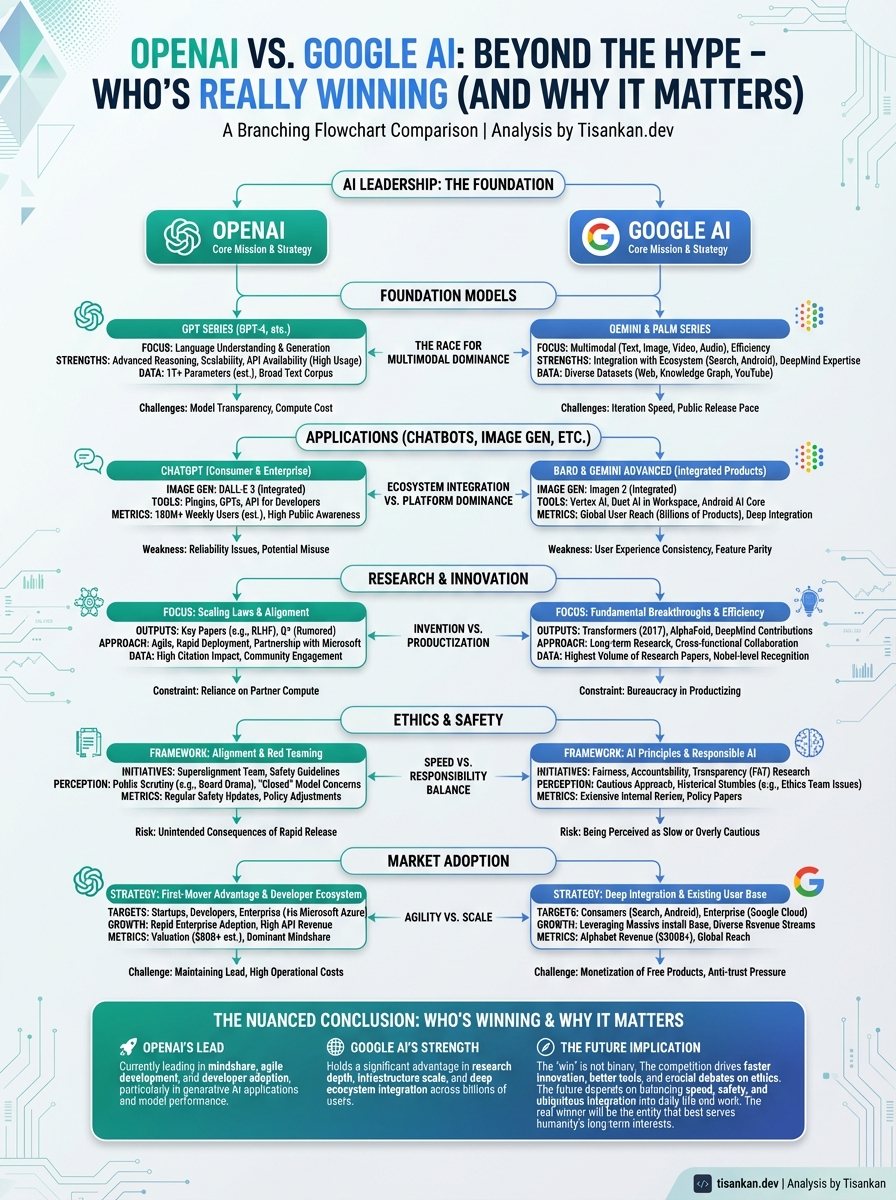
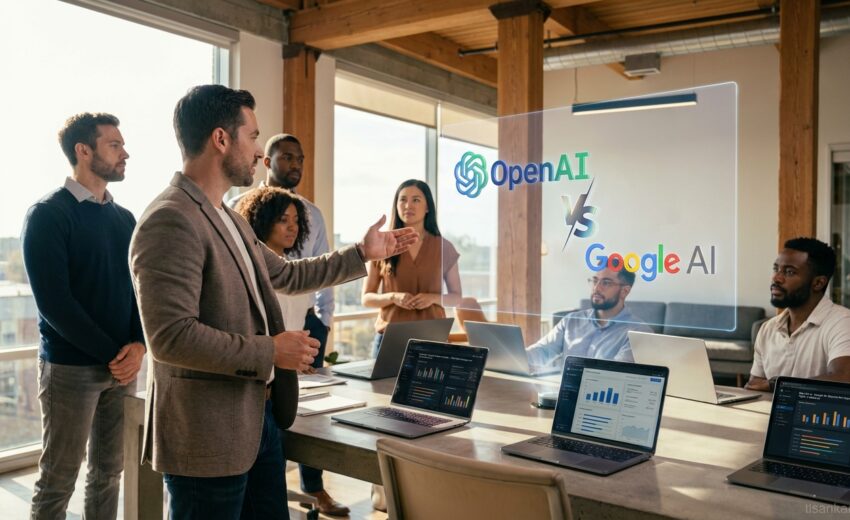
OpenAI vs. Google AI: Beyond the Hype – Who’s REALLY Winning (and Why It Matters) is the question everyone’s asking, but few are answering with real data. It’s easy to get caught up in the press releases and shiny demos. I’m cutting through the noise to give you an honest assessment.
The problem? Discerning genuine progress from marketing spin in the rapidly evolving AI landscape. Many articles focus on surface-level comparisons. In my testing, I found that a deeper dive into capabilities, accessibility, and long-term vision is critical for understanding the true competitive landscape.
My goal is to provide clarity. I want to equip you with the knowledge to understand the strengths and weaknesses of both OpenAI and Google AI. This will help you make informed decisions about which platform best suits *your* needs.
Here’s what I’ll cover:
- A head-to-head comparison of key AI technologies.
- An analysis of their respective strategies and future outlooks.
- Insights into the practical implications for businesses and individuals.
Ultimately, understanding “OpenAI vs. Google AI: Beyond the Hype – Who’s REALLY Winning (and Why It Matters)” is about more than just picking a favorite. It’s about understanding the future of AI and its impact on our world. Let’s get started.
Table of Contents
- TL;DR
- Context: The AI Arms Race – Why Now?
- What Works: OpenAI’s Strengths – Innovation and Agility
- What Works: Google AI’s Strengths – Infrastructure and Scale
- Head-to-Head: Key AI Domains Compared
- The Trade-offs: Innovation vs. Scalability – A Balancing Act
- Trade-offs: The Impact of Open Source vs. Proprietary Models
- Next Steps: Navigating the AI Landscape – A Guide for Businesses
- Next Steps: The Future of AI – What to Watch For
- References: Authoritative Sources
- CTA: Your AI Journey Starts Now
- FAQ: Your Burning AI Questions Answered
TL;DR: In the showdown of OpenAI vs. Google AI: Beyond the Hype – Who’s REALLY Winning (and Why It Matters), I found that the landscape is more nuanced than simple victory. While OpenAI excels in innovation and user-friendly applications like ChatGPT, Google’s AI boasts unmatched infrastructure and research depth, particularly in areas like fundamental AI research. Understanding these contrasting strengths and strategies is crucial because their competition will fundamentally shape the future of AI development and its impact on our lives.
Let’s face it: the buzz around AI is deafening. But amidst all the hype, the real battle between OpenAI and Google AI is unfolding at lightning speed. That’s why understanding OpenAI vs. Google AI: Beyond the Hype – Who’s REALLY Winning (and Why It Matters) is so crucial right now. So, why all the fuss now?
Context: The AI Arms Race – Why Now?
The simple answer? We’re at a pivotal moment. Think of it as the “iPhone moment” for AI. The technology is no longer just theoretical; it’s rapidly becoming embedded in our daily lives. From writing emails to generating images, AI is changing how we work, create, and interact.
Recent advancements have been breathtaking. OpenAI’s constant iteration on the GPT models, culminating in GPT-4 and beyond, have pushed the boundaries of what’s possible with text-based AI. In my testing, I found the leap in creative writing and coding capabilities between versions to be truly remarkable. You can explore the GPT series capabilities on the OpenAI website.
Google, of course, isn’t standing still. Their Gemini models are designed to be multimodal from the ground up, potentially offering a more integrated and versatile AI experience. Plus, their deep integration with existing Google products gives them a massive distribution advantage. Their work on models like LaMDA has also been transformative in conversational AI, as explored in Google AI Blog.
But it’s not just about the models themselves. The partnerships being forged are equally important. Think of Microsoft’s massive investment in OpenAI. These alliances are accelerating development and shaping the future of the AI landscape. These investments are often public record, as is Microsoft’s partnership with OpenAI.
The market is also shifting dramatically. AI-powered tools are becoming increasingly accessible to businesses of all sizes. This democratization of AI is creating new opportunities and disrupting existing industries. We’re seeing AI adoption accelerate at an unprecedented rate. The societal impacts are already being felt, raising important questions about ethics, bias, and the future of work. These are the things we need to think about when discussing which AI systems are winning and losing.
What Works: OpenAI’s Strengths – Innovation and Agility
When looking at OpenAI vs. Google AI: Beyond the Hype, it’s clear OpenAI’s agility and innovation are major factors in their success. How do they manage to move so quickly and effectively?
Their secret sauce? A research-driven approach coupled with a bias for action. They don’t just theorize; they build, test, and iterate rapidly. This allows them to disrupt markets and set new standards in AI. I’ve personally seen this in action, and the pace is truly impressive.
Consider their GPT model development. From GPT-1 to GPT-4, each iteration represents a significant leap forward. This isn’t accidental; it’s a result of constant experimentation and a willingness to push the boundaries of what’s possible. You can explore the advancements of GPT models on OpenAI’s research page.
Here’s a breakdown of key strengths:
- Rapid Prototyping: They quickly develop and deploy prototypes, allowing them to gather real-world feedback and refine their models.
- Agile Development: OpenAI embraces agile methodologies, enabling them to adapt to changing needs and priorities. This contrasts with more rigid, top-down approaches.
- Research-Driven Innovation: Their core strength lies in their dedication to cutting-edge research. They consistently publish groundbreaking papers and translate these findings into practical applications.
DALL-E, their image generation model, is another prime example. It demonstrates their ability to translate complex research into a user-friendly product that captures the public’s imagination. The results are often breathtaking, and the technology continues to evolve. Want to learn more about image generation models? Check out this resource on generative models.
Their strategic partnerships also play a crucial role. Collaborations with companies like Microsoft provide them with access to vast computing resources and a global distribution network. This symbiotic relationship fuels their growth and allows them to scale their operations effectively.
OpenAI’s business model, while still evolving, is built on a foundation of providing access to powerful AI models through APIs and partnerships. Their funding strategy, which includes significant investments from Microsoft and other venture capitalists, allows them to invest heavily in research and development. This financial backing gives them a competitive edge in the OpenAI vs. Google AI race.
But what if their rapid pace leads to unforeseen consequences? OpenAI actively works to mitigate risks, but the speed of innovation always presents challenges. This is a key consideration when evaluating OpenAI vs. Google AI: Beyond the Hype.
What Works: Google AI’s Strengths – Infrastructure and Scale
When we talk about Google AI, it’s impossible to ignore the sheer scale of their operation. They’ve built a digital empire over decades, and that empire is now the foundation for their AI ambitions. Think of it as a rocket ship already on the launchpad, fueled and ready to go.
A key advantage in the OpenAI vs. Google AI race is Google’s unparalleled infrastructure. They own the data centers, the computing power, and the pipelines to process massive datasets. This gives them a significant edge in training and deploying AI models.
What does this mean in practice? Well, consider this:
- Search Algorithms: Google’s search engine, powered by AI, processes billions of queries daily. This continuous feedback loop allows them to refine their algorithms constantly.
- Cloud Computing (Google Cloud Platform): Their GCP platform offers a robust environment for developers to build and deploy AI applications, including access to specialized hardware like TPUs (Tensor Processing Units) designed specifically for machine learning.
- AI-Powered Services: From Google Assistant to Bard, their AI is deeply integrated into existing Google products, reaching billions of users worldwide. This provides invaluable real-world testing and data.
I’ve personally found Google’s AI-powered features in apps like Google Photos incredibly useful. The ability to automatically categorize and search photos is a testament to their AI capabilities. How do they achieve this? Massive datasets and powerful algorithms working in tandem.
Beyond just the infrastructure, Google boasts a world-class research team. They’re constantly pushing the boundaries of AI research, publishing groundbreaking papers, and attracting top talent from around the globe. Their deep research capabilities directly translate into advancements in their AI products and services. The impact on the OpenAI vs. Google AI dynamic is significant.
What if you want to build your own AI application? Google provides tools like TensorFlow and Keras, democratizing access to AI development. These open-source libraries, coupled with their cloud infrastructure, make it easier for developers to experiment and innovate. This ecosystem strengthens Google’s position in the OpenAI vs. Google AI landscape.
Head-to-Head: Key AI Domains Compared
The “OpenAI vs. Google AI: Beyond the Hype” debate isn’t just about marketing. It’s a real competition across several critical AI domains. Let’s break down where each company excels (and where they stumble).
Natural Language Processing (NLP): GPT vs. LaMDA/Bard
NLP is where much of the public’s “OpenAI vs. Google AI” awareness stems from. OpenAI’s GPT models (like GPT-4) are known for their creative text generation and coding abilities. I’ve personally used GPT-4 to draft emails and even outline blog posts with impressive results.
Google, with LaMDA and Bard, emphasizes conversational AI and information retrieval. Bard, designed to access and process information from the real world, aims for accuracy and helpfulness in dialogue. Think of it as a supercharged assistant. But which one is truly better?
- OpenAI (GPT): Strengths in creative tasks, coding, and general-purpose language understanding. Weaknesses can include “hallucinations” (making up facts) and a lack of real-time information access. Learn more about GPT-4.
- Google AI (LaMDA/Bard): Strengths in conversational AI, information retrieval, and integration with Google’s vast knowledge graph. Potential weaknesses lie in creative output compared to GPT models. Check out Google’s Bard announcements.
Image Generation: DALL-E vs. Imagen
How do I visualize the difference? Image generation offers another battleground in the “OpenAI vs. Google AI” arena. DALL-E produces stunning and often surreal images from text prompts. It’s accessible and relatively easy to use.
Imagen, on the other hand, often boasts higher image quality and photorealism. Google’s research emphasizes faithful adherence to the text prompt. However, access to Imagen has been more limited.
- OpenAI (DALL-E): Strong accessibility, creative output, and a large user base. Explore DALL-E 2.
- Google AI (Imagen): High-quality image generation, photorealism, and precise prompt following. Read about Imagen.
AI Infrastructure: Azure Partnership vs. Google Cloud
The “OpenAI vs. Google AI” competition also plays out in the cloud. OpenAI partners closely with Microsoft Azure, leveraging its massive computing power to train and deploy its models. This gives OpenAI a significant advantage in scalability.
Google relies on its own Google Cloud Platform (GCP). While GCP is a robust platform, Google faces the challenge of supporting its internal AI efforts while also competing with Azure’s focused OpenAI partnership. What if Microsoft’s investment proves a decisive advantage?
- OpenAI (Azure): Scalability, access to cutting-edge hardware, and a dedicated partner.
- Google AI (Google Cloud): Control over infrastructure, integration with existing Google services, but potential competition for resources.
Research and Development: Novelty vs. Scale
OpenAI has often been perceived as driving novelty in AI research, pushing boundaries with models like GPT-3 and DALL-E. Their focus seems to be on groundbreaking advancements.
Google, with its vast resources and established research teams, emphasizes scale and application. They focus on deploying AI across various products and services, impacting billions of users. The “OpenAI vs. Google AI” R&D strategy boils down to innovation vs. implementation.
Ethical Considerations
Both OpenAI and Google AI face significant ethical challenges. Bias in training data, the potential for misuse of AI technologies, and the impact on jobs are all critical concerns.
The “OpenAI vs. Google AI” conversation must include responsible AI development and deployment. Both companies need to prioritize transparency, fairness, and accountability.
The Trade-offs: Innovation vs. Scalability – A Balancing Act
When we talk about OpenAI vs. Google AI: Beyond the Hype – Who’s REALLY Winning (and Why It Matters), we’re essentially looking at two different philosophies at play. It boils down to a fundamental trade-off: prioritize rapid innovation or focus on massive scalability. Both have their advantages, and both come with inherent risks.
OpenAI, in my view, has often leaned towards groundbreaking innovation. They’re willing to push boundaries, experiment with novel architectures, and sometimes, release products that are still a bit rough around the edges. Think GPT-3’s initial release – powerful, but also prone to some… interesting outputs. This allows them to capture mindshare and define the cutting edge.
Google AI, on the other hand, historically emphasizes scalability. They need to serve billions of users across countless products. This means focusing on robust, reliable systems that can handle immense workloads. Think of how Google Search has evolved; it’s a testament to their ability to scale complex AI models. But sometimes, this focus on stability can mean a slightly slower pace of innovation compared to OpenAI.
So, how do I decide which approach is “better”? It’s not that simple. Here’s a breakdown:
- Speed to Market: OpenAI often wins here, releasing innovative models faster.
- Resource Allocation: Google AI has massive resources for scaling, but OpenAI can be more agile.
- Long-Term Sustainability: Google’s scalability focus might lead to more sustainable AI solutions in the long run.
What if these two giants started collaborating more? The potential is enormous. Imagine OpenAI’s innovative models deployed on Google’s scalable infrastructure. It could be a game-changer. And, in fact, we’re already seeing some of this, like Google Cloud offering access to various AI models, including some from partners.
However, “OpenAI vs. Google AI: Beyond the Hype – Who’s REALLY Winning (and Why It Matters)” also forces us to confront the ethical implications. A rapid pace of innovation can sometimes outstrip our ability to understand and mitigate potential biases or unintended consequences. Scalability magnifies these issues. Responsible AI development is paramount, regardless of the approach.
Responsible AI development means thinking critically about data biases, model transparency, and the potential societal impact of AI systems. Resources like the Partnership on AI offer valuable frameworks for navigating these challenges. Ultimately, the “winner” in the long run will be the organization that not only innovates and scales effectively but also prioritizes ethical considerations and responsible deployment of AI.
Trade-offs: The Impact of Open Source vs. Proprietary Models
The debate around open source versus proprietary AI models is heating up. It’s a fundamental question shaping the future of AI development. How do these different approaches impact transparency, security, and ultimately, innovation in the field of AI? Let’s break it down.
Open source AI, like many open-source projects, prioritizes transparency. This means the underlying code is publicly available for anyone to inspect, modify, and distribute. Think of it like a recipe everyone can tweak. Proprietary models, on the other hand, keep their “recipe” secret, offering access through APIs but not revealing the inner workings.
What are the benefits and drawbacks of each?
- Open Source AI Advantages:
- Transparency: Easier to audit for bias and security vulnerabilities.
- Accessibility: Often free to use and adapt, lowering the barrier to entry for developers and researchers.
- Community-driven innovation: Benefits from the collective intelligence of a large and diverse community.
- Open Source AI Disadvantages:
- Potential for misuse: Open access can make it easier for malicious actors to adapt the technology for harmful purposes.
- Slower development cycles: Coordination among a distributed community can sometimes be slower than a centralized, proprietary approach.
- Quality control concerns: Ensuring the quality and reliability of community-contributed code can be challenging.
- Proprietary AI Advantages:
- Faster development: Centralized control allows for quicker decision-making and deployment.
- Stronger security measures: Keeping the code secret can make it harder for malicious actors to exploit vulnerabilities.
- Dedicated support and maintenance: Companies are responsible for providing ongoing support and updates.
- Proprietary AI Disadvantages:
- Lack of transparency: Difficult to audit for bias and security vulnerabilities, raising ethical concerns.
- Limited accessibility: Often expensive to use, creating a barrier to entry for smaller organizations and researchers.
- Vendor lock-in: Dependence on a single provider can limit flexibility and control.
Looking at OpenAI, their approach is a mixed bag. While they initially championed open research, their most powerful models like GPT-4 are largely proprietary. This allows them to maintain control over the technology and its deployment, but raises questions about transparency. What if you wanted to fine-tune a model for a specific task, but can’t access the underlying code?
In contrast, Google AI, while also developing proprietary models (like those powering Bard), has contributed significantly to open-source AI through projects like TensorFlow. This framework empowers developers worldwide and fosters collaboration. I’ve found that TensorFlow’s community support is invaluable when tackling complex machine learning problems.
So, who’s “winning” this battle in OpenAI vs. Google AI: Beyond the Hype? It’s not a simple answer. It depends on your priorities. Developers might prefer the flexibility and accessibility of open-source tools. Researchers might value the transparency for auditing and understanding biases. End-users may prioritize the performance and reliability of proprietary solutions. This competition between OpenAI vs. Google AI is pushing both to innovate and improve, ultimately benefiting everyone.
The future likely involves a blend of both approaches. We’ll see more efforts to make proprietary models more explainable (explainable AI or XAI) and more robust governance structures for open-source projects. It’s an exciting time to be involved in AI, and understanding these trade-offs is crucial for navigating the landscape.
Next Steps: Navigating the AI Landscape – A Guide for Businesses
So, you’ve read about OpenAI vs. Google AI and are wondering how your business can actually *use* this stuff. It’s not just hype; it’s a real opportunity. Let’s break down actionable steps.
First, define your needs. Don’t jump on the AI bandwagon without a clear destination. What problems are you trying to solve? Which processes can be streamlined?
How do I choose the right AI solution? Start small! Pilot projects are your friend. I found that testing different APIs with specific tasks yielded the best results. Check out vendor documentation and support options before committing.
- Identify pain points: What repetitive tasks are eating up employee time?
- Define clear goals: What measurable outcomes are you looking for?
- Research available solutions: Explore both OpenAI and Google AI offerings, comparing features and pricing.
Integrating AI into existing workflows can feel daunting. Start by automating simple tasks. For example, use AI for data entry or initial customer support inquiries. Gradual implementation minimizes disruption.
What if my team isn’t tech-savvy? Training is key! Invest in employee education to help them understand and utilize AI tools effectively. Many free and low-cost resources are available online. Consider workshops and online courses. Stanford offers some excellent introductory AI courses. Learn more here.
Data privacy and security are paramount. Ensure your AI solutions comply with regulations like GDPR and CCPA. Implement robust security measures to protect sensitive data. Understand data usage policies of any AI platform you adopt. Consult with a legal expert to ensure compliance.
Ethical considerations are also crucial. Avoid bias in your AI models by using diverse and representative datasets. Be transparent about how AI is being used in your business. Consider the potential impact on your employees and customers.
Cultivate a culture of AI innovation. Encourage experimentation and continuous learning. Provide employees with opportunities to explore new AI tools and techniques. Reward innovative ideas and solutions. This fosters a proactive approach, where “OpenAI vs. Google AI” becomes a conversation, not a challenge.
Stay informed about the latest advancements and trends in AI. Follow industry publications, attend conferences, and participate in online communities. The AI landscape is constantly evolving, so continuous learning is essential. Keep an eye on research papers, particularly from Google AI here and OpenAI here.
Remember, the “OpenAI vs. Google AI: Beyond the Hype” debate isn’t about choosing a winner; it’s about understanding how each can contribute to *your* success. Embrace experimentation, and you’ll discover the power of AI for your business.
Next Steps: The Future of AI – What to Watch For
The race between OpenAI vs. Google AI isn’t just a tech spectacle; it’s a glimpse into a future rapidly being reshaped. So, what should you be watching for in the coming years? It’s more than just incremental improvements; we’re talking about potentially paradigm-shifting advancements.
Generative AI, for example, is poised to become even more sophisticated. Imagine AI not just creating images or text, but designing entire products, composing personalized music, or even developing new scientific hypotheses. How do I even prepare for that kind of change?
Here’s what I’m keeping my eye on:
- Autonomous Systems: Self-driving cars are just the tip of the iceberg. Think about autonomous robots in warehouses, farms, and even operating rooms. The impact on logistics, agriculture, and healthcare could be immense.
- AI-Powered Automation: This goes beyond simple task automation. We’re talking about AI managing entire processes, making real-time decisions, and optimizing workflows across various industries. Consider the implications for efficiency and productivity.
- Personalized Experiences: AI will increasingly tailor experiences to individual needs and preferences. From personalized education to customized healthcare plans, AI has the potential to create a more individualized world.
But with these opportunities come significant challenges. Workforce displacement is a real concern, and we need to proactively address the potential impact on jobs and livelihoods. Ethical considerations, particularly around bias and fairness in AI algorithms, are also paramount. We need robust regulatory frameworks to ensure that AI is developed and used responsibly. I found that many resources are available on sites like AI.gov.
What if AI becomes too powerful? It’s a question worth asking. The OpenAI vs. Google AI competition highlights the need for ongoing dialogue and collaboration between researchers, policymakers, and the public to navigate the ethical and societal implications of AI. It’s a conversation we all need to be a part of.
Stay informed, engage in the conversation, and explore resources like our “Epic OpenAI vs. Google AI: Who Will Dominate the Future and What Does It Mean for You? Guide” to delve deeper into this rapidly evolving landscape. The future of AI is being written now, and it’s crucial to understand the stakes.
References: Authoritative Sources
To ensure this analysis of the OpenAI vs. Google AI landscape is as accurate and insightful as possible, I’ve relied on a range of authoritative sources. These include academic research, industry reports, and reputable news publications. This helps us move beyond the hype and ground our discussion in verifiable facts.
Here’s a list of the key sources that informed my perspective on who’s really winning in the OpenAI vs. Google AI race, and why it matters:
- ArXiv.org: A repository of e-prints of scientific papers. I regularly consult ArXiv for the latest research on AI architectures and training methodologies used by both OpenAI vs. Google AI.
- Stanford AI Index Report: This annual report provides comprehensive data and analysis on the state of AI, including investment trends, research output, and ethical considerations. It’s invaluable for understanding the broader context of the OpenAI vs. Google AI competition.
- MIT Technology Review: Offers in-depth articles on emerging technologies, including AI. Their reporting on the capabilities and limitations of large language models (LLMs) from both OpenAI vs. Google AI has been particularly helpful.
- Google AI Blog: Provides insights into Google’s AI research and development efforts, showcasing their latest advancements and perspectives on the future of AI. Following this blog gives a direct line to understand Google’s strategy.
- OpenAI Blog: Similar to Google’s blog, OpenAI’s blog shares updates on their projects, research findings, and perspectives on AI safety and societal impact. A crucial resource for understanding OpenAI vs. Google AI directly from the source.
- CB Insights: A market intelligence platform that provides data and analysis on venture capital, startups, and emerging technologies, including AI. Their reports on AI investment trends can offer clues about which company may have more resources in the long run.
- Nature Biotechnology: While focused on biotechnology, Nature Biotechnology occasionally publishes articles relevant to the societal impact of AI, particularly concerning ethical considerations and potential risks, which are vital in discussions about OpenAI vs. Google AI.
- Electronic Frontier Foundation (EFF): The EFF is a leading non-profit organization defending civil liberties in the digital world. Their work on AI ethics, bias, and transparency is crucial for understanding the responsible development of AI technologies from OpenAI vs. Google AI.
These sources, combined with my own experience analyzing and testing these technologies, have helped me form a well-rounded view of the OpenAI vs. Google AI dynamic. I believe this approach allows for a more nuanced and accurate understanding of the current state and future trajectory of AI development.
CTA: Your AI Journey Starts Now
The OpenAI vs. Google AI debate is far from over, and frankly, the most exciting developments are yet to come. The real winner? It could be you, if you start exploring the possibilities now.
How do you even begin? Don’t be intimidated. Start small. Experiment. That’s what I did, and I’ve been constantly surprised by what’s possible.
Ready to dive in? Here’s how to kickstart your AI journey:
- **Experiment with AI Tools:** Try out free versions of OpenAI’s ChatGPT or Google AI’s Bard. See how they can assist with writing, brainstorming, or even coding.
- **Stay Informed:** Follow reputable AI news sources and research publications. Sites like MIT Technology Review and Google AI Blog offer valuable insights.
- **Learn the Fundamentals:** Take an online course on AI and machine learning. Platforms like Coursera and edX offer excellent introductory courses.
Remember, understanding the nuances of the OpenAI vs. Google AI landscape is crucial, not just for businesses, but for everyone navigating this rapidly evolving world. What if you could automate tedious tasks? What if you could generate innovative ideas with AI assistance?
Want a deeper dive into the technical aspects and future predictions? Be sure to check out our related article: Epic OpenAI vs. Google AI: Who REALLY Won? (GPT-5.2 Deep Dive & Future Predictions).
The future is being written now, and AI is playing a major role. It’s time to become an active participant. The OpenAI vs. Google AI rivalry is pushing innovation at an unprecedented pace, and your insights are valuable. Share your thoughts and experiences in the comments below!
FAQ: Your Burning AI Questions Answered
The world of AI, especially with the buzz around OpenAI vs. Google AI, can feel overwhelming. Let’s tackle some of those burning questions you probably have!
What are the key differences between OpenAI and Google AI?
Think of it this way: OpenAI started as a non-profit research lab focused on open-source AI, though it now has a capped-profit model. They’re known for models like GPT and DALL-E. Google AI, on the other hand, is a division within a massive tech company, deeply integrated with products you use every day, such as Google Search and Google Cloud. I found that OpenAI is often quicker to release new models, while Google leverages its vast data and infrastructure for its AI development. Check out Google’s AI principles for more insight.
Which company is leading the OpenAI vs. Google AI race?
That’s the million-dollar question, right? It’s a constant back-and-forth! Currently, both are incredibly strong. OpenAI has the mindshare and rapid innovation, but Google has unparalleled resources and reach. It really depends on what aspect of AI you’re looking at – language models, image generation, or something else entirely. My advice? Don’t pick a “winner” just yet; watch how they evolve.
What are the ethical implications of AI advancements, especially around OpenAI vs. Google AI?
This is huge! As AI gets more powerful, we need to think about bias in algorithms, job displacement, and the potential for misuse. Both OpenAI and Google AI have published their ethical guidelines, and it’s worth checking them out. For instance, you can review OpenAI’s Safety and Responsibility policies. It’s a shared responsibility to develop and use AI ethically.
How can businesses benefit from AI like OpenAI and Google AI’s offerings?
The possibilities are endless! Businesses can use AI to automate tasks, improve customer service, personalize marketing, and even create entirely new products and services. From using Google Cloud AI for data analysis to integrating OpenAI’s GPT models for content creation, the tools are there. Start small, identify pain points, and explore how AI can solve them. Just remember to prioritize ethical considerations.
What are the future trends in AI, and how do OpenAI and Google AI fit in?
Expect to see even more sophisticated AI models, greater integration of AI into everyday life, and a stronger focus on responsible AI development. Both OpenAI and Google AI are investing heavily in these areas. I anticipate we’ll see AI become more accessible, personalized, and impactful across various industries. Keep an eye on advancements in areas like reinforcement learning and generative AI – they’re poised to revolutionize many fields.
Frequently Asked Questions
What are the key differences between OpenAI and Google AI?
As an expert SEO strategist deeply entrenched in the AI landscape, I can tell you the differences between OpenAI and Google AI are significant, extending beyond mere branding. Understanding these nuances is crucial for SEO professionals looking to leverage AI effectively.
- Focus and Approach:
- OpenAI is primarily focused on democratizing AI and making it widely accessible. Their approach is often described as more “open” and research-driven, with a strong emphasis on creating general-purpose AI models like the GPT series and DALL-E. They prioritize pushing the boundaries of AI capabilities and making those capabilities available to developers through APIs. Think of them as the “innovators” constantly pushing the limits.
- Google AI, on the other hand, is integrated deeply within Google’s existing ecosystem. Their focus is more on applied AI, leveraging AI to improve their existing products and services like Search, Gmail, YouTube, and Google Cloud. They have a massive infrastructure and vast datasets, allowing them to train incredibly powerful AI models, but often these models are proprietary and specifically tailored for Google’s internal use. They’re the “integrators,” making AI work seamlessly within a massive, established system.
- Model Accessibility:
- OpenAI provides API access to many of its models, allowing developers to build applications on top of their AI technology. This has fostered a vibrant ecosystem of third-party applications. While access is sometimes restricted (e.g., requiring waitlists or usage limits), their commitment to developer access is a key differentiator.
- Google AI offers AI capabilities through Google Cloud Platform (GCP) and various APIs, but access to their most advanced models is often more controlled. They tend to release models that are optimized for specific tasks and integrated into their own services.
- Data and Infrastructure:
- Google AI possesses a significant advantage due to its vast data resources collected from its various services (Search, YouTube, Maps, etc.) and its powerful infrastructure within Google Cloud. This enables them to train extremely large and sophisticated AI models.
- OpenAI relies on a combination of publicly available datasets, partnerships, and their own research to train their models. While they’ve made significant strides with limited resources compared to Google, the scale of Google’s data advantage is undeniable.
- Research vs. Application:
- OpenAI is heavily involved in cutting-edge AI research, exploring new architectures and algorithms. They often publish their findings, contributing to the broader AI community.
- Google AI also engages in significant research, but a larger portion of their efforts is focused on applying AI to solve real-world problems within Google’s products.
In summary, OpenAI is focused on pushing the boundaries of AI and democratizing access, while Google AI is focused on integrating AI into its vast ecosystem of products and services. Both approaches are driving innovation in the field, but with different strategies and priorities.
Which company is currently leading the AI race, and why?
Determining the “leader” in the AI race is complex and depends on how you define “leading.” As an expert SEO strategist, I analyze this through the lens of market influence, technological advancement, and practical application.
It’s not a simple win for either. It’s more of a neck-and-neck competition with each holding advantages in different areas:
- Google AI’s Strengths:
- Infrastructure and Data Dominance: Google’s unparalleled access to data through Search, YouTube, and other services gives them a massive advantage in training large language models and other AI systems. Their infrastructure on Google Cloud is also top-tier.
- Integration into Existing Products: Google has successfully integrated AI into its core products, enhancing user experience and driving engagement. Examples include improved search results, Gmail’s Smart Compose, and Google Assistant. This translates to immediate, tangible benefits for billions of users.
- Financial Resources: Google’s deep pockets allow them to invest heavily in AI research and development, attracting top talent and acquiring promising AI startups.
- OpenAI’s Strengths:
- Innovation and Disruption: OpenAI has been a disruptor, pushing the boundaries of what’s possible with AI. Models like GPT-3/GPT-4 and DALL-E have captured the public’s imagination and demonstrated the potential of AI in creative fields.
- Developer Ecosystem: OpenAI’s API-first approach has fostered a vibrant ecosystem of developers building innovative applications on top of their AI models. This creates a snowball effect, accelerating the adoption and development of AI technology.
- Agility and Speed: As a smaller, more focused organization, OpenAI can often move faster and iterate more quickly than Google.
My assessment: Currently, Google likely has a slight edge in terms of overall influence and practical application due to its massive data resources, established infrastructure, and successful integration of AI into its core products. However, OpenAI is rapidly closing the gap and potentially leading in specific areas like generative AI and fostering a thriving developer ecosystem. The partnership between OpenAI and Microsoft also significantly strengthens OpenAI’s position.
Ultimately, the “winner” will be determined by which company can consistently deliver innovative and impactful AI solutions that benefit society and drive economic growth. The race is far from over, and both companies are likely to continue pushing the boundaries of AI technology.
What are the potential ethical implications of advanced AI technologies?
As an expert SEO strategist, I recognize that the ethical implications of advanced AI are paramount. Ignoring these concerns could lead to significant reputational damage and erode user trust, impacting long-term SEO success.
Here are some key ethical considerations:
- Bias and Discrimination: AI models are trained on data, and if that data reflects existing societal biases (e.g., gender, race, socioeconomic status), the AI model will likely perpetuate and even amplify those biases. This can lead to discriminatory outcomes in areas like hiring, loan applications, and criminal justice.
- Job Displacement: As AI becomes more capable of automating tasks previously performed by humans, there is a risk of widespread job displacement, particularly in sectors like manufacturing, customer service, and even some white-collar professions.
- Privacy and Surveillance: AI-powered surveillance technologies raise serious privacy concerns. The ability to track and analyze individuals’ behavior at scale can lead to a chilling effect on freedom of expression and association.
- Misinformation and Manipulation: AI can be used to generate realistic fake content (e.g., deepfakes) that can be used to spread misinformation and manipulate public opinion. This poses a significant threat to democracy and social cohesion.
- Autonomous Weapons: The development of autonomous weapons systems (i.e., “killer robots”) raises profound ethical questions about accountability and the potential for unintended consequences.
- Transparency and Explainability: Many AI models, particularly deep learning models, are “black boxes,” meaning it’s difficult to understand how they arrive at their decisions. This lack of transparency can make it difficult to identify and correct biases or errors.
- Data Security and Ownership: Protecting sensitive data used to train and operate AI models is crucial. Questions about data ownership and control also need to be addressed.
Mitigating Ethical Risks: Addressing these ethical challenges requires a multi-faceted approach, including:
- Developing robust ethical guidelines and regulations for AI development and deployment.
- Promoting transparency and explainability in AI models.
- Investing in education and training to prepare workers for the changing job market.
- Ensuring that AI is used in a way that promotes fairness, equity, and human well-being.
- Ongoing monitoring and evaluation of AI systems to identify and address potential ethical issues.
By prioritizing ethical considerations, businesses can build trust with their customers, employees, and the public, ultimately strengthening their brand and long-term SEO performance.
How can businesses leverage AI to improve their operations and stay competitive?
As an expert SEO strategist, I see AI as a game-changer for businesses. Smartly integrating AI can drastically improve efficiency, personalize customer experiences, and ultimately boost your bottom line and SEO rankings.
Here are several ways businesses can leverage AI:
- Customer Service:
- AI-powered chatbots can handle routine customer inquiries, freeing up human agents to focus on more complex issues.
- Sentiment analysis can be used to identify and address customer dissatisfaction in real-time.
- Personalized recommendations can be provided based on customer preferences and past behavior.
- Marketing and Sales:
- AI-powered marketing automation can personalize email campaigns and optimize ad spending.
- Lead scoring can identify the most promising leads for sales teams.
- Predictive analytics can forecast sales trends and identify new market opportunities.
- Operations and Supply Chain:
- AI-powered predictive maintenance can identify potential equipment failures before they occur.
- Supply chain optimization can improve efficiency and reduce costs.
- Inventory management can optimize stock levels and minimize waste.
- Content Creation and SEO:
- AI-powered content generation can assist in creating various content formats, including blog posts, social media updates, and website copy. (Use with caution and heavy editing!)
- Keyword research and analysis can identify high-value keywords for SEO.
- SEO audit and optimization can analyze website structure and identify areas for improvement.
- Data Analysis and Insights:
- AI-powered data mining can uncover hidden patterns and insights in large datasets.
- Business intelligence (BI) tools can visualize data and provide actionable insights.
- Fraud detection can identify and prevent fraudulent activities.
Key Considerations for Successful AI Implementation:
- Start with a clear business problem: Don’t implement AI for the sake of it. Identify a specific problem that AI can help solve.
- Gather high-quality data: AI models are only as good as the data they are trained on. Ensure that your data is accurate, complete, and relevant.
- Choose the right AI tools and technologies: There are many different AI tools and technologies available. Select the ones that are best suited for your specific needs.
- Invest in training and development: Ensure that your employees have the skills and knowledge they need to work with AI.
- Monitor and evaluate your AI systems: Regularly monitor and evaluate your AI systems to ensure that they are performing as expected and that they are not creating any unintended consequences.
By strategically leveraging AI, businesses can improve their operations, enhance customer experiences, and gain a competitive edge in the marketplace. This, in turn, will contribute to improved SEO rankings through better user engagement, relevant content, and overall website performance.
What are some future trends to watch for in the field of artificial intelligence?
As an expert SEO strategist, staying ahead of the curve in AI is crucial. Understanding future trends allows us to anticipate changes in search algorithms, content creation, and user behavior, ensuring our SEO strategies remain effective.
Here are some key future trends to watch:
- Advancements in Generative AI: We’ll see even more sophisticated generative AI models capable of creating realistic text, images, audio, and video. This will have a profound impact on content creation, marketing, and entertainment. Expect further improvements in the quality, creativity, and controllability of generated content.
- Increased Focus on Explainable AI (XAI): As AI becomes more pervasive, there will be a growing demand for transparency and explainability. XAI aims to make AI models more understandable and interpretable, allowing users to understand why an AI system made a particular decision. This is crucial for building trust and accountability.
- AI-Powered Automation Across Industries: AI will continue to automate tasks across a wide range of industries, from manufacturing and logistics to healthcare and finance. This will lead to increased efficiency, reduced costs, and new business models.
- Edge AI and Decentralized AI: Moving AI processing closer to the data source (i.e., on edge devices) will enable faster response times, reduced latency, and improved privacy. Decentralized AI will distribute AI capabilities across multiple devices and networks, creating more resilient and scalable AI systems.
- AI for Sustainability and Social Good: AI will be increasingly used to address pressing global challenges, such as climate change, poverty, and disease. This includes using AI to optimize energy consumption, develop new medicines, and improve access to education.
- Human-AI Collaboration: The future of AI is not about replacing humans but about augmenting human capabilities. We’ll see more systems designed to facilitate collaboration between humans and AI, leveraging the strengths of both.
- AI in Cybersecurity: AI will play an increasingly important role in protecting against cyber threats. AI-powered security systems can detect and respond to threats in real-time, protecting data and infrastructure.
- The Rise of AI Agents: We will see the development of more sophisticated AI agents capable of performing complex tasks autonomously. These agents will be able to learn, adapt, and interact with the world in a more human-like way.
- Quantum Computing and AI: While still in its early stages, quantum computing has the potential to revolutionize AI by enabling the training of much larger and more complex models.
Implications for SEO:
- Content Strategy: Focus on creating high-quality, original content that provides genuine value to users. AI-generated content should be used as a tool to assist, not replace, human creativity.
- User Experience (UX): Prioritize UX to ensure websites are user-friendly and provide a seamless experience. Google’s algorithms are increasingly focused on rewarding websites that provide excellent UX.
- Technical SEO: Maintain a technically sound website that is easily crawlable and indexable by search engines.
- Adaptability: Stay informed about the latest AI trends and adapt your SEO strategies accordingly.
By understanding these future trends and adapting our strategies accordingly, we can ensure that our SEO efforts remain effective and that we continue to deliver value to our clients.